






What to Expect From a Spring AC Tune-Up in Los Alamitos
If you're wondering about spring ac tune up what to expect, here's a quick answer before we dive deeper:
During a professional spring AC tune-up, a certified technician will typically:
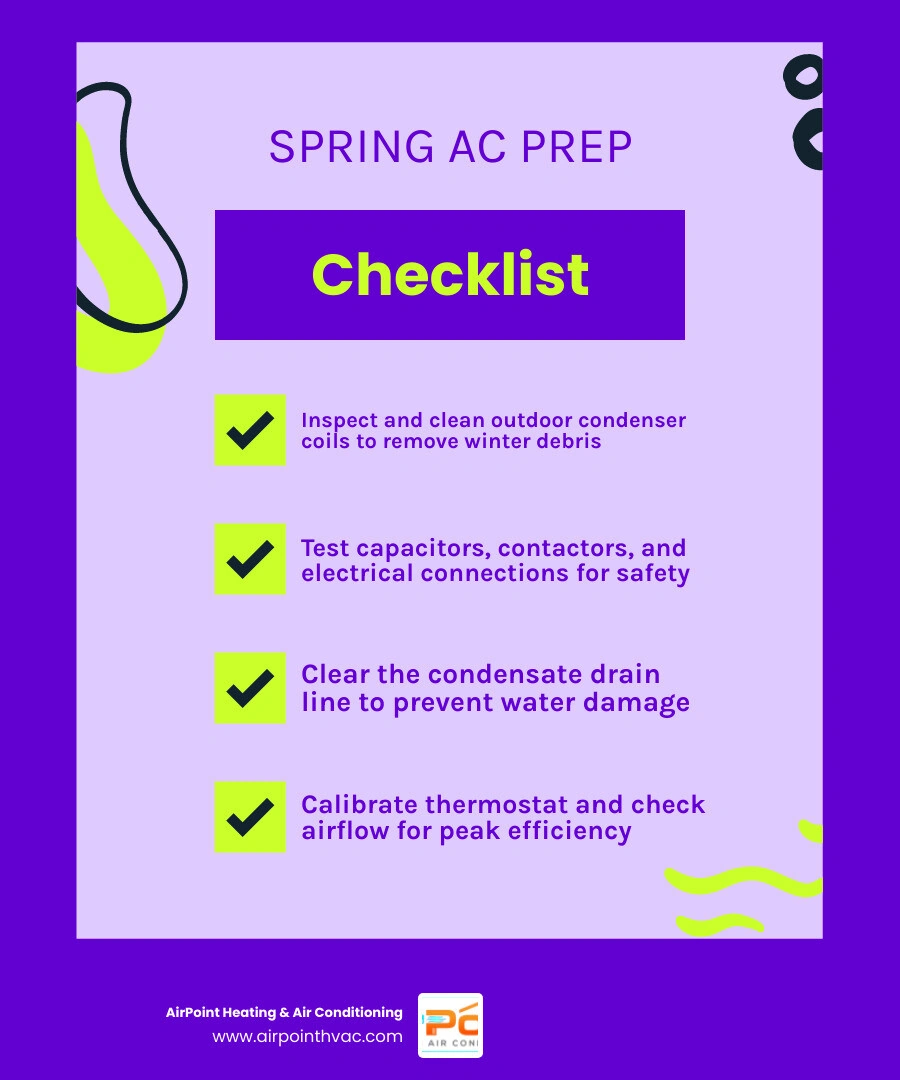
- Inspect and clean the outdoor condenser coils
- Check refrigerant levels and system pressure
- Test electrical connections, capacitors, and contactors
- Clear the condensate drain line
- Inspect and test the blower motor and evaporator coil
- Calibrate the thermostat
- Replace or inspect the air filter
- Run a full system performance test
Most visits take between 60 and 90 minutes and wrap up with a summary of your system's condition and any recommended next steps.
Knowing what a spring AC tune-up involves can be the difference between a cool, worry-free summer and an emergency call on the hottest day of the year. For homeowners in Los Alamitos and across Orange County, that risk is very real — Southern California summers push air conditioning systems hard, and a unit that sat idle all winter may not be ready for the demand. Many homeowners only find out something is wrong when they flip on the AC during the first heat wave and it struggles to keep up.
A spring tune-up is preventative, not reactive. Think of it the way you'd think about an oil change for your car — you don't wait for the engine to fail before you service it. The same logic applies to your cooling system. Catching small issues in March or April, before peak demand hits, means avoiding the long wait times, premium pricing, and real discomfort that come with summer emergency calls.
Why Scheduling a Spring AC Tune-Up is Crucial for Southern California Homes

As we enter the 2026 cooling season, Southern California homeowners face a unique set of climate challenges. From the salty, humid air in coastal cities like Newport Beach and Huntington Beach to the intense, dry heat further inland in Anaheim and Yorba Linda, our local weather demands a highly resilient air conditioning system. When summer heatwaves strike, your AC is forced to run for hours on end. If the system is carrying a year's worth of dust, worn electrical parts, or restricted airflow, it will work twice as hard to cool your home.
During the winter, your outdoor unit sits exposed to the elements. Wind, seasonal rain, fallen leaves, and nesting pests can clog the delicate aluminum fins of your outdoor condenser. Indoors, dust gathers on the evaporator coil, and biological growth can slowly block your condensate drain line. Skipping your annual service means forcing a compromised system to jump directly into heavy summer workloads.
This seasonal neglect leads to a compounding drop in efficiency. In fact, HVAC systems can lose up to 5% of their operating efficiency for every year they go without professional maintenance. This means you pay more on your monthly utility bills for less cooling power. Scheduling preventative care ensures your system is clean, safe, and ready to handle whatever the Southern California climate throws its way. To understand how consistent care keeps your cooling system reliable, you can read more about the AC Maintenance Crucial Role.
Additionally, coastal living introduces salt air, which accelerates coil corrosion and electrical wear. Homeowners in beach communities must pay special attention to protecting their units from premature breakdown. For tailored advice on navigating these coastal hazards, check out our Ultimate HVAC Maintenance Tips Coastal California.
Spring AC Tune Up What to Expect: The Professional Checklist
When you schedule a professional spring ac tune up what to expect is a highly detailed, multi-point inspection. A technician does not simply look at your unit and change the filter; they perform a deep diagnostic evaluation of both the indoor and outdoor components. This comprehensive checklist ensures that every mechanical, electrical, and airflow system operates safely and efficiently.
During a professional visit, a licensed technician will systematically evaluate your cooling system to catch minor wear before it escalates. To see how these tasks fit into your overall spring prep, explore our guide on Essential Spring AC Maintenance Tasks. If you live in the North Orange County area, you can also look at our AC Tune Up Anaheim CA Complete Guide for localized maintenance insights.
What to Expect During the Outdoor Condenser Inspection
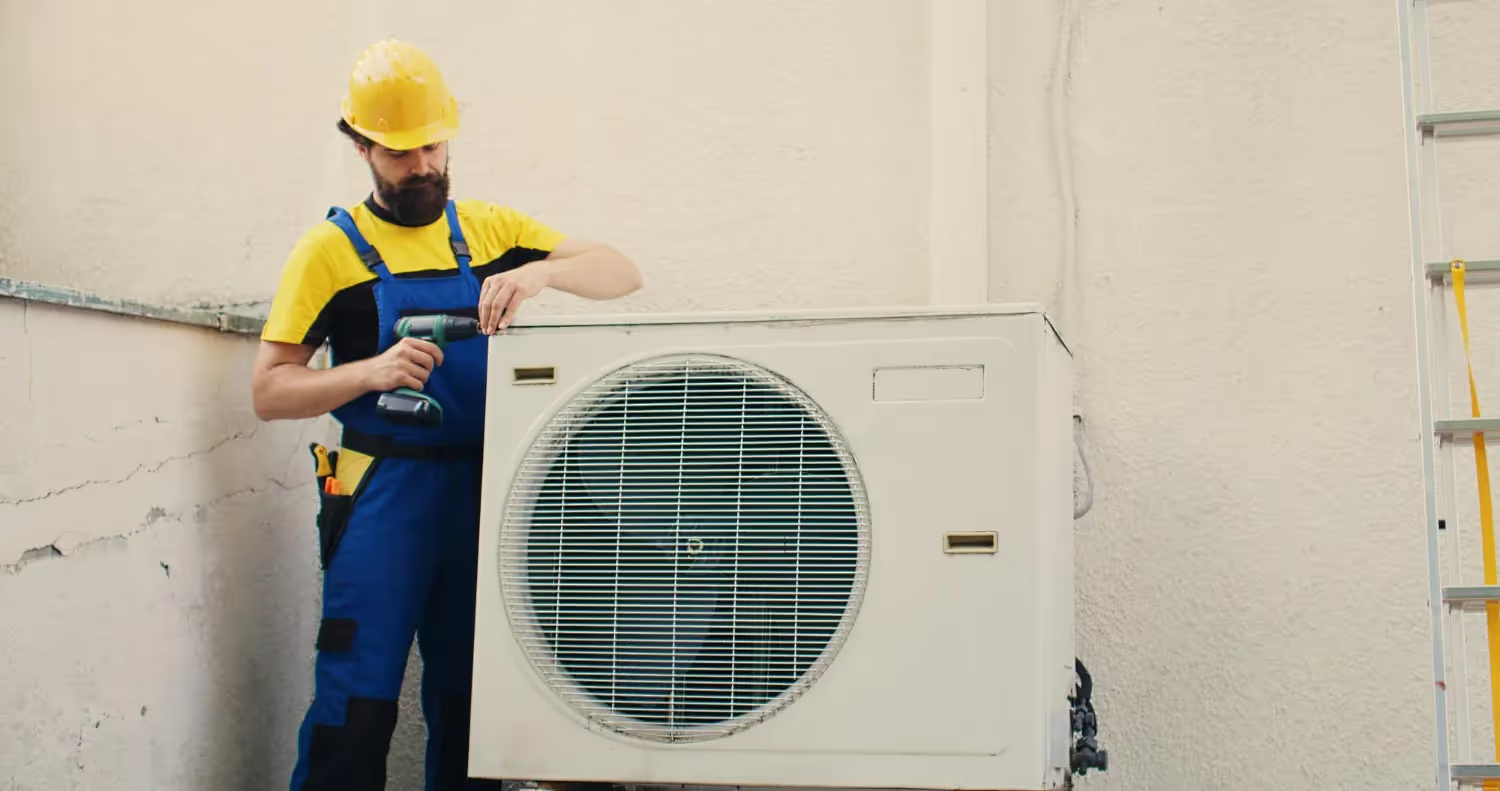
The outdoor condenser is the workhorse of your air conditioning system. It is responsible for releasing the heat extracted from inside your home out into the open air. Because it is exposed to the elements, it requires meticulous cleaning and electrical testing.
- Coil Cleaning and Debris Removal: Dust, grass clippings, and pollen collect on the condenser coils, forming a felt-like barrier. This dirt acts as an insulating blanket, trapping heat inside the system and forcing the compressor to work harder. The technician will gently clean the coils using professional solutions to restore proper heat transfer.
- Fan Motor and Blade Inspection: The outdoor fan pulls air through the coils to cool the hot refrigerant. The technician inspects the fan blades for balance or damage and checks the fan motor's amp draw to ensure it isn't overheating.
- Electrical Capacitors and Contactors: Capacitors store electrical energy to help start and run the compressor and fan motors. Over time, heat causes capacitors to degrade, lose charge, or bulge. Catching a weak capacitor in the spring prevents a sudden system failure on a hot summer weekend.
- Contactor Inspection: The contactor acts as the physical switch that turns your AC on. Technicians look for "pitting" or electrical wear on the contactor points, which can cause the unit to get stuck in the "on" or "off" position.
For residents living in coastal areas where salty air accelerates rust and electrical wear, local maintenance is vital. You can read more about this in our AC Tune Up Laguna Beach Complete Guide.
What to Expect During the Indoor System and Airflow Check
The indoor portion of your air conditioner is responsible for absorbing heat and moisture from your indoor air, blowing cool air through your ductwork, and keeping your home comfortable.
- Evaporator Coil Inspection: The indoor evaporator coil is where the actual cooling takes place. If this coil is dirty, airflow is restricted, and the system cannot absorb heat efficiently. In extreme cases, a dirty evaporator coil can cause the system to freeze up into a block of ice.
- Blower Motor and Airflow Evaluation: The blower motor pushes the cooled air through your home's vents. The technician tests the motor's performance, measures static pressure, and checks for even airflow across all rooms.
- Condensate Drain Line Clearing: As your AC cools your home, it also dehumidifies the air. This moisture condenses on the evaporator coil and drips into a drain pan before flowing out of your home. A single AC unit can produce up to five gallons of water per day. If the drain line is clogged with dust, algae, or mold, water will back up, leading to water damage in your ceiling or walls, or triggering an automatic safety shutdown.
- Thermostat Calibration: The technician will verify that your thermostat is reading the room temperature accurately and communicating correctly with your heating and cooling system.
If you live in inland Orange County and want a deeper look at indoor diagnostics, check out our 24 Hour AC Tune Up Guide Anaheim CA.
The Long-Term Benefits of Annual Cooling Maintenance
Investing in a professional spring AC tune-up is about far more than just immediate comfort. Regular, proactive care delivers substantial financial and performance dividends over the life of your equipment. When you prioritize preventative maintenance, you protect one of the largest investments in your home.
An HVAC system that receives annual care will run more reliably, break down less often, and keep your indoor air cleaner. For a complete breakdown of what you stand to gain, review our Annual AC Tune Up Benefits or check out our comprehensive HVAC Preventative Maintenance Guide.
How a Spring AC Tune-Up What to Expect Can Lower Your Energy Bills
The most immediate return on your investment comes in the form of lower monthly utility bills. When your air conditioner's coils are clean, its electrical connections are tight, and its airflow is completely unobstructed, the system requires significantly less electricity to cool your home.
A dirty, unmaintained system must run longer and work harder to achieve your desired thermostat setting. This extended runtime directly translates to increased energy consumption. By ensuring that all mechanical parts are lubricated and electrical components are functioning within manufacturer specifications, a spring tune-up optimizes your system's efficiency. To understand the relationship between regular service and your energy costs, read our article on Regular HVAC Maintenance System Efficiency.
Protecting Your Manufacturer Warranty and System Lifespan
A brand-new, high-quality air conditioning system is built to last between 15 and 20 years, but that lifespan assumes regular professional care. Neglecting annual maintenance can cut your system's life expectancy in half, forcing an expensive premature replacement.
Additionally, almost all major HVAC manufacturers require proof of annual professional maintenance to keep your equipment warranty valid. If a major component like your compressor fails during the warranty period, the manufacturer may deny your claim if you cannot provide service records from a licensed HVAC contractor. In this way, a spring tune-up acts as "warranty insurance," protecting you from expensive out-of-pocket repair bills. Learn more about how consistent care safeguards your equipment by reading how HVAC Maintenance Keeps System Running.
Frequently Asked Questions About Spring AC Maintenance
When is the best time to schedule a spring AC tune-up?
The ideal window to schedule your tune-up is between March and April. Scheduling your service during early spring ensures your system is clean and fully operational before the first major heatwave hits. It also allows you to secure an appointment easily, as HVAC companies face peak demand and longer wait times once summer temperatures arrive in May and June.
How does a spring AC tune-up what to expect differ from an emergency repair?
A spring AC tune-up is a proactive, preventative service performed on a fully functioning system to optimize its performance, clean its components, and prevent future breakdowns. An emergency repair is a reactive service scheduled after your system has already stopped working or is actively malfunctioning. Tune-ups are designed to help you avoid the stress, discomfort, and sudden expenses associated with emergency repairs.
What can homeowners do between professional maintenance visits?
While technical tasks like refrigerant testing and electrical diagnostics must be left to licensed professionals, homeowners can handle basic upkeep. The most important task is replacing your air filter every 30 to 90 days, or monthly during peak summer use if you have pets or allergies. Additionally, keep a two-foot clear zone around your outdoor condenser unit by clearing away leaves, weeds, or patio furniture to ensure unrestricted airflow.
Conclusion
Preparing your home for the warm summer months starts with ensuring your cooling system is ready for the workload. Now that you know exactly what to expect from a professional spring AC tune-up, you can make an informed decision to protect your home's comfort, lower your monthly energy bills, and extend the lifespan of your system.
At AirPoint Heating & Air Conditioning, we provide fast, expert HVAC solutions across Los Alamitos and surrounding Orange County communities. As a family-owned, award-winning business, we are committed to honest communication, exceptional service, and a 100% satisfaction guarantee. Our certified technicians will ensure your air conditioner is operating safely and at peak efficiency.
Don't wait for the summer heat to arrive. Schedule your professional spring AC tune-up today to book fast, reliable service with our friendly team!
Other Blogs
Latest Blog Posts
Common Homeowner Questions Answered: Is That Fall Heater Burning Smell Normal?
Common Homeowner Questions Answered: Why Does My Heater Smell Like Burning?
Why Is My Heater Smelling or Clicking? A Fall Startup Troubleshooting Guide

Customer Testimonials



I recommend Air Point for your HVAC needs."