







Why Salt Air and Marine Moisture Are Hard on HVAC Systems in Coastal California
HVAC maintenance tips for coastal california homeowners start with one important truth: the same ocean breeze that makes living near the California coast so enjoyable is quietly working against your heating and cooling system every single day.
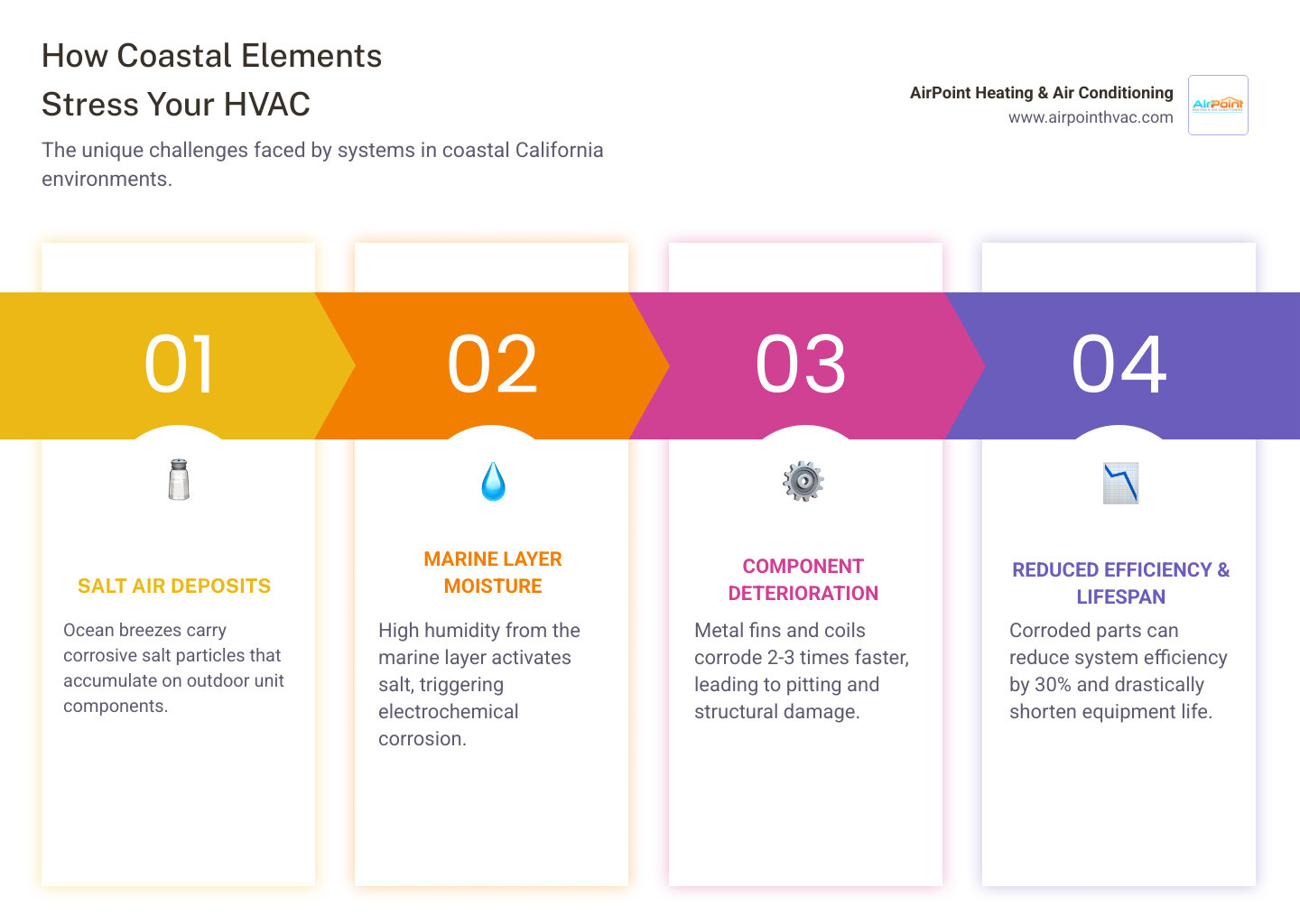
Salt air doesn't just settle on your windows and patio furniture. It lands on your outdoor HVAC unit too - on the metal fins, coils, fan blades, and electrical connections. Once salt mixes with moisture from the marine layer, it triggers a corrosive reaction that eats through metal components two to three times faster than in dry, inland climates. Over time, that damage adds up. Corroded condenser fins alone can reduce your system's efficiency by up to 30%, which means higher energy bills and a shorter system lifespan.
For homeowners in coastal Orange County communities like Seal Beach, Huntington Beach, and Laguna Beach, this isn't a distant risk - it's happening right now to systems that aren't getting the right care.
Here's a quick overview of the most important steps to protect your HVAC system on the California coast:
- Rinse your outdoor unit monthly with a low-pressure garden hose to remove salt buildup
- Replace air filters every 1 to 3 months - or more often if you live very close to the water
- Schedule professional tune-ups twice a year - once in spring before cooling season, and once in fall before heating season
- Apply anti-corrosion coatings to outdoor components to slow salt damage
- Keep 2 to 3 feet of clearance around your outdoor unit at all times
- Inspect and clear condensate drain lines regularly to prevent mold and water damage
- Check for signs of wear like rust, pitting, rising energy bills, or unusual noises
Whether you're dealing with the morning marine layer rolling in off the Pacific or the occasional wildfire smoke drifting down from inland areas, your HVAC system is working harder than you might think. This guide walks you through everything you need to know to keep it running strong.
Why Coastal California Homeowners Need Specialized HVAC Maintenance
Living in a coastal paradise like Newport Beach or Huntington Beach comes with a hidden price tag for your mechanical systems. While inland residents might get away with neglecting their AC for a year or two, coastal equipment is under constant biological and chemical "attack." The primary culprit is salt air corrosion.
When salt particles from the Pacific settle on your outdoor condenser, they don't just sit there. They attract moisture from the humid marine layer, creating an electrochemical reaction. This process turns your air conditioner into a giant, unintentional battery that slowly dissolves its own metal parts. Aluminum fins, which are essential for heat exchange, are particularly vulnerable. As they deteriorate, your system loses its ability to cool your home efficiently. Research shows that coastal systems can suffer a 30% reduction in efficiency due to salt damage alone.
To keep your home comfortable and your bills manageable, specialized HVAC Maintenance Seal Beach CA is a necessity, not a luxury. Without it, you’re looking at a system that dies years before its time.
Comparing HVAC Lifespans: Coastal vs. Inland
| Feature | Coastal (0-5 miles from shore) | Inland (15+ miles from shore) |
|---|---|---|
| Average Lifespan | 5–10 years (unprotected) | 15–20 years |
| Efficiency Loss | Up to 30% from corrosion | Minimal |
| Part Replacement | 40% more frequent | Standard intervals |
| Service Frequency | Bi-annual (recommended) | Annual |
Identifying Signs of Salt Damage and Coastal Wear
How do you know if the ocean is winning the war against your AC? We recommend doing a visual "walk-around" of your outdoor unit once a month. Look for the following red flags:
- Pitting and Flaking: If the metal fins on your outdoor coil look like they are "shedding" or have tiny holes, that’s advanced corrosion.
- White or Green Crust: Salt often leaves a white, powdery residue, while copper lines might develop a greenish patina (oxidation) that indicates the metal is weakening.
- Unusual Noises: If salt gets into the bearings of your fan motor, you might hear grinding, squealing, or rattling.
- Rising Bills: If your April 2026 energy bill is significantly higher than last year’s, but your usage hasn't changed, your system is likely struggling to breathe through corroded fins.
If you spot these signs, it’s time to call for professional AC Maintenance Huntington Beach CA before a small rust spot turns into a total system failure.
How the Marine Layer and Wildfire Smoke Affect Performance
It isn't just the salt. The "Marine Layer"—that thick, humid fog we often see in the mornings—keeps your unit damp for hours. This moisture acts as a glue, trapping fine sand, dust, and particulate matter inside the delicate fins of your condenser.
Furthermore, California’s wildfire seasons introduce heavy loads of ash and smoke into the air. These microscopic particles clog air filters and coat internal components, forcing the motor to work overtime just to move air. For those in beach-adjacent neighborhoods, HVAC Maintenance Laguna Beach CA must account for this double-whammy of salt-dampness and fine-particle clogging.
Essential HVAC Maintenance Tips for Coastal California Homeowners
Protecting your investment doesn't always require a technician’s van in the driveway. There are several high-impact DIY tasks that can save you thousands in the long run.

The Power of the Freshwater Rinse
The single most effective of all hvac maintenance tips for coastal california homeowners is the monthly freshwater rinse. Think of it like rinsing your car after a trip to the beach.
Using a standard garden hose (never a pressure washer!), gently spray the outdoor coils to wash away salt deposits. This prevents the salt from sitting on the metal long enough to start the "pitting" process. While you’re out there, ensure you have at least 2 to 3 feet of clearance around the unit. Trim back any hibiscus or coastal sage that might be blocking airflow. For residents in high-exposure areas, consistent AC Maintenance Seal Beach CA starts with this simple five-minute habit.
Optimal Air Filter Replacement Schedules for Marine Environments
In a standard inland home, you might change your filter every three months. In a coastal home, that’s often too long. Marine air is heavy with moisture and fine sand. When these get trapped in a filter, they create a "mat" that blocks airflow almost entirely.
- Check monthly: Pull the filter out and hold it up to a light. If you can't see light through it, it's done.
- MERV Ratings: We suggest using filters with a MERV rating between 8 and 11. This is strong enough to catch salt crystals and sand without putting too much strain on your blower motor.
- Replacement: Plan on a fresh filter every 1 to 2 months during the peak of summer or when the marine layer is particularly persistent.
Keeping up with a Spring HVAC Maintenance Checklist ensures you start the season with a clean slate.
Managing Coastal Humidity to Prevent Mold
Coastal humidity in Southern California often hovers between 60% and 70%. Inside your HVAC system, this moisture can collect in the dark, cool spaces of your evaporator coil and drain pan. If the water doesn't drain properly, it becomes a breeding ground for mold and mildew.
If your air feels "clammy" or you notice a musty "dirty sock" smell when the AC kicks on, your system is struggling with moisture. Regularly checking your condensate drain line for clogs is vital. A quick flush with a little vinegar can help keep algae from growing, but for a deep clean and mold prevention, professional AC Service Laguna Beach CA is the safest bet to ensure your indoor air quality remains high.
Professional Strategies to Combat Corrosion and Improve Efficiency
While DIY care is great, there are some things only a pro can do. In coastal environments, we use specialized tools and materials to "armor" your system against the elements.
Anti-Corrosion Coatings and Sacrificial Anodes
When we perform a Heating Maintenance Seal Beach CA visit, we don't just check the thermostat. We can apply specialized epoxy or phenolic coatings to the coils. These coatings act as a shield, preventing salt from ever touching the raw metal.
We also look at "sacrificial anodes." Much like the anodes used on boats, these are pieces of metal designed to corrode instead of your expensive HVAC components. By attracting the corrosive "attack" to a cheap, replaceable part, we extend the life of your compressor and coils by years.
The Importance of Regular Duct Inspection and Sealing
Many older homes in areas like Long Beach or Huntington Beach have ductwork that wasn't built to modern sealing standards. In a coastal climate, leaky ducts are a disaster. They suck in humid, salty air from crawlspaces or attics and blow it directly into your home—and across your indoor HVAC components.
Sealing these leaks improves your energy efficiency and prevents "internal" corrosion. If you're noticing uneven temperatures or dusty surfaces shortly after cleaning, it’s time for a thorough HVAC Maintenance Huntington Beach CA inspection of your duct system.
Energy-Efficient Upgrades for the Mild California Coast
Because our coastal weather is relatively mild, you might not need a massive, traditional furnace and AC setup. Modern Heat Pumps are incredibly efficient in our climate. They provide both heating and cooling by moving heat rather than creating it, and many modern units come with "coastal-rated" factory coatings.
Ductless mini-splits are another fantastic option for coastal homes, especially older ones where adding ductwork is difficult. They allow for "zone control," meaning you don't waste energy cooling the whole house when you're only using one room. Scheduling a Heat Pump Tune-Up Seal Beach CA ensures these high-tech systems stay in peak condition.
Seasonal Preparation: Getting Your System Ready for 2026
As we move through April 2026, the "May Gray" and "June Gloom" are just around the corner. Seasonal shifts in Southern California might be subtle, but they change how your HVAC interacts with the environment.
Preparing for Seasonal Temperature Swings in Orange County
In the spring, your main goal is ensuring the AC is ready to handle the sudden humidity of the marine layer. In the fall, you want to make sure your heating components haven't become a home for dust or pests during the summer.
- Smart Thermostats: Upgrading to a smart thermostat allows you to program "dehumidification modes" that run the AC just enough to pull moisture out of the air without freezing you out of the house.
- Vent Dusting: Salt and dust accumulate on your registers. Give them a quick vacuum to keep that debris from recirculating.
- System Testing: Don't wait for the first 90-degree day in July to turn on your AC. Test it in April! If you hear a weird noise or it smells like burning dust, schedule a Furnace Tune-Up Seal Beach or AC check immediately.
Proactive care in the "off-season" is the best way to avoid emergency repair calls. Whether you need a Furnace Tune-Up Laguna Beach CA or a spring AC refresh, timing is everything.
Frequently Asked Questions about hvac maintenance tips for coastal california homeowners
How often should I schedule a professional tune-up near the ocean?
While inland homes can often get by with an annual check, coastal homes should be serviced bi-annually. A spring visit prepares your system for the humidity and cooling load, while a fall visit ensures your heating system is safe and clear of salt-induced electrical oxidation.
Can I use a pressure washer to clean my outdoor unit?
Absolutely not. The fins on your AC unit are made of thin aluminum and are very fragile. A pressure washer will flatten them instantly, blocking airflow and potentially ruining your coil. Always use a gentle stream from a standard garden hose.
What are the best hvac maintenance tips for coastal california homeowners to prevent rust?
The "Triple Threat" approach is best:
- Rinse monthly with fresh water.
- Coat the coils with professional-grade anti-corrosion sprays.
- Elevate the unit slightly off the ground to prevent it from sitting in brackish puddles after a rainstorm or heavy fog.
Conclusion: Partner with Local Experts for Coastal Comfort
Living by the Pacific is a dream, but it requires a bit of extra vigilance to keep your home running smoothly. At AirPoint Heating & Air Conditioning, we understand the unique challenges of the Orange County coastline because we live and work here too. From the salt-sprayed streets of Seal Beach to the hills of Mission Viejo, we provide the expert care your system needs to survive the sea air.
As a family-owned, award-winning business, we stand behind our work with a 100% satisfaction guarantee. Whether you need a precision tune-up, a corrosion-resistant upgrade, or a fast repair, we are here to help. Don't let the sea breeze break your budget—stay ahead of the salt and enjoy the coastal lifestyle you love.
Looking for reliable HVAC Maintenance Long Beach CA or service in Los Alamitos and surrounding areas? Book Now for fast, reliable service!
Other Blogs
Latest Blog Posts
Heat Pump vs. Gas Furnace: Weighing Operating Costs Under Current California Utility Rates
Why DIY Mini Split Pre-Charged Lines Often Leak Refrigerant After the First Season

How to Inspect Your Attic Ductwork for Rodent Damage Before Winter Sets In

Customer Testimonials



I recommend Air Point for your HVAC needs."