



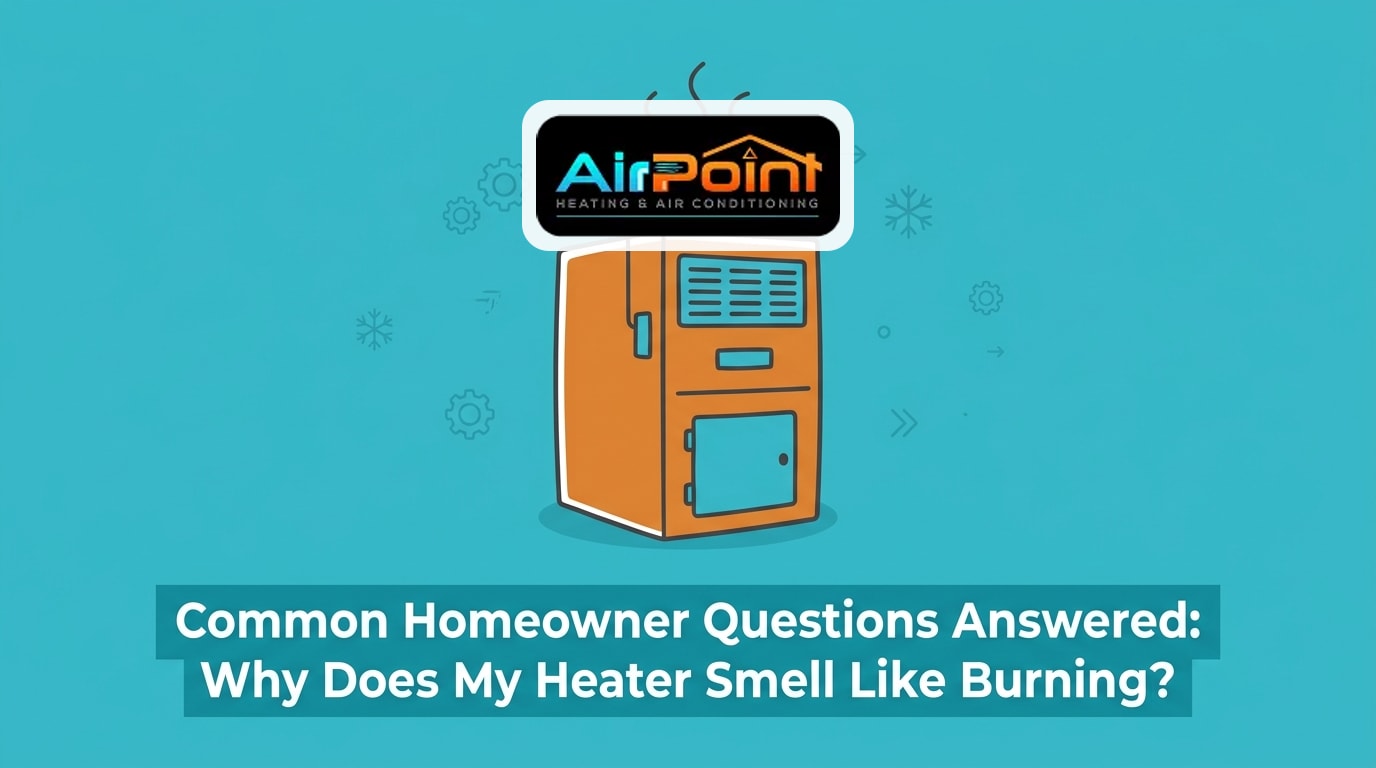
Common Homeowner Questions Answered: Why Does My Heater Smell Like Burning?
Is It Safe to Run My Heater if It Smells Like Burning?
Did you just switch your thermostat to 'heat' for the first cool October morning, only to be hit with a concerning odor? Here at AirPoint Heating & Air Conditioning, one of the most common homeowner questions answered by our technicians every fall across Los Alamitos is whether that sudden burning smell means the house is in danger. When your heating equipment sits completely idle for over six months, the transition back to active heating can be a jarring sensory experience. You are suddenly faced with a critical decision point: do you let the system run and hope the smell fades, or do you shut off the power immediately to prevent an electrical fire?
While some odors are a completely normal part of seasonal transitions, others are urgent warning signs that require immediate system shutdown. The air you breathe is directly impacted by how your system is maintained during the off-season, and understanding these early warning signs is essential for your family's safety. This diagnostic guide will help you confidently identify the exact difference between harmless dust burn-off and a hazardous electrical or component issue.
The quick fix: For comprehensive protection and peace of mind before the cold weather sets in, explore our indoor air quality solutions or schedule HVAC service with our local experts today.
The Most Common Culprit: Seasonal Dust Burn-Off on the Heat Exchanger
If you are turning on your furnace or heat pump for the first time since early spring, the most likely source of that alarming scent is simple, everyday dust. During the long, dry Southern California summer, your heating components sit dormant. As the months pass, a fine layer of household particulates—including pet dander, textile fibers, skin cells, and microscopic debris—gradually settles over the internal components of your furnace, particularly the heat exchanger.
The coastal climate factor: In our years of servicing HVAC systems in Los Alamitos, our team has noticed that our specific local geography plays a major role in this phenomenon. Our coastal proximity contributes to a unique mix of damp marine moisture in the mornings and dry, dusty conditions in the afternoons. This fluctuating humidity causes summer particulates to stick much more stubbornly to unused HVAC components than they would in a purely arid climate. It creates a slightly thicker, more resilient layer of debris inside the cabinet.
When the thermostat finally calls for heat, the burners ignite, and the heat exchanger rapidly reaches extreme temperatures. That settled layer of coastal dust and household debris is instantly baked off by the intense heat. This rapid incineration produces a very distinct odor. It usually smells like a faint, dry campfire, toasted lint, or warm dirt. While the scent can be strong enough to spread through every vent in your home, this specific type of dust burn-off is a normal, expected, and generally harmless part of the autumn startup process.
How Long Should the Burning Dust Smell Last?
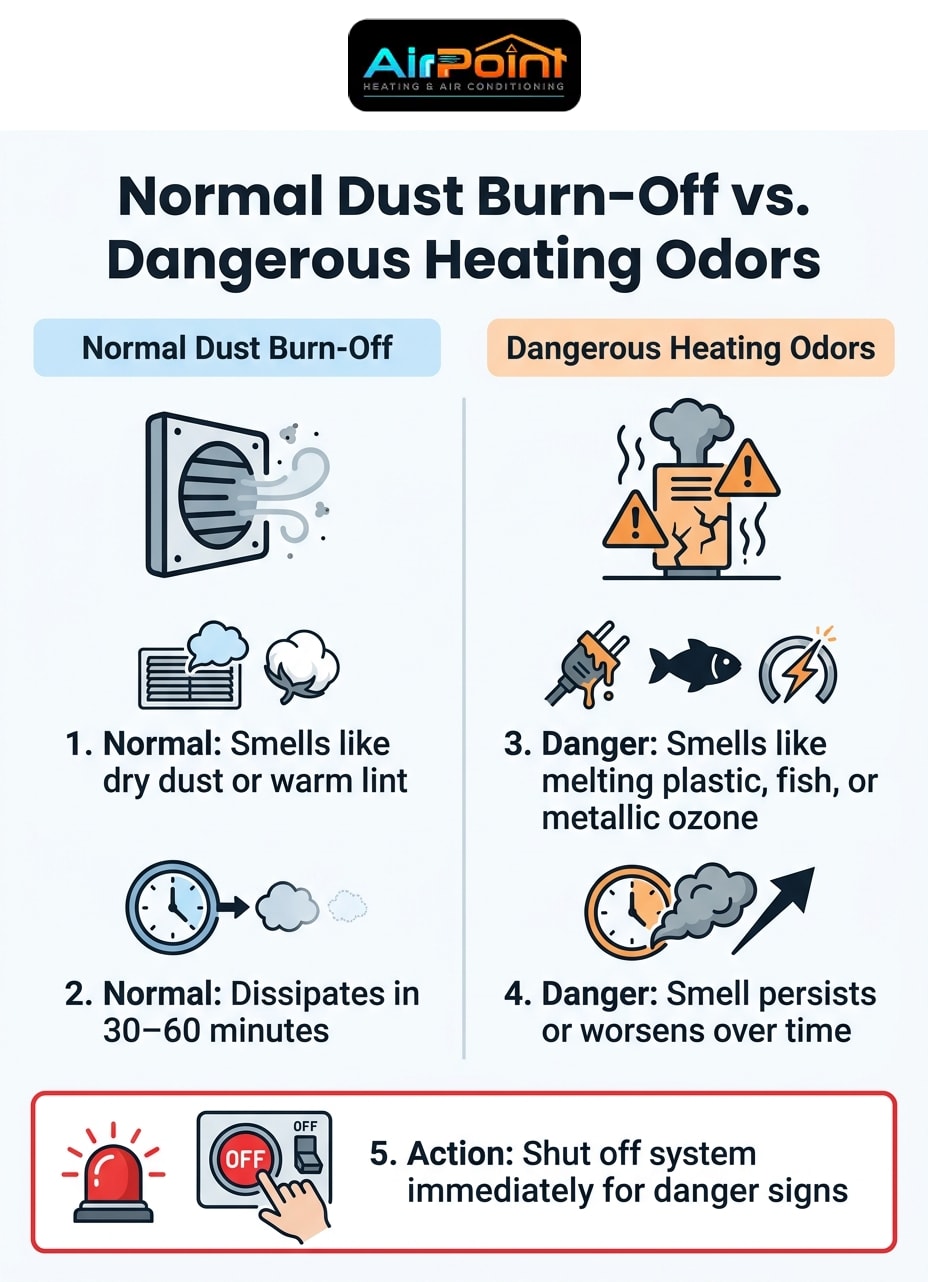
Knowing exactly how long this process should take is your best defense against unnecessary panic. The standard rule of thumb for normal seasonal dust burn-off is that it should fully dissipate within 30 to 60 minutes of continuous operation.
• Ventilate the space: If the weather permits, open a few windows and turn on your ceiling fans to help clear the initial wave of toasted dust from your living areas.
• Monitor the vents: The smell should be strongest during the first ten minutes and gradually taper off until it is completely unnoticeable.
• The shutdown threshold: If the smell persists beyond an hour of continuous heating, or if it seems to be getting stronger and more acrid rather than fading away, it is no longer normal dust burn-off. At that point, you must turn the system off immediately and call for professional diagnostics.
Warning Signs: When to Shut Down Your Heating System Immediately
While dust burn-off is harmless, other odors indicate severe mechanical failure, electrical hazards, or combustion issues. Your nose is often the first diagnostic tool for detecting a dangerous malfunction. If the odor coming from your vents does not smell like dry, toasted lint, you need to take immediate action.
One pattern our AirPoint Heating & Air Conditioning technicians see often on fall service calls is homeowners ignoring sharp, chemical smells because they assume all startup odors are normal. Never ignore a smell that stings your eyes or smells distinctly synthetic. If you encounter any of the danger signs listed below, turn off the system at the thermostat and the breaker immediately, then schedule HVAC service to have a professional diagnose the root cause safely.
• Dry dust, toasted lint, warm dirt — Likely Cause: Normal seasonal dust settling on the heat exchanger. — Required Action: Monitor for 30-60 minutes. Open windows. Harmless if it fades.
• Acrid, melting plastic, burning rubber — Likely Cause: Failing capacitor, melting wire insulation, or a foreign plastic object in the heating cabinet. — Required Action: Shut down system immediately at the thermostat and breaker. Call for service.
• Fishy, metallic, or sharp ozone — Likely Cause: Electrical arcing, overheating blower motor, or failing circuit board. — Required Action: Shut down system immediately. This is a severe fire hazard.
• Rotten eggs or raw sulfur — Likely Cause: Natural gas leak. The utility company adds mercaptan to gas to produce this distinct warning smell. — Required Action: Evacuate the home immediately. Do not flip light switches. Call the gas company.
• Musty, damp, or burning hair — Likely Cause: Mold in the ductwork, or a pest that has nested (and perished) near the heating elements. — Required Action: Turn off system. Requires professional duct inspection and sanitization.
How Dirty Air Filters Contribute to Heating Odors
Sometimes, the burning smell isn't coming from the heat exchanger at all, but rather from an overworked blower motor struggling against a clogged air filter. Your HVAC filter is the only line of defense preventing heavy household dust from coating your internal heating components. When that filter is neglected, a chain reaction of airflow problems begins.
Running your heater with a heavily soiled filter forces the system to overwork. The blower motor has to strain against the physical blockage of the dirty filter to pull enough air into the system. This extreme static pressure causes the motor to overheat, which can produce an electrical burning smell that is often confused with normal dust burn-off. Furthermore, a dirty filter fails to catch the very dust that is burning off on the heat exchanger, making the initial startup smell much worse than it needs to be.
To prevent filter-related odors and overheating, follow these essential maintenance steps before the heating season begins:
1. Locate and inspect the filter: Pull the filter from the return vent or the slot near the furnace cabinet. Hold it up to a light source; if no light passes through the media, it is completely clogged and must be discarded.
2. Select the proper replacement: Choose a filter with the correct density for your specific system. If you are unsure which density provides the best balance of filtration and airflow, reviewing a guide on understanding MERV ratings and air filters can help you make the right choice.
3. Install with correct airflow direction: Ensure the arrows printed on the side of the new filter frame point toward the furnace cabinet (the direction the air is flowing).
4. Establish a replacement schedule: During peak usage months, check the filter every 30 days and replace it at least every 90 days to prevent blower motor strain.
Hidden Hazards: Debris and Foreign Objects in the Vents
If you have verified that your filter is clean and the burning smell persists, the source of the odor might not be inside the furnace cabinet at all. Often, the culprit is hiding out of sight inside your home's ductwork. This is especially common in homes with floor registers.
The household debris factor: In our extensive experience servicing local homes, floor registers can easily become catch-alls for small household items over the course of the long summer. Children's plastic toys, crayons, pet hair accumulations, food wrappers, and small pieces of synthetic debris can fall through the grates and rest inside the metal ductwork. When the furnace kicks on and blasts highly heated air through those metal channels, these foreign objects heat up rapidly. A melting plastic toy or a cluster of scorched pet hair will produce a highly toxic, acrid smell that gets pushed into the living areas.
Pest intrusions: Another hidden hazard involves pests. Rodents and insects often seek refuge in dark, quiet ductwork during the off-season. If a pest has built a nest—or perished—near a heat register, the first blast of hot air will carry a deeply unpleasant, foul, or burning odor throughout the house.
How to check: Before turning on the heat for the first time, take a flashlight and look down into your accessible floor and wall registers. If you spot debris, carefully remove the grate and vacuum it out. However, if the smell seems localized to one specific room's vent and you cannot see the blockage, do not attempt to reach deep into the ductwork. Instead, rely on a professional ductwork inspection to safely locate and remove the hidden hazard.
Why You Should Never Inspect the Heat Exchanger Yourself
When homeowners detect a burning smell, their first instinct is often to grab a flashlight, open the furnace cabinet, and try to wipe down the dusty components themselves. This is a critical safety mistake. At AirPoint Heating & Air Conditioning, we've seen the dangerous results of DIY furnace explorations, which is why we strongly advise against any untrained exploration of your heating equipment's internal combustion chamber.
The fragility of the heat exchanger: The heat exchanger is the most vital safety component in your furnace. It is a series of thin metal tubes or coils that separate the toxic combustion gases (like carbon monoxide) from the clean air being blown into your home. Despite being made of metal, these components undergo extreme thermal expansion and contraction. They are delicate and can easily develop microscopic cracks. Attempting to clean or wipe down a heat exchanger without specialized training can inadvertently stress the metal, turning a dusty furnace into a deadly carbon monoxide hazard.
Complex system transitions: Modern HVAC systems are highly complex. The transition from utilizing your air conditioning system all summer to engaging the winter heating components involves intricate electrical relays, gas valves, and draft inducers. Only licensed professionals possess the specialized diagnostic tools—such as combustion analyzers, draft gauges, and micro-inspection cameras—required to safely measure electrical draw, verify gas pressure, and confirm combustion safety.
Trusting local expertise: Homeowners shouldn't have to guess whether their heating system is safe to operate. Relying on our local Orange County expertise and our 100% Satisfaction Guarantee means you are getting an honest, thorough safety inspection. A professional technician will safely evaluate the heat exchanger, test all safety switches, and ensure the system is ready for the seasonal shift without putting your family at risk.
Frequently Asked Questions About Fall Furnace Odors
Why does my heater smell like burning dust?
The heater smells like burning dust because a layer of household particulates settles on the internal components during the long summer off-season. When the furnace is turned on for the first time in autumn, the heat exchanger rapidly reaches extreme temperatures and essentially bakes off this settled dust. This rapid incineration creates a distinct, dry campfire odor that circulates through your home's vents. It is a completely normal physical reaction to the seasonal startup process.
How long does the burning smell last when you turn on the heater?
Normal seasonal dust burn-off should completely dissipate within 30 to 60 minutes of continuous operation. The odor will be most intense during the first ten minutes and should steadily fade as the system runs. If the smell persists beyond an hour, or if it grows stronger and more acrid, turn off the system immediately, as this indicates a mechanical or electrical issue rather than simple dust.
Is it safe to run the heater if it smells like burning?
It is safe to run the heater if the smell is strictly similar to dry, toasted lint and it is the very first time you are running the system for the season. However, it is absolutely unsafe to run the heater if the odor smells like melting plastic, electrical ozone, fish, or sulfur. If you experience any chemical or electrical smells, shut the power off at the thermostat and the breaker immediately to prevent a fire hazard.
What does an electrical fire smell like in a heater?
An electrical fire in a heater typically produces a sharp, metallic, or uniquely "fishy" odor caused by melting wire insulation and arcing electricity. It does not smell like dry dust; instead, it has a distinct synthetic, chemical harshness that often stings the eyes or nose. This smell is a severe warning sign of an overheating blower motor, a failing capacitor, or a short-circuiting control board, requiring immediate system shutdown.
Can a dirty air filter make my furnace smell like it's burning?
Yes, a severely clogged air filter can cause your furnace to emit a burning smell by forcing the blower motor to overwork. When airflow is heavily restricted by a dirty filter, the motor strains against the static pressure, causing it to overheat and emit an electrical burning odor. Additionally, a dirty filter allows more dust to bypass the media and settle on the heat exchanger, intensifying the normal dust burn-off smell.
When should I be worried about my heater smelling?
You should be worried about your heater smelling if the odor resembles melting plastic, rotten eggs (sulfur), or electrical ozone, or if a normal dust smell lasts longer than 60 minutes. You should also be concerned if the burning smell occurs suddenly in the middle of the winter after the system has already been running regularly for months. Any new, sharp, or persistent odor warrants an immediate shutdown and a professional safety inspection.
Get Peace of Mind for Your Fall Heating Startup
Transitioning your home from summer cooling to winter heating shouldn't be a source of stress. While the faint scent of toasted dust on the first cool morning is a normal part of the season, you should never have to second-guess whether a persistent or chemical odor is putting your home at risk. The safest approach to any unfamiliar HVAC smell is caution.
A comprehensive pre-season safety check is the absolute best way to prevent unexpected breakdowns, verify the integrity of your heat exchanger, and ensure that your system is operating cleanly and efficiently. If you are unsure about the safety of your system, or if that initial startup smell simply won't go away, don't wait for a minor issue to become a major hazard. Reach out to our local experts at AirPoint Heating & Air Conditioning to secure total peace of mind for the heating season ahead.
Other Blogs
Latest Blog Posts
Why Is Air Quality Bad in Huntington Beach, CA Today? (And How to Protect Your Home)

Heating Options Comparisons for Homeowners in Los Alamitos, CA: Heat Pump vs. Gas Furnace

Home Maintenance Tips and Troubleshooting: Navigating Fall Heater Startup Smells in Los Alamitos

Customer Testimonials



I recommend Air Point for your HVAC needs."