





Using a SEER Savings Calculator: Balancing Efficiency Upgrades with Fall HVAC Prep

Are You Ready for Fall Winds? Evaluating Your System's Future
As you map out your seasonal home maintenance checklist, is your current HVAC system truly prepared for the heavy dust and allergens brought by autumn winds? Many homeowners focus heavily on summer cooling or deep winter freezes, entirely overlooking the unique strain that the transition season places on their indoor comfort systems. Here in Los Alamitos and the surrounding coastal areas, our team at AirPoint Heating & Air Conditioning sees fall introduce a distinct set of challenges—namely, a significant drop in indoor air quality as seasonal winds whip up fine particulate matter and drive it straight toward your home's air intake.
If you want to understand exactly how much an inefficient system is costing you during these heavy-use transition periods, running your numbers through a SEER savings calculator is the most effective first step. This concrete problem forces a critical decision point before the temperatures drop: Should you proactively service and clean your existing equipment to survive another wind season, or is it time to evaluate a full system upgrade? Older units often lack the blower capacity to push air through the high-efficiency filters required to combat heavy autumn dust. By taking a hard look at your system's current performance, you can make a strategic, data-backed decision about your home's comfort and air quality before the first real cold snap forces your hand.
The Fall Reality: Why Autumn is the True Test for Your HVAC
In Los Alamitos, the fall climate is notoriously mild. You are rarely dealing with freezing pipes or catastrophic blizzards. However, this mild coastal weather often masks the severe strain that heavy dust accumulation places on your internal HVAC components. Autumn is when the October Santa Ana winds begin to peak, carrying dry, dusty air and wildfire ash directly into your neighborhood. Your system, which has likely been running consistently throughout the summer, is now being bombarded with fine debris just as it prepares to switch over to heating mode.
One common phenomenon homeowners experience during this time is a distinct, alarming burning smell during the very first heating cycle of the season. This occurs because dust, pet dander, and airborne particles have settled directly onto the heat exchanger over the long summer months. When the furnace ignites for the first time, it literally burns off that accumulated debris. While a brief odor is normal, heavy accumulation poses a safety and efficiency risk that requires a professional preventative check.
Recently, our technicians were called out by a local homeowner who scheduled a preventative check on their aging heating and AC system to ensure future reliability ahead of the winter months. Our team conducted a thorough inspection and explained potential efficiency issues using before-and-after photos of the internal components. This comprehensive approach restored the homeowner's confidence that their system would run smoothly through the changing seasons. Relying on a licensed professional is non-negotiable here; DIY cleaning is entirely insufficient for delicate internal components like the heat exchanger and blower motor, and attempting to service them yourself can lead to dangerous malfunctions or voided warranties.
The Hidden Impact of Seasonal Debris
The compounding effect of summer wear and tear followed by autumn winds creates a perfect storm for your air conditioning systems and heating units.
• Bypassing standard filters: The fine particulate matter carried by October Santa Ana winds is often too small for standard, cheap fiberglass filters to catch, allowing debris to coat the evaporator coil and blower motor.
• Restricted airflow: As dust builds up on internal components, the system has to work twice as hard to pull air through the house, increasing energy consumption and causing premature wear on the blower fan.
• Moisture and mold risks: If dust settles on a damp evaporator coil before the cooling season entirely ends, it creates a breeding ground for biological growth, further degrading your indoor air quality.
Repair vs. Replace: Making the Decision Before the Cold Hits
Transitioning from cooling to heating is the ultimate stress test for an aging HVAC unit. If your system is already struggling, the heavy workload of filtering out autumn dust while maintaining comfortable indoor temperatures will quickly expose its weaknesses. The decision to repair an older unit or replace it entirely should always be made proactively, long before an emergency breakdown leaves you shivering on a cold November night.
Evaluating the true condition of your equipment requires looking beyond the basic functions. A standard tune-up can clean the components and calibrate the thermostat, but it cannot reverse fundamental inefficiency or undo years of internal wear. Consider the following signs that an aging unit is losing its battle against seasonal strain:
• Constant cycling: The system turns on and off rapidly (short-cycling) because it can no longer maintain a consistent temperature, often due to a failing compressor or restricted airflow.
• Unusual mechanical noises: Grinding, squealing, or rattling sounds indicate that internal components like the blower motor bearings are deteriorating.
• Rising utility costs: Even with regular maintenance, an outdated unit will consume significantly more energy to achieve the same level of comfort as it did a decade ago.
For example, our team recently helped a local family who found themselves without functioning comfort control after a home warranty company misdiagnosed their aging unit. After receiving unpressured, professional guidance from our experts, they opted for a prompt replacement that was installed with minimal disruption to their work-from-home schedule. Making the choice to upgrade rather than pour money into endless repairs provides long-term stability. If you are planning an AC installation or a full system overhaul, measuring the energy efficiency of modern units compared to your current setup is the most reliable way to determine if a replacement makes financial sense.
Decoding Efficiency: How to Effectively Measure Potential Savings
When you start researching new HVAC systems, you will immediately encounter the term SEER, which stands for Seasonal Energy Efficiency Ratio. Understanding what this rating actually means for your daily home comfort and energy consumption is critical. Simply put, SEER measures how much cooling a system delivers per unit of electrical energy it consumes over a typical season. A higher SEER rating indicates a more efficient system that requires less electricity to do its job.
However, calculating the true financial payback of a higher-efficiency unit requires more than just looking at the sticker price. This is where a calculation tool becomes invaluable. To effectively measure your potential savings, you must evaluate several specific variables:
1. Determine your current baseline: Identify the SEER rating of your existing unit. If your system is over ten years old, it is likely operating at a 10 or 12 SEER, meaning any modern upgrade will provide an immediate efficiency boost.
2. Input local utility rates: The cost of electricity in your specific area dictates how quickly an energy-efficient unit pays for itself. Higher local energy rates mean a faster return on investment for high-efficiency models.
3. Estimate seasonal usage hours: Calculate roughly how many hours per day your system runs during the peak heating and cooling seasons.
4. Compare system types: Evaluate traditional cooling efficiency metrics against modern alternatives, such as a heat pump installation, which provides both high-efficiency heating and cooling from a single unit.
Inputting the Right Variables
The accuracy of any savings calculation depends entirely on the quality of the data you input. Using national averages for energy costs will give you a skewed perspective, as utility rates in coastal regions often differ significantly from the rest of the country. Furthermore, you must factor in the specific square footage, layout, and insulation quality of your home. A highly efficient unit installed in a poorly insulated house will still struggle to maintain temperatures, negating many of the potential energy savings.
High-Efficiency vs. Standard Units in a Mild Coastal Climate
Choosing the right HVAC system requires balancing the initial investment against long-term operational costs, and your local climate plays the biggest role in this equation. In areas that experience extreme, prolonged summer heat, investing in the absolute highest SEER rating available often makes perfect financial sense. However, in the mild coastal climate of Los Alamitos, the math changes significantly.
In our years of installing and servicing systems across coastal communities, we consistently advise homeowners that because our cooling season is less extreme and temperatures rarely reach triple digits for extended periods, the financial payback period for an ultra-high-efficiency model (18+ SEER) is noticeably longer than it would be in a desert climate. A standard efficiency unit (14 to 15 SEER) often provides the most practical return on investment for coastal homeowners. That said, higher-tier units offer benefits that go far beyond basic energy savings, particularly when it comes to variable-speed technology.
Variable-speed compressors and blowers do not just run at full blast or turn off entirely. They adjust their output in tiny increments to perfectly match the heating or cooling demand of the home. This results in continuous air circulation, superior humidity control, and vastly improved filtration—crucial factors when combating October Santa Ana winds.
• Initial Investment — Standard Efficiency (14-15 SEER): Lower upfront cost, highly accessible. — High Efficiency (18+ SEER): Higher upfront cost, premium technology.
• Coastal Payback Period — Standard Efficiency (14-15 SEER): Shorter payback due to lower initial cost in mild climates. — High Efficiency (18+ SEER): Longer payback period; requires heavy usage to recoup costs.
• Airflow Technology — Standard Efficiency (14-15 SEER): Single-stage or two-stage operation; turns on/off frequently. — High Efficiency (18+ SEER): Variable-speed operation; runs continuously at low power.
• Humidity & Filtration — Standard Efficiency (14-15 SEER): Basic humidity control; adequate for standard filters. — High Efficiency (18+ SEER): Excellent humidity extraction; ideal for high-MERV filtration.
• Best Suited For — Standard Efficiency (14-15 SEER): Homeowners seeking reliable, cost-effective comfort. — High Efficiency (18+ SEER): Homeowners prioritizing premium comfort and maximum IAQ.

Beyond Efficiency: Prioritizing Indoor Air Quality and Filtration
Upgrading your HVAC system is not just an exercise in reducing your monthly utility bill; it is a profound opportunity to drastically improve your indoor air quality. When the October Santa Ana winds blow through Los Alamitos, they carry a heavy load of fine dust, pollen, and environmental allergens. If your system cannot filter these particles effectively, they will circulate continuously through your living spaces.
Modern air handlers in high-efficiency systems are specifically engineered to handle advanced filtration. Older, less efficient blowers often lack the power to pull air through dense, high-MERV filters (such as MERV 13) without severely restricting airflow and suffocating the system. A modern variable-speed blower, however, can easily accommodate these thicker filters, capturing microscopic wind-driven dust and wildfire smoke particles before they enter your ductwork.
Proper filtration is also the primary defense mechanism for the HVAC equipment itself. By capturing dust at the return vent, a high-quality filter prevents debris from coating the evaporator coil and blower motor. This protection preserves the unit's efficiency rating over time. It is vital to remember that even the most advanced, ultra-high-efficiency unit will quickly lose its energy-saving benefits if it is forced to breathe through a clogged, dirty filter.
Navigating Your Upgrade: Honest Returns and Flexible Options
Making the decision to upgrade your home comfort system involves evaluating the long-term value of a new installation versus the ongoing, compounding costs of repairing an inefficient, aging unit. While the initial investment of a new system can feel daunting, the operational savings, improved air quality, and sheer reliability often outweigh the frustration of nursing a failing unit through another seasonal shift.
When navigating this process, it is important to explore all available avenues to offset the initial costs. Generally applicable energy rebates, federal tax credits, or local utility incentive programs may be available for qualifying high-efficiency equipment. Because these programs change frequently, you should always verify current offerings with your utility provider or a tax professional to see what applies to your specific installation. Additionally, exploring HVAC financing options allows you to spread the investment over time, making a higher-tier, better-filtering system much more accessible for your household budget.
The most critical factor in this journey is working with professionals who prioritize honest, local expertise and true financial ROI over simply upselling the highest available SEER rating. At AirPoint Heating & Air Conditioning, our trustworthy technicians will evaluate your home's specific footprint, your family's air quality needs, and the realities of the local climate to recommend a system that genuinely serves your best interests.
Make an Informed Decision for Your Home's Comfort
Preparing for seasonal weather requires a clear, realistic understanding of how local conditions—like heavy autumn winds and dust—strain your HVAC system. Balancing energy savings with practical, high-impact air quality improvements yields the best possible results for your daily home comfort. Do not wait until the first cold night to find out your heater is failing or your indoor air is compromised by accumulated debris. Rely on our certified technicians to thoroughly assess your current setup, and reach out for a professional evaluation today so you can weigh your options confidently and keep your home safe, efficient, and comfortable all season long.
Frequently Asked Questions
Why does my heater smell like burning when I first turn it on?
That initial burning smell is typically caused by dust and debris that has settled on the heat exchanger over the long summer months. When the furnace ignites for the first time, it burns off this accumulated layer of particles. While a brief odor lasting a few minutes is normal, a persistent burning smell requires immediate professional inspection.
How do I prepare my HVAC for fall?
Preparing your system for fall involves scheduling a professional preventative tune-up to inspect internal components and clean the heat exchanger before heavy use. You should also replace your air filters to ensure maximum airflow and clear any outdoor debris, such as leaves or branches, away from the condenser unit. A licensed technician will also verify that your thermostat is accurately communicating with the system.
What MERV filter is best for wind and dust?
For heavy wind and dust events, a MERV 13 filter is highly recommended because it effectively captures fine particulate matter, including wildfire smoke and airborne allergens. However, you must ensure your specific HVAC system's blower motor is powerful enough to handle the density of a MERV 13 filter without restricting critical airflow. Consulting with an HVAC professional will help you determine the highest MERV rating your current system can safely accommodate.
Does a higher SEER rating improve indoor air quality?
A higher SEER rating alone measures energy efficiency, but the advanced technology found in high-SEER units indirectly improves indoor air quality. These systems typically feature variable-speed blowers that run continuously at lower speeds, meaning air is constantly being cycled through the filtration system. This continuous circulation removes more dust and allergens from the air than a standard system that frequently turns on and off.
How long does it take for a high-efficiency unit to pay for itself in a mild climate?
In a mild coastal climate, the financial payback period for an ultra-high-efficiency unit is generally longer than in regions with extreme summer heat, often taking several years to recoup the initial investment through energy savings. Because the system does not need to run at maximum capacity for extended periods, the month-to-month electricity savings are smaller. Homeowners in mild climates often choose mid-range efficiency units to achieve the best balance between upfront cost and long-term utility savings.
Other Blogs
Latest Blog Posts

Troubleshooting Heating Startup Smells: Is Your Furnace Safe for Fall?
Fall Home Maintenance Tips: Troubleshooting Heating Odors and Using a SEER Savings Calculator
Home Maintenance Tips: Troubleshooting a Burning Smell During Your Fall Heating Startup

Customer Testimonials



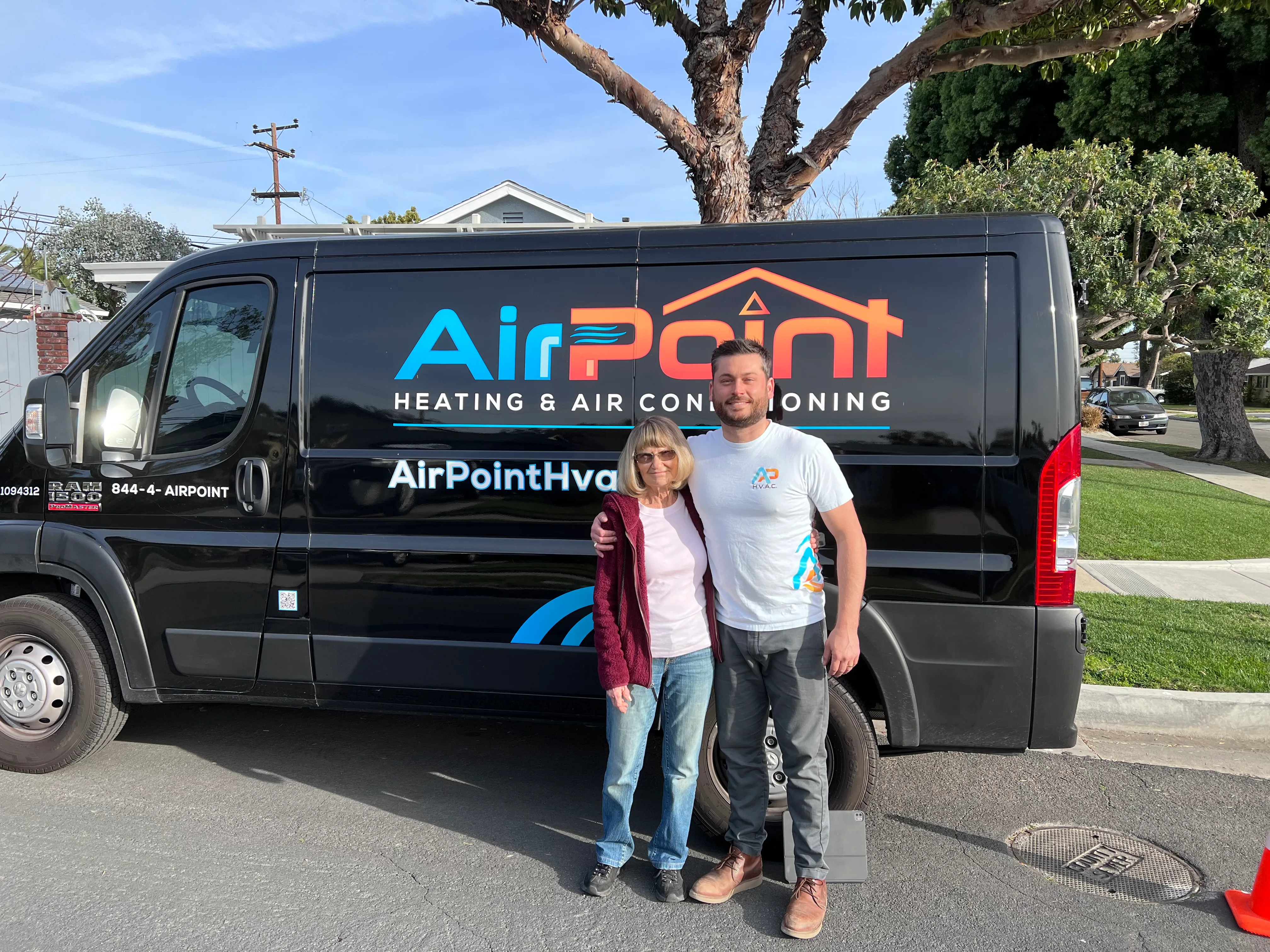
I recommend Air Point for your HVAC needs."