





Home Maintenance Tips: Troubleshooting a Burning Smell During Your Fall Heating Startup
Why Does My Heater Smell Like Burning on the First Cold Night?
When our Los Alamitos customers are searching for home maintenance tips and troubleshooting, dealing with a heating system that emits a sudden burning smell while failing to adequately warm the home during a mid-fall heating startup in October is often at the top of the list. You turn up the thermostat expecting a wave of cozy warmth, but instead, an alarming odor fills the hallways. It is perfectly natural to feel a spike of anxiety when you smell smoke or burning inside your house. The immediate instinct is to assume the worst—a severe fire hazard or a completely ruined furnace that requires emergency intervention.
However, at AirPoint Heating & Air Conditioning, we find that understanding the context of that first chilly evening can help you make a calm, informed decision. The core decision point every homeowner faces in this moment is distinguishing between harmless dust burn-off and a serious mechanical hazard. Modern HVAC systems, including integrated air conditioning systems, require proper seasonal transitions to operate safely and efficiently. If you are ever in doubt about the safety of your equipment or the nature of the odors it is producing, the absolute safest route is to schedule an HVAC consultation with a licensed professional.
In the following sections, we will walk through exactly what our technicians see happening inside your unit, what smells are perfectly normal, and what specific sensory signs mean you need to cut the power immediately. Knowing what to expect during this seasonal transition protects your home and prevents unnecessary panic.
The Mechanics of a Southern California Fall Heating Startup
To understand why your heater smells like it is burning, it is helpful to look at the mechanical sequence of a heating system coming online after months of total dormancy. The primary culprit behind this alarming mid-fall heating startup in October is simply the passage of time. In our experience serving Los Alamitos and the surrounding areas, Southern California's prolonged cooling season means that heating components remain dormant much longer than the national average. While homes in colder climates might only go a few months without using their heaters, systems in this region often sit completely idle for eight or nine months out of the year.
The Accumulation Phase: Throughout the long spring and summer, your HVAC system is continuously circulating air to cool your home. Even with a high-quality air filter in place, microscopic particles inevitably bypass the filter media. Dust, pet dander, lint, and common household particles settle on the internal components of your furnace or heat pump. Specifically, they coat the heat exchanger, the burners, and the electrical heating elements in a fine, invisible layer of organic debris.
The Burn-Off Phase: When the first cold night arrives and your thermostat signals for heat, the system initiates its startup sequence. The inducer motor starts, the igniter glows, and the gas valve opens, or the electric heating coils energize. Within seconds, the heat exchanger reaches temperatures of several hundred degrees. As this metal rapidly heats up, the layer of settled dust and dander literally bakes off the surface. This incineration process is what creates the dusty, slightly smoky smell that flows through your ductwork and out of your vents.
Setting Expectations: Because Southern California systems accumulate so much dust during their extended off-season, this initial burn-off odor can be quite pronounced. However, it is a completely normal mechanical sequence. You should expect this normal burn-off odor to last typically 30 to 60 minutes. Once the accumulated debris has been safely incinerated, the smell will naturally dissipate, leaving you with clean, odorless warm air.
Normal Dust Burn-Off vs. Hazardous Electrical Smells
Our team at AirPoint Heating & Air Conditioning believes in providing transparent, expert guidance because it builds trust by telling homeowners exactly when they do NOT need to call us for service versus when they are facing a true safety hazard. You do not have to be an HVAC technician to diagnose the difference between a harmless seasonal quirk and a dangerous electrical short. The key lies in paying close attention to the specific sensory profile of the odor and how your system is performing overall.
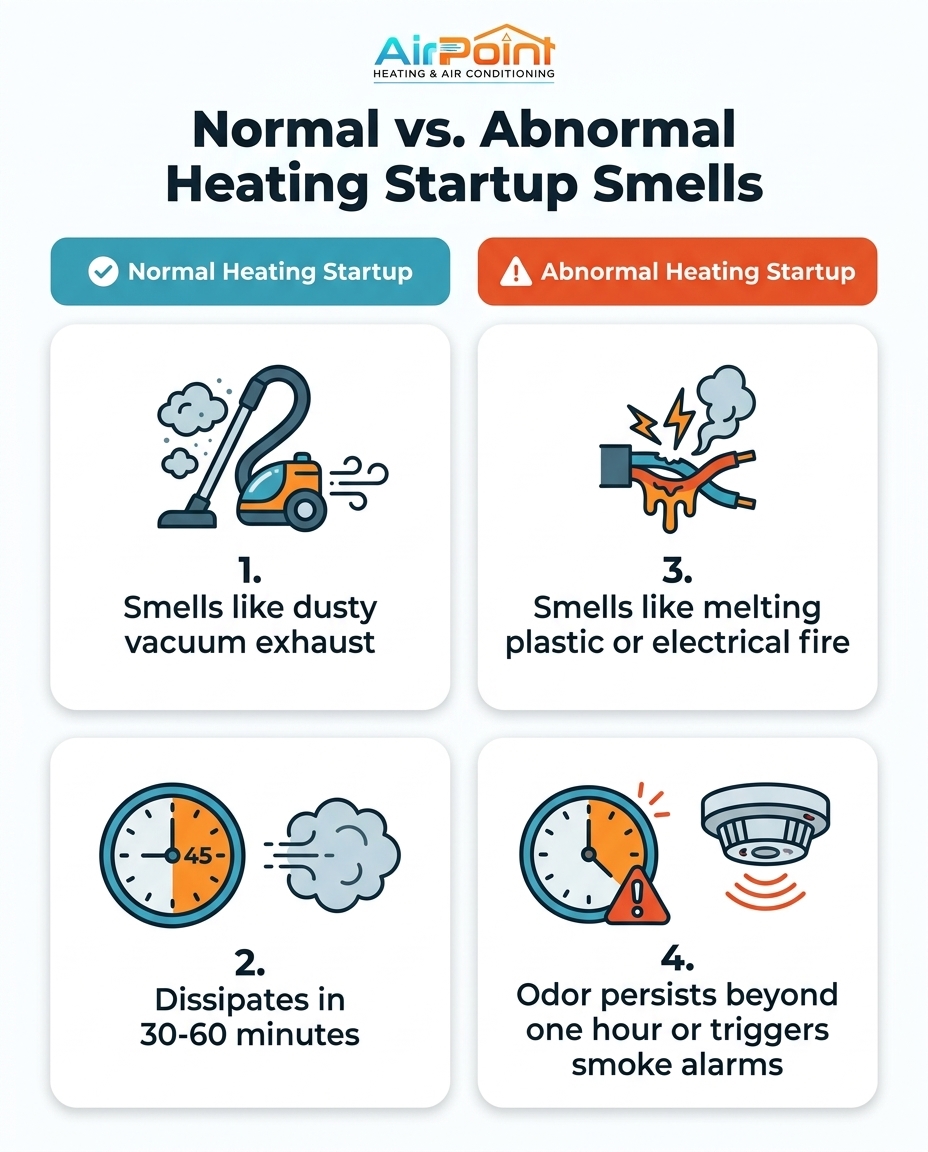
Normal dust burn-off has a very distinct scent. It smells remarkably similar to the exhaust of a vacuum cleaner that hasn't been emptied in a while, or like a space heater that has just been pulled out of a dusty closet. It is a dry, earthy smell. In contrast, a hazardous mechanical failure produces a sharp, acrid smell. If you detect the scent of burning plastic, melting electrical wire, or a metallic ozone odor, this is not dust. This indicates that wire insulation is melting or internal components are overheating dangerously.
Furthermore, performance is a major indicator of safety. If you have the thermostat set to 68°F but indoor temp remaining stagnant while the system produces a strange smell, it strongly indicates a mechanical failure, not just a dirty unit. A heater that is functioning properly will raise the ambient temperature of the room even while burning off dust. If the air coming from the vents is cold or weak, the system is struggling and likely overheating internally.
Finally, it is crucial to recognize the role of clogged air filters in exacerbating these odors. A severely dirty filter restricts the vital airflow needed to keep the furnace from overheating. When airflow is blocked, the internal temperature of the unit spikes, making the initial dust burn-off smell much harsher and potentially triggering the system's high-limit safety switch to shut the burner down entirely.
• Odor Type — Normal Dust Burn-Off: Dry, dusty, like a warm vacuum cleaner — Hazardous Mechanical Issue: Acrid, fishy, melting plastic or electrical wire
• Duration — Normal Dust Burn-Off: Fades completely within 30 to 60 minutes — Hazardous Mechanical Issue: Persists for hours or worsens over time
• Temperature Response — Normal Dust Burn-Off: Home warms up steadily to thermostat setting — Hazardous Mechanical Issue: System runs continuously but home remains cold
• Smoke Alarms — Normal Dust Burn-Off: Rarely triggered unless dust buildup is extreme — Hazardous Mechanical Issue: May trigger alarms due to actual smoke or overheating
Troubleshooting Checklist: When to Let It Run and When to Shut It Down
When you encounter a burning smell, taking a structured approach to observation can keep your home safe without requiring you to attempt any dangerous DIY repairs. The goal here is to evaluate the system's status from the outside. Never open the furnace cabinet or attempt to inspect live electrical or gas components yourself. We recommend following these actionable, safety-focused steps to determine your next move.
1. Step 1: Check the air filter and replace it if it is heavily soiled. Before you even turn the system on for the first time, locate your return air filter. If it is coated in a thick layer of gray dust, it must be replaced. A blocked filter forces the blower motor to work harder and restricts the airflow that cools the heat exchanger. This restriction traps heat inside the unit, making the burn-off process smell much more intense and increasing the risk of mechanical strain.
2. Step 2: Monitor the system for the first 30 minutes with windows slightly open. If the filter is clean and the smell is definitively that of dusty burn-off, let the system run. Open a few windows slightly to provide ventilation and allow the trapped odors to escape the house. Stay home during this initial test run—never turn on a dormant heater and leave for the day. Close observation during this first half-hour is critical.
3. Step 3: Check the vents for active warm airflow. Walk around your home and place your hand near the supply registers. You should feel a strong, steady stream of noticeably warm air. If the airflow is weak, lukewarm, or entirely cold despite the system running, this indicates a failure in the heating sequence, such as a broken igniter, a tripped limit switch, or a failing blower motor.
4. Step 4: Immediately shut off the system at the thermostat and breaker if electrical smells persist. If at any point during your observation the smell shifts from dusty to acrid, if you see visible smoke coming from the vents, or if your smoke alarms trigger, abort the test. Turn the thermostat to the "Off" position immediately. For added safety, locate your home's electrical panel and flip the dedicated breaker for the HVAC system to cut all power. Once the system is safely shut down, call a licensed professional.
What to Do If an Aging System is the Culprit
Sometimes, a burning smell is not merely the result of seasonal dust accumulation; it is a glaring symptom of a failing, outdated HVAC system that requires a full replacement rather than a simple repair. Aging units present significant safety and efficiency risks that go far beyond a temporary odor. As a furnace or heat pump reaches the end of its 15-to-20-year lifespan, internal components begin to degrade fundamentally. Leaky compressors, deteriorating coolant pipes, and worn-out blower motors can all produce mechanical friction and burning smells. Most concerning of all is a cracked heat exchanger in a gas furnace, which can allow dangerous carbon monoxide to mix with your home's breathing air.
A pattern we see often on our service calls highlights how comprehensive these aging issues can be. In one recent Los Alamitos scenario, our team helped a homeowner who was dealing with an old, inefficient setup where the air ducts were severely degraded and the attic insulation was failing to retain any heat. The ultimate solution involved completely replacing the old air ducts and installing fresh attic insulation alongside the new equipment. This comprehensive approach ensured that the new system could operate without the strain that caused the old unit to fail.
Evaluating Your Upgrade Options
When you are faced with a failing heater, you must weigh the cumulative cost of constant, expensive repairs against the long-term value of a full system replacement. It is often more cost-effective to invest in new equipment than to repeatedly patch a unit that is actively degrading. Furthermore, replacing a failing heater often means upgrading the entire integrated HVAC system. Because heating and cooling components share the same blower motor and ductwork, matching your heating and cooling efficiency ratings is essential for the system to function correctly and last its full intended lifespan.
To understand the financial impact of a modern system, we highly recommend evaluating the long-term energy savings using a SEER calculator. This tool helps you visualize how much less energy a new unit will consume compared to your outdated model. For homeowners in this region, there are significant benefits to upgrading to 16 SEER in Southern California. A higher efficiency rating ensures that your system can handle the intense summer heat while providing safe, reliable, and odor-free warmth during the cooler winter months, maximizing your year-round comfort.
Managing Replacement Costs and Financial Planning
Realizing that your heating system is unsafe and requires a full replacement can be a stressful moment. An unexpected HVAC replacement is undeniably a significant home investment, especially when the weather is beginning to turn cold and you need reliable heating immediately. However, there are numerous resources available to help you manage this transition smoothly and affordably, ensuring that you do not have to compromise on your family's safety or comfort.
First, it is important to explore available incentives. Generally applicable energy rebates or federal tax credits may be available for high-efficiency upgrades, particularly if you are transitioning to advanced heat pump technology or systems that meet strict energy guidelines. Because these programs frequently update their terms and qualifications, it is always wise to verify current programs with your local utility provider or a qualified tax professional to see what benefits apply to your specific installation.
Beyond rebates, utilizing HVAC financing options can make a necessary safety upgrade highly manageable. Flexible financing allows you to spread the cost of a new, reliable system over time, rather than depleting your savings all at once. This means you can address dangerous mechanical failures and burning smells immediately, restoring peace of mind without delaying your comfort.
Preventative Maintenance: Avoiding Startup Surprises Next Season
The most effective way to handle a frightening fall heating startup is to prevent it from happening in the first place. Shifting your focus to proactive care demonstrates how routine inspections prevent alarming startup smells and ensure complete system reliability. The value of a comprehensive preventative system check before the heavy heating season begins cannot be overstated. When a licensed technician inspects your system in the early fall, they identify and resolve the small issues that eventually lead to major odors and breakdowns.
During a professional tune-up, the technician thoroughly cleans the internal components of your furnace or heat pump. By meticulously removing the thick layers of dust, lint, and pet dander from the heat exchanger and burners, they eliminate the fuel that causes severe burn-off smells. They also check all electrical connections to ensure wires are tight and not at risk of melting or shorting out, which prevents the hazardous plastic odors discussed earlier.
The benefits of routine maintenance extend to the overall performance and acoustics of your system as well. In another recent service call, our technicians worked with a homeowner who was dealing with an extremely loud AC unit that emitted a high-pitched noise and suffered from poor airflow. A thorough diagnostic check revealed that the system was starving for air. By installing proper intake vents and improving the duct routing, the system's efficiency was restored, resulting in evenly distributed comfort and quiet operation. The same principle applies to your heating system: ensuring clean components and unrestricted airflow guarantees that your heater will run smoothly, quietly, and safely all season long, providing you with ultimate peace of mind.
Ensure Your Home's Safety and Comfort This Fall
Navigating the transition into the cooler months should be a comfortable experience, not a stressful one. To summarize, while brief, dusty odors are a normal part of the first heating cycle, persistent burning smells, acrid plastic odors, or a lack of actual heat require immediate professional attention. You should never have to guess whether your home's heating equipment is operating safely.
At AirPoint Heating & Air Conditioning, we encourage you to prioritize your family's safety and comfort above all else. Having a clear, definitive checklist of normal versus abnormal startup symptoms gives you the confidence to either let the system run its course or shut it down before damage occurs. If you have any doubts about your system's performance, or if you want to ensure it is thoroughly cleaned before the cold weather sets in, do not hesitate to schedule an HVAC consultation. A proactive approach is the best way to guarantee a warm, safe, and odor-free home this fall.
Frequently Asked Questions
Is it normal for a heater to smell like burning dust?
Yes, it is very common during the first few uses of the season. Dust, pet dander, and household debris settle on the internal heating elements over the long summer months. When the heater turns on and the metal components heat up, these particles burn off, creating a temporary, dusty odor that spreads through the vents.
How long should a heater smell like burning dust?
A normal dust burn-off smell should dissipate entirely within 30 to 60 minutes of continuous operation. If the odor continues well past the first hour, or if it grows significantly stronger, it may indicate a clogged air filter or a mechanical issue. You should shut the system down if the smell persists beyond this normal timeframe.
When is a burning smell from a heater dangerous?
A burning smell becomes dangerous if it resembles melting plastic, electrical wires, or a metallic ozone scent. Additionally, if the smell is accompanied by visible smoke coming from the vents, sparking sounds, or your home's smoke alarms triggering, it is a severe safety hazard. You must turn off the power at the breaker immediately and call a professional.
What should I do if my heater smells like burning plastic?
You should immediately turn off the heating system at the thermostat and switch off its dedicated circuit breaker at your electrical panel. Do not attempt to run the system again to "test" it or see if the smell goes away. Call a licensed HVAC professional to safely inspect the internal wiring and components for melting or electrical shorts.
Can a dirty air filter cause a burning smell in my house?
Yes, a severely clogged air filter restricts vital airflow through your heating system. This lack of circulating air causes the internal components, particularly the heat exchanger, to overheat rapidly. This overheating can produce a noticeable burning smell and potentially cause permanent damage to the equipment if the limit switch fails to shut it down.
Why is my heater running but the indoor temperature isn't rising?
If your heater is running constantly without warming the room, it usually points to restricted airflow, a malfunctioning thermostat, or a failing internal heating element. This condition forces the system to overwork, often leading to overheating and the burning smells associated with mechanical strain. A professional diagnostic is required to pinpoint the exact point of failure.
Other Blogs
Latest Blog Posts
Home Maintenance Tips and Troubleshooting: Navigating Your First Fall Heater Startup
Common Homeowner Questions Answered: Is That Fall Heater Burning Smell Normal?
Common Homeowner Questions Answered: Why Does My Heater Smell Like Burning?

Customer Testimonials



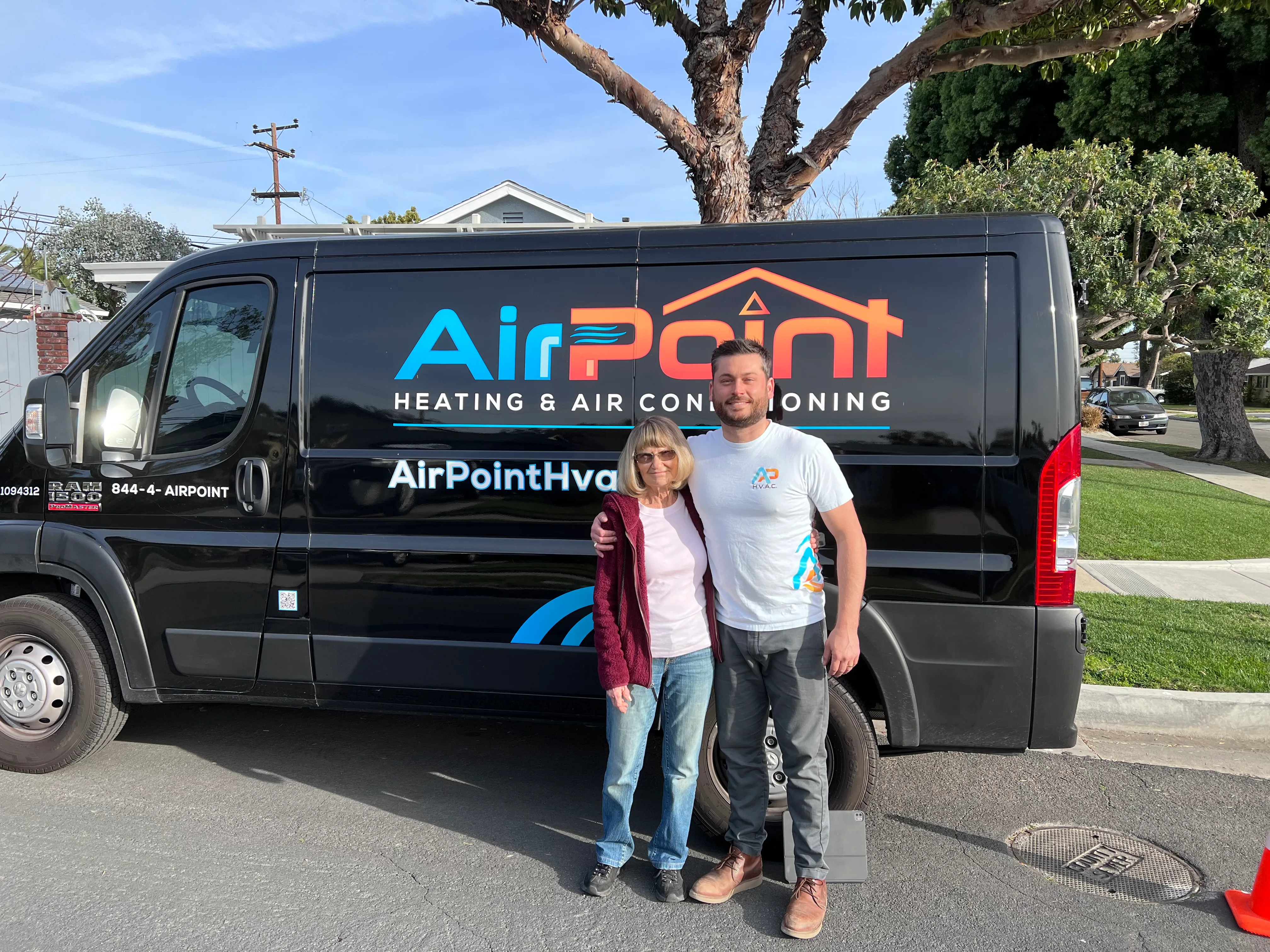
I recommend Air Point for your HVAC needs."