





Why Does My Heater Smell Like Burning Dust? A Mid-Fall HVAC Repair Guide
Are You Prepared for the Mid-Fall HVAC Transition?
Have you noticed strange odors or unusual noises when turning your heating system on for the first time after months of inactivity? As you search for reliable home maintenance tips and troubleshooting steps to navigate the seasonal shift, you are not alone. Safely transitioning a residential HVAC system from summer cooling to winter heating is a common challenge, especially in areas like Los Alamitos where mild winters mean heating units often sit dormant for the better part of the year. The core decision you face right now is understanding the precise boundary between safe homeowner preparation and the point where mandatory professional inspections become necessary to protect your property.
Because Southern California weather can be unpredictable, your climate control systems endure unique stresses. When a furnace or heat pump has been powered down since early spring, firing it up requires more than just flipping a switch on the thermostat. Dust settles, electrical connections can loosen, and moving parts lose their lubrication. Securing professional HVAC services ensures that this critical first start-up goes smoothly, keeping your indoor environment safe and comfortable as the cooler nights approach.
Demystifying the First Turn-On: Why Dormant Heaters Smell
One of the most frequent concerns homeowners experience in mid-fall October is a distinct burning dust smell when the heater kicks on for the first time. To understand why this happens, you have to look at the science of your system's internal components. Throughout the long coastal cooling season, your furnace's heat exchangers and heating elements sit completely inactive. During this time, household dust, pet dander, and airborne particles naturally settle on these cold metal surfaces.
When the dry Santa Ana winds blow through the region, they deposit even heavier layers of dust into your home's ventilation system. The moment you activate the heating cycle, the internal burners or electrical coils heat up rapidly, literally incinerating the accumulated debris. This process creates the familiar "burning dust" odor that filters through your living spaces. While this scent can be alarming, a brief burning smell lasting 15 to 30 minutes is typically a normal part of the seasonal transition.
However, persistent odors that last beyond the first cycle indicate a much deeper problem that requires professional intervention. The Environmental Protection Agency (EPA) strongly recommends annual professional inspections for all fuel-burning equipment. Skipping this critical step can lead to severe safety hazards, including the risk of carbon monoxide exposure from cracked heat exchangers.
Normal Odors vs. Warning Signs
Knowing the difference between harmless dust burn-off and a critical mechanical failure can save you from unexpected breakdowns. Here is a breakdown of what to monitor during that initial start-up:
• Faint burning dust — Typical Cause: Normal accumulation on heat exchangers incinerating upon start-up. — Required Action: Monitor for 15-30 minutes. Open windows if necessary.
• Melting plastic or rubber — Typical Cause: Overheating electrical wires or a failing blower motor belt. — Required Action: Turn off the unit immediately and call a professional.
• Rotten eggs or sulfur — Typical Cause: A potential natural gas leak near the furnace combustion chamber. — Required Action: Evacuate the home, call the gas company, and request emergency service.
• Musty or damp smells — Typical Cause: Mold or mildew growth inside the ductwork or on the AC evaporator coil. — Required Action: Schedule a comprehensive system cleaning and inspection.
The quick fix: If you detect any smell resembling melting plastic, electrical ozone, or sulfur, do not attempt to investigate the internal wiring or gas valves yourself. Shut the system down at the thermostat and the breaker, and contact a licensed technician immediately.
Safe Homeowner Prep vs. Professional Inspection Tasks
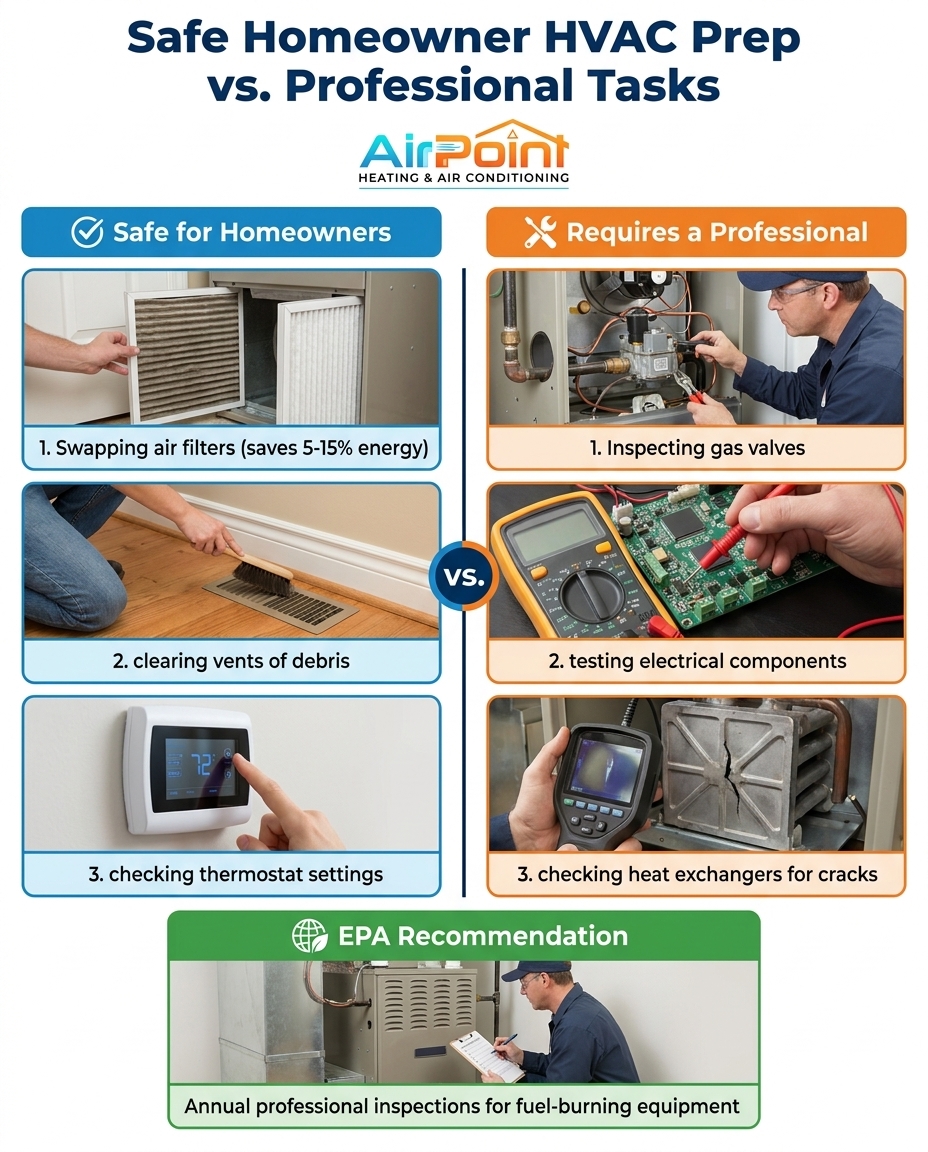
Maintaining your system requires a clear understanding of what you can safely handle and what must be left to a certified expert. Well-intentioned homeowners in Los Alamitos sometimes attempt complex repairs, inadvertently causing expensive damage or creating severe safety risks. Establishing a strict boundary between basic upkeep and professional diagnostics is the smartest way to protect your investment.
According to the Department of Energy (Energy.gov), simply replacing a dirty, clogged filter with a clean one can lower your system's energy consumption by 5% to 15%. This is the most impactful task you can perform on your own. However, opening the sealed furnace cabinet, adjusting gas manifold pressures, or testing high-voltage capacitors are strictly off-limits for anyone without professional licensing.
Here is a clear checklist to guide your seasonal preparation:
• Tasks Safe for Homeowners:
— Swapping air filters: Check filters monthly and replace them at least every 90 days (or more frequently if you have pets or during heavy Santa Ana wind events).
— Clearing vents and registers: Ensure all return and supply vents are unblocked by furniture, rugs, or drapes to maintain proper airflow.
— Testing thermostat settings: Switch the thermostat from cooling to heating and verify that the system responds accurately.
— Cleaning the outdoor unit perimeter: Remove dry leaves, branches, and debris from around the exterior condenser to allow for optimal air circulation.
• Tasks Requiring a Licensed Professional:
— Inspecting heat exchangers: Checking for microscopic cracks that could leak carbon monoxide into your living space.
— Testing electrical components: Measuring voltage and amperage on motors, testing capacitors, and tightening wire connections.
— Calibrating gas valves: Ensuring the correct fuel-to-air ratio for safe, efficient combustion.
— Checking safety controls: Testing the high-limit switch, flame sensor, and pressure switches to guarantee the system will shut down safely in an emergency.
Addressing Lingering Cooling Needs During Autumn Heatwaves
Mid-fall October weather in Southern California rarely follows a predictable script. It is entirely common to experience chilly mornings that require heating, followed by intense, late-season heatwaves that demand robust air conditioning in the very same week. This fluctuating climate means your cooling needs do not vanish the moment the calendar shifts to autumn, making dual-system reliability an absolute necessity.
If your air conditioner struggled to keep up during the peak summer months—running constantly, failing to reach the set temperature, or making unusual noises—those issues will not magically resolve themselves while the unit sits dormant. Letting a struggling system sit broken until the following spring is a recipe for disaster. Moisture can accumulate in compromised components, and minor refrigerant leaks can completely drain the system over the winter, leading to a much more expensive fix later.
Addressing lingering cooling problems now ensures that you aren't caught off guard when a random 90-degree day hits in November. Whether you need a simple refrigerant top-off, a thorough coil cleaning, or comprehensive air conditioning repair, handling these tasks during the fall transition protects the lifespan of your equipment and guarantees your home remains comfortable regardless of the erratic coastal weather patterns.
When to Call an Expert for Heating System Troubleshooting
Recognizing the critical failure points that necessitate immediate professional intervention is key to maintaining a safe home. While a temporary dust smell is harmless, other symptoms point directly to mechanical or electrical failures that require expert diagnostics. Ignoring these warning signs can lead to compromised indoor air quality, severe safety risks, and potential total system failure.
One customer reached out in the spring when their AC stopped working entirely. A technician provided an honest assessment of needed repairs, showing the customer exactly what was required to get the equipment working again, resulting in trustworthy and reasonably priced service. The exact same level of diagnostic rigor and transparency applies to heating system troubleshooting in the fall. A professional evaluation identifies hidden inefficiencies in older units, ensuring that small problems are corrected before they escalate into mid-winter emergencies.
If your system is severely outdated or unsafe to operate, a technician can outline your replacement options. Keep in mind that generic federal tax credits or local utility rebate programs may be available for upgrading to high-efficiency systems like modern heat pumps. (Always verify current program availability and eligibility requirements with your utility provider or a qualified tax professional.) Furthermore, having access to 24/7 emergency service provides a crucial safety net when unexpected breakdowns occur during the first true cold snap of the season in Los Alamitos.
Signs Your Furnace Needs Immediate Attention
Do not hesitate to schedule a professional diagnostic visit if you observe any of the following behaviors during your initial system test:
• System fails to ignite: If you hear a clicking sound but the burners do not light, you may have a faulty ignitor, a dirty flame sensor, or a disrupted gas supply.
• Short-cycling: If the heater turns on for only a few minutes before shutting off abruptly, the system is likely overheating. This is often caused by a severely clogged filter or a failing blower motor triggering the high-limit safety switch.
• Yellow pilot light or burner flame: A healthy gas flame should burn crisp and blue. A yellow or wavering flame indicates incomplete combustion, which can produce dangerous levels of carbon monoxide.
• Loud banging or grinding noises: Banging upon ignition (often called "delayed ignition") means gas is building up before igniting, which can crack the heat exchanger. Grinding sounds typically point to failing bearings in the blower motor.
• Thermostat disconnects: If the thermostat goes blank or provides wildly inaccurate temperature readings, the issue could stem from compromised low-voltage wiring or a failing control board inside the furnace.
The Impact of Dry Winds on Overall HVAC Efficiency
Regional weather patterns play a massive role in the health and longevity of your climate control equipment. In mid-fall October, the continuous dry Santa Ana winds push massive amounts of dust, dirt, and organic debris directly into your outdoor condenser unit and, through negative pressure, into your indoor ductwork. This environmental stress puts an immense burden on aging HVAC components, forcing the system to work much harder to achieve the desired indoor temperature.
When the outdoor condenser coils become coated in a thick layer of wind-blown dirt, the system's ability to transfer heat is severely restricted. This forces the compressor to run longer cycles, increasing wear and tear on vital parts like coolant pipes and electrical contactors. Inside the home, wind-driven dust infiltrates leaky return ducts, clogging the air filter prematurely and coating the delicate indoor blower wheel with grime.
In one instance during the spring, a customer found that their AC unit needed to be replaced entirely, contrary to initial assessment. The technician counseled and guided the customer, scheduling service quickly and performing the AC replacement with care for the home environment. Catching wind-related wear and tear early through preventative maintenance can often prevent these full-system overhauls. A comprehensive professional tune-up entails deep-cleaning the coils, checking electrical connections, testing refrigerant levels, and ensuring all moving parts are properly lubricated. Investing in regular AC tune-ups and heating inspections restores lost efficiency, lowers your monthly utility bills, and ensures your system operates safely through the most demanding weather conditions.
Frequently Asked Questions About HVAC Repair and Maintenance
Why does my heater smell when I turn it on for the first time?
The burning dust smell occurs because particles that settled on the heat exchangers during the summer are being incinerated. This is a normal part of the seasonal transition in Los Alamitos. The odor typically dissipates within 15 to 30 minutes of continuous operation. If the smell resembles melting plastic, electrical burning, or rotten eggs, turn the system off immediately and call a professional, as these indicate serious mechanical or gas-related failures.
Is it safe to troubleshoot my own furnace?
Homeowners can safely perform basic maintenance like changing air filters, replacing thermostat batteries, and clearing blocked vents. However, it is never safe for an unlicensed individual to troubleshoot internal electrical components, adjust gas valves, or inspect the heat exchanger. Opening the furnace cabinet exposes you to high voltage and potential gas leaks, making professional diagnostics mandatory for internal repairs.
What happens if a furnace sits unused for months?
When a heating system sits dormant for an extended period, dust accumulates heavily on the burners, electrical connections can loosen due to thermal expansion and contraction, and moving parts can lose their lubrication. This prolonged inactivity is why the first start-up of the season is the most likely time for a breakdown. Scheduling a pre-winter inspection ensures all components are cleaned, tightened, and tested before they are subjected to heavy daily use.
What HVAC maintenance can I do myself?
The most important DIY maintenance task is replacing your air filter every 30 to 90 days, which protects the blower motor and maintains proper airflow. You can also ensure that all indoor supply and return registers remain open and unobstructed by furniture. Outdoors, you can safely clear away dry leaves, branches, and debris from the perimeter of the condenser unit to ensure the system can breathe properly.
When should I call a professional for furnace repair?
You should call a licensed technician immediately if your system fails to ignite, short-cycles rapidly, produces loud banging or grinding noises, or emits persistent burning or sulfur odors. Additionally, if you notice a yellow or wavering burner flame instead of a crisp blue one, professional intervention is required to address potential carbon monoxide risks. Never ignore these warning signs, as they can lead to total system failure.
How do dry autumn winds affect my HVAC system's performance?
Dry autumn winds, like the Santa Ana winds, blow heavy amounts of particulate matter into the outdoor condenser coils and infiltrate indoor ductwork. This debris acts as an insulating blanket on the coils, severely restricting heat transfer and forcing the compressor to work harder. Over time, this wind-driven dust reduces overall system efficiency, increases energy consumption, and accelerates wear and tear on critical internal components.
Secure Your Peace of Mind Before Winter Arrives
Understanding exactly what to check and knowing precisely when to call a professional ensures a safe, comfortable, and stress-free winter season. In mid-fall October, prioritizing a pre-winter inspection for your dormant heating system is the most effective way to prevent unexpected breakdowns and protect your home from potential safety hazards. Our 100% satisfaction guarantee provides the ultimate reassurance, ensuring that every diagnostic check and repair meets the highest standards of quality. Don't wait for the first freezing night to discover a problem—take proactive steps today and schedule HVAC service to secure your peace of mind.
Other Blogs
Latest Blog Posts
HVAC Repair: Decoding Fall Furnace Smells and Startup Issues
Home Maintenance Tips and Troubleshooting: Decoding Fall Heating Startup Symptoms

The Truth About Smart Thermostat Auto-Switch Features During Unpredictable Fall Weather

Customer Testimonials



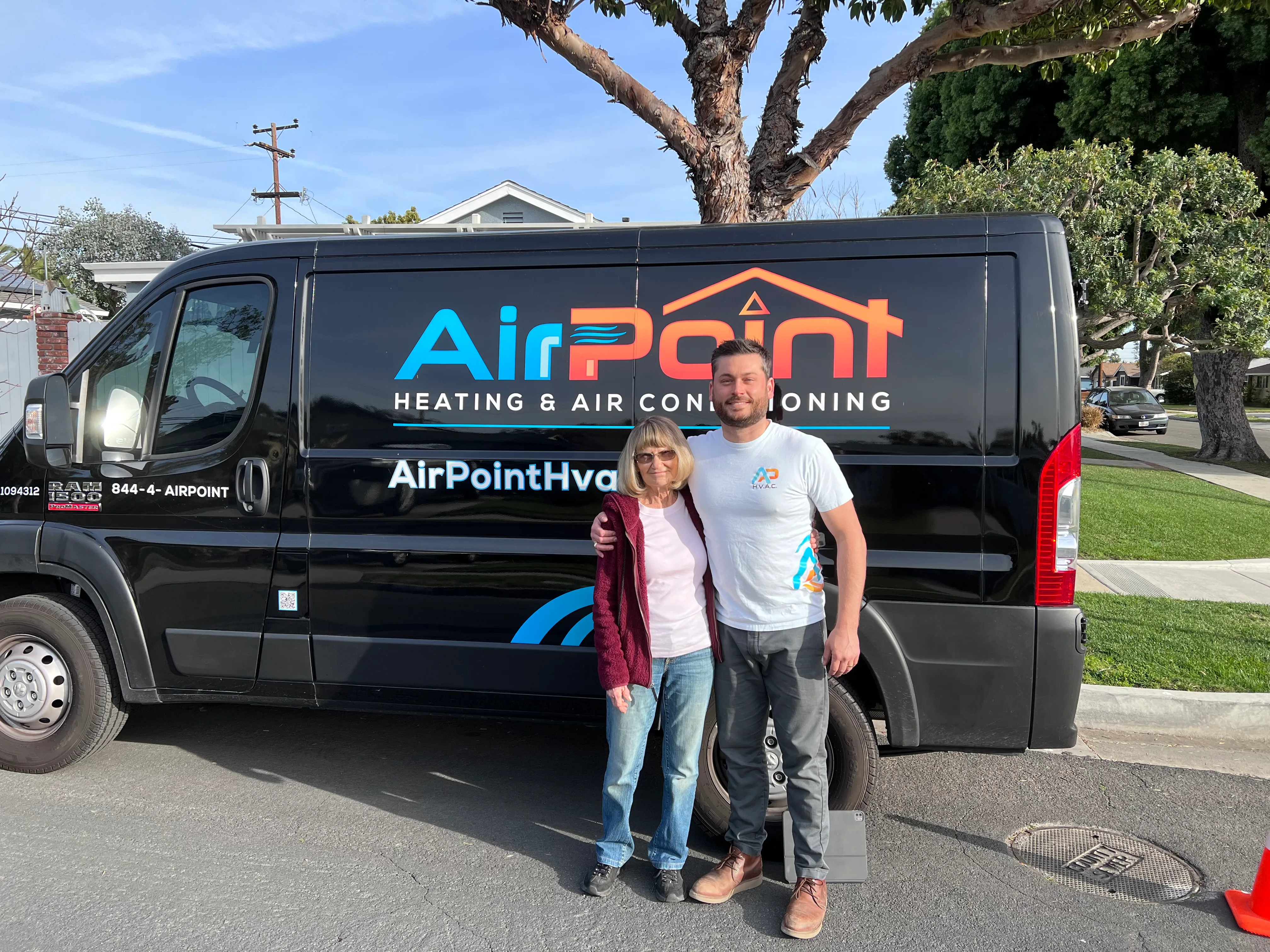
I recommend Air Point for your HVAC needs."