




HVAC Settings for Winter Vacation: Why 62 Degrees is Ideal for Thanksgiving Travel
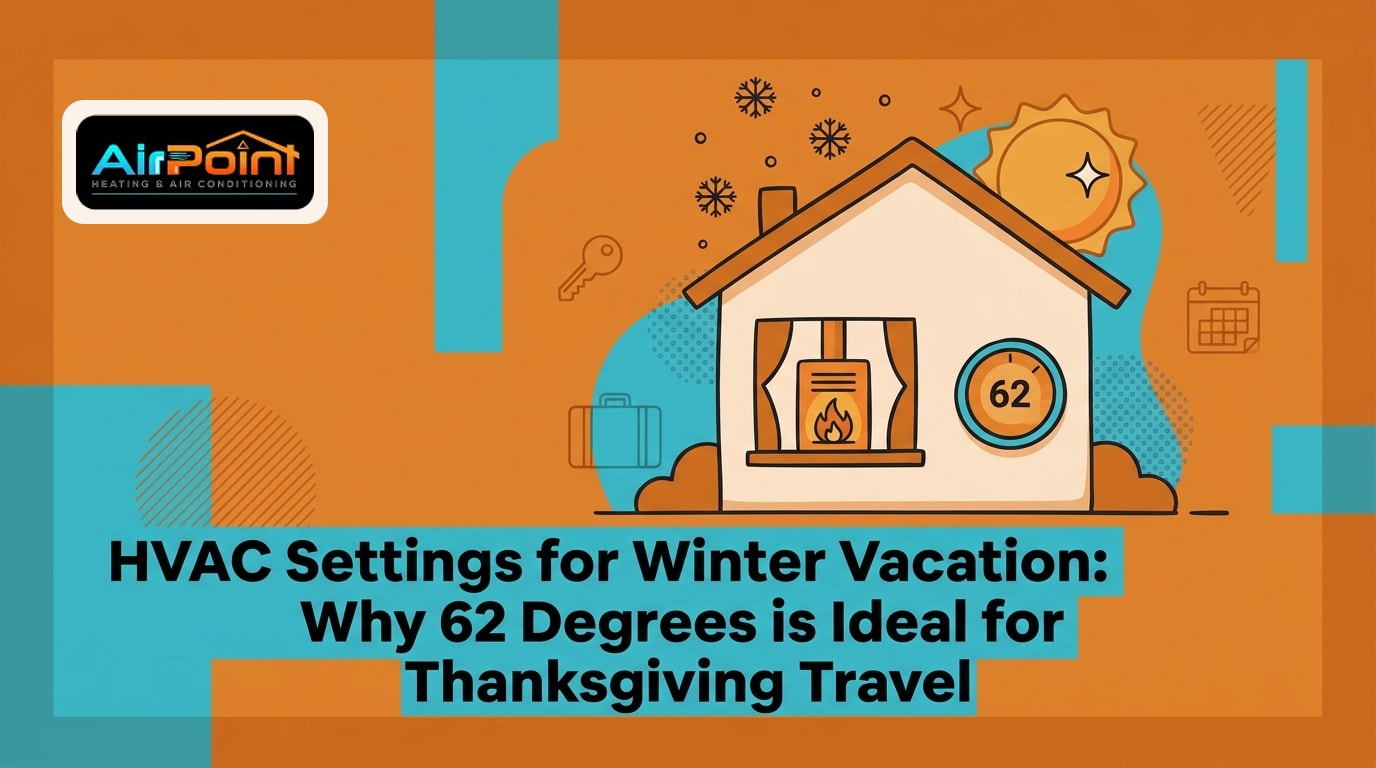
Preparing Your Home's Climate for Thanksgiving Travel
Thanksgiving is right around the corner, and as you finalize your itinerary, figuring out the right hvac settings for winter vacation is likely the last thing on your mind. You are busy packing bags, stopping the mail, and making sure all the doors are locked. Yet, as you grab your keys and head for the door, you probably find yourself staring at the thermostat. Leaving your home empty for the holidays introduces a common dilemma: you want to save as much energy as possible while the house is vacant, but you also need to ensure the interior remains protected from sudden weather shifts.
During Thanksgiving travel week, the weather can be highly unpredictable. The decision usually comes down to whether you should turn the system off entirely, leave it at your normal daily temperature, or choose a specific setback number. When you rely on our team at AirPoint Heating & Air Conditioning for professional heating services, you quickly learn that generic, nationwide advice often fails to account for our specific regional climate. Let's look at exactly how to set your thermostat so you can balance maximum energy savings with ultimate home protection while you are away.
Why the National '50-Degree Rule' Fails in Southern California
If you search online for advice on setting your thermostat before a trip, you will almost universally find recommendations telling you to set the temperature to 50 or 55 degrees. This is a long-standing national rule of thumb, but it is heavily biased toward climates that experience harsh, freezing winters. In those regions, the primary goal of running a heater while on vacation is simply to keep the indoor temperature just high enough to prevent water pipes from freezing and bursting.
The Frozen Pipe Myth
In our years of serving Los Alamitos and across Southern California, our technicians have seen firsthand that our climate requires a completely different approach. National advice assumes deep, sustained freezes. However, our local winter weather rarely, if ever, reaches pipe-bursting temperatures. During late fall and early winter, our nighttime temperatures typically only drop into the low 50s. A deep freeze is practically non-existent. Setting your thermostat to 50 degrees in this region means your heater will likely never turn on at all. While that might sound like a great way to save energy, it completely ignores how homes actually function and breathe in our specific microclimate.
The Cost of Extreme Setbacks
The recovery penalty: When you set your thermostat drastically low, you allow the indoor temperature to gradually match the outdoor chill. Your home loses all of its thermal mass—meaning the walls, floors, and furniture become just as cold as the air. When you finally return home and bump the thermostat back up to a comfortable 70 degrees, your heating system has to run continuously for hours to bridge that massive gap and reheat the physical structure of the house.
Unnecessary wear and tear: Setting the thermostat too low means the heater runs continuously to recover the temperature when you return. This sudden, intense strain can cause unexpected wear and tear on the unit. Instead of cycling on and off naturally, the blower motor and heat exchanger are pushed to their limits, which can eventually lead to premature breakdowns.
The Sweet Spot: Why 62 Degrees is the Ideal Temperature
Based on the hundreds of pre-winter tune-ups our team performs each year, we have found that for a winter vacation in a mild climate, 62 degrees is the optimal setting. This specific temperature provides the definitive answer to balancing energy efficiency with home preservation. The U.S. Department of Energy recommends setting back thermostats by 7 to 10 degrees from their normal settings to achieve optimal energy savings without overtaxing the system upon return. If your normal comfortable temperature is 70 or 72 degrees, a 10-degree setback puts you right at 62 degrees.
Energy Savings Without System Strain
Maintaining a 62-degree baseline is the smartest strategy for several reasons. It maximizes your energy savings while preventing your home from turning into an icebox.
1. Prevents daytime cycling: During a mild, 65-degree afternoon, a 62-degree setting ensures your heater stays completely off. You will not waste a single watt of energy while the sun is naturally warming your house.
2. Protects against the nighttime chill: When the sun goes down and temperatures dip into the 50s, the heater will kick on just enough to maintain that 62-degree baseline. It only runs during the coolest parts of the night.
3. Ensures a fast, safe recovery: When you walk through the door after your trip, your system only has to raise the temperature by 8 to 10 degrees. This is a normal workload that your system can handle quickly and efficiently, restoring your comfort in a fraction of the time.
Managing Coastal Humidity While Your House is Sealed
Temperature is only half of the equation when you leave your home empty. The secondary climate concern—which is highly relevant to coastal Southern California homes—is managing indoor humidity and stagnant air. Our technicians frequently help homeowners deal with a persistent coastal marine layer that introduces significant moisture into the air, even in late fall.
When you lock up your house, close all the windows, and leave for a week, you are sealing that moisture inside. A house with no air circulation for days or weeks becomes a breeding ground for stale air. The moisture from the marine layer settles into your carpets, upholstery, and drapes. Without the HVAC system running to filter and condition the air, the indoor environment quickly becomes stuffy and uncomfortable.
Preventing Stale Air and Odors
This lack of ventilation leads to musty smells upon your return. Maintaining a moderate baseline temperature like 62 degrees helps manage this indoor moisture because it ensures the system cycles on periodically, pulling air through the filter and removing dampness. Proper HVAC settings guarantee that your home gets periodic air circulation. If your thermostat allows it, consider running the fan on a schedule—such as 15 minutes every hour—to keep the air fresh. For comprehensive moisture and airflow management, exploring dedicated indoor air quality solutions can keep your home's atmosphere balanced and healthy year-round, even when it is sealed up tight.
Should You Just Turn Your HVAC System Completely Off?
We often see homeowners tempted to just flip the system completely off to save maximum energy. After all, an idle system uses zero electricity or gas. However, turning your system completely off leaves your home vulnerable to sudden temperature drops and severe humidity spikes.
When the system is off, your home has no defense against the changing weather outside. If an unexpected cold front moves in, your home's interior will drop right along with it. Furthermore, turning it off completely creates a massive energy spike when you return. The energy required to reheat a completely cold house often negates the pennies you saved by turning the system off in the first place.
• System Turned Completely Off — Energy Usage: Zero while away — Indoor Air Quality Risk: High (stagnant air, trapped coastal moisture) — System Recovery Effort: Extreme (runs continuously for hours to reheat thermal mass)
• Setback to 62 Degrees — Energy Usage: Minimal (only runs on cold nights) — Indoor Air Quality Risk: Low (periodic circulation filters the air) — System Recovery Effort: Moderate (quick, efficient return to normal comfort)
A moderate setback is always better than turning the system off entirely. Keeping the system active at a lower temperature protects the physical structure of your home, keeps the air moving, and protects the mechanical components of your heater from the shock of a massive recovery cycle.
Pre-Trip HVAC Checklist for Ultimate Peace of Mind
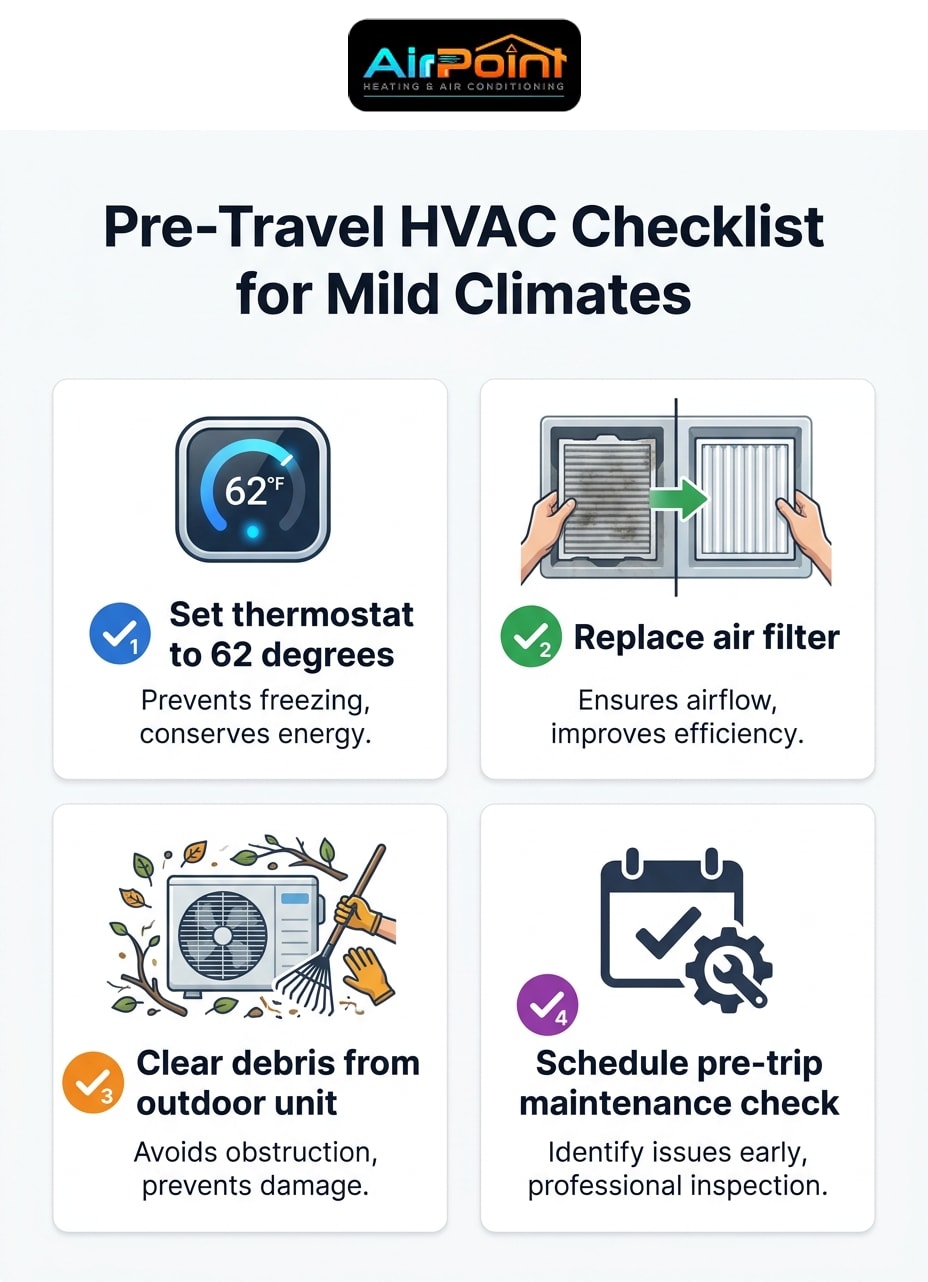
Before you head out for Thanksgiving travel week, our team recommends taking a few proactive steps that can save you from returning to an uncomfortable home or a broken heater. Taking ten minutes to prep your system ensures it breathes easily and operates safely while you are gone.
• Replace the air filter before leaving: A clogged filter forces your system to work twice as hard to pull air through. Starting with a fresh filter ensures the system breathes easily and operates at peak efficiency while you are gone.
• Check smart thermostat settings: If you have a Wi-Fi enabled thermostat, verify your schedule. Utilize "Vacation Mode" features if available to lock in your 62-degree setback and prevent the system from resuming its normal daily heating schedule while the house is empty.
• Clear debris away from outdoor units: Fall winds can blow leaves, twigs, and dirt into your outdoor heat pump or AC condenser. Clear a two-foot perimeter around the unit so airflow remains unobstructed.
• Schedule a professional system check: The best way to ensure the heater won't fail while you are away is to have it inspected by an expert before you pack your bags.
The Importance of Professional Maintenance
A pre-trip inspection catches minor issues before they become major breakdowns. Worn out capacitors, loose electrical connections, and dirty flame sensors can all cause a system to shut down unexpectedly. At AirPoint Heating & Air Conditioning, our team understands the unique demands of our local microclimates and how they affect your equipment. By enrolling in an Airpoint Membership maintenance plan, you receive proactive system checks that guarantee peace of mind. Ensuring your system is serviced by insured professionals means you will never return from a relaxing holiday to a freezing house and a costly repair bill.
Frequently Asked Questions About Vacation HVAC Settings
If you are coordinating travel plans and scheduling home maintenance, you likely have a few specific questions about how to handle your climate control. Before you hire anyone to inspect your system, our team highly recommends verifying your HVAC contractor's liability insurance to ensure your property is protected. Once you know your system is in good hands, you can confidently adjust your settings. Here are the most common questions homeowners ask about managing their thermostats during a winter getaway.
What temperature should I leave my house when on vacation in winter?
For mild winter climates, setting your thermostat to 62 degrees is highly recommended. This temperature keeps the house warm enough to prevent moisture buildup and protects the structural thermal mass of the home. It also ensures your heating system uses minimal energy while you are away.
Should I turn off my HVAC when I go on vacation?
No, you should never turn your HVAC system completely off when leaving for an extended period. Turning the system off stops all indoor air circulation, which can lead to stale air and trapped humidity. It also forces your heater to work exceptionally hard to recover the temperature when you finally turn it back on.
Is it better to leave the heat on or off when away?
It is always better to leave the heat on, but adjusted to a lower setback temperature. A setting of 62 degrees prevents the house from becoming uncomfortably cold during chilly nights. Leaving the heat on a low setting protects your home's interior and is actually gentler on your HVAC equipment than a massive reheating cycle.
What temperature to set thermostat when away for a month?
Even if you are leaving for a full month, 62 degrees remains the ideal setting for coastal and mild climates. Over a long period, maintaining this baseline prevents deep-setting moisture issues and keeps the air from becoming stagnant. It provides the perfect long-term balance of energy conservation and home protection.
How does coastal humidity affect an empty house in winter?
The coastal marine layer brings moisture inland, and when a house is sealed up for a vacation, that moisture gets trapped inside. Without the HVAC system running periodically to circulate and filter the air, this humidity can settle into fabrics and create musty odors. A moderate thermostat setting ensures the system cycles enough to manage this moisture.
Should I leave my HVAC fan on 'auto' or 'on' while on vacation?
If your thermostat has a circulation feature that runs the fan for a few minutes every hour, that is the best option for an empty house. If not, leaving it on 'auto' with a 62-degree heating baseline is perfectly fine. Leaving the fan strictly 'on' 24/7 can waste electricity and unnecessarily wear out the blower motor over a long trip.
Enjoy Your Holiday with a Prepared Home
Preparing your home for a trip should give you peace of mind, not add to your travel stress. By understanding that 62 degrees provides the perfect balance of energy savings and home protection, you can leave knowing your property is secure. This simple adjustment keeps the air circulating, manages coastal moisture, and prevents your system from overworking when you return to Los Alamitos or anywhere in Southern California. Getting your hvac settings for winter vacation right means you can focus entirely on enjoying your time away with family and friends. If you want to ensure your system is in perfect condition before you pack your bags, schedule a pre-travel HVAC service with our team today. Travel safely, and enjoy a warm, comfortable welcome when you get home.
Other Blogs
Latest Blog Posts
Why Moving a Thermostat to Another Room Can Fix a Freezing Bedroom
Improving Indoor Air Quality for Holiday Guests: A Pre-Party Filtration Checklist

Heat Pump Auxiliary Heat Triggers: Why Your System Switched During the First November Cold Snap

Customer Testimonials



I recommend Air Point for your HVAC needs."