




What We Found Inside a Dormant Furnace: Why November Pre-Checks Prevent Midnight Breakdowns

The Sudden Chill: Waking Up a Dormant Heating System
November in Southern California always brings a noticeable shift, trading mild, sunny afternoons for that sudden, unexpected November first-freeze or cold snap that sends you straight to the thermostat. Before you switch that system from cooling to heating, scheduling pre winter hvac checks is the single most effective way to ensure your home stays warm safely. At AirPoint Heating & Air Conditioning, our team sees this every year: your furnace has likely been sitting completely idle since early spring, waiting in the dark for eight or nine months. When the temperature drops rapidly, the natural instinct is to blindly turn the system on, assuming it will perform exactly as it did last winter.
Here is the thing: waking up a dormant heating system without verifying its safety first is a gamble. A pre-winter check is not just about bumping up your energy efficiency; it is about clearing out months of dormant buildup, testing safety switches, and preventing a sudden midnight breakdown when you need heat the most. By taking a proactive approach, you protect your equipment from the stress of a cold start. If you are ready to prepare your system for the season, explore our heating services to ensure your equipment is cleared for operation.
The 8-Month Slumber: What Happens Inside Your Furnace
Unlike regions with heavy, punishing winters where wear-and-tear is the primary concern, mild climates present a completely different challenge for heating equipment. In the Los Alamitos and coastal-adjacent Orange County areas we serve, heating systems often sit completely dormant from March through late October. Over years of servicing local homes, we have found that this extended 8-month slumber creates an environment where physical degradation occurs silently, driven not by friction, but by inactivity.
During these long months, coastal moisture naturally infiltrates the garage, attic, or closet where your furnace is housed. This moisture settles on sensitive internal components, leading to stiffness in moving parts and surface oxidation on electrical contacts. When a system sits unused for nearly three-quarters of the year, the initial startup sequence places an immense amount of stress on the equipment. Belts may have stiffened, lubricants may have settled, and electrical relays might struggle to make a clean connection.
Dormancy vs. Heavy Use: Understanding the Difference
• Primary Stressor — Heavy Winter Climates: Constant mechanical friction and heat fatigue. — Mild Coastal Climates (Dormant): Extended inactivity, stiffness, and moisture settlement.
• Common Failure — Heavy Winter Climates: Overworked blower motors and cracked heat exchangers. — Mild Coastal Climates (Dormant): Oxidized sensors, stuck valves, and ignition failures.
• Maintenance Focus — Heavy Winter Climates: Replacing worn parts and ensuring continuous airflow. — Mild Coastal Climates (Dormant): Clearing buildup, removing corrosion, and testing safety sequences.
Because the internal components of a gas furnace involve combustion and high voltage, you should strictly avoid any DIY attempts to open the furnace cabinet or clean internal parts. A professional understands exactly how to address the stiffness and oxidation that plague dormant systems without risking damage to the delicate mechanisms inside.
Decoding the First-Cycle Burning Smell
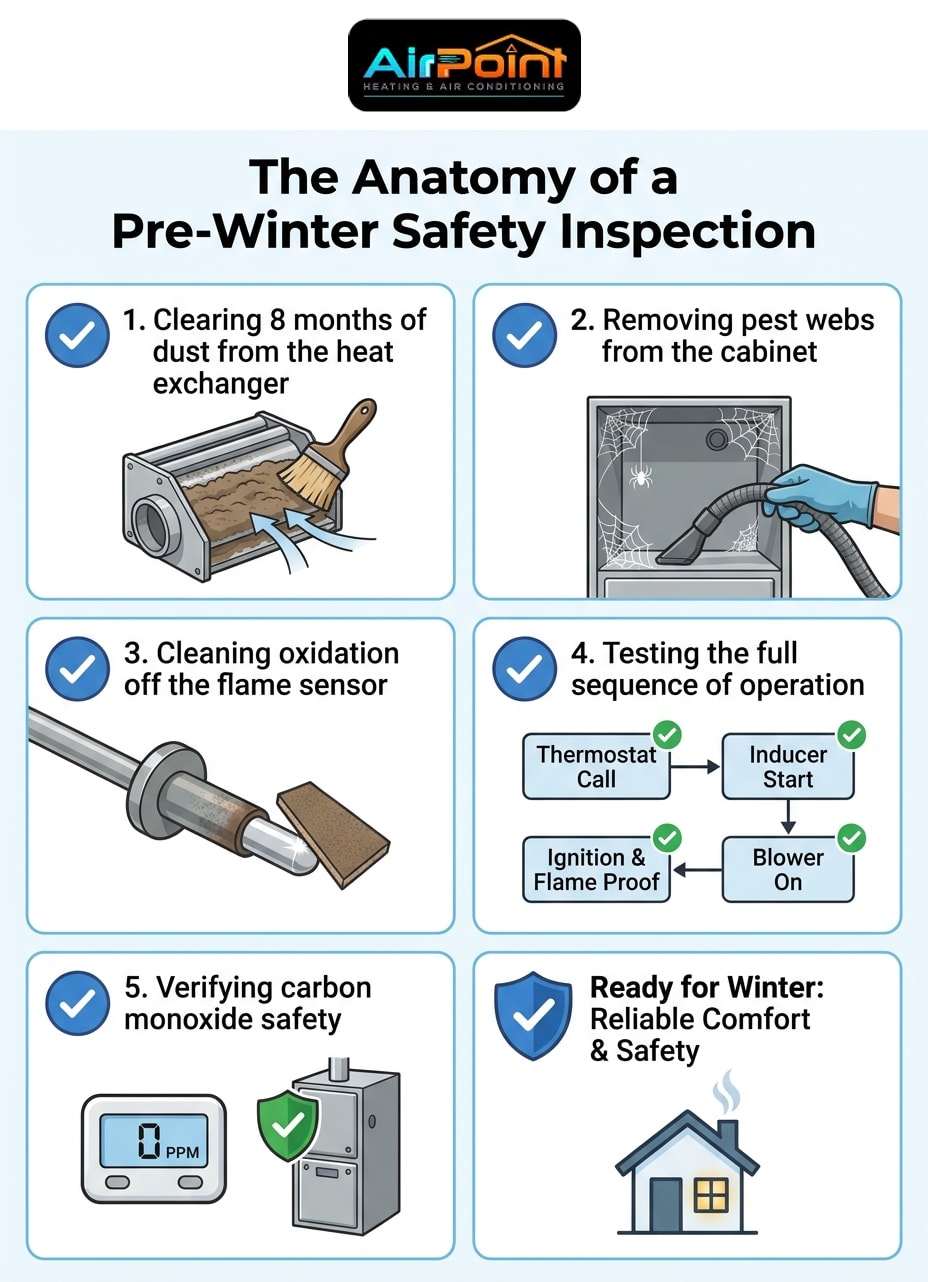
One of the most common symptoms homeowners experience during that initial November first-freeze or cold snap is a distinct burning smell circulating through the vents. When a furnace sits idle for months, the heat exchanger acts as a magnet for airborne dust, pet dander, and microscopic debris. When the burners ignite for the first time, this accumulated layer of dust is instantly incinerated, producing a noticeable odor.
The normal dust burn-off: According to Department of Energy (DOE) guidelines regarding residential heating maintenance, a brief burning smell during the first heating cycle of the year is generally expected. This "dust burn-off" typically dissipates within 30 to 60 minutes of operation as the heat exchanger clears itself. Opening a few windows during this initial cycle can help ventilate the home.
When the smell indicates a hazard: There is a critical difference between the temporary smell of burning dust and a lingering odor that indicates a serious problem. If you notice a sharp electrical burning smell, the scent of melting plastic, or the distinct odor of natural gas (often described as rotten eggs), you must initiate an immediate emergency shutdown. These smells indicate failing electrical components, overheating wires, or a gas leak. Because differentiating between safe dust burn-off and a hazardous malfunction can be difficult, relying on a licensed professional to clean the heat exchanger before the first use is the safest way to prevent damage and eliminate the guesswork.
Spiders, Pests, and the Vulnerable Flame Sensor
Beyond dust, a dormant furnace cabinet offers an ideal, undisturbed shelter for pests during the warm summer months. Spiders, in particular, frequently seek refuge inside burner tubes and near the ignition assembly, spinning webs that can completely block the flow of gas or interfere with the spark ignitor. When a Los Alamitos or coastal-adjacent Orange County homeowner attempts to turn on their heater for the first time, these webs can prevent the system from lighting entirely. Our crews pull countless spider webs out of burner tubes every fall to get these systems firing safely again.
Even if pests have not moved in, coastal moisture poses a significant threat to one of the most critical safety components in your furnace: the flame sensor. The flame sensor is a thin metal rod that sits directly in the path of the burner flame. Its sole job is to detect whether a fire is actually present when the gas valve opens. If it does not detect a flame within a few seconds, it shuts the entire system down to prevent raw gas from flooding your home.
• The oxidation problem: Over the summer, coastal humidity causes a microscopic layer of oxidation (rust and corrosion) to form on the surface of the flame sensor.
• The short-cycling symptom: When you turn the heat on, the burners may ignite beautifully, but the oxidized sensor cannot read the microamps of the flame. The furnace will immediately shut off, a frustrating cycle known as short-cycling.
• The delicate solution: Cleaning a flame sensor requires specialized abrasive materials. Using the wrong tool can permanently score the metal, ruining the sensor. This is a non-DIY task that requires a professional touch.
Beyond the Basic Tune-Up: The Sequence of Operation Test
Not all seasonal maintenance is created equal. Many generic tune-ups simply involve swapping a filter and wiping down the outside of the cabinet. However, a thorough, professional safety inspection focuses heavily on the "sequence of operation." This sequence is the exact step-by-step process your furnace must successfully complete to produce heat safely, especially when tested during a November first-freeze or cold snap.
Testing the sequence of operation involves verifying that the thermostat communicates with the control board, the inducer motor creates the proper draft to vent exhaust gases, the ignitor glows or sparks at the precise right moment, and the gas valve opens smoothly. Most importantly, it involves verifying carbon monoxide safety, ensuring that all exhaust fumes are safely routed out of the home and not leaking into the living space. At AirPoint Heating & Air Conditioning, we focus on thorough, professional safety inspections and have the expertise required to safely start up dormant systems, ensuring you get real reliability over a basic, generic wipe-down.
Our team sees the value of a comprehensive approach frequently when encountering older equipment. For example, we recently helped a local homeowner who moved into a new property that had no air conditioning and was still relying on an original 1960s furnace. Rather than simply trying to force an obsolete, potentially unsafe unit to run, our technicians provided a compassionate consultation. This led to our efficient crew installing a complete, modern heating and cooling system, upgrading the home's comfort and safety entirely. A proper inspection provides transparency, giving you confidence in your equipment's safety without unnecessary upsells.
Protecting Your Home's Breathing Environment
The condition of your dormant furnace has a direct and immediate impact on the air you breathe. If you turn on a system without a pre-check, the blower motor will forcefully push months of settled dust, pollen, and debris out of the ductwork and directly into your living space. For families in the Los Alamitos and coastal-adjacent Orange County areas, this sudden influx of airborne particulates can trigger seasonal allergies and reduce overall comfort.
The EPA consistently emphasizes the importance of seasonal indoor air quality, noting that HVAC systems can circulate dust throughout a home if not properly maintained. Starting the season with a fresh, high-quality air filter is the bare minimum requirement. A clean filter protects the blower motor from strain and captures the initial wave of dust that kicks up during the first few heating cycles.
However, basic filters only catch large particles. If you want to maintain a truly clean breathing environment throughout the winter months, it is worth exploring advanced indoor air quality solutions. Options like UV lights, advanced media filters, and air purifiers can neutralize microscopic contaminants, ensuring that when your heater runs, it is circulating clean, healthy air rather than recycled dust.
Don't Forget the Reversing Valve: Pre-Winter Needs for Heat Pumps
While gas furnaces dominate many conversations about winter heating, a significant number of homes utilize heat pumps. Unlike a furnace, a heat pump does not sit completely dormant during the summer; it works hard to provide air conditioning. However, when the November first-freeze or cold snap arrives, the system must switch operational modes, transitioning from cooling the house to heating it.
This transition relies entirely on a critical component called the reversing valve. The reversing valve physically shifts the flow of refrigerant, allowing the system to absorb heat from the outside air and move it indoors. If this valve becomes stuck due to lack of use in its heating position, your heat pump will continue blowing cold air, regardless of what the thermostat says.
Critical Heat Pump Checks for Winter
• Testing the reversing valve: Ensuring the valve shifts smoothly and completely between cooling and heating modes without sticking.
• Verifying the defrost cycle: Heat pumps naturally build up frost on the outdoor unit during cold nights. The defrost cycle temporarily melts this ice; if it fails, the unit will freeze solid and stop working.
• Checking refrigerant charge: A heat pump requires an exact refrigerant balance to extract heat efficiently from chilly air.
Because these systems operate differently than traditional furnaces, they require specialized care. Investing in dedicated heat pump maintenance ensures that your system can handle the seasonal switch smoothly and efficiently.
Who to Trust with Your Heating Safety Inspection
When it comes to preparing your heating system for winter, the credentials of the person standing in front of your furnace matter immensely. Gas-powered appliances and high-voltage electrical systems pose serious risks if handled incorrectly. Allowing an unlicensed or uninsured individual to work on your equipment in the Los Alamitos and coastal-adjacent Orange County areas is a liability you simply do not need to take. As a fully licensed and insured local business, AirPoint Heating & Air Conditioning takes this responsibility seriously.
A legitimate HVAC professional carries specific credentials, including an active state contractor's license, workers' compensation coverage, and general liability insurance. These protections ensure that if an accident occurs, or if property is damaged during the inspection, you are not held financially responsible. A qualified technician is trained to look past the surface, focusing on the long-term safety and reliability of your system rather than just a quick fix.
Before you hire someone to inspect your dormant furnace, take a few minutes to confirm their standing. If you are unsure of what documents to ask for or how to check them, you can easily learn how to verify an HVAC contractor's liability insurance to guarantee your peace of mind.
Rest Easy This Winter with a Professionally Cleared System
Understanding the physical changes that occur inside a dormant furnace is the first step to preventing midnight emergencies. From oxidized flame sensors to dust-coated heat exchangers, the challenges of waking up a system after an eight-month slumber are real. A professional pre-check addresses these issues head-on, prioritizing your family's safety and the long-term reliability of your equipment before the November first-freeze or cold snap even arrives.
Do not wait until your thermostat reads 60 degrees indoors and the vents are blowing cold air. Take action before the first major temperature drop puts unnecessary stress on your dormant equipment. If you want to ensure your home is ready for the chilly nights ahead, schedule your pre-winter HVAC check today and enjoy a warm, worry-free season.
Frequently Asked Questions
Should I get my furnace serviced before winter?
Yes, getting your furnace serviced before winter is highly recommended to ensure safe and efficient operation. A dormant furnace accumulates dust and moisture over the summer, which can cause sensors to fail or produce burning smells. A professional service clears this buildup and tests the safety switches before you actually need the heat.
Why does my heater smell like it's burning when I turn it on?
A burning smell during the first use is usually caused by the incineration of dust that has settled on the heat exchanger over the summer. While a brief dust burn-off is normal, lingering smells of electrical burning or gas indicate a serious hazard. If the smell does not dissipate within an hour, shut the system down and call a professional.
How do I prepare my HVAC for winter?
Preparing your HVAC for winter starts with replacing your air filter to ensure proper airflow and protect indoor air quality. You should also clear any debris away from your outdoor heat pump unit and ensure all indoor vents are open and unblocked. Finally, scheduling a professional safety inspection is the best way to verify the system's internal components are ready for the cold.
What is included in a winter HVAC tune up?
A comprehensive winter tune-up includes cleaning the burner assembly, testing the ignition sequence, and verifying the flame sensor is free of oxidation. The technician will also check the heat exchanger for cracks, test the carbon monoxide safety systems, and ensure the blower motor is operating at the correct voltage. This thorough sequence ensures the system will not fail under load.
Can I clean my dormant furnace's flame sensor myself?
No, cleaning a flame sensor yourself is not recommended. The sensor is a highly delicate instrument that reads microamps of electricity, and using the wrong abrasive material can permanently damage it. A licensed professional has the correct tools to safely remove oxidation without scoring the metal.
How long does a professional pre-winter HVAC inspection take?
A professional pre-winter inspection typically takes between 60 to 90 minutes to complete thoroughly. This allows the technician enough time to clean the internal components, test the full sequence of operation, and verify all safety mechanisms. If the system has been dormant for a very long time or requires additional repairs, the visit may take slightly longer.
Other Blogs
Latest Blog Posts

Heat Pump Auxiliary Heat Triggers: Why Your System Switched During the First November Cold Snap
Why Positive Pressure Fails: True HVAC Solutions for Drafty Rooms

Understanding Heat Pump Base Pan Heater Function Before November Freezes

Customer Testimonials


I recommend Air Point for your HVAC needs."