




Why Pre-Holiday HVAC System Stress Testing Prevents Hosting Disasters
The Unseen Threat to Your Late-Fall Holiday Gatherings
Late-fall holiday hosting is fast approaching, and if you want to prevent a sudden furnace failure with a house full of guests, scheduling pre holiday hvac system stress testing is the smartest move you can make. The shift in seasons brings a unique set of challenges for homeowners. On one hand, you are preparing guest bedrooms, finalizing dinner menus, and coordinating travel schedules for arriving family members. On the other hand, the outdoor temperatures are beginning their rapid seasonal descent, forcing your home's dormant climate control equipment to suddenly wake up and perform at maximum capacity.
Most homeowners don't realize that sudden thermal strain on heating equipment is a leading cause of unexpected breakdowns during large gatherings. At AirPoint Heating & Air Conditioning, our technicians respond to dozens of these exact emergency calls every November. For months, your furnace or heat pump has sat mostly idle. When the first major cold front of the season arrives—often coinciding perfectly with holiday weekends—the equipment is abruptly forced into continuous operation. This sudden demand can expose hidden mechanical weaknesses, worn belts, or failing sensors that a quick glance would never reveal.
Deciding to proactively evaluate the system right now prevents the embarrassment and deep discomfort of an emergency failure later. A controlled, rigorous test ensures your home remains a welcoming, warm environment for visiting relatives, rather than a freezing house waiting on an emergency repair dispatch. By addressing the health of your heating systems before the heavy usage begins, you secure a smooth, uninterrupted holiday experience for everyone under your roof.
How Extra Houseguests Impact Your Indoor Climate
The short answer is that people generate a massive amount of heat and moisture, and your home's climate control equipment has to work overtime to balance it. When you transition from a standard household of three or four people to a bustling holiday gathering of fifteen, the indoor environment changes drastically. HVAC systems must adapt rapidly to these changing thermal loads to maintain a consistent temperature, and a strained system will quickly show its flaws.
Here is a closer look at exactly how extra houseguests alter the environment inside your home:
• Increased ambient heat generation: Every human body radiates heat, acting like a small space heater. Add in a hot oven running for hours, boiling stovetops, and extra lighting, and the ambient temperature in the main living areas spikes. This can confuse the thermostat, causing the system to short-cycle or leave peripheral guest bedrooms freezing cold while the kitchen is sweltering.
• Spiking indoor humidity: More people breathing, talking, showering, and cooking means a massive influx of moisture into the indoor air. In colder months when windows are sealed tight, this humidity has nowhere to go. If the heating equipment is not operating efficiently, this excess moisture can make the air feel heavy and uncomfortable.
• Heavy filtration demands: Extra foot traffic stirs up dormant dust, introduces pet dander from visiting animals, and brings in outdoor allergens. Your system's air filter will clog much faster during a week of late-fall holiday hosting than it would during a normal month, restricting airflow and forcing the blower motor to work twice as hard.
• Critical ventilation needs: Proper ventilation becomes paramount for guest comfort in a closed, heavily occupied house. Strained systems struggle to circulate clean air effectively, leading to stale, stuffy rooms. Upgrading or maintaining your indoor air quality ensures that the air remains fresh, even when the house is packed with relatives.
If the equipment hasn't been properly prepared for this sudden, heavy load, it will struggle to keep up. The blower motor may overheat, the heat exchanger may suffer from restricted airflow, and the overall comfort of your home will degrade rapidly just when you need it to be perfect.
What Exactly is Pre-Holiday HVAC System Stress Testing?
The Problem with Basic Visual Inspections
Many homeowners assume that changing the air filter and turning the thermostat to "heat" is enough to verify that the system is ready for winter. However, a basic visual check or a brief test cycle only proves that the system can turn on—it does not prove that the system can stay on under heavy demand. Mild autumn weather rarely pushes the equipment to its breaking point. The problem arises when the system is suddenly asked to run for six hours straight during a freezing night in Los Alamitos, exposing hidden fatigue in aging components.
The Cause of Sudden Holiday Breakdowns
Mechanical parts degrade over time. Capacitors lose their ability to hold a charge, blower motor bearings lose their lubrication, and flame sensors become coated in carbon buildup. When a system operates under light, intermittent loads, these degraded components can often scrape by without failing. But when continuous operational demand is applied—such as when a house full of guests requires constant heat during a cold snap—these weakened parts succumb to the mechanical and electrical stress, resulting in a sudden, complete system shutdown.
The Solution: Simulating Peak Demand
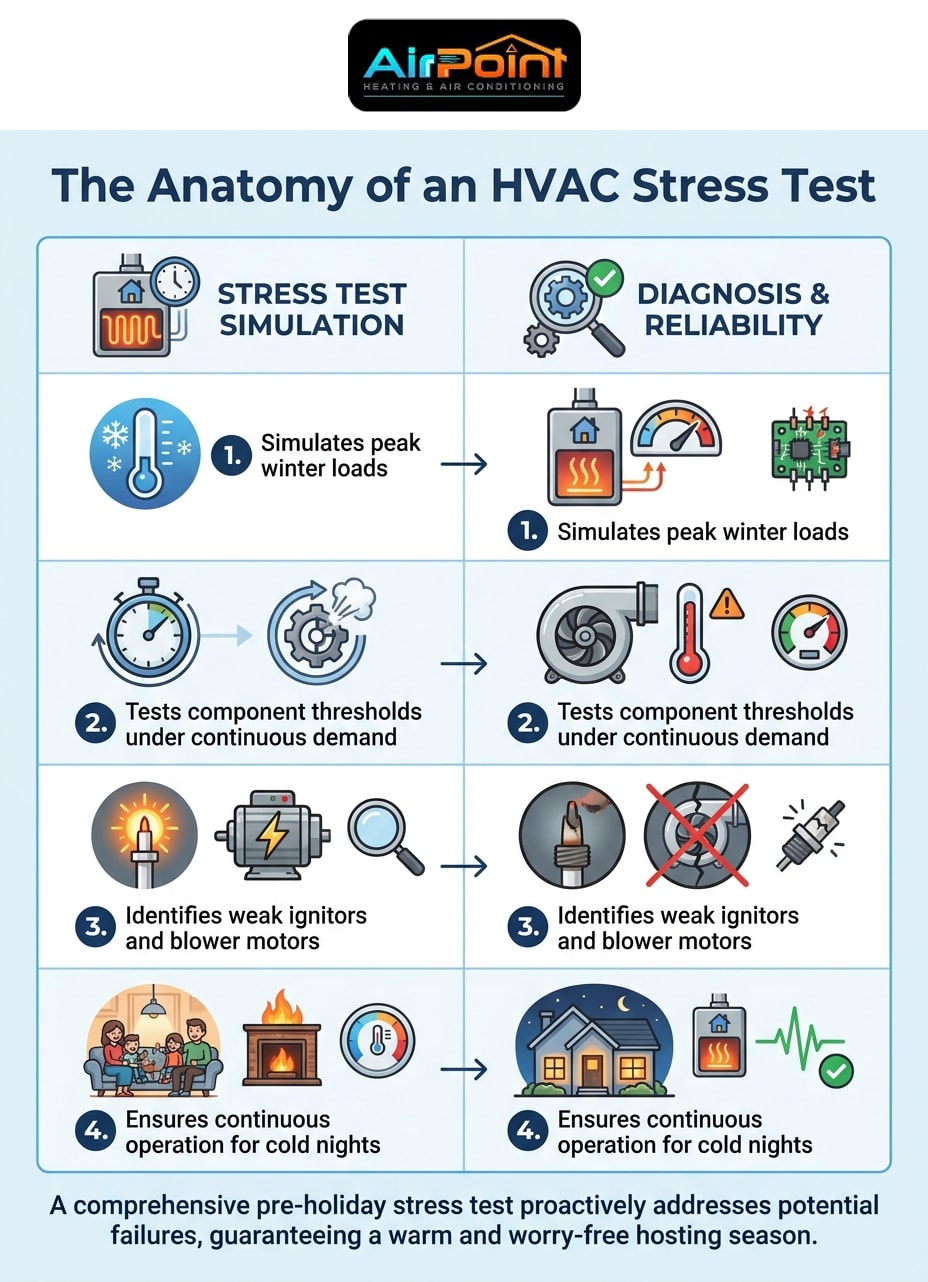
A true stress test goes far beyond a standard tune-up. It actively simulates peak winter heating loads on the system to measure component thresholds under continuous operational demand. Professionals use specialized diagnostic tools to measure the exact electrical draw of the blower motor, verify the millivolt output of the thermocouple, and test the high-limit safety switches under pressure. If a component is on the verge of failing, this controlled environment will reveal it safely.
This deep diagnostic approach is highly recommended before major gatherings. It is the core difference between hoping your system works and knowing it will. For a deeper understanding of how these evaluations differ from standard check-ups, reviewing the details of a furnace safety inspection can shed light on the specific electrical and mechanical thresholds that technicians measure to guarantee reliability.
Why the November Climate Creates the Perfect Storm for Breakdowns
The regional climate plays a massive role in how and why heating equipment fails. In our years of keeping Los Alamitos homes comfortable, the AirPoint team has observed that the November weather pattern creates a highly specific type of mechanical strain known as thermal shock. During the day, mild temperatures often mask underlying heating issues because the system barely needs to cycle on. The house stays reasonably comfortable through natural sunlight and mild ambient air, allowing a struggling furnace to hide its symptoms.
However, as the sun sets, the environment changes drastically. Sudden, sharp nighttime temperature drops force the dormant equipment to wake up and work overtime with very little warning. This rapid transition from a completely cold, dormant state to maximum combustion capacity causes extreme mechanical shock to aging components. Metal heat exchangers expand rapidly as the burners ignite, and if there is a preexisting hairline crack or structural fatigue, this rapid expansion can cause the component to fail completely, potentially leaking dangerous combustion gases into the home.
Furthermore, the blower motor, which has been sitting idle in the cool air, is suddenly asked to spin at high speeds for hours on end to combat the dropping outdoor temperatures. If the bearings are dry or the electrical capacitor is weak, the motor will overheat and trip the system's circuit breaker. Proactive testing intentionally triggers this heavy demand in a controlled, observed environment. By forcing the system to handle these sharp temperature transitions while a technician is monitoring the gauges, you ensure that the equipment is genuinely ready for the unpredictable swings of late-fall weather.
Warning Signs Your Furnace Needs Immediate Attention
Even if you haven't scheduled a formal evaluation yet, your heating equipment will often try to warn you that it is struggling. Recognizing these early symptoms can mean the difference between a minor adjustment and a catastrophic failure during your late-fall holiday hosting duties. If you notice any of the following behaviors, it usually means the system is operating under severe duress.
• Persistent burning dust smells: It is entirely normal for a furnace to emit a slight burning odor during the first one or two cycles of the season as it burns off settled summer dust. However, if that acrid smell persists for days, or smells distinctly like melting plastic or electrical ozone, it indicates a serious overheating issue that requires immediate professional diagnosis.
• Strange rattling, banging, or squealing noises: Your heater should operate with a smooth, consistent hum. A high-pitched squeal usually points to a failing blower motor belt or dry bearings. A loud bang when the system turns on (delayed ignition) means gas is building up before igniting, which is a significant safety hazard. Rattling often indicates loose panels or, more severely, a cracked heat exchanger.
• Short-cycling behavior: This occurs when the heater turns on, runs for only a minute or two, and shuts off before the house reaches the set temperature. Short-cycling is incredibly hard on the equipment and usually means a safety limit switch is tripping because the system is overheating due to poor airflow or a failing flame sensor.
• Uneven heating across different rooms: If the kitchen is boiling but the guest bedrooms are freezing, your system is failing to distribute air properly. This could be due to ductwork issues, a failing blower fan, or a system that is improperly sized for the current thermal load of the house.
Ignoring these signs is a gamble you do not want to take when expecting guests. If your system is exhibiting any of these symptoms, taking advantage of a furnace diagnostic special is a highly effective way to uncover the root cause before the equipment locks out completely.
The Advantages of Proactive vs. Reactive Maintenance
One pattern our heating specialists see far too often is homeowners waiting until the system completely stops producing heat before calling for help. While this might seem like a way to save time in the short term, it almost always leads to a much more stressful and disruptive experience. Emergency breakdown calls peak significantly during busy holiday weekends, exactly when you need your home to be at its most comfortable.
Reactive repairs often interrupt family dinners, overnight stays, and general hosting duties. You find yourself waiting for a technician to arrive while your guests huddle under blankets. Conversely, proactive testing offers predictable comfort. It allows you to address minor wear and tear on a random Tuesday morning, rather than dealing with a major component failure on a holiday evening.
• Timing & Scheduling — Proactive Stress Testing: Scheduled at your convenience before guests arrive. — Reactive Emergency Repair: Dictated by the breakdown, often during peak holiday hours.
• System Impact — Proactive Stress Testing: Identifies minor wear before it damages other expensive parts. — Reactive Emergency Repair: Often involves catastrophic failure of multiple components.
• Hosting Experience — Proactive Stress Testing: Uninterrupted comfort for late-fall holiday hosting. — Reactive Emergency Repair: Freezing guest rooms, stress, and disrupted family meals.
• Peace of Mind — Proactive Stress Testing: High confidence that the system can handle extreme cold snaps. — Reactive Emergency Repair: Constant worry about whether the heater will make it through the night.
A controlled evaluation avoids the stress and potential delays of waiting for dispatch during peak demand times. It transforms a potential emergency into a routine checklist item, allowing you to focus entirely on your family rather than your thermostat.
Secure Your Comfort Before the Relatives Arrive
Do not let a sudden heating breakdown ruin your carefully planned holiday hosting. The transition into colder weather puts an enormous burden on your equipment, and pushing a dormant system to its limits without a proper evaluation is a recipe for an untimely failure. Scheduling a professional evaluation now ensures peak reliability when it matters most, giving you the confidence that your home can handle whatever the late-fall weather brings.
Rest easy knowing your home is fully prepared for dropping temperatures and arriving guests. With AirPoint's 100% Satisfaction Guarantee and reliable 24-hour service availability, you can trust that your comfort is protected around the clock. Take the proactive step today and schedule HVAC service to ensure your gatherings are remembered for the warmth of the company, not the chill of the house. A clear understanding of your equipment's health is the ultimate key to a stress-free season.
Frequently Asked Questions
Why should I test my heating system before guests arrive?
Testing your heating system before guests arrive prevents unexpected breakdowns caused by sudden thermal strain. Extra houseguests significantly alter the indoor thermal load, forcing your dormant heater to work much harder to maintain a consistent temperature. A proactive test ensures the equipment can handle this sudden spike in demand without failing, keeping your home warm and your hosting duties uninterrupted.
What is the difference between a furnace tune-up and a stress test?
A standard tune-up usually involves basic cleaning, a filter change, and a visual inspection of parts. A stress test, however, actively simulates peak winter heating loads to measure how components perform under continuous, heavy demand. This deeper diagnostic approach identifies weak ignitors, failing motors, and safety switch issues that only reveal themselves when the system is pushed to its limits.
How does increased home occupancy affect my HVAC system?
Increased occupancy rapidly raises indoor humidity and ambient heat generation, forcing your HVAC system to constantly adapt to changing thermal loads. Every extra person acts as a heat source, which can confuse the thermostat and lead to short-cycling or uneven heating across different rooms. Additionally, more people mean more airborne dust and dander, requiring your system's blower motor and filtration to work significantly harder.
Why does my heater smell like burning dust when I turn it on?
A brief burning dust smell is completely normal during the first few heating cycles of the season as the system burns off particles that settled over the summer. However, if the smell persists for more than a few days, or if it smells like melting plastic or electrical wiring, it is a major warning sign. Persistent odors indicate that the system is overheating or experiencing electrical friction, requiring immediate professional attention.
How far in advance of the holidays should I schedule an HVAC evaluation?
You should ideally schedule your HVAC evaluation at least three to four weeks before your major holiday gatherings begin. This timeframe provides ample padding in case the technician discovers a weak component that requires a specialized replacement part to be ordered. Booking early also ensures you avoid the massive spike in emergency service calls that typically occur during the first major cold snap of November.
Other Blogs
Latest Blog Posts
Heat Pump vs. Gas Furnace: HVAC Options Comparisons for Homeowners
When to Call an AC Technician: Navigating Your Late-Fall Home Maintenance Checklist

The Complete Homeowner's Guide to Safely Starting a Dormant Heating System in Los Alamitos

Customer Testimonials


I recommend Air Point for your HVAC needs."