






The Critical Difference Between a Furnace Safety Inspection and a Basic Tune-Up
The Dangerous Myth of the 'Good Enough' Fall Furnace Check
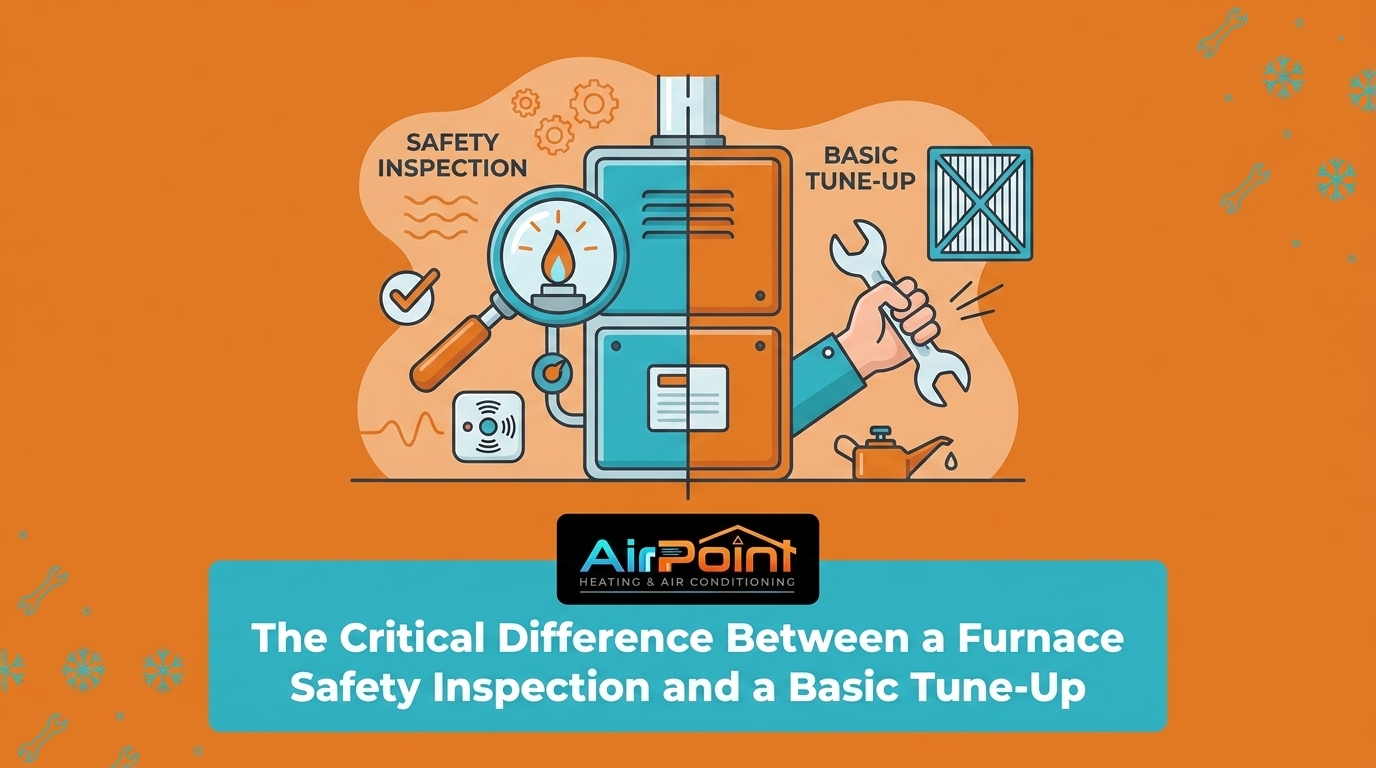
A common misconception is that any seasonal maintenance visit guarantees your equipment is safe to operate, but understanding the critical difference between a furnace safety inspection and a basic tune-up is vital for your family's well-being. Many homeowners assume that if a technician changes the filter and wipes down the cabinet during the September pre-heating season, the system is fully cleared for heavy winter use. That assumption leaves households vulnerable to dangerous, undetected issues. A basic filter change and surface-level cleaning is merely a comfort service designed to keep air flowing. It is not a life-safety protocol.
Mistaking a standard tune-up for a rigorous safety inspection can have severe consequences. When technicians only perform a quick visual check, they often miss microscopic heat exchanger cracks and potential carbon monoxide leaks that are invisible to the naked eye. The internal components of your furnace endure extreme thermal stress every time the burner ignites. Over the years, that stress compromises the structural integrity of the metal. If you do not explicitly request a deep safety evaluation, those hidden fractures remain undetected.
Understanding the distinct mechanical differences between these two levels of service empowers you to verify the scope of work before a technician ever arrives at your door. You need to know exactly what you are paying for when you book an appointment for your heating systems. A true safety inspection utilizes specialized diagnostic tools to measure gas pressure, test exhaust venting, and analyze combustion byproducts. By recognizing the limitations of a basic wipe-down, you can make informed decisions that prioritize both operational efficiency and the safety of the people living in your home.
The Baseline: What a Basic Tune-Up Actually Covers
Standard tune-ups focus heavily on airflow, system efficiency, and basic cleanliness. This level of service is absolutely necessary for keeping energy bills low and preventing premature wear and tear on your blower motor, but it has significant limitations regarding hazard detection. When you live in an area like Los Alamitos, where the weather fluctuates, maintaining efficient airflow is a constant priority. However, you should not confuse this routine upkeep with a deep diagnostic evaluation.
If you are scheduling a furnace tune up, you can generally expect the technician to perform a specific set of surface-level tasks designed to optimize how the equipment runs. These routine steps typically include:
• Replacing air filters: Removing clogged filters to restore proper airflow and reduce the strain on the blower motor.
• Cleaning the burners: Brushing away surface soot and debris so the gas ignites evenly and efficiently.
• Lubricating moving parts: Applying oil to bearings and motors to reduce friction and eliminate grinding noises.
• Checking electrical connections: Tightening loose wires and testing capacitors to ensure the system cycles on and off correctly.
• Calibrating the thermostat: Verifying that the temperature reading matches the actual room environment.
While this checklist is essential for extending the lifespan of your equipment, it does not involve the specialized diagnostic tools required to find invisible hazards. A technician performing a basic tune-up is primarily armed with rags, vacuums, standard hand tools, and a multimeter. They will verify that the system turns on, blows warm air, and shuts off safely. They will not, however, dismantle the unit to scope the deep internal chambers or run chemical analysis on the exhaust gases. Recognizing this baseline helps you understand why older systems require a much closer look.
The Danger of Dormancy: Why Mild Climates Hide Hidden Furnace Threats
Heating systems in mild Southern California climates face a unique set of challenges that homeowners in freezing regions rarely encounter. In Los Alamitos, your furnace likely sits completely inactive from early spring all the way through late fall. This eight-to-nine month dormancy period creates the perfect environment for hidden threats to develop deep inside the cabinet, making comprehensive checks critical before the first chilly night arrives.
During these long stretches of inactivity, moisture from the humid coastal air can settle inside the metal components. This leads to unnoticed corrosion along the heat exchanger and burner assemblies. Furthermore, a dormant furnace is an inviting home for pests. Spiders, rodents, and insects frequently build nests inside the exhaust flues and burner tubes. When a system is suddenly turned on for the first cold snap after months of sitting idle, this pre-existing deterioration and blockage can lead to immediate operational failures or severe safety hazards.
A surface-level check simply cannot detect the internal degradation caused by extended dormancy. If a spider web is blocking the pilot orifice or a bird's nest is obstructing the exhaust vent, the system might still ignite, but the dangerous combustion gases will backdraft directly into your living space. The mild climate lulls many homeowners into a false sense of security. Because the furnace is not used heavily, the assumption is that it does not experience wear and tear. In reality, the long periods of disuse are exactly what allow rust and blockages to form unnoticed, requiring a much deeper inspection before the system is fired up for the winter.
The Life-Safety Protocol: Inside a Comprehensive Safety Inspection
A true safety inspection goes far beyond visual checks and basic cleaning. It is a rigorous life-safety protocol designed to protect your household from invisible, odorless threats. Technicians performing this level of service utilize specialized equipment, such as combustion analyzers and high-definition inspection cameras, to look deep inside the mechanical structure of the furnace. The goal is not just to see if the unit produces heat, but to verify that it does so without compromising the breathable air in your home.
We see the value of this deep-dive approach frequently during the September pre-heating season. One customer recently reached out for a preventative check on their heating and cooling equipment. Instead of just wiping down the cabinet, the technician performed a thorough evaluation, explained potential long-term safety issues, and provided before-and-after photos of the internal components. This level of detail left the homeowner feeling confident that their system would run smoothly and safely for the rest of the season.
When you invest in a comprehensive furnace service, the technician will follow a strict, step-by-step diagnostic process:
1. Combustion Analysis: A specialized probe is inserted into the exhaust flue to measure the exact chemical makeup of the gases being produced. This detects incomplete combustion and dangerous carbon monoxide levels that a standard visual check cannot see.
2. Heat Exchanger Integrity Testing: Technicians use flexible, lighted inspection cameras to snake through the curved chambers of the heat exchanger, looking for microscopic hairline cracks or signs of metal fatigue.
3. Gas Leak Detection: Electronic sniffers and liquid leak detectors are applied to all gas valves, unions, and supply lines to ensure there is no raw fuel escaping into the utility closet.
4. Exhaust Venting Verification: The entire length of the flue pipe is inspected for proper draft, correct sloping, and secure joints to guarantee that all toxic byproducts are successfully carried outside the home.
5. Safety Control Stress Testing: High-limit switches and flame sensors are intentionally tripped to ensure they will automatically shut the system down in the event of an emergency.
This meticulous process ensures that your equipment is structurally sound. It shifts the focus from simple operational comfort to proactive hazard prevention, giving you the peace of mind that your heating system will not endanger your family.
Heat Exchangers and the Invisible Threat of Carbon Monoxide
The heat exchanger is the most critical component of your furnace, acting as the physical barrier between the toxic combustion gases and the clean air circulating through your vents. When the burner ignites, the flames heat the metal walls of the exchanger. Your blower motor then pushes indoor air over the outside of these hot metal walls, warming the air before returning it to your rooms. The toxic exhaust gases remain trapped inside the exchanger and are vented safely out the roof.
Because the heat exchanger undergoes constant thermal expansion and contraction during every single heating cycle, it is subjected to immense physical stress. Over time, this repetitive thermal stress causes metal fatigue. Eventually, the weakened metal develops microscopic cracks. According to the CDC, carbon monoxide is a colorless, odorless gas responsible for hundreds of non-fire-related poisoning deaths annually. A cracked heat exchanger allows this deadly carbon monoxide to escape the combustion chamber and mix directly with the breathable air circulating through your Los Alamitos home.
Why Visual Wipe-Downs Miss the Mark
The terrifying reality of metal fatigue is that microscopic cracks often only open up when the metal is hot and actively expanding. When the furnace is turned off and the metal cools, these cracks contract and press tightly back together, making them virtually invisible to the naked eye. If a technician is only performing a basic tune-up, they are looking at a cold heat exchanger with a flashlight.
Without specialized inspection cameras to view the deepest, darkest curves of the metal, or a combustion analyzer to detect the chemical presence of carbon monoxide in the airstream, a technician doing a basic visual check will miss these fatal flaws entirely. The furnace will appear completely fine on the surface, while actively leaking toxic gas whenever the burner runs for an extended period.
Side-by-Side Comparison: Basic Maintenance vs. Safety Protocols
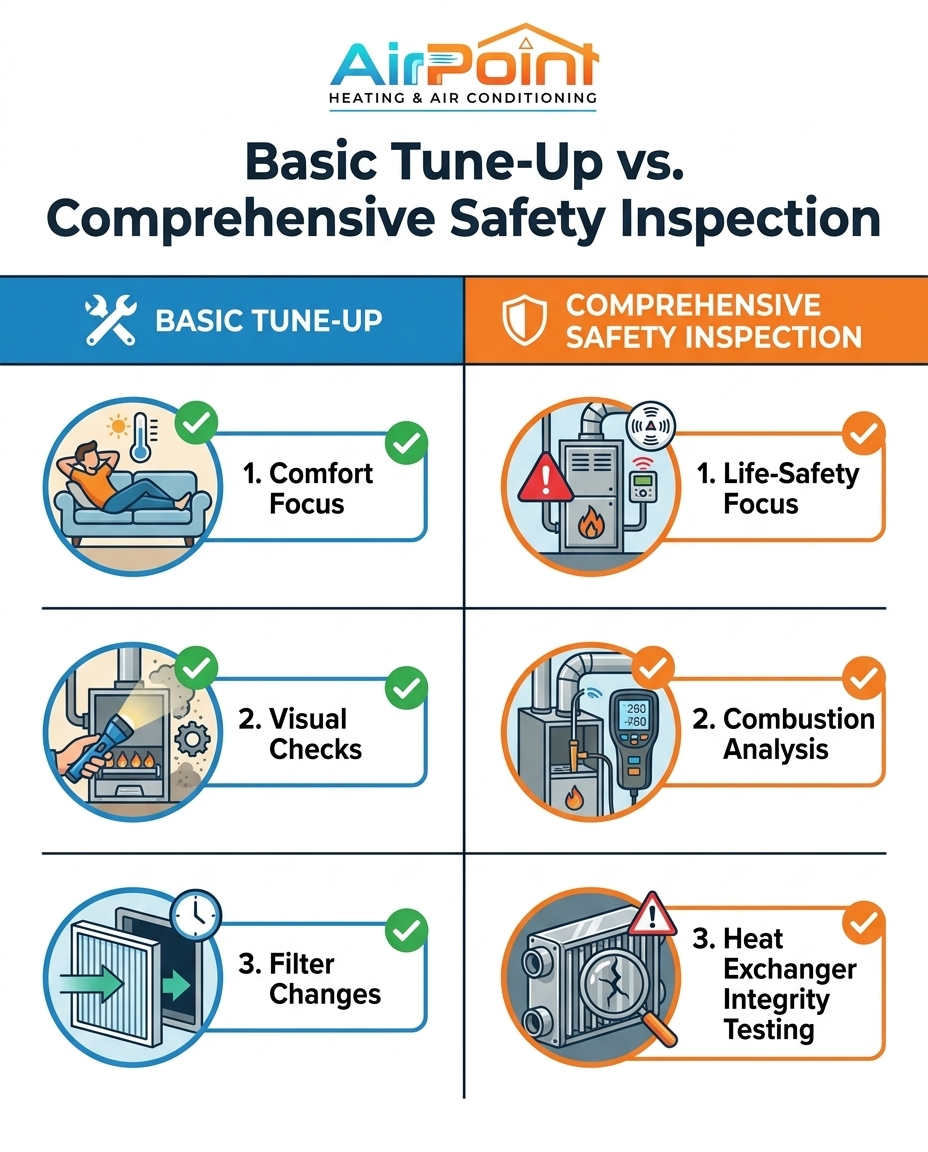
To make the best decision for your home, it helps to see exactly how these two services differ. While a basic tune-up is a great tool for keeping a newer system running efficiently, aging equipment requires the depth of a true safety protocol. The differences in intent, tooling, and testing are stark.
Review this breakdown to understand what you are getting, especially if you are preparing for the September pre-heating season or considering a deeper 4-point HVAC inspection for a property transaction.
• Primary Intent — Basic Tune-Up: Comfort, airflow, and energy efficiency. — Comprehensive Safety Inspection: Life-safety, hazard prevention, and structural integrity.
• Tools Used — Basic Tune-Up: Rags, vacuums, standard hand tools, and multimeters. — Comprehensive Safety Inspection: Combustion analyzers, electronic gas sniffers, and inspection cameras.
• Heat Exchanger Check — Basic Tune-Up: Quick visual glance with a flashlight on a cold unit. — Comprehensive Safety Inspection: Rigorous structural integrity testing, often with a camera.
• Carbon Monoxide Focus — Basic Tune-Up: Not explicitly tested or measured. — Comprehensive Safety Inspection: Primary focus of the service; chemical makeup is analyzed.
• Safety Controls — Basic Tune-Up: Basic verification that the system turns on and off. — Comprehensive Safety Inspection: Intentional stress testing of limit switches and flame sensors.
By comparing these approaches side-by-side, it becomes clear that a tune-up is about maintaining the status quo, while a safety inspection is about actively hunting for hidden dangers before they can cause harm.
Why Rigorous Diagnostic Standards Matter for Older Heating Systems
As heating systems age, they become significantly more susceptible to metal fatigue, compromised safety controls, and electrical degradation. Older units are at a much higher risk for developing the microscopic heat exchanger cracks that lead to carbon monoxide exposure. This is exactly why AirPoint Heating & Air Conditioning takes a rigorous approach to safety, emphasizing the use of specialized diagnostic tools to find invisible stress cracks rather than just checking off a basic maintenance list.
We see the impact of this thorough approach constantly in Los Alamitos. Recently, a homeowner called us to look at an older, run-down HVAC unit that was struggling to perform. Because we prioritize honest diagnostic work, the technician performed a complete, deep-dive evaluation. Instead of using high-pressure tactics to force a replacement, they fixed a leaky compressor, replaced the necessary components, topped off the system, and thoroughly cleaned the internals. The outdated unit was made significantly more efficient and safe through professional, honest work.
Identifying issues early through a rigorous safety inspection allows you to make informed decisions. If a hazard is found, you have the data you need to decide whether to repair the older unit or invest in a replacement. True professional service prioritizes the safety of your household above simple operational comfort, ensuring that you are never left guessing about the structural integrity of your equipment.
Frequently Asked Questions
Is a furnace tune-up the same as an inspection?
No, a furnace tune-up is not the same as a safety inspection. A tune-up is a preventative maintenance service focused on cleaning the unit, replacing filters, and ensuring efficient airflow. A safety inspection is a deep diagnostic evaluation that uses specialized tools to check for structural damage, gas leaks, and carbon monoxide risks.
What does a furnace safety inspection include?
A comprehensive safety inspection includes rigorous testing of the heat exchanger, combustion analysis, and gas leak detection. Technicians will use inspection cameras to look for microscopic cracks in the metal and electronic sniffers to ensure no raw fuel is escaping. They also stress-test all safety limit switches to guarantee the system will shut down during an emergency.
How do HVAC technicians check a heat exchanger for cracks?
Technicians check a heat exchanger for cracks using flexible, lighted inspection cameras that snake through the internal chambers. They also use a combustion analyzer in the exhaust flue to detect abnormal levels of carbon monoxide or oxygen, which strongly indicates that the structural integrity of the metal has been compromised.
Can a standard furnace tune-up prevent carbon monoxide leaks?
A standard tune-up cannot reliably prevent or detect carbon monoxide leaks. Because tune-ups rely primarily on visual checks with a flashlight, they easily miss the microscopic metal fractures that open up only when the furnace is running hot. Detecting carbon monoxide requires specialized chemical analysis tools that are not typically used during a basic wipe-down.
How often should an aging furnace be inspected for safety?
An aging furnace should undergo a comprehensive safety inspection at least once a year, ideally right before the heating season begins. As metal components endure years of thermal expansion and contraction, the risk of metal fatigue increases exponentially, making annual structural checks essential for older units.
Secure Your Peace of Mind Before the Cold Arrives
Your family's safety should never be left to chance or a basic visual checklist. Understanding the depth of a true safety protocol empowers you to ask the right questions and ensure your equipment is structurally sound before the temperatures drop. Do not wait for a cold snap to find out your aging system has hidden issues. Take proactive steps today and schedule HVAC service with professionals who prioritize rigorous diagnostic standards. You deserve the peace of mind that comes from knowing your home is truly safe and ready for the season ahead.
Other Blogs
Latest Blog Posts

The Essential Fall Home Maintenance Checklist: Decoding HVAC Startup Smells

Finding Your Efficiency Sweet Spot: Using a SEER Savings Calculator for HVAC Upgrades

Common Homeowner Questions Answered: Why Does My Heater Smell Like Burning Dust?

Customer Testimonials



I recommend Air Point for your HVAC needs."