




 Blog
BlogFall Home Maintenance Tips: Troubleshooting Heating Odors and Using a SEER Savings Calculator
Why the First Fall Heating-Startup Often Causes Concern
You finally switch your thermostat from cooling to heating on a chilly evening, and within minutes, an alarming burning smell fills the house. If you are looking for reliable home maintenance tips and troubleshooting advice, understanding this October heating-startup transition is essential. Whether you are evaluating the longevity of your air conditioning systems or trying to project future energy efficiency with a SEER savings calculator, getting your home ready for cooler weather requires a proactive approach.
The transition from cooling to heating often reveals underlying maintenance and efficiency issues that have compounded silently over the summer. When a heating system sits idle for months, it becomes a magnet for household particulates. The moment the burners ignite or the heat strips engage for the first time, those accumulated particles react to the sudden spike in temperature. For many homeowners, this sudden odor triggers immediate anxiety about fire hazards or equipment failure.
However, evaluating your system during this seasonal shift is about more than just identifying strange smells. It is the perfect time to assess the overall health of your climate control equipment. Summer usage can mask deteriorating components in your furnace or heat pump, as the heating elements remain dormant. By paying close attention to how your system behaves during its first major heating cycle, you can identify minor mechanical struggles before they turn into mid-winter breakdowns.
The proactive approach: Rather than waiting for a complete system failure on the coldest night of the year, using this initial startup period to monitor performance allows you to make informed decisions. Assessing your equipment now gives you the runway to schedule professional tune-ups, replace clogged filters, or calculate the true return on investment for a high-efficiency upgrade before emergency rates apply.
Understanding the Science Behind Dormant HVAC Systems
To understand why your system behaves the way it does in the fall, you have to look at the physical environment inside your ductwork and equipment cabinet. In the Los Alamitos coastal climate, long, mild summers mean heating components often sit completely unused for six to eight months. This extended dormancy creates a unique set of conditions that heavy-winter regions do not experience.
During those long months of inactivity, your air conditioner is running, pulling indoor air through the return vents. Even with a high-quality filter in place, microscopic particulates—pet dander, skin cells, cooking oils, and textile fibers—inevitably bypass the media and settle on the internal components. The heat exchanger, which is the metal chamber that gets incredibly hot to warm the air passing over it, acts like a shelf for this settling dust.
When the October heating-startup finally occurs, the physical burn-off process begins. The sequence happens rapidly:
1. Ignition: The thermostat signals the furnace to start, igniting the burners or engaging the electric heat strips.
2. Rapid Heating: The heat exchanger rapidly climbs to temperatures exceeding several hundred degrees Fahrenheit.
3. Combustion of Particulates: The layer of settled dust and debris resting on the metal surfaces is instantly incinerated by the intense heat.
4. Distribution: The blower motor kicks on, pushing the warm air—and the resulting odor of incinerated dust—throughout the home's ductwork.
This physical burn-off process is entirely normal. Because the Los Alamitos coastal climate features higher humidity levels mixed with this accumulated dust, the resulting odor can sometimes feel heavier or more noticeable than in dry, arid regions. However, the timeline for this normal burn-off is brief. The smell typically peaks within the first ten minutes of operation and should completely dissipate within 30 to 60 minutes as the heat exchanger is cleared of debris.
Troubleshooting Fall Furnace Odors: Normal Burn-Off vs. Safety Hazards
The Problem: You smell something burning when the heat kicks on, and you need to know if your house is safe or if you need to shut the system down immediately.
The Cause: Odors stem from either the harmless incineration of settled dust or a severe mechanical/electrical failure within the unit's internal components.
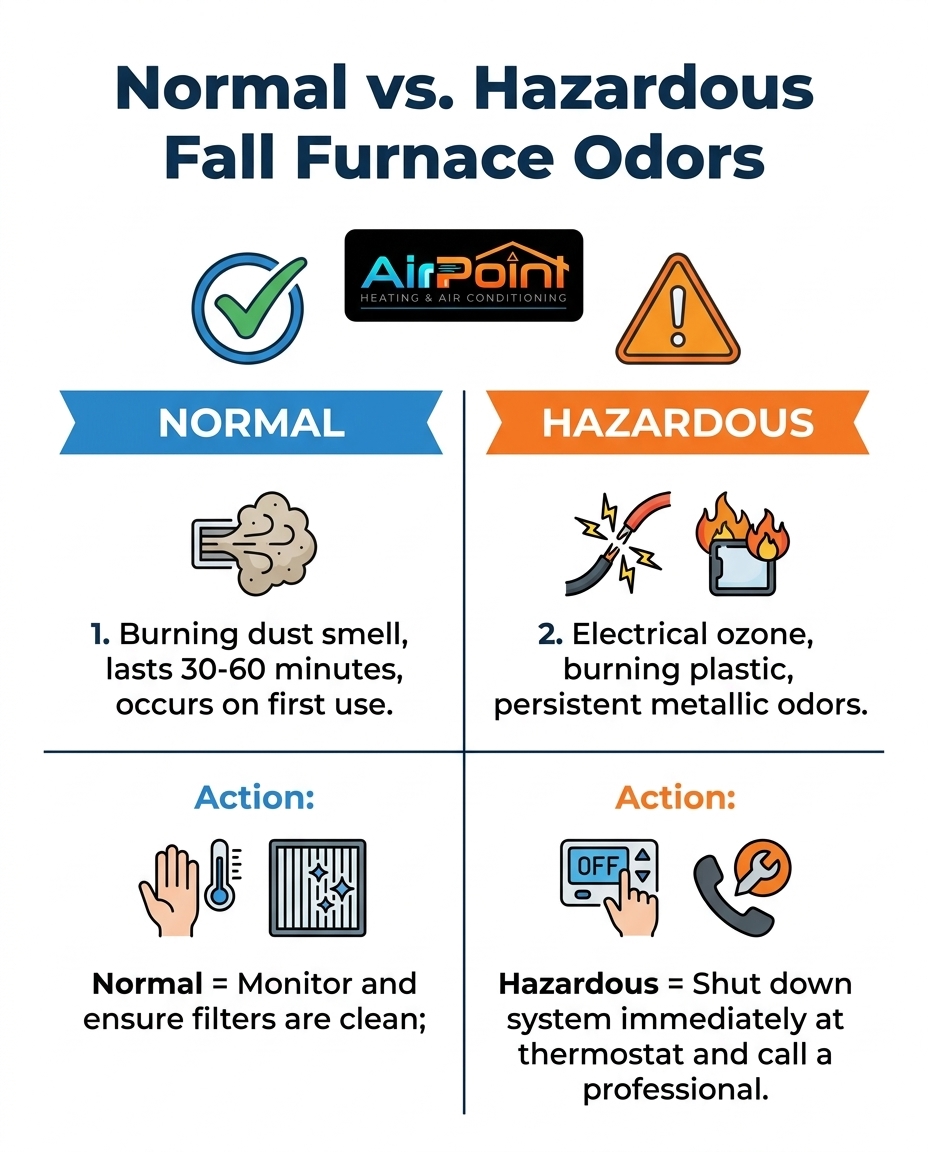
The Solution: Apply strict, neutral-expert parameters to distinguish between a harmless nuisance and a dangerous situation. A normal burning dust smell is brief, smells somewhat like toasted dirt, is non-acrid, and fades quickly. It does not sting the eyes or cause coughing. If the smell persists beyond the first hour of the October heating-startup, or if it changes in character, the situation has escalated from a maintenance quirk to a potential safety hazard.
• Burning Dust / Musty — Likely Cause: Normal accumulation of household particulates on the heat exchanger. — Required Action: Monitor for 30-60 minutes. Ensure air filters are clean.
• Electrical Ozone / Fishy — Likely Cause: Overheating blower motor, melting wire insulation, or failing capacitor. — Required Action: Shut down system at thermostat immediately. Call a professional.
• Burning Plastic / Rubber — Likely Cause: Foreign object in ductwork or melting internal plastic components. — Required Action: Shut down system immediately. Inspect accessible vents.
• Persistent Metallic / Acrid — Likely Cause: Cracked heat exchanger or severe mechanical friction. — Required Action: Shut down immediately. Do not operate until inspected.
When to Shut Down Your System Immediately
Safety always supersedes waiting for a smell to dissipate. If you detect specific sensory red flags, you must cut power to the unit right away. These red flags include the smell of melting plastic, electrical ozone (which often smells strangely sweet or fishy), visible smoke coming from the vents, or the sound of sparking and grinding accompanying the odor.
Mechanical failures, such as a seized blower motor bearing or compromised wiring insulation, will not resolve themselves. Allowing a system to run while producing an electrical odor can lead to severe equipment damage or a house fire. Always turn the system to the "Off" position at the thermostat, and if the smell is particularly strong, flip the dedicated breaker for the HVAC system until a licensed technician can investigate.
Managing Indoor Air Quality During the Fall Transition
The first fall startup is intimately connected to your home's broader indoor air quality (IAQ). According to EPA guidelines, indoor air pollutant levels can be two to five times higher than outdoor levels. When you fire up a dormant system, you are not just heating the air; you are forcefully circulating whatever has settled in your ductwork and equipment over the past half-year.
In the Los Alamitos coastal climate, the combination of coastal humidity and accumulated dust can significantly exacerbate IAQ issues. Moisture in the air can cause dust to clump, making it harder for standard filters to catch and easier for it to settle deep within the ductwork. When the blower motor engages, this particulate matter is pushed into your living spaces, potentially triggering allergies, asthma, or general respiratory irritation.
To combat this, managing your filtration strategy before the first major heating cycle is critical. Understanding MERV ratings and air filters ensures you have the right level of protection for your specific household needs.
• Inspect before starting: Never turn on your heater for the first time in fall without checking the current state of your filter. A clogged filter restricts airflow, forcing the heat exchanger to run hotter than designed.
• Select the right MERV rating: A filter with a Minimum Efficiency Reporting Value (MERV) of 8 to 11 is generally ideal for residential homes. It captures pet dander, pollen, and dust mites without severely restricting the airflow your blower motor needs to function.
• Clear the vents: Walk through the house and ensure all supply and return registers are fully open and unblocked by furniture or rugs. Closed vents increase static pressure, which degrades air quality and strains the system.
• Consider supplementary purification: If seasonal allergies are a major concern, upgrading to a media cabinet or integrating a UV light system can neutralize biological particulates that a standard paper filter might miss.
The Role of Professional Pre-Winter Inspections
While changing filters and monitoring odors are excellent proactive steps, the internal mechanical and electrical components of your heating system require specialized attention. A professional pre-winter inspection is not just a cursory glance; it is a rigorous diagnostic process designed to ensure safety, efficiency, and longevity. Handling internal component cleaning or electrical troubleshooting must always be left to licensed experts, as DIY attempts on high-voltage or combustible gas systems pose severe safety risks.
During an October heating-startup inspection, a licensed professional evaluates several critical safety mechanisms that homeowners cannot test themselves. One of the most vital checks is the integrity of the heat exchanger. A cracked heat exchanger can allow carbon monoxide to leak into the home's airstream—a hazard that produces no odor and cannot be detected without specialized combustion analysis tools. Technicians also test the limit switch, a safety device designed to shut the furnace down if it begins to dangerously overheat.
Preventative checks on aging systems provide confidence and prevent catastrophic mid-season breakdowns. A thorough tune-up includes tightening electrical connections, measuring the amperage draw of the blower motor, and cleaning the flame sensor. If a flame sensor becomes coated in carbon buildup, the system will repeatedly shut off shortly after igniting, leaving you without heat.
Many modern technicians utilize digital tools, such as before-and-after photos or video inspections of the ductwork and heat exchanger, to transparently show the system's condition. This evidence-based approach removes the guesswork, allowing you to see exactly what is happening inside the dark, inaccessible parts of your equipment. By verifying that all safety switches are operational and the combustion process is clean, a professional inspection transforms your system from a potential liability into a reliable source of comfort.
Evaluating Aging Systems: When Troubleshooting Isn't Enough
There comes a point in every HVAC system's lifecycle where routine troubleshooting and professional maintenance yield diminishing returns. Identifying the signs that an outdated heating system is beyond simple maintenance is critical to avoiding the compounding costs of continuous repairs. If your system is over 10 to 15 years old, utilizes outdated refrigerant, or requires frequent interventions just to maintain a baseline level of comfort, it may be time to evaluate a full replacement.
The Los Alamitos coastal climate may be mild, but an inefficient system still drains energy and fails to manage indoor humidity effectively. When evaluating an aging system, consider these critical factors:
1. Increasing Frequency of Breakdowns: If you find yourself calling for repairs multiple times a year, the system is signaling structural failure. The cost of replacing individual components—like a blower motor one season and a control board the next—quickly outpaces the value of the unit.
2. Deteriorating Insulation and Leaky Components: Old ductwork often suffers from degraded insulation and disconnected seams. You might be paying to heat air that escapes into the attic or crawlspace before it ever reaches your living room. Replacing old ducts alongside the main unit drastically improves overall home temperature regulation.
3. Inconsistent Temperature Regulation: If some rooms are sweltering while others remain freezing, the system is no longer moving air effectively. Modern systems with variable-speed motors and updated thermostats provide precise, even comfort throughout the entire floor plan.
4. Rising Utility Costs: As internal parts wear down, the system has to run longer and consume more energy to achieve the same temperature. This long-term inefficiency quietly inflates your monthly bills.
Transitioning from an old, failing unit to a modern, high-efficiency system is a major decision. Fortunately, exploring HVAC financing options can make full system replacements more manageable, allowing homeowners to spread the investment over time while immediately benefiting from lower energy consumption and reliable comfort.
How to Use a SEER Savings Calculator to Plan Efficiency Upgrades
If you have determined that replacing your aging system is the most logical step, the next challenge is choosing the right efficiency rating. This is where understanding SEER (Seasonal Energy Efficiency Ratio) becomes incredibly valuable. SEER measures the cooling output of an air conditioner over a typical cooling season divided by the energy it uses in Watt-Hours. The higher the SEER rating, the more efficiently the system converts electricity into cooling power.
Because Southern California experiences long, intense cooling seasons, SEER ratings are a major factor in annual utility costs. While the mild winters mean heating efficiency (measured by AFUE) plays a slightly smaller role in the Los Alamitos coastal climate, the cooling efficiency dictates the bulk of your yearly energy expenditure. A SEER savings calculator helps homeowners estimate their true return on investment by comparing their current system's estimated SEER against modern, higher-rated models.
One homeowner reached out during a winter cold snap when their heater stopped working properly. A technician arrived the same day, diagnosed a terminal failure in the aging equipment, and helped the family replace it with a highly efficient modern system. By running the numbers on utility usage, they were able to select a unit that balanced upfront cost with long-term monthly savings.
Transparent, honest guidance: It is important to note that jumping to the absolute highest SEER rating available isn't always mathematically necessary. The ideal rating depends heavily on your specific home layout, insulation quality, and personal usage habits. A SEER savings calculator provides a transparent look at the numbers. If a mid-range SEER unit provides a substantial drop in utility costs that pays for the upgrade in a reasonable timeframe, it might be the smartest financial move. Evaluating system upgrades should always focus on this long-term mathematical reality rather than just looking at the sticker price.
Frequently Asked Questions
Why does my heater smell like burning dust when I turn it on?
This odor is caused by the physical incineration of household particulates. Over the long summer months, pet dander, skin cells, and standard dust settle on the furnace's heat exchanger. When the system is turned on for the first time in the fall, the heat exchanger rapidly reaches high temperatures, burning off this accumulated debris and circulating the smell through the ductwork. It is a normal process for dormant systems.
How long is it normal for a heater to smell when first turned on?
A normal burning dust smell should dissipate within 30 to 60 minutes. The odor will be strongest during the first ten minutes of operation as the bulk of the debris is incinerated. If the smell persists for several hours, changes to an electrical or plastic odor, or causes physical irritation, you should shut the system down and contact a professional.
When does a furnace smell require a professional inspection?
You need a professional inspection immediately if the odor resembles electrical ozone, burning plastic, or persistent metallic fumes. These smells indicate serious mechanical or electrical failures, such as melting wire insulation, an overheating blower motor, or a cracked heat exchanger. Turn off the system at the thermostat to prevent fire hazards or carbon monoxide exposure until a technician arrives.
What is a normal smell when turning on the heater?
The only normal smell is a brief, dry, "toasted dirt" or musty odor that occurs exclusively during the first few uses of the season. It should not smell acrid, fishy, or like melting rubber. The normal dust burn-off is harmless and simply a byproduct of the system clearing its internal components after months of inactivity.
How does the coastal climate affect HVAC system dormancy and startup?
Mild coastal climates cause heating systems to sit unused for much longer periods—often six to eight months—compared to regions with harsh winters. This extended dormancy allows more dust to accumulate. Additionally, higher coastal humidity can cause this dust to clump slightly, sometimes making the initial startup odor more noticeable and making pre-season filter changes even more critical for indoor air quality.
Can a SEER savings calculator help me decide between repairing or replacing my HVAC system?
Yes, a calculator provides a clear mathematical projection of your future energy costs. If you are facing a massive repair bill on an aging, low-SEER unit, calculating the monthly utility savings of a new, high-efficiency system can reveal how quickly the new unit will pay for itself. It shifts the decision from a simple repair cost to a comprehensive look at your long-term return on investment.
Closing Thoughts
Navigating the first fall startup doesn't have to be a source of stress. By establishing clear parameters on what constitutes a normal startup odor versus a true safety hazard, you can protect your home with confidence. Proactive maintenance and professional pre-winter inspections prevent mid-season breakdowns, ensuring your system runs safely and efficiently all season long.
Other Blogs
Latest Blog Posts
Home Maintenance Tips: Troubleshooting a Burning Smell During Your Fall Heating Startup
Home Maintenance Tips and Troubleshooting: Navigating Your First Fall Heater Startup
Common Homeowner Questions Answered: Is That Fall Heater Burning Smell Normal?

Customer Testimonials



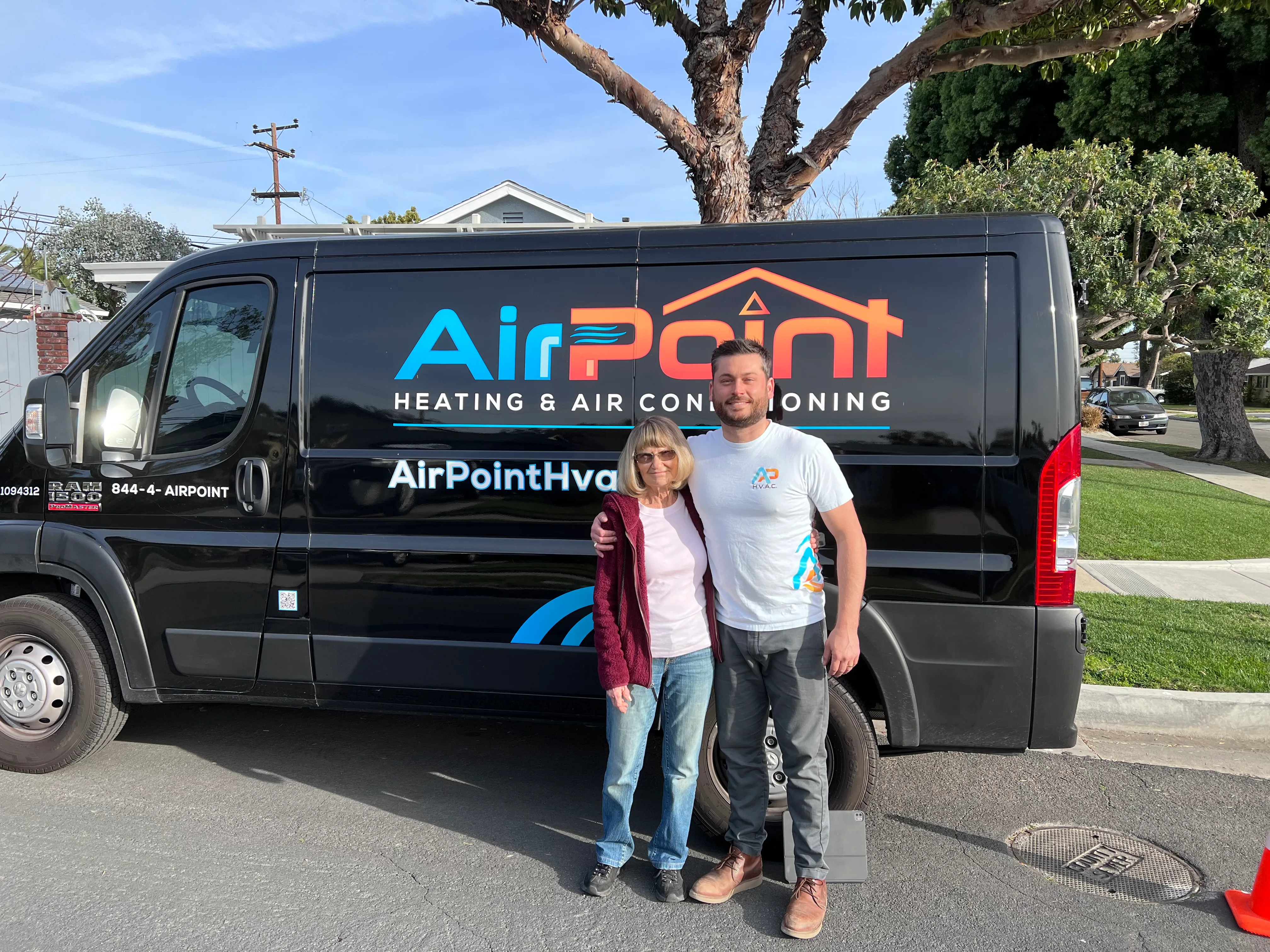
I recommend Air Point for your HVAC needs."