





Why Understanding Air Filter Types and MERV Ratings Matters for Your Home
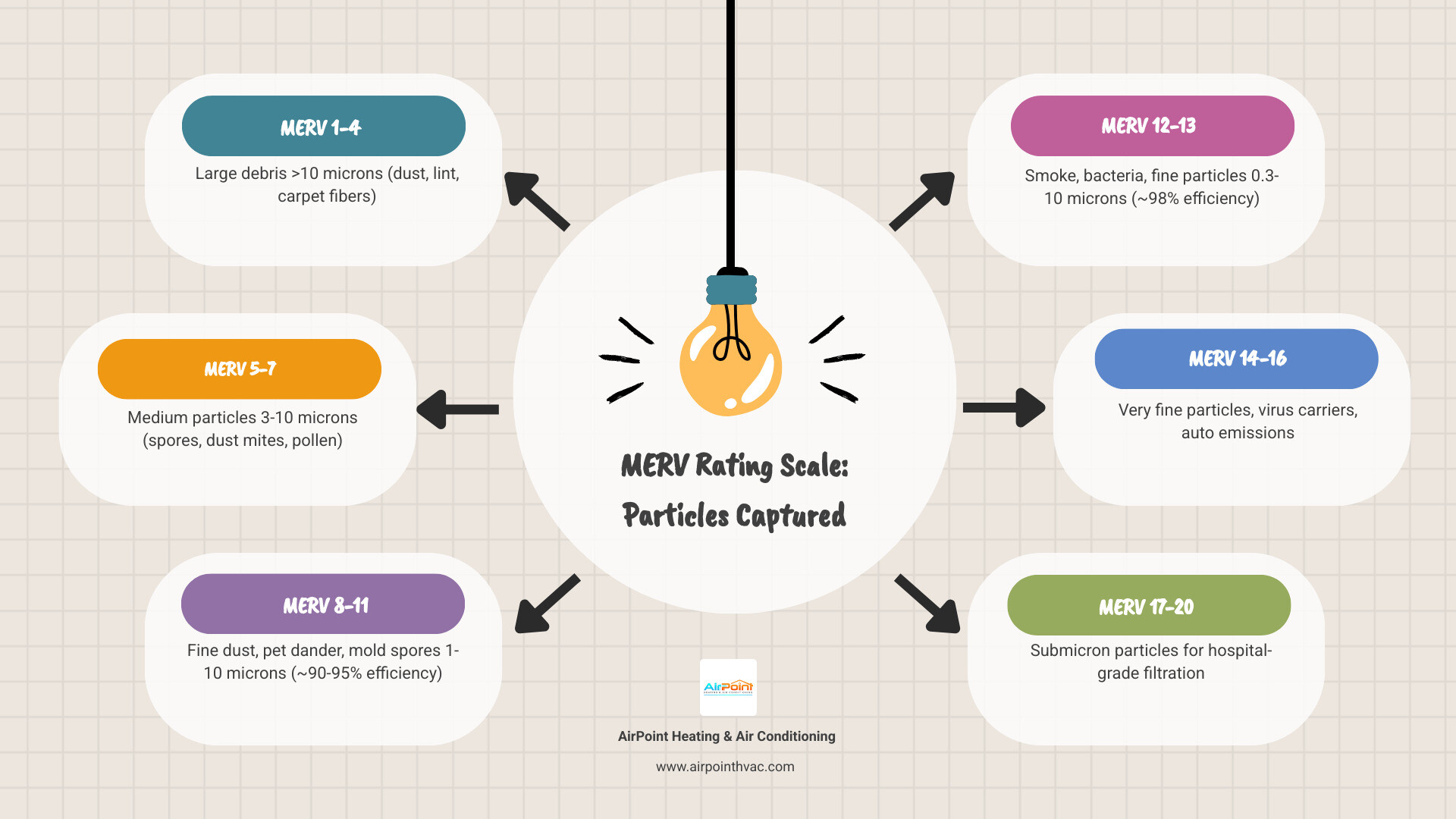
Air filter types and merv ratings explained simply: MERV (Minimum Efficiency Reporting Value) is a standardized scale from 1 to 20 that measures how effectively an air filter captures airborne particles between 0.3 and 10 microns. Higher numbers mean better filtration of smaller particles.
Quick Answer — Air Filter Types and MERV Ratings at a Glance:
| MERV Rating | Best For | Particles Captured |
|---|---|---|
| MERV 1–4 | Basic industrial use | Large debris only (>10 microns) |
| MERV 8 | Standard homes | Dust, pollen, mold spores (3–10 microns), ~90% efficiency |
| MERV 11 | Homes with pets or mild allergies | Pet dander, finer dust (1–10 microns), ~95% efficiency |
| MERV 13 | Allergy/asthma sufferers | Smoke, bacteria, fine particles (0.3–10 microns), ~98% efficiency |
| MERV 14–16 | Commercial/hospital use | Near-microscopic particles |
| HEPA | Portable air purifiers | 99.97% of particles at 0.3 microns |
Common filter types include:
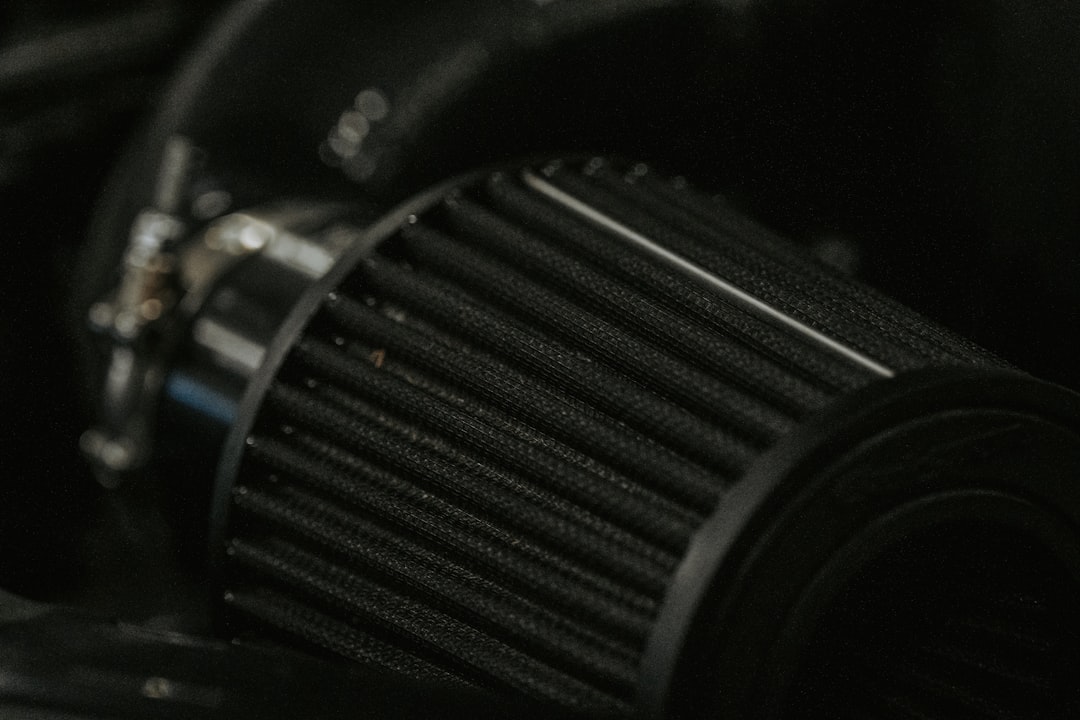
- Fiberglass — low cost, low efficiency, MERV 1–4
- Pleated polyester — best balance of airflow and filtration, MERV 8–13
- Electrostatic — uses static charge to attract particles, moderate efficiency
- Washable/reusable — low MERV, high maintenance, generally not recommended
- HEPA — hospital-grade efficiency, not compatible with most home HVAC systems
If you're a homeowner in Los Alamitos or anywhere in Orange County, picking the wrong filter rating can quietly hurt your HVAC system or leave your family breathing air that's dirtier than it needs to be. Most modern homes fall somewhere in the MERV 8 to 13 range — but the right choice depends on your household, your system, and your air quality needs.
Understanding these numbers isn't just for HVAC professionals. It's one of the most practical things you can do for your family's health and your system's long-term performance.
Air Filter Types and MERV Ratings Explained
When we talk about air filter types and merv ratings explained, we have to start with the organization that set the rules: ASHRAE (the American Society of Heating, Refrigerating, and Air-Conditioning Engineers). In 1987, they developed the MERV system to give us a universal language for air filtration. Before this, it was nearly impossible for a homeowner in Cerritos or Huntington Beach to compare two different brands of filters accurately.
MERV stands for Minimum Efficiency Reporting Value. The "Minimum" part is crucial; it represents the filter's worst-case performance scenario. If a filter is rated MERV 8, it means that even under challenging conditions, it will catch at least the specified percentage of particles.
The scale measures particles in microns. To give you some perspective, a single human hair is about 70 microns wide. The MERV scale looks at particles as small as 0.3 microns—things so tiny they are invisible to the naked eye but can easily enter your lungs. Understanding How Air Filters Impact Your HVAC System is the first step in realizing that your filter is more than just a piece of cardboard and mesh; it is the frontline defense for both your lungs and your expensive HVAC machinery.
How Air Filter Types and MERV Ratings Explained Impact Indoor Air Quality
Indoor air quality (IAQ) is a major concern for us in Southern California. Between the coastal salt air in Newport Beach and the urban dust in Downey, our HVAC systems work overtime. The air inside our homes can actually be more polluted than the air outside because contaminants get trapped and recirculated.
Common indoor pollutants include:
- Dust Mites: Tiny organisms that thrive in humidity and feed on skin cells.
- Pollen: Tracked in from our beautiful California landscapes.
- Mold Spores: Which can reproduce rapidly in damp areas like bathrooms or kitchens.
- Pet Dander: Dried skin flakes from our furry friends that attract other allergens.
A higher MERV rating means the filter has smaller "pores" or more specialized fibers to catch these microscopic troublemakers. For example, while a basic filter might catch lint and large dust, it takes a MERV 11 or higher to effectively snag pet dander and mold spores. If you are noticing more sneezing or dust buildup on your furniture, it might be time to look into Indoor Air Quality Services Irvine CA to see if a filter upgrade is right for you.
Choosing Between Air Filter Types and MERV Ratings Explained for Your HVAC System
Selecting a filter is a balancing act. We all want the cleanest air possible, but we also need our air conditioners to breathe. Think of it like breathing through a cloth mask versus a thick piece of plywood. The plywood stops everything, but you can’t get any air through it.
In the HVAC world, this resistance is called "static pressure." If we install a filter with a MERV rating that is too high for your specific system, the blower motor has to work much harder to pull air through the dense material. This leads to:
- Reduced Airflow: Your home takes longer to cool down or heat up.
- Increased Energy Bills: The motor uses more electricity to overcome the resistance.
- System Wear and Tear: Overworking the motor can lead to premature failure.
Before you jump to the highest number on the shelf, it’s vital to check your manufacturer’s guidelines. If you’re unsure what your system can handle, we often provide Air Filter Replacement Garden Grove CA to help homeowners find that perfect middle ground where the air is clean, but the system stays healthy.
Comparing Common Air Filter Materials and Designs
Not all filters are made of the same stuff. The material determines how the filter performs and how long it lasts.
- Fiberglass Filters: These are the thin, blue, see-through filters you often see in bulk at big-box stores. They are designed primarily to protect the HVAC equipment from large "boulders" of dust, not to improve your air quality. They usually carry a MERV 1–4 rating.
- Pleated Polyester/Cotton: This is the industry standard for residential use. By folding the material into pleats, manufacturers increase the surface area. More surface area means more "parking spots" for dust and better airflow. These typically range from MERV 8 to MERV 13.
- Electrostatic Fibers: These filters use self-charging paper or cotton fibers that act like a magnet for small particles. They are excellent for catching light allergens like smoke and fine dust.
- Washable Filters: While they seem eco-friendly, we generally don't recommend them for most homes in Huntington Beach or Anaheim. They often have low MERV ratings, and if you don't let them dry completely before reinstalling, they can become a breeding ground for mold.
For most of our neighbors, we suggest high-quality pleated filters. If you need help deciding, our team offers Air Filter Replacement Huntington Beach CA to ensure you get a filter that actually does what it promises.
HEPA Filters vs. Standard HVAC Filters
You’ve likely heard the term "HEPA" (High-Efficiency Particulate Air). By definition, a HEPA filter must remove at least 99.97% of particles that are 0.3 microns in size. This is hospital-grade filtration.
However, there is a common misconception that you can simply pop a HEPA filter into a standard home furnace or AC unit. In reality, most residential systems are not powerful enough to push air through a true HEPA filter. Doing so would be like trying to blow air through a brick—it would likely cause your system to overheat or the evaporator coil to freeze.
True HEPA filtration in a home usually requires a dedicated Whole House Air Purification Cypress CA system that sits alongside your HVAC unit, or a standalone portable air purifier.
Alternative Rating Systems: MPR and FPR
If you've gone shopping for filters lately, you might have noticed numbers that don't look like MERV ratings.
- MPR (Microparticle Performance Rating): This is a proprietary scale used by 3M (Filtrete). It focuses on the filter's ability to capture particles smaller than 1 micron.
- FPR (Filter Performance Rating): This is a 1–10 scale used by Home Depot.
While these can be confusing, you can usually find a MERV equivalent on the packaging. For instance, a filter with an MPR of 1000 is roughly equivalent to a MERV 11. If you're confused by the different scales while shopping for Air Filter Replacement Anaheim CA, just remember that MERV is the only industry-wide, independent standard.
Finding the "Sweet Spot": MERV Ratings for Residential Homes
For the vast majority of homes in Los Alamitos and surrounding areas, the "sweet spot" is between MERV 8 and MERV 13.
| Feature | MERV 8 | MERV 11 | MERV 13 |
|---|---|---|---|
| Primary Target | Dust, Pollen, Lint | Pet Dander, Dust Mites | Smoke, Bacteria, Viruses |
| Efficiency (1-3 μm) | ~20% | ~80% | ~85% |
| Efficiency (3-10 μm) | ~70% | ~90% | ~90% |
| Best For | Standard Households | Homes with Pets | Allergy/Asthma Sufferers |
- MERV 8: Great for "average" homes without pets or major allergies. It keeps the system clean and catches the big stuff.
- MERV 11: The preferred choice for pet owners. It’s significantly better at catching the fine dander that makes us sneeze.
- MERV 13: The highest rating we typically recommend for residential systems. It’s a powerhouse for air quality.
If you are looking for Air Filter Replacement Newport Beach CA, we can help you determine which of these levels matches your lifestyle and your equipment's capabilities.
Best Filters for Allergies and Asthma
If someone in your home struggles with respiratory issues, the air filter becomes a health tool. MERV 13 filters are capable of capturing virus carriers, bacteria, and smoke particles. In fact, MERV 13 filters capture up to 98% of airborne particles in the 0.3 to 10.0 micron range.
For families in Fullerton dealing with heavy seasonal allergies, upgrading to a higher MERV rating can make a night-and-day difference in sleep quality and daily comfort. We often recommend Whole House Air Purification Fullertron CA for those who need that extra layer of protection beyond just a standard filter.
Specialized Filtration for Orange County Homes
Living in Orange County brings unique air quality challenges. We have "pollen surges" in the spring, high humidity near the coast that encourages mold, and—unfortunately—wildfire smoke during the dry months.
Wildfire smoke is composed of incredibly fine particles (often 2.5 microns or smaller) that can penetrate deep into the lungs. During fire season, a MERV 13 filter is almost essential for keeping that "campfire" smell and the harmful soot out of your living room. Residents looking for Air Filter Replacement Yorba Linda CA often ask us for high-efficiency options specifically to deal with these outdoor environmental factors.
The Risks of High-Efficiency Filtration and System Compatibility
We have seen it many times: a well-meaning homeowner buys the most expensive, highest-rated filter they can find, only to have their AC stop working a week later.
When a filter is too restrictive, it creates a high "pressure drop." This means the air pressure on one side of the filter is much higher than the other. This can lead to:
- Frozen Evaporator Coils: Without enough warm air blowing over the cooling coils, the condensation on them turns to ice. This literally chokes your system until it shuts down.
- Blower Motor Failure: The motor is designed to spin at a certain resistance. If it has to fight a "wall" of a filter, it can burn out.
- Cracked Heat Exchangers: In the winter, restricted airflow can cause the furnace to overheat, potentially cracking the heat exchanger—a dangerous and expensive problem.
If you live in South County, getting a professional Air Filter Replacement South County CA ensures that your filter is matched to your blower's capacity.
Balancing Airflow and Particle Capture
The goal is to find the maximum filtration your system can handle without causing a spike in energy consumption. Modern HVAC systems with ECM (Variable Speed) motors are better at handling higher MERV filters because they can adjust their speed to compensate for the resistance. However, older systems with PSC motors are much more sensitive.
If you want the benefits of a MERV 13 but have an older system, we might recommend a thicker filter (4 or 5 inches thick instead of the standard 1 inch). These "media filters" have vastly more surface area, allowing for high filtration with much lower airflow resistance. We frequently install these for Air Filter Replacement Cerritos CA customers who want the best of both worlds.
Maintenance Schedules and Replacement Best Practices
The most important rule of air filters is: Change them! Even the best MERV 13 filter becomes a liability once it’s clogged with dirt.
- Standard 1-inch filters: Check every 30 days. Replace every 60–90 days.
- Homes with multiple pets: Replace every 30–45 days.
- Homes with smokers or high-allergy needs: Replace every 30 days.
- Thick 4-5 inch media filters: These can often last 6 to 12 months.
We recommend setting a calendar reminder on your phone for the first of the month. If you are in Los Alamitos, our Air Filter Replacement Los Alamitos CA service can take the guesswork out of maintenance by including filter checks in your regular tune-ups.
Signs Your Filter Needs Immediate Replacement
Sometimes, the 90-day window isn't enough. Your filter might need an early retirement if you notice:
- Visible Dust: If the filter looks gray or "fuzzy," it’s full.
- Whistling Sounds: This often means the filter is so clogged that air is trying to "leak" around the edges of the frame.
- Dust Near Vents: If you see "ghosting" (dark streaks) around your supply vents, your filter is likely failing to catch fine particles.
- Longer Run Times: If your AC seems to be running forever without reaching the set temperature.
If you're seeing these signs, don't wait. A quick Air Filter Replacement Orange County CA can prevent a much more expensive repair bill down the road.
Frequently Asked Questions about Air Filters
Is a MERV 13 filter too high for my home HVAC system?
It depends on the age and design of your system. Most modern systems (less than 10-15 years old) can handle a MERV 13, especially if it is a high-quality pleated version. However, if you have an older furnace, we recommend sticking to a MERV 8 or 11 unless a professional has verified your system's "static pressure" limits.
How often should I change my filter if I have multiple pets?
Pets are "particle factories." Between the dander, fur, and the dirt they bring in from the yard, they can clog a filter twice as fast as a pet-free home. We recommend checking your filter every 30 days and replacing it at least every 45 days to keep your air fresh and your system running efficiently.
Can a higher MERV rating help protect against viruses?
Yes, higher MERV ratings (specifically MERV 13 and above) are designed to capture the tiny droplets that viruses often "hitch a ride" on. While no filter can guarantee 100% protection from illness, a MERV 13 filter is a significant upgrade in capturing airborne pathogens compared to a standard MERV 8.
Conclusion
Choosing the right air filter doesn't have to be a mystery. By understanding air filter types and merv ratings explained, you can take control of your home's environment and protect your family from the unique air quality challenges we face here in Southern California.
At AirPoint Heating & Air Conditioning, we believe that "comfort is happiness." As a family-owned, award-winning business based in Los Alamitos, we’ve spent years helping our neighbors in Cypress, Garden Grove, and across Orange County breathe easier. Whether you need a simple filter replacement, a precision tune-up, or a whole-home air purification system, we back all our work with a 100% satisfaction guarantee.
Don't let a dirty or incorrect filter strain your system or your health. Book your indoor air quality consultation today for fast, honest, and expert service!
Other Blogs
Latest Blog Posts
The Essential Fall Home Maintenance Checklist: Decoding HVAC Startup Smells

Finding Your Efficiency Sweet Spot: Using a SEER Savings Calculator for HVAC Upgrades

Common Homeowner Questions Answered: Why Does My Heater Smell Like Burning Dust?

Customer Testimonials



I recommend Air Point for your HVAC needs."