







Why How Coastal California Climate Affects Your HVAC System Matters for SoCal Homeowners
How coastal California climate affects your HVAC system is one of the most important things to understand if you own a home near the Pacific — because the same ocean breeze that makes SoCal living so appealing is quietly working against your heating and cooling equipment every single day.
Here's a quick breakdown of the key ways the coastal climate puts stress on your HVAC system:
- Salt air corrosion — Salt particles in the marine air trigger electrochemical reactions on metal surfaces, degrading aluminum fins, copper lines, and electrical components 2-3 times faster than inland climates
- High humidity — Morning humidity along the coast regularly exceeds 80%, forcing your AC to work harder to remove moisture from the air on top of just cooling it
- Temperature swings — Diurnal (day-to-night) swings of 15-25°F cause short-cycling and added mechanical stress on compressors and reversing valves
- Marine layer and fog — Moisture-laden air from the marine layer pushes salt particles and humidity further inland, affecting homes well beyond the immediate shoreline
- Wildfires and smog — Seasonal wildfire smoke and urban smog rapidly clog filters, straining airflow and blower motors
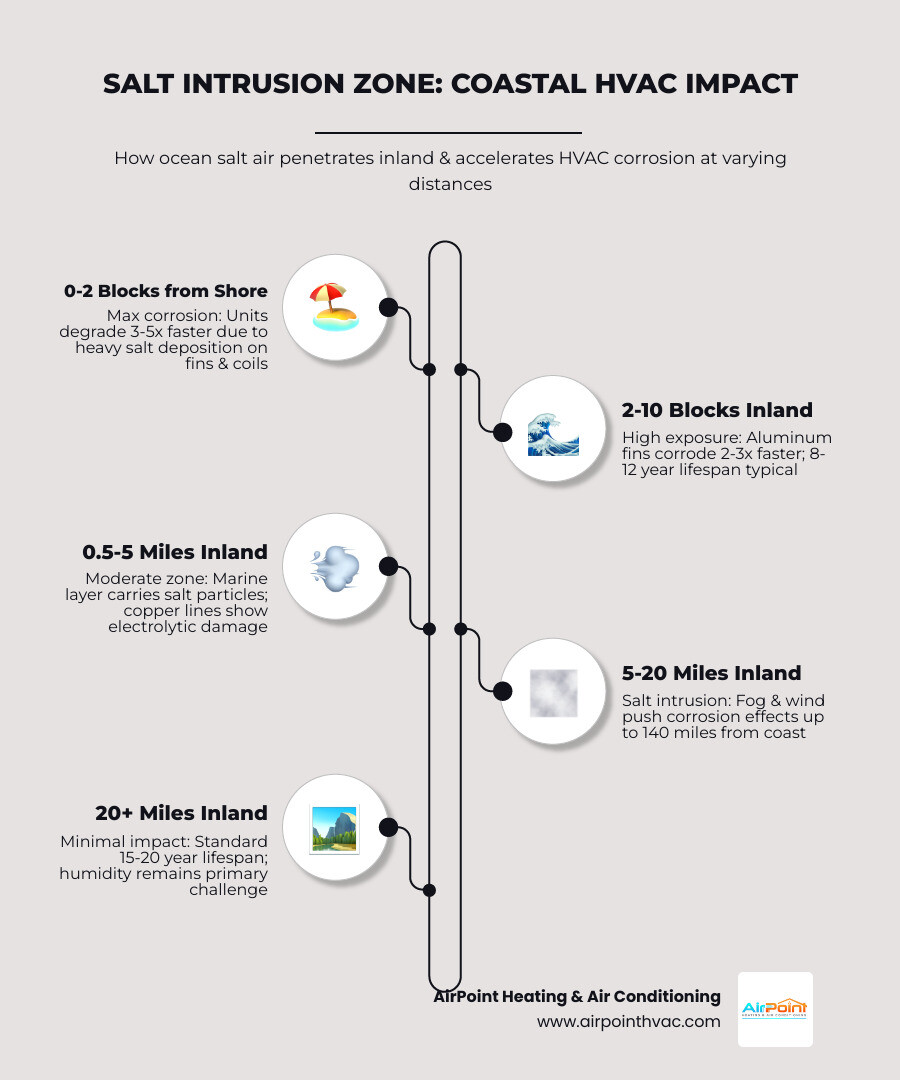
- Shorter equipment lifespan — Outdoor units within 2 blocks of the shoreline typically last just 8-12 years, compared to the 15-20 year standard for inland installations
- Microclimates — Neighborhoods just a few miles apart can have noticeably different humidity and salt exposure levels, meaning HVAC needs vary even within the same city
The result? Higher energy bills, more frequent repairs, and systems that wear out years ahead of schedule — unless you take the right steps to protect them.
How Coastal California Climate Affects Your HVAC System Performance
Living in beautiful communities like Newport Beach or Huntington Beach means enjoying the refreshing Pacific breeze. However, that same air carries a hidden burden for your air conditioner. When we talk about how coastal California climate affects your HVAC system, we have to start with the "latent load." This is the energy required to remove moisture from the air.
In coastal SoCal, morning humidity often spikes above 80%. Your AC isn't just lowering the temperature; it’s acting as a giant dehumidifier. This double duty forces the system to run longer cycles. When moisture levels are high, the air feels "heavy" or "clammy," often leading homeowners to lower the thermostat even further. This creates a cycle of overtime operation that spikes energy bills and accelerates wear and tear. If your system is struggling to keep up with the muggy marine layer, you might need professional AC Repair Laguna Beach CA to ensure your components are still operating at peak efficiency.

Understanding How Coastal California Climate Affects Your HVAC System Lifespan
In the HVAC world, geography is destiny. If you live in Rossmoor or Long Beach, your equipment faces different challenges than a unit in the high desert. Research shows that outdoor HVAC equipment within the "salt intrusion zone"—which can actually extend up to 140 miles inland—suffers a significantly shorter lifespan.
While a standard air conditioner might last 15 to 20 years in a dry, inland environment, units near the Los Angeles and Orange County shorelines often see their performance suffer drastically after just 6 or 7 years if neglected. On average, a coastal unit’s functional life is capped at 8 to 12 years. Salt air is a relentless corrosive agent, and once it takes hold, it can lead to refrigerant leaks and total compressor failure. When the salt finally wins, a timely HVAC Replacement Laguna Beach CA with marine-grade equipment is often the most cost-effective path forward.
The Impact of Salt Air Corrosion on Outdoor Units
The primary victim of the coast is the outdoor condenser coil. Most standard units use aluminum fins pressed onto copper lines. In the presence of salt and moisture, an electrolytic reaction occurs. This is essentially a "slow-motion battery" effect that eats away at the metal.
Without protective measures, these delicate aluminum fins can begin to turn to powder or "flake" within 3 to 5 years of installation. Once the fins degrade, the unit can no longer dissipate heat effectively. We also see significant damage to:
- Electrical Terminals: Salt residue causes pitting and poor connections, leading to intermittent shutdowns.
- Fasteners and Cabinets: Standard steel screws rust shut, making future repairs difficult.
- Fan Blades: Corrosion can throw the motor out of balance, leading to noisy operation and premature motor failure.
To combat this, we highly recommend specialized AC Maintenance Laguna Beach CA that includes deep coil cleaning to rinse away these corrosive deposits before they can bond to the metal.
Lifespan and Efficiency: Coastal vs. Inland HVAC Systems
The difference between living on the coast versus living inland is stark when you look at the data. We’ve compiled this comparison to show just how much the Pacific influences your home’s hardware.
| Feature | Coastal SoCal (0-5 miles from shore) | Inland SoCal (20+ miles from shore) |
|---|---|---|
| Typical Lifespan | 8 - 12 Years | 15 - 20 Years |
| Coil Degradation | Visible within 3 - 5 years | Minimal over 10+ years |
| Maintenance Need | Quarterly to Bi-Annual | Annual |
| Humidity Impact | High (Latent load is a priority) | Low (Sensible cooling is priority) |
| Primary Failure | Corrosion & Electrical Shorts | Heat Stress & Mechanical Wear |
When systems are forced into "overtime operation" to fight humidity, they often fall victim to short-cycling. This is when the system turns on and off too frequently, which is the hardest thing you can do to a compressor. If you're noticing your energy bills climbing despite the mild coastal weather, it’s a sign your system is losing the efficiency battle. Regular HVAC Maintenance Long Beach CA is the best way to keep these costs in check.
Proactive Steps to Mitigate How Coastal California Climate Affects Your HVAC System
You don't have to just accept a shorter equipment life. There are several professional-grade strategies we use at AirPoint to shield your investment:
- Protective Coatings: Applying specialized epoxy or phenolic coatings to the coils provides a barrier against salt air.
- Sacrificial Anodes: Much like on a boat, these can be installed to draw corrosion away from critical components.
- Quarterly Coil Rinsing: A gentle, low-pressure fresh water rinse (not a power wash!) can remove salt buildup.
- Frequent Filter Changes: Coastal dust and moisture can turn filters into a breeding ground for debris. We suggest checking them every 30-60 days.
For homeowners in areas like Rossmoor, a seasonal AC Tune-Up Rossmoor CA is the perfect time to apply these protective measures and ensure your drainage lines aren't clogged with salt-crusted "gunk."
Managing High Humidity and Latent Load Demands
In April 2026, we are seeing more homeowners prioritize indoor air quality than ever before. Coastal morning humidity regularly exceeding 80% doesn't just make you feel hot; it creates a risk for mold and mildew inside your ductwork and behind walls.
Signs your HVAC is failing to manage humidity include:
- Musty or "sock-like" odors when the air turns on.
- Condensation on windows or near supply vents.
- A "clammy" feeling even when the temperature is 72°F.
- Increased allergy symptoms among family members.
Standard air conditioners are designed to cool first and dehumidify second. In our neck of the woods, you may need a more targeted approach. Integrating Whole House Dehumidification Long Beach CA allows your system to pull gallons of water out of the air every day without over-cooling your home, keeping you comfortable and protecting your home's structure.
Selecting the Best HVAC Equipment for Coastal SoCal Homes
If you are looking to upgrade, don't just buy the same unit your cousin in the desert has. Coastal homes require "Marine-Grade" specifications.
When selecting new equipment, look for:
- Epoxy-Coated Coils: These are factory-applied and offer the best defense against salt.
- Stainless-Steel Fasteners: Prevents the unit from becoming a rusted "box" that can't be serviced.
- Variable-Speed Technology: This is a game-changer for coastal climates. Instead of being "all on" or "all off," variable-speed systems ramp up and down slowly. This allows for much better dehumidification and handles our 15-25°F diurnal temperature swings with ease.
If your current unit is showing signs of terminal rust, it’s time to call for an expert HVAC Repair Long Beach CA assessment to see if a coastal-rated replacement is a better long-term value.
Why Heat Pumps and Mini-Splits Excel in Coastal Climates
Heat pumps are the "gold standard" for the Southern California coast. Because our winters are mild (rarely dropping below 45°F), heat pumps operate with incredible efficiency. They often achieve a Coefficient of Performance (COP) of 3.0 or higher, meaning they move three times more energy than they consume.
Ductless mini-splits are also a fantastic option, especially for older coastal bungalows in places like Laguna Beach where adding ductwork is difficult. These systems allow for "zoning," so you aren't wasting energy cooling the whole house when you're only using the bedroom. Plus, many high-end mini-splits come with advanced corrosion resistance built-in. If you already have one of these systems, keeping up with Mini-Split Service Laguna Beach CA ensures those sensitive electronic expansion valves stay free of salt damage.
Protecting Indoor Air Quality from Fog, Smog, and Wildfires
Coastal living isn't just about salt; it’s about what’s in the air. The marine layer can trap particulate matter (smog) near the ground. Furthermore, California's wildfire seasons introduce fine ash and smoke that can penetrate even the best-sealed homes.
Moisture from the marine layer can cause these particulates to stick to your coils and filters, creating a thick "mat" that chokes your system. To combat this, we recommend:
- High-MERV Filtration: Using MERV 11 or 13 filters to catch microscopic smoke and smog particles.
- Air Purifiers: Systems that use UV light or ionization to neutralize mold spores that thrive in our humid air.
- Duct Sealing: Ensuring that salt-laden air isn't being sucked into your home through leaks in the attic or crawlspace.
Investing in Indoor Air Quality Laguna Beach CA solutions is the best way to ensure that the air your family breathes is as fresh as a sea breeze, without the pollutants.
Frequently Asked Questions about Coastal HVAC Care
How often should I wash my outdoor AC unit if I live near the beach?
If you are within a mile of the ocean, we recommend a gentle fresh-water rinse of the outdoor condenser coils once a month. This helps remove salt crystals before they can bond to the metal. Just be sure to use a gentle stream—never a pressure washer, which can flatten the delicate aluminum fins!
Does the marine layer affect my indoor furnace or just the outdoor unit?
While the outdoor unit takes the brunt of the salt spray, the marine layer brings high humidity indoors, too. This can lead to moisture buildup in your ductwork and even cause "flash rust" on the burner components of a furnace. This is why indoor humidity control is just as important as outdoor corrosion protection.
What are the signs that salt air is damaging my HVAC system?
Look for "white powder" or pitting on the aluminum fins of your outdoor unit. Other signs include rust stains on the cabinet, unusually loud fan noises, or a noticeable increase in your monthly energy bills. If you see the fins starting to crumble when touched, the corrosion is already advanced.
Conclusion
At AirPoint Heating & Air Conditioning, we know that "comfort is happiness." Living in coastal Southern California is a dream, but your HVAC system needs a little extra love to survive the marine environment. Whether you are in Los Alamitos, Huntington Beach, or Newport Beach, our family-owned business is here to provide the expert, honest service you deserve.
From precision tune-ups that wash away the salt to installing the latest corrosion-resistant heat pumps, we back all our work with a 100% satisfaction guarantee. Don't let the salt air steal years from your system's life.
Book Now for fast, reliable service in Huntington Beach CA today!
Other Blogs
Latest Blog Posts

The Essential Seasonal Home Maintenance Checklist: Decoding Fall HVAC Startup Smells and Sounds

How to Use a SEER Savings Calculator to Compare Heating and Cooling Upgrades

Why Does My Furnace Smell Like Burning? Fall Heating Startup FAQ

Customer Testimonials



I recommend Air Point for your HVAC needs."