





Common Homeowner Questions Answered: Why Does My Heater Smell Like Burning?
Is It Normal for My Heater to Smell Like Burning?
Is your heater actually malfunctioning, or is that strange odor just a normal part of the season? When searching for common homeowner questions answered, one of the most urgent concerns we hear during a mid-fall heating startup is the sudden, alarming smell of burning spreading through the house. You flip the thermostat from cool to heat for the first time in months, and within minutes, the air smells vaguely like smoke. It is an immediate trigger for panic, and rightfully so—protecting your home from fire hazards is always a top priority.
The transition from summer cooling to fall heating often reveals hidden dust accumulation that you simply cannot see. After relying on your air conditioning systems for months to combat the heat, the furnace or heat pump has sat completely dormant in the background. While you might have spent the summer using a SEER savings calculator to plan next year's cooling upgrades, right now, your focus is entirely on heating safety. The short answer is: a brief burning smell during the initial fall startup is usually normal. However, knowing the exact difference between harmless dust burn-off and a dangerous electrical issue is critical. Let's break down exactly what is happening inside your system and when you need to take action.
The Science Behind the Mid-Fall Heating Startup Odor
To understand why your heater smells like it is on fire, it helps to look at the physics of your HVAC system. Inside your furnace, there is a crucial component called a heat exchanger (or heating elements, if you use a heat pump or electric furnace). This component gets incredibly hot to warm the air passing over it. But when the system is turned off for months at a time, that heat exchanger becomes a magnet for household debris.
Even in the cleanest homes, indoor air is filled with microscopic particles. Pet dander, dead skin cells, textile fibers from carpets and clothing, and regular atmospheric dust constantly circulate through your ductwork. While your air filter catches the vast majority of this debris, microscopic particles inevitably slip through and settle on the stationary metal surfaces of your dormant heating components.
When you initiate that mid-fall heating startup, the heat exchanger rapidly climbs to temperatures exceeding 400 degrees Fahrenheit. The settled dust and dander have nowhere to go, so they are instantly incinerated. What you are smelling is quite literally the rapid combustion of months' worth of microscopic household dust. It is a simple physical reaction, not a mechanical failure.
Why Long Dormancy Equals Stronger Odors
In Southern California areas like Los Alamitos, the heating system sits dormant for eight to nine months due to the extended cooling season. This allows significantly more dust to accumulate than in colder climates where heaters are used for a larger portion of the year.
The Stages of Dust Burn-Off:
• Minutes 1 to 5: The heat exchanger reaches peak operating temperature. The accumulated dust begins to incinerate rapidly, producing a distinct, slightly sweet or organic burning odor. This is when the smell is strongest at the vents.
• Minutes 5 to 15: The bulk of the debris has burned away. The smell begins to dilute as the blower fan pushes fresh, heated air through the ductwork and circulates it throughout your living spaces.
• Minutes 15 to 30: The heat exchanger is now completely clear of settled dust. The residual odor in the air begins to fade entirely.
Because the dormancy period is so long, that first ten minutes of operation will always produce the strongest scent. Understanding this chemical and physical process helps reassure homeowners that the system is simply clearing its throat, so to speak, rather than breaking down.
How Long Should the Dust Burn-Off Smell Last?
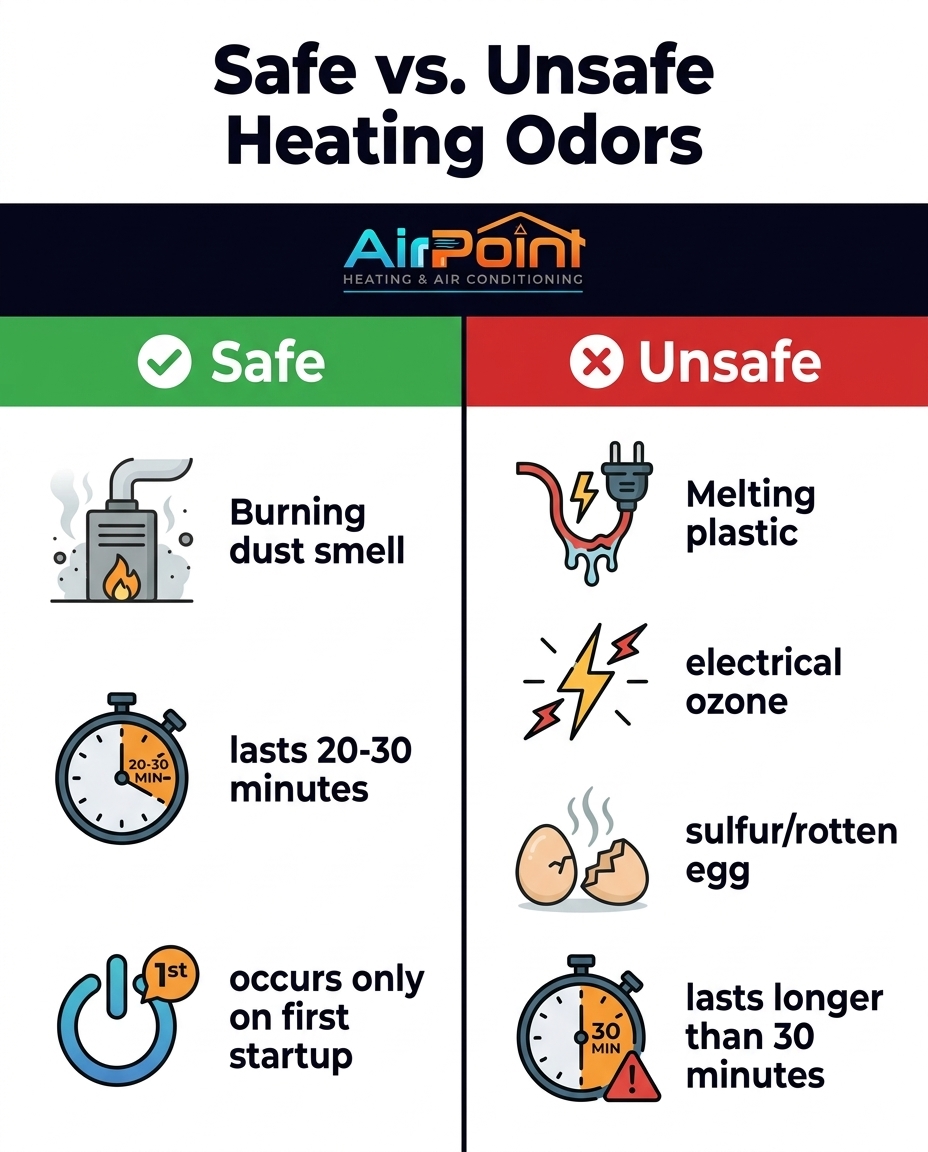
While understanding the science is comforting, you still need a definitive timeline to prevent unnecessary panic or premature service calls. As a neutral rule of thumb for any mid-fall heating startup, normal dust burn-off should dissipate entirely within 20 to 30 minutes of continuous operation.
If you turn your system on and notice the smell, follow these specific steps to safely monitor the situation:
1. Note the exact time: Look at the clock the moment the heater engages and you first detect the odor. This gives you a strict window to measure against.
2. Improve ventilation: Open a few windows or turn on your ceiling fans. This helps clear the initial wave of incinerated dust from your living space, making it easier to tell if the system is still actively producing the smell.
3. Monitor the scent profile: The smell should strictly resemble burning dust—similar to the smell of a hot clothes iron or a space heater that has just been turned on. It should never smell like harsh chemicals, melting plastic, or ozone.
4. Wait 30 minutes: Allow the system to run through a full heating cycle. If the smell fades and disappears within this half-hour window, your system is operating normally.
If the smell persists beyond this 30-minute window, or if it disappears but returns strongly during subsequent heating cycles later in the week, it crosses the threshold from normal to potentially problematic. We emphasize our commitment to honest advice by explicitly telling homeowners not to call for service if the smell is just dust and clears within 30 minutes. We prioritize your education and peace of mind over collecting a cheap service fee for a non-issue.
Dangerous Odors: When to Turn Off Your System Immediately
While burning dust is harmless, there are specific odors that indicate a severe mechanical or electrical failure. If you detect any of the following smells during your mid-fall heating startup, do not wait 30 minutes. Turn off the thermostat immediately and shut off power to the unit at the breaker box.
The Vocabulary of Dangerous Heating Odors:
• Electrical Ozone: This smells sharp, metallic, and slightly similar to chlorine or an overheated electric motor. An electrical ozone smell indicates overheating components, failing capacitors, or wiring faults that could lead to an electrical fire.
• Melting Wire Insulation: Often described as a "fishy" or highly acrid smell, this occurs when the protective plastic casing around your internal wiring begins to melt due to excessive electrical current or a short circuit.
• Burning Plastic: A distinct melting plastic odor often points to foreign objects that have fallen into the ductwork (like a child's toy or a dropped wrapper) resting against a heating element, or a failing plastic component inside the blower motor housing.
• Sulfur or Rotten Eggs: If you have a natural gas furnace, a sulfur smell is the most dangerous odor of all. Utility companies add a chemical called mercaptan to natural gas to give it this distinct rotten egg smell. If you smell this near your furnace or vents, it indicates a potential gas leak. Evacuate the home immediately and call your gas utility provider.
Checklist: Safe vs. Unsafe Heating Odors
• Faint burning dust or hot metal — Likely Cause: Normal seasonal dust accumulation — Required Action: Monitor for 20-30 minutes; open windows.
• Acrid, melting plastic — Likely Cause: Foreign object in ducts or failing casing — Required Action: Turn off system immediately; call a professional.
• Metallic, sharp ozone or "fishy" smell — Likely Cause: Overheating electrical wires or motors — Required Action: Shut off power at breaker; call a professional.
• Sulfur or rotten eggs — Likely Cause: Natural gas leak — Required Action: Evacuate home; call gas company immediately.
How Your HVAC Filter Impacts Heating Odors
One of the most overlooked factors in heating system performance is the air filter. Many homeowners assume the filter only affects air conditioning, but it plays an equally vital role during the heating season. In fact, a neglected filter can directly cause or severely exacerbate burning smells.
A severely clogged filter restricts airflow through the return ducts. When the blower motor cannot pull enough cold air across the heat exchanger to cool it down during operation, the heat exchanger begins to run much hotter than its designed safety limits. This excessive heat not only intensifies the normal dust burn-off smell, making it sharper and longer-lasting, but it can also cause the system to overheat entirely. If the furnace overheats, it will trigger a high-limit safety switch that shuts the system down to prevent a fire.
Furthermore, dirty filters fail to catch airborne dust circulating in your Los Alamitos home. The more debris that bypasses a clogged filter, the more dust settles directly on the heating elements, guaranteeing a terrible smell the next time the system fires up.
Selecting the right filter rating for the seasonal transition is essential. If you choose a filter that is too dense, you might accidentally restrict airflow yourself. We highly recommend reviewing the different air filter types and MERV ratings to ensure you are using a filter that balances excellent particle capture with healthy system airflow. Always replace your filter with a fresh one right before the first heating cycle of the year to minimize odors and maximize safety.
Why Pre-Season Maintenance Prevents Startup Surprises
The most effective way to handle the mid-fall heating startup odor is to prevent it from happening in the first place. This is where professional pre-season maintenance proves its value. A routine tune-up goes far beyond just changing the filter; it is a comprehensive safety check of the entire heating mechanism.
During a professional tune-up, a technician physically cleans the heat exchanger and the burner assembly. By vacuuming away the settled dust, pet dander, and debris that accumulated over the summer, they eliminate the fuel for that initial burning smell. When you finally turn your heater on for the first cold night, you get warm air with zero unpleasant odors.
More importantly, technicians inspect the system for the hidden dangers that cause the unsafe odors we discussed earlier. They check for frayed wires, leaky components, failing capacitors, and deteriorating electrical insulation that could cause a short circuit or an electrical fire.
Consider what happens when older systems are neglected until the dead of winter. One customer reached out during a cold snap when their very old, run-down HVAC unit began showing severe signs of wear, including a leaky compressor and deteriorating insulation. A comprehensive tune-up was performed to fix the leak, top off the refrigerant, and rewrap the coolant pipes, successfully improving the aging unit's efficiency and preventing a catastrophic mid-season failure.
For older systems, these routine checks are the barrier between a minor adjustment and a total breakdown. If a technician discovers that an aging system requires constant, expensive repairs to remain safe, exploring HVAC financing options for a modern, high-efficiency replacement might be a much more cost-effective and safer long-term strategy.
Common Homeowner Questions Answered: Heating Startup FAQs
When dealing with a strange smell in your home, you want fast, accurate answers. To help you troubleshoot quickly, we have compiled the most common homeowner questions answered regarding heating startups.
Is it normal for a heater to smell like burning?
Yes, it is completely normal if it is the first time you are turning the system on for the season. The smell is caused by harmless household dust and debris burning off the heat exchanger after months of inactivity.
How long does a heater smell like burning when first turned on?
The normal dust burn-off smell should completely dissipate within 20 to 30 minutes of continuous operation. If the smell persists longer than half an hour, or if it returns on subsequent days, it requires professional attention.
Should I turn off my heater if it smells like burning?
Turn it off immediately if it smells like electrical ozone, melting plastic, or sulfur, or if a standard dust smell lasts longer than 30 minutes. If it is just a faint dusty smell during the first 10 minutes of the season, you can safely leave it running to clear out.
What does an electrical fire smell like in a heater?
An electrical fire in an HVAC system smells acrid, sharp, and metallic. It is often compared to the scent of melting plastic, burning rubber, or a distinct "fishy" odor that occurs when protective wire insulation begins to melt.
Can a dirty air filter cause a burning smell?
Yes, a clogged filter restricts essential airflow, causing the furnace's internal components to overheat. This excessive heat can emit a strong burning odor right before the system's high-limit safety switches engage and shut the furnace down.
Why does my heater smell like burning plastic?
A burning plastic smell is never normal. It usually indicates that a foreign object has fallen into the ductwork and is resting against a hot component, or that an internal electrical casing is failing. Shut the system down immediately and call a professional.
Schedule Your Fall Heating Inspection Today
Navigating the transition into cooler weather shouldn't involve guessing whether your home is safe. While a brief dust smell during your mid-fall heating startup is completely normal and expected, persistent or acrid odors always require the attention of a licensed professional. Prioritizing your family's safety and comfort means never ignoring a symptom that lasts longer than it should.
If you are experiencing strange odors, or if you simply want to avoid the dust burn-off entirely, proactive maintenance is the key. Schedule a professional inspection today to ensure your heat exchanger is clean, your electrical connections are secure, and your system is completely ready to keep your home safely warm all season long. Having your common homeowner questions answered by a qualified technician is the best way to guarantee true peace of mind.
Other Blogs
Latest Blog Posts
Why Is My Heater Smelling or Clicking? A Fall Startup Troubleshooting Guide
Why Does My Heater Smell Like Burning Dust? A Mid-Fall HVAC Repair Guide
HVAC Repair: Decoding Fall Furnace Smells and Startup Issues

Customer Testimonials



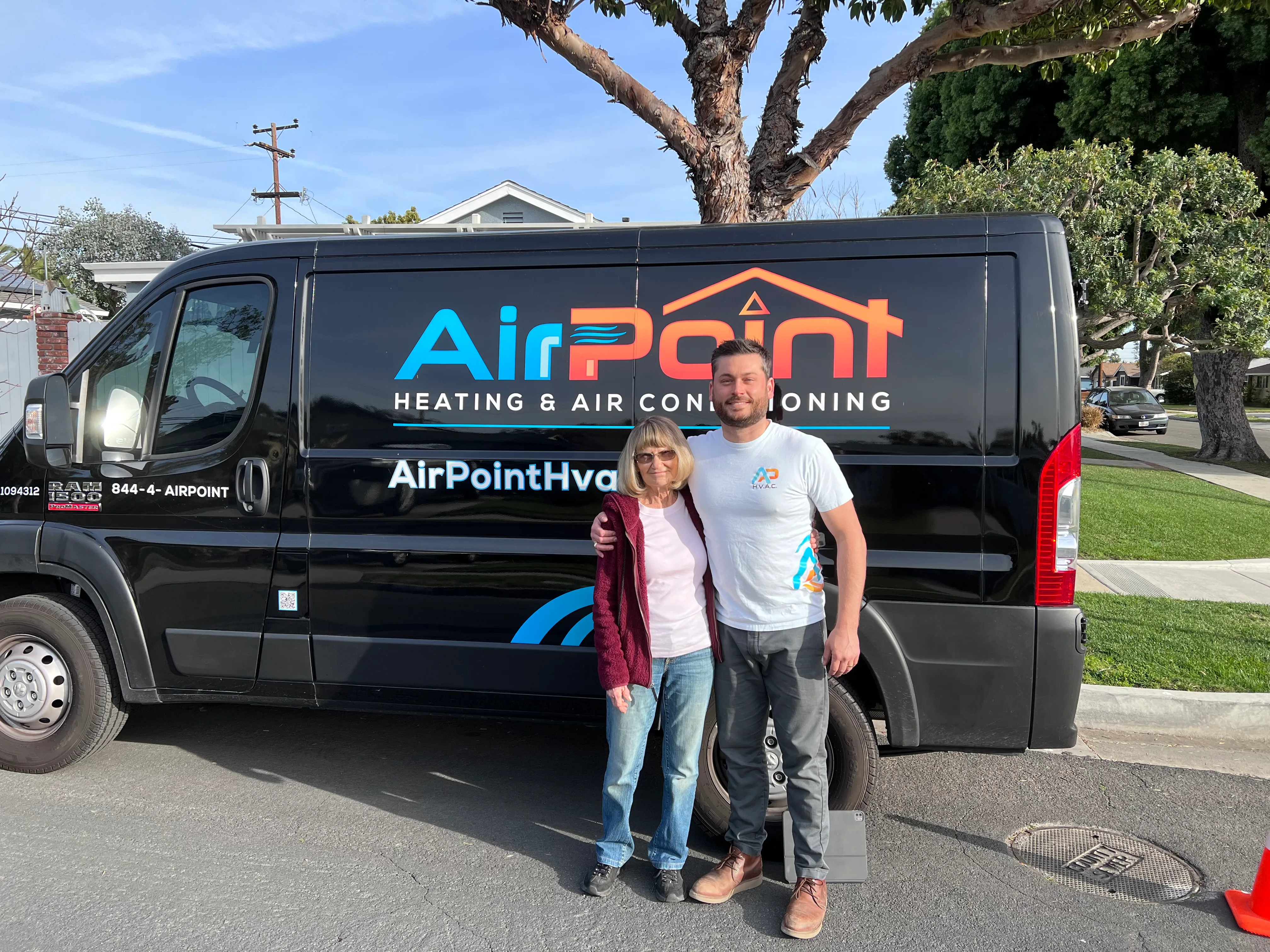
I recommend Air Point for your HVAC needs."