





Why Your First Time Turning on the Heater Smells Like Burning Dust (And When to Worry)
That Burning Smell During Your First Fall Heating Cycle: Don't Panic Yet
As the early fall pre-heating season arrives in September, adjusting your thermostat should bring immediate comfort, but instead, you might find yourself wondering why your first time turning on the heater smells like burning dust (and when to worry). Standing near a vent and suddenly catching the scent of smoke in your own home is an incredibly alarming experience. Your immediate instinct is likely to assume the worst—that a mechanical fire has started inside your walls or ductwork.
Most of the time, this initial odor is simply the result of months of settled household dust oxidizing on your furnace's heat exchanger. It is a completely normal rite of passage for the changing seasons. However, there is a strict boundary between harmless dust burn-off and a dangerous mechanical failure. At AirPoint Heating & Air Conditioning, our team fields dozens of frantic calls about this exact issue every September, so we put together this guide to help you quickly identify what you are smelling, understand exactly how long the odor should last, and know precisely when to shut your system down for safety.
For professional heating services or to schedule an HVAC service right away, our expert technicians are ready to help.
The Mechanics of the 'Hot Dust' Smell
To understand why your vents are producing that distinct odor, you have to look at what happens inside your heating system during the long off-season. In the Los Alamitos area, our exceptionally long warm season means your furnace sits completely dormant for a significant portion of the year. During those quiet months, gravity does its work.
The accumulation phase: Household dust is not just dirt. It is a complex mixture of microscopic skin cells, pet dander, fabric fibers, and airborne particulate matter. Even with a good air filter in place, tiny amounts of this debris inevitably settle inside your ductwork and directly onto the metal surface of your furnace's heat exchanger.
The ignition phase: The heat exchanger is the core component responsible for warming the air that circulates through your home. When you finally turn your thermostat to "heat" for the first time in months, the burners ignite and the heat exchanger rapidly warms up, typically reaching internal operating temperatures between 140 and 170 degrees Fahrenheit.
The oxidation process: When those settled particles of dust and dander meet the sudden, intense heat of the metal exchanger, they instantly oxidize. They literally burn away. The smell traveling through your vents is the harmless byproduct of this tiny amount of organic matter vaporizing. This is a normal mechanical operating principle, not a sign of system failure or an impending fire.
Sensory Checklist: What Normal Dust Burn-Off Smells Like
Because it is entirely natural to feel anxious when you smell something burning, having a specific sensory checklist can help you validate that your situation is normal. A standard dust burn-off event follows a very predictable pattern.
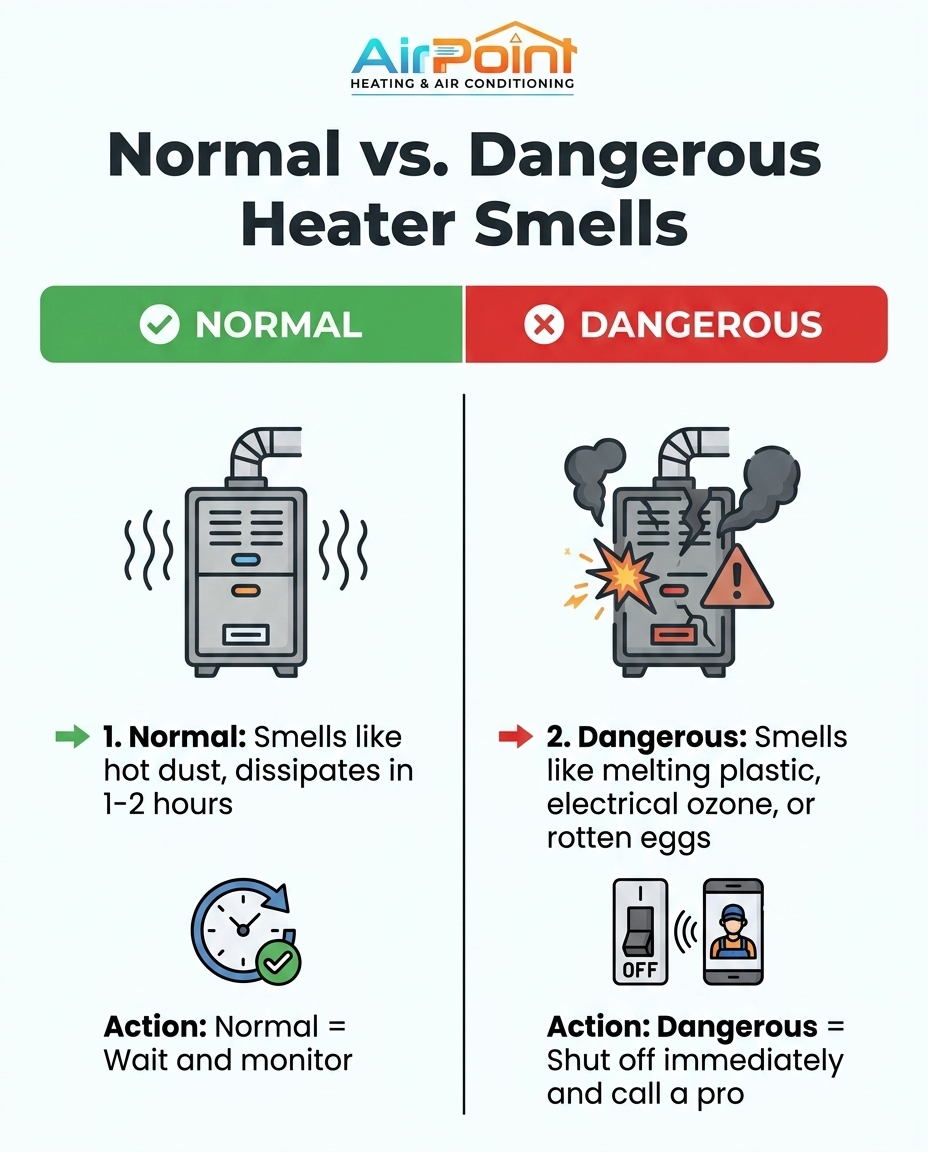
• The specific scent profile: Normal dust burn-off smells distinctly carbon-like. It closely mimics the scent of a hot clothes iron left sitting on a damp fabric, or the smell a portable space heater makes when you pull it out of a dusty closet. It is a dry, warm, and slightly toasted odor.
• The expected timeline: The smell should be most intense during the first 10 to 15 minutes of the heating cycle. As the dust finishes oxidizing, the odor will steadily fade. It should dissipate entirely within 1 to 2 hours of continuous operation.
• The physical signs: A normal burn-off will never produce visible smoke in your living space. You should not see a haze in the air near your vents.
• The auditory signs: Your system should sound normal. You should hear the steady whoosh of air and the standard hum of the blower motor, without any loud grinding, scraping, or banging noises accompanying the smell.
Danger Smells: When to Shut Off Your Heater Immediately
While dust burn-off is harmless, other odors indicate an actual emergency. If your heating system produces any of the smells listed in the danger category, your immediate action plan is simple: shut the system off at the thermostat, flip the corresponding breaker in your electrical panel to cut the power, and never attempt to diagnose internal electrical faults yourself. Always leave internal component testing to a licensed professional.
• Dry, toasted dust (fades quickly) — Likely Cause: Normal settled dust burning off the heat exchanger. — Required Action: Monitor for 1 to 2 hours. Ensure the smell dissipates.
• Melting plastic or burning rubber — Likely Cause: Failing wire insulation, an overheated circuit board, or a seized blower motor. — Required Action: Shut off system immediately at the thermostat and breaker. Call for service.
• Sharp metallic "zap" or ozone — Likely Cause: Electrical arcing or a failing capacitor inside the furnace cabinet. — Required Action: Shut off system immediately. Do not open the cabinet. Call for service.
• Rotten eggs or sulfur — Likely Cause: A severe natural gas leak (the utility company adds this scent for safety). — Required Action: Evacuate the home immediately. Call the gas company from outside.
Electrical Fires vs. Dust Burn-Off
The most important distinction to make is between dust and electrical failure. An electrical fire or melting component produces a highly acrid, chemical scent that burns the back of your throat. It smells toxic, much like melting a plastic container on a hot stove. Unlike dust burn-off, an electrical smell will not fade after 15 minutes; it will grow stronger and more pungent the longer the system runs. If you detect this chemical odor, it means a component is actively failing and requires immediate professional intervention.
Why Southern California Heaters Experience Heavier Initial Odors
The severity of that first-cycle burning smell is heavily influenced by your regional climate. In the Los Alamitos area, homes typically experience an 8 to 9 month dormant period where the heating system remains entirely inactive. Our technicians at AirPoint Heating & Air Conditioning see firsthand every fall how this extended off-season allows significantly more dust to accumulate on internal components than you would see in colder climates where heaters run for half the year.
Furthermore, local indoor air quality factors contribute heavily to the particulate load in your ductwork. Summer wildfires, dry Santa Ana winds, heavy pollen seasons, and year-round pet shedding all introduce debris into your home's air circulation. Even when your furnace isn't running, your air conditioner uses the same blower motor and ductwork, meaning dust is constantly moving past the dormant heat exchanger all summer long.
If you find that the initial burning smell is overwhelmingly strong every single year, it often points to an excessive amount of particulate matter circulating in your home. Upgrading your indoor air quality solutions—such as installing better filtration media, air purifiers, or UV lights—can drastically reduce the volume of dust that manages to settle on your internal HVAC components during the long summer months.
Professional Diagnostics vs. The 'Wait and See' Approach
It is always better to err on the side of caution when dealing with heavy combustion appliances in your home. Validating your alarm is important; if an odor persists longer than a couple of hours, or if you simply feel uneasy about the safety of your system, relying on the "wait and see" approach is not worth the stress.
Just last fall, a local homeowner reached out to our team concerned about potential issues with their heating system after noticing an unusual, lingering burning odor during their first start-up. One of our technicians performed a thorough preventative maintenance check, carefully inspecting the equipment and explaining potential future issues. This comprehensive approach gave the customer complete confidence in their system's condition and future performance going into the colder months.
At AirPoint Heating & Air Conditioning, our commitment to your safety and peace of mind drives everything we do. A professional preventative diagnostic goes far beyond just swapping out an air filter. An expert technician will visually inspect the heat exchanger for dangerous microscopic cracks, test the electrical draw of the blower motor, and verify that all safety switches are functioning correctly. Understanding the difference between a furnace safety inspection and a basic tune-up helps you know exactly what level of care your system needs to operate safely all season long.
How to Prevent the Burning Odor Next Year
While a brief "hot dust" smell is a normal part of autumn, you can take proactive steps to minimize or completely eliminate the odor before the next heating season arrives. By managing the dust load before you turn the system on, you can skip the stressful waiting period entirely.
1. Change the air filter at the end of summer: Before you initiate that very first heating cycle, remove your summer air filter and replace it with a fresh one. A clogged filter restricts airflow, which makes the furnace run hotter and burns the settled dust much more aggressively.
2. Vacuum around the furnace and return vents: Take a vacuum with a hose attachment and clean the exterior cabinet of your furnace. More importantly, vacuum the louvers of all your return air vents (the large vents that pull air into the system). This prevents a massive wave of loose dust from being sucked into the heat exchanger the moment the blower motor kicks on.
3. Invest in proactive care: The absolute best way to prevent the smell is to have the system professionally cleaned before the burners ever ignite. Scheduling annual heating maintenance ensures that a technician clears away the settled dust, tests the electrical components, and verifies safe operation before the cold weather settles in.
Get Peace of Mind Before the Cold Settles In
Experiencing a brief "hot dust" smell is a normal, albeit startling, rite of passage for the first fall heating cycle in September. As long as the odor dissipates within an hour or two and is not accompanied by loud noises or visible smoke, your system is simply clearing off the summer's accumulated dust. However, you should never ignore chemical, electrical, or persistent odors, as these require immediate professional attention.
If you have any lingering doubts about why your first time turning on the heater smells like burning dust (and when to worry), you do not have to guess. Protect your home and ensure your family's comfort safely by reaching out to our team to schedule an HVAC service today. Clear, immediate reassurance and professional safety checks are the best ways to start the heating season.
Frequently Asked Questions
How long is it normal for a heater to smell like burning?
A normal dust burn-off smell should peak within the first 10 to 15 minutes of operation. The odor will gradually fade and should completely dissipate within 1 to 2 hours of continuous running. If the smell persists beyond a few hours, you should turn the system off and contact a professional.
Should I be worried if my heater smells like burning?
If the smell resembles dry, hot dust and happens during the very first use of the season, it is generally not a cause for worry. However, if the smell resembles melting plastic, burning wires, or rotten eggs, you should be concerned. Shut the system down immediately if you detect any chemical or gas odors.
What does a bad furnace smell like?
A failing furnace often produces acrid, chemical odors that burn your nose or throat. It may smell like melting plastic, burning rubber, or a sharp metallic ozone scent, which indicates electrical arcing. A rotten egg smell is the most dangerous, as it indicates a natural gas leak requiring immediate evacuation.
Can a dusty heater cause a fire?
While the tiny amount of dust on a heat exchanger simply vaporizes harmlessly, severe neglect can pose risks. If a furnace filter is completely impacted with dirt, airflow is severely restricted, causing the system to overheat. Routine maintenance and regular filter changes prevent dust buildup from becoming a hazard.
What does an electrical fire in a furnace smell like?
An electrical fire smells highly toxic and synthetic, distinctly different from a dusty smell. It closely mimics the scent of burning wire insulation, melting plastic containers, or a sharp metallic "zap." This smell will grow stronger the longer the system runs and requires immediate system shutdown.
Does turning on the heat for the first time set off smoke alarms?
In most cases, normal dust burn-off will not produce enough particulate matter to trigger a standard smoke alarm. However, if your smoke alarm is located directly above a heating vent, or if your system is exceptionally dirty after years of inactivity, it is possible. If an alarm sounds, always verify there is no actual fire before silencing it.
Is it safe to sleep with the heater on if it smells like dust?
You should never go to sleep while your heater is actively producing a burning smell. Run the heater during the day while you are awake to monitor the odor and ensure it completely dissipates within a couple of hours. Once the smell is gone and the system is running cleanly, it is safe to leave on overnight.
Other Blogs
Latest Blog Posts

The Essential Fall Home Maintenance Checklist: Decoding HVAC Startup Smells

Finding Your Efficiency Sweet Spot: Using a SEER Savings Calculator for HVAC Upgrades

Common Homeowner Questions Answered: Why Does My Heater Smell Like Burning Dust?

Customer Testimonials




I recommend Air Point for your HVAC needs."