






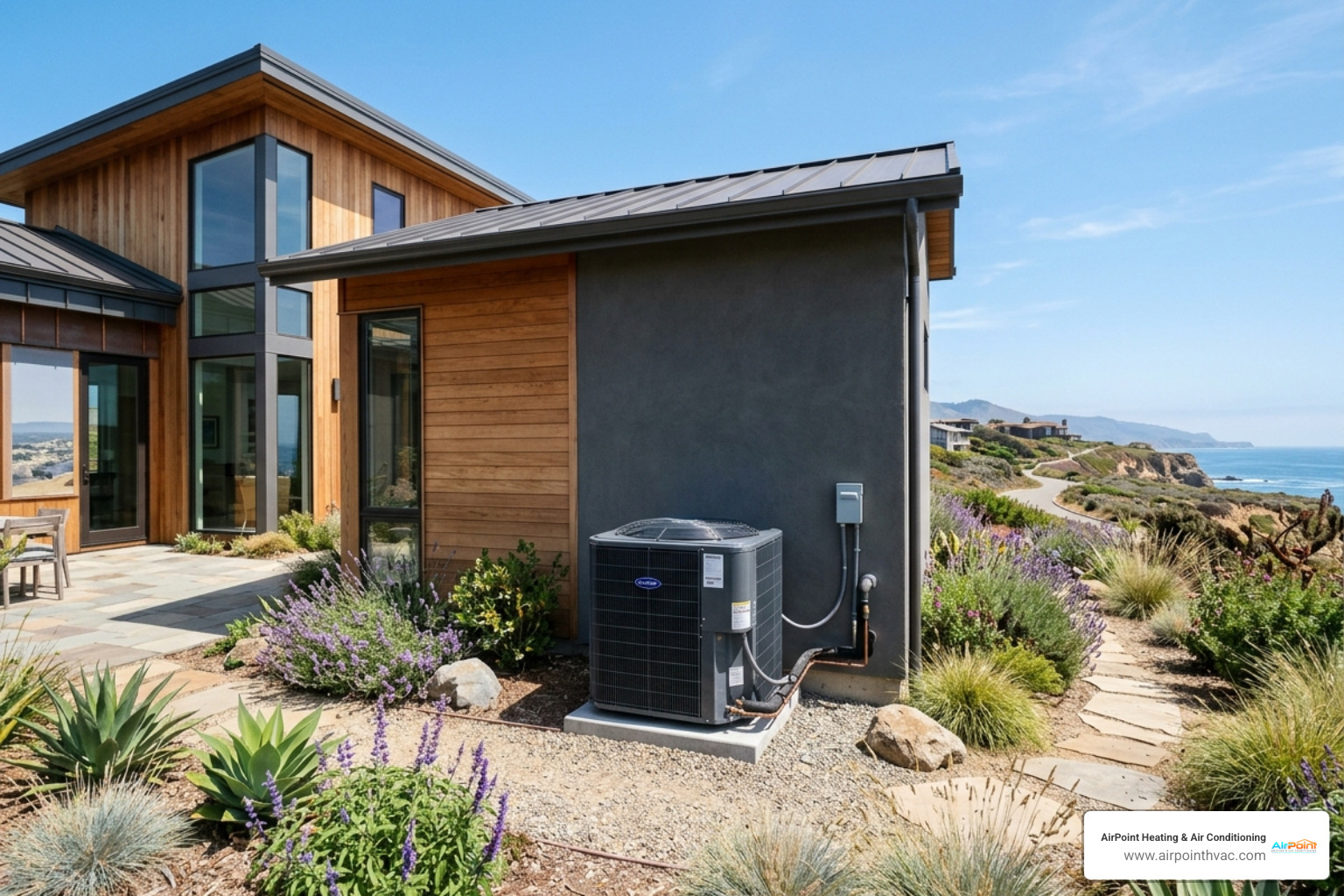
How Long Does an HVAC System Last in Coastal California — and Why It Matters
How long does an HVAC system last in coastal California depends heavily on how close you are to the ocean — and the answer might surprise you. While a well-maintained central AC unit can last 15 to 20 years in most parts of the state, coastal conditions can cut that lifespan down dramatically. Salt-laden marine air, humidity, and coastal fog work together to corrode metal components, degrade coils, and strain electrical parts far faster than in inland areas.
Here's a quick overview of what to expect near the coast:
| HVAC System Type | Typical Lifespan (Inland CA) | Typical Lifespan (Coastal CA) |
|---|---|---|
| Central Air Conditioner | 15-20 years | 10-15 years (condenser may need replacement by year 10) |
| Heat Pump | 10-20 years | 10-15 years with regular maintenance |
| Ductless Mini-Split | 15-20 years | 18-20 years with corrosion inspection every 7 years |
| Window AC Unit | 5-10 years | 5-8 years |
| Gas Furnace | Up to 25 years | 15-20 years depending on exposure |
If you live in Los Alamitos or anywhere along the Orange County coastline, your HVAC system is fighting a daily battle against the elements. Without the right maintenance and protection, a brand-new unit that should last 15 to 20 years can wear out in as little as 5 to 7 years. That's not a small problem — it's a costly one that catches many homeowners off guard.
This guide breaks down exactly what shortens HVAC life near the beach, what you can do about it, and how to know when it's time to replace rather than repair.
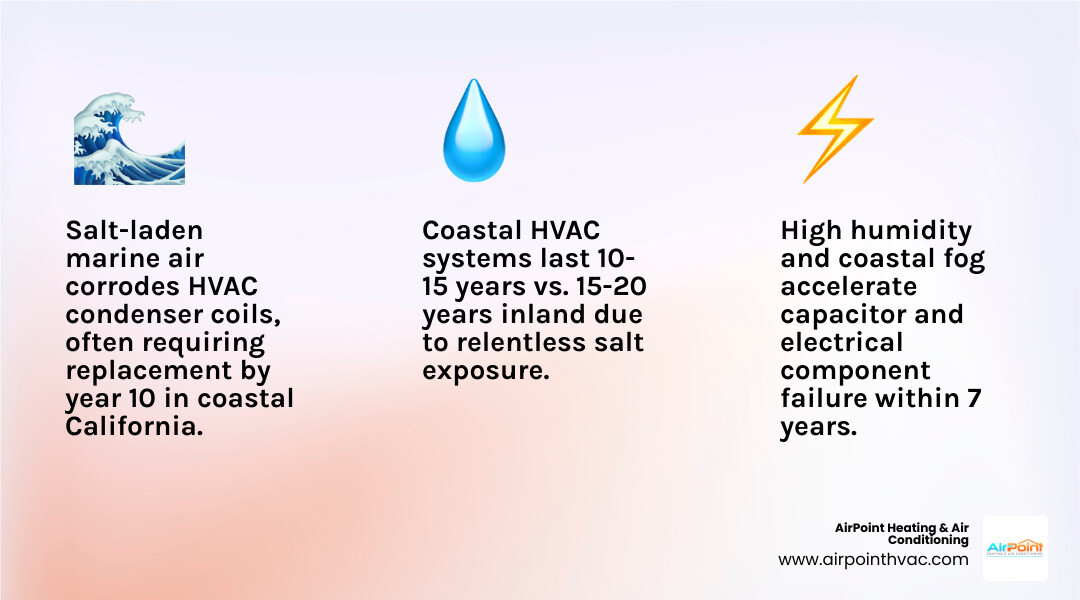
Understanding the Average Lifespan of Coastal Systems
When we talk about the lifespan of an HVAC system in Southern California, we have to look at two different worlds: the hot, dry inland valleys and the breezy, salt-misted coastline. In places like Whittier or Downey, heat is the primary enemy. But in Newport Beach or Huntington Beach, the enemy is chemical. Salt air is a silent corrosive agent that eats away at metal 24/7.
While the industry standard for a Central Air Conditioning unit is often cited as 15 to 20 years, coastal reality is often shorter. Statistics show that systems installed in coastal ZIP codes frequently show severe condenser corrosion requiring full coil replacement by year 10. Without intervention, the salt air can reduce a system's life to just one-third of its expected duration.
How long does an hvac system last in coastal california for central AC?
For a standard central AC system, the 15-year median is a moving target. The most vulnerable part is the outdoor condensing unit. These units feature aluminum fins and copper tubing that are highly susceptible to "pitting" corrosion. Once the salt air penetrates the protective layers of these metals, it creates tiny holes that lead to refrigerant leaks.
If you aren't sure where your system stands, it helps to Know When to Replace AC units before they fail during a July heatwave. In our experience serving coastal Orange County, a central AC unit that reaches the 12-year mark near the water is often operating at significantly reduced efficiency due to coil degradation.
Lifespan of Heat Pumps and Mini-Splits in Beach Communities
Interestingly, some modern systems fare slightly better or offer different maintenance profiles. A Heat Pump typically lasts 10 to 20 years, though because they often run year-round for both heating and cooling in our mild climate, they accumulate "mileage" faster than a standalone AC.
Ductless mini-split systems are becoming a favorite in beach cottages and older homes in areas like Laguna Beach. These systems can last 18 to 20 years. Because they don't rely on extensive Ductwork, they avoid the efficiency losses associated with leaky, salt-damaged ducts. However, they still require professional corrosion inspections at 7-year intervals to ensure the outdoor inverter unit isn't being eaten away by the marine layer.
Why Ocean Air and Salt Exposure Accelerate Failure
The "Beach Life" sounds idyllic for us, but for your HVAC, it’s a high-stress environment. The corrosion cycle starts the moment salt-laden air hits the warm metal of your condenser. As the moisture evaporates, it leaves behind concentrated salt crystals. These crystals draw more moisture from the air (even on days that aren't raining), creating a constant chemical reaction that dissolves metal.
This leads to:
- Coil Pitting: Tiny holes in the refrigerant lines.
- Fin Decay: The thin aluminum fins that dissipate heat turn to dust, making the unit work twice as hard.
- Reduced Lifespan: In extreme beachfront cases, a unit can fail in 5 to 7 years if left completely neglected.

The Impact of Humidity and Fog on Electrical Components
It isn't just the visible metal that suffers. Coastal California is famous for its "June Gloom" and thick marine layers. This persistent humidity can wreak havoc on the electrical heart of your system. Moisture can lead to electrical attrition, causing capacitors to fail prematurely.
We recommend a deep electrical inspection every 7 years for coastal units. Keeping your Heating and cooling electrical components dry and clean is essential for preventing "hard starts" that can burn out a compressor—the most expensive part of your system. Furthermore, maintaining high Indoor Air Quality becomes a challenge when high humidity encourages mold growth within the air handler.
How Proximity to the Shoreline Changes Everything
Proximity is the biggest variable. A home located five miles inland in Garden Grove will have a very different HVAC experience than a home on the "windward" side of a street in Seal Beach. If your home acts as a direct windbreak for ocean breezes, your outdoor unit is essentially being sandblasted with salt. ZIP code data shows that the closer you are to the breaking surf, the more aggressive your maintenance schedule needs to be.
Key Factors Influencing How Long an HVAC System Lasts in Coastal California
Beyond geography, how you treat your system determines its fate. We’ve seen identical units in Newport Beach have lifespans that differ by a decade simply based on placement and care.
One of the best strategies is smart unit placement. Using your home or a structural barrier to block direct ocean winds can significantly reduce salt accumulation. However, you must be careful not to enclose the unit too tightly; airflow is vital, and natural rain can actually be a friend by rinsing off salt.
The Role of Regular Maintenance in Corrosive Environments
In a salty environment, maintenance isn't optional—it's a rescue mission. While inland homeowners might get away with annual service, we strongly recommend a bi-annual HVAC Maintenance Plan West Garden Grove CA for our coastal neighbors.
Professional maintenance includes a specialized salt rinse and coil cleaning that uses specific solutions to neutralize the salt without damaging the delicate fins. As we always say, HVAC Maintenance Keeps System Running longer by ensuring the system doesn't have to "choke" through layers of salt and grime to move air.
Impact of California Title 24 on Replacement Decisions
As of April 2026, California’s Title 24 regulations and SEER2 standards are stricter than ever. When a coastal unit fails, homeowners often face a choice: do I repair a 10-year-old corroded unit or replace it?
Newer systems are designed with higher efficiency thresholds and often feature better factory-applied corrosion protection. Understanding When to Plan for HVAC Replacement helps you avoid the "emergency replacement" trap, where you might not have time to research the best corrosion-resistant models.
Strategies to Protect Your Coastal HVAC Investment
If you are installing a new system today, ask about coastal-specific warranties. Some manufacturers offer units specifically designed for high-salt environments, featuring E-coatings or Triple-Phase protection on the coils.
Effective Cleaning and Rinsing Techniques
One of the simplest DIY tips we give homeowners is to gently rinse their outdoor unit with a garden hose. Doing this about 10 times a year—or after a particularly windy storm—can wash away salt before it bonds to the metal.
Pro Tip: Avoid using high-pressure power washers, as these can bend the fragile aluminum fins. Also, avoid covering your unit with non-breathable plastic covers; these trap moisture and salt inside, creating a "sauna of corrosion." Instead, Schedule HVAC Service to have a professional apply a specialized protective coating. For more detailed tips, check out our HVAC Preventative Maintenance Guide.
Signs your hvac system is nearing the end of its life in coastal california
How do you know if the salt has finally won? Watch for these red flags:
- Rising Energy Bills: If your bills are climbing but your usage hasn't changed, your corroded coils are likely struggling to exchange heat.
- The 5,000 Rule: Multiply the age of your system by the repair cost. If the number exceeds 5,000, it’s usually time to replace.
- Visible "White Rust": If you see a white, powdery substance on your coils, that’s aluminum oxide—a sign of advanced corrosion.
- Strange Noises: Grinding or squealing often indicates that salt has got into the fan motor bearings.
- Frequent Repairs: If we’re visiting your home more than once a year for breakdowns, the system is telling you it's tired.
Don't ignore the Furnace Replacement Top Signs either; while the outdoor AC unit takes the brunt of the salt, the heating components can also suffer from coastal humidity.
Frequently Asked Questions
Can an AC unit really last 20 years near the beach?
It is rare, but possible. A unit that lasts 20 years in a place like Laguna Beach is usually one that has been meticulously maintained, shielded from direct wind, and perhaps treated with aftermarket anti-corrosive coatings. However, even if it runs, it likely won't be efficient. You might find that it's Time to Replace Your Air Conditioning Unit simply to save money on your monthly Edison or SDG&E bill.
Does salt air affect the indoor portion of my HVAC?
Yes, though to a lesser extent. The marine layer brings high humidity indoors, which can affect your evaporator coils and electrical panels. This is why we emphasize Indoor Air Quality and high-MERV filtration. Keeping your indoor air dry helps protect the "brains" of your HVAC system.
When should I choose repair over replacement for a coastal unit?
If your system is under 10 years old and the corrosion is minimal, a repair is often the way to go. However, if your unit still uses R-22 refrigerant (which was phased out in 2020), repairs become incredibly expensive. In many cases, the efficiency gains of a new SEER2-compliant system will pay for themselves in a few years. When deciding, it’s best to When to Consider Furnace Replacement or AC replacement based on the total health of the system, not just the immediate breakdown.
Conclusion
Living on the coast is a dream, but it requires a little extra vigilance to keep your home comfortable. Understanding how long does an hvac system last in coastal california is the first step in protecting one of your home's most expensive investments. By choosing the right equipment, prioritizing maintenance, and acting early when signs of failure appear, you can enjoy the ocean breeze without worrying about your AC giving up the ghost.
At AirPoint Heating & Air Conditioning, we are your Los Alamitos experts in coastal climate challenges. As a family-owned, award-winning business, we pride ourselves on honest service and a 100% satisfaction guarantee. Whether you need a precision tune-up to fight off salt corrosion or a full system upgrade to a modern, efficient HVAC solution, we are here to help.
Ready to protect your coastal home? Book Now for fast, reliable service!
Other Blogs
Latest Blog Posts

Finding Your Efficiency Sweet Spot: Using a SEER Savings Calculator for HVAC Upgrades

Common Homeowner Questions Answered: Why Does My Heater Smell Like Burning Dust?

The Essential Seasonal Home Maintenance Checklist: Decoding Fall HVAC Startup Smells and Sounds

Customer Testimonials



I recommend Air Point for your HVAC needs."