






Why Coastal Long Beach Homes Often Need Different Heat Pump Defrost Cycles
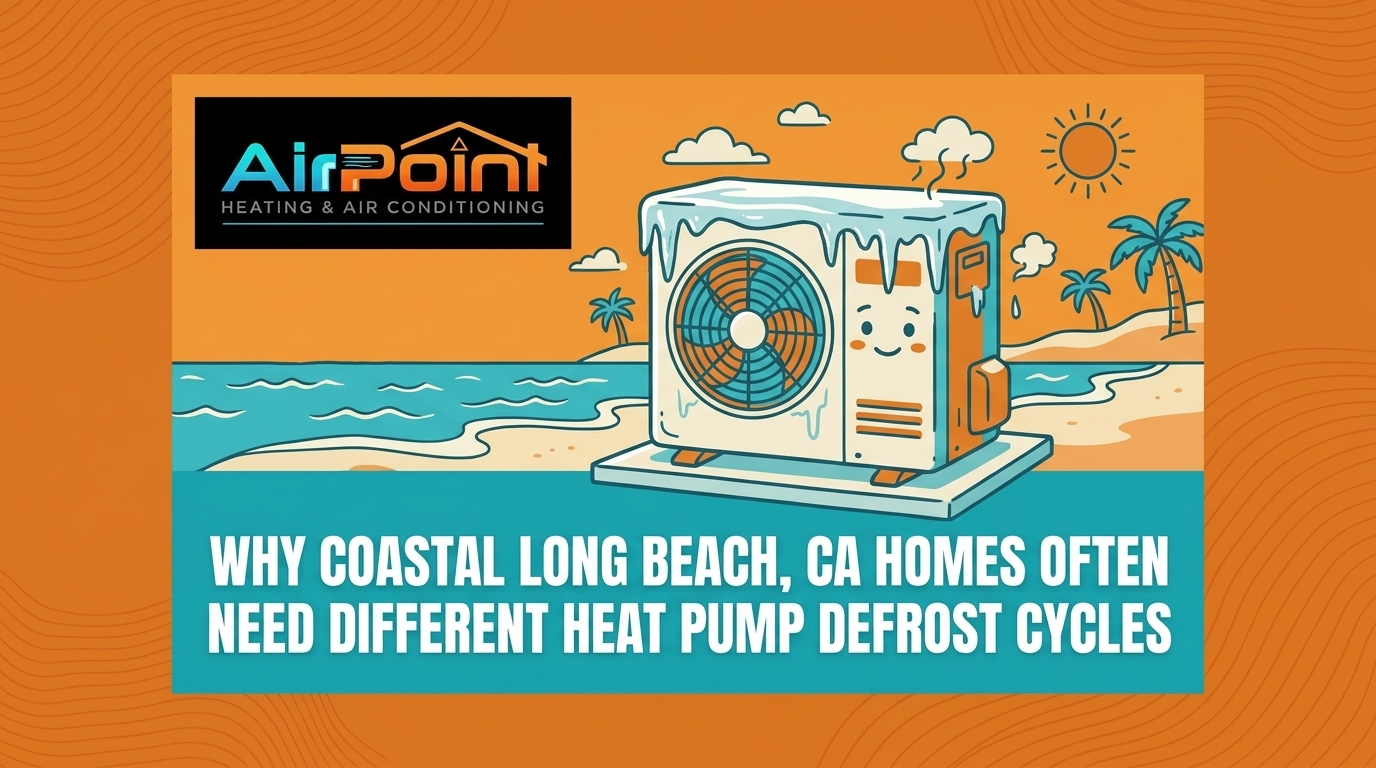
The Hidden Impact of the September Marine Layer on Coastal Heat Pumps
At AirPoint Heating & Air Conditioning, our technicians regularly get calls from homeowners who wake up to a chilly house, expecting warm air from their vents, but instead find their outdoor unit encased in a thick block of ice. Understanding exactly why Coastal Long Beach homes often need different heat pump defrost cycles is the key to solving this frustrating problem before the weather gets truly cold. When your system struggles to breathe through a wall of frost, it wastes energy and leaves your living space uncomfortable.
When standard factory settings fail to handle local moisture, upgrading your heating systems with specialized heat pump services ensures your home stays comfortable all season long.
The Early Fall Transition Challenge
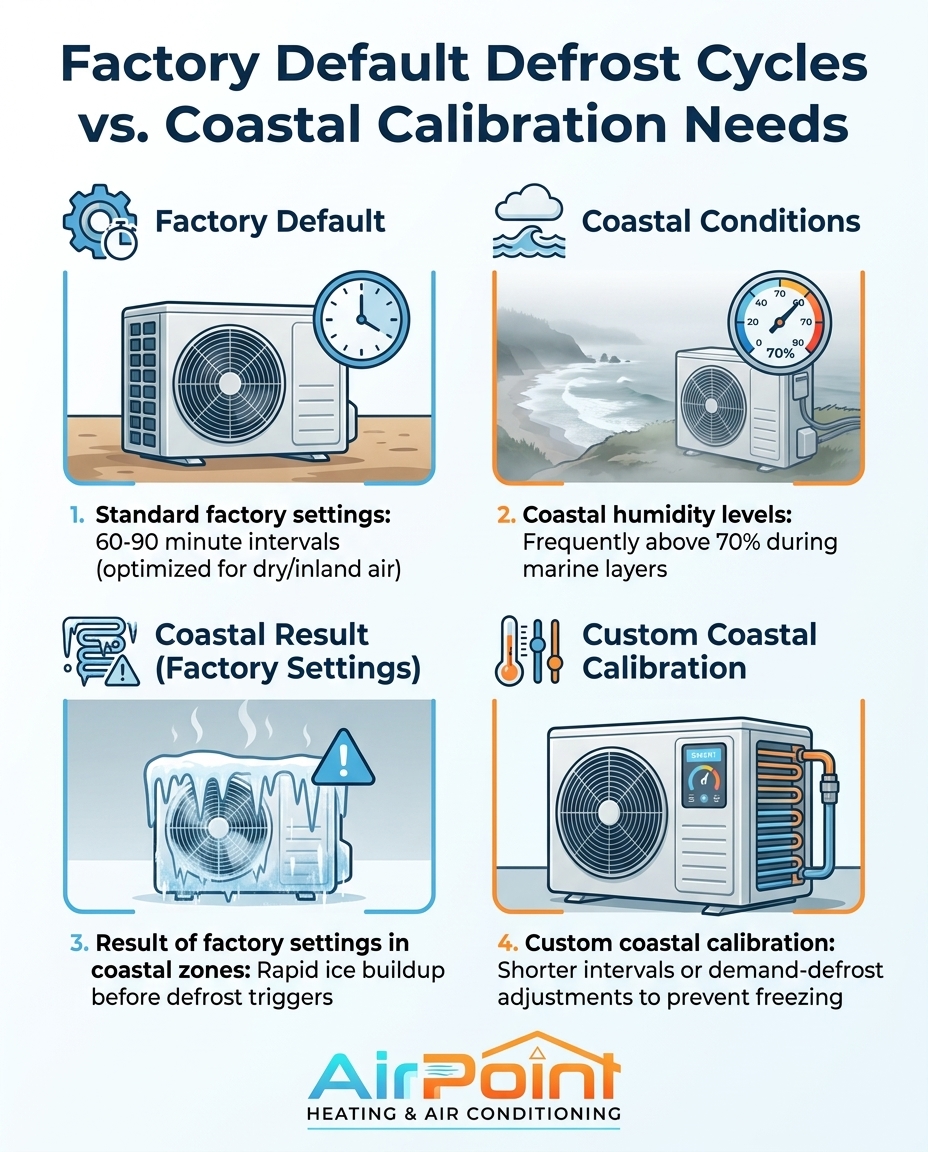
In our experience serving Los Alamitos and coastal Long Beach, the shift from summer to winter in Southern California is rarely a clean break. During the early fall transition, specifically around the September marine layer, the region experiences a unique microclimate phenomenon. The daytime temperatures might still feel mild, but as the sun sets, the ambient temperature drops rapidly while the heavy, wet marine layer rolls in from the Pacific. This combination creates an environment where relative humidity frequently spikes above 70 percent.
Your heat pump sits outside, pulling massive volumes of this damp air across its metal coils. Because the system is actively trying to extract heat from that air to warm your home, the coils themselves become extremely cold. When heavy airborne moisture meets freezing metal, you get instant, aggressive frost buildup. This is not a slow, gradual process; in these specific coastal conditions, a clear coil can become completely choked with ice in a fraction of the time it would take in a drier climate.
Why Standard Operations Fall Short
We consistently find that most heating equipment is manufactured to operate efficiently across a broad, national average of weather conditions. Out of the box, these systems expect a certain balance of temperature and humidity. However, the dense coastal moisture of Long Beach creates a worst-case scenario for frost accumulation. The volume of water suspended in the air simply overwhelms the system's standard ability to shed ice, creating an immediate need for specialized calibration rather than relying on default operational cycles.
The Physics of Coastal Moisture and Rapid Coil Frosting
To understand why your system freezes so quickly, you have to look at the basic thermal dynamics of how a heat pump operates in heating mode. Unlike a gas furnace that burns fuel to create heat, a heat pump acts as a heat transporter. It uses chemical refrigerant to absorb ambient heat from the outside air, compresses it to raise the temperature, and then moves that heat indoors.
How Your Heat Pump Extracts Heat
For the outdoor coil to absorb heat from the surrounding air, the refrigerant inside the coil must be colder than the air outside. On a brisk 45-degree evening, the coil itself might drop down to 25 degrees or lower. Whenever a surface drops below the freezing point of water, any moisture in the air that touches it will condense and immediately turn to frost. This is a normal part of heat pump operation, but the rate at which that frost forms depends entirely on how much moisture is in the air.
The Coastal Long Beach Difference
The frost rate in Coastal Long Beach is drastically different from what homeowners experience in drier, inland Southern California cities. Inland areas might experience colder absolute temperatures, but their air is relatively dry. The coastal marine layer, heavily influenced by the ocean, holds a massive volume of suspended water vapor.
When that saturated air passes over a sub-freezing coil, the condensation rate is extreme. While a light coating of frost is perfectly normal and manageable, the heavy volume generated by coastal moisture quickly builds into a solid sheet of insulating ice that standard operational cycles simply cannot keep up with.
• Relative Humidity — Coastal Long Beach: Consistently high, often 70%+ during marine layers — Inland Southern California: Generally lower, often below 40%
• Frost Accumulation Rate — Coastal Long Beach: Rapid and heavy due to high moisture volume — Inland Southern California: Slow and light, easily managed by default settings
• Primary Challenge — Coastal Long Beach: Excessive wet air freezing on cold coils — Inland Southern California: Lower ambient temperatures, but dry air
Why Factory-Default Defrost Timers Fail in Microclimates
The Problem: Our team regularly encounters standard heat pumps utilizing a time-temperature defrost control board. These boards operate on factory-set intervals, typically checking the system every 30, 60, or 90 minutes. If the timer reaches its set interval and the temperature sensor detects that the coil is below freezing, the system temporarily reverses itself to melt the ice. The problem is that these default intervals are optimized for average, drier climates across the country.
The Cause: When a unit is shipped from the factory with a 90-minute timer, it assumes that it will take roughly an hour and a half for enough frost to build up to warrant a defrost cycle. However, in a high-humidity coastal zone, the heavy marine layer accelerates this process. The outdoor coil might become completely encased in thick ice within just 45 minutes. For the next 45 minutes, the system is essentially suffocating, unable to pull any heat through the thick layer of insulating ice before the board finally decides it is time to run a defrost cycle.
The Solution: Relying on these factory defaults in a damp microclimate leads to massive energy waste and poor indoor comfort. The system runs continuously, drawing maximum electricity, but produces very little heat because the ice blocks the airflow. Customizing these settings to trigger more frequently—or upgrading to a demand-defrost system that senses actual ice buildup rather than relying on a blind timer—prevents the unit from freezing over completely.
Recognizing the Warning Signs of an Out-of-Sync Defrost Cycle
We find that homeowners often do not realize their defrost settings are poorly calibrated until the system fails completely. Because the outdoor unit is out of sight, the early warning signs usually go unnoticed. Learning to identify these symptoms early can save your equipment from severe strain during the coldest nights of the year.
• Visual ice accumulation: A light, fuzzy layer of white frost is normal. However, if you see thick, solid bands of clear or white ice encasing the outdoor cabinet, covering the fan grille, or creeping down the sides of the unit, your defrost cycle is failing to keep up with the moisture.
• Auditory warning signs: As ice builds up on the coils and restricts airflow, the compressor has to work significantly harder. You might hear a louder, harsher buzzing sound. In severe cases, expanding ice can push into the fan blades, creating a loud clicking or grinding noise.
• Blowing lukewarm air: If your system is running but the air coming from your indoor vents feels cool or only slightly warm, it means the outdoor coil is blocked by ice and cannot absorb enough ambient heat to warm your home.
• Short-cycling behavior: An out-of-sync cycle often leads to the system turning on and off rapidly without ever reaching the temperature you set on the thermostat. The unit is struggling, overheating, or shutting down to protect itself.
• Unexpected system lockouts: Modern heat pumps have safety sensors. If the unit detects a severe fault—like dangerous operating pressures caused by a completely frozen coil—it will lock itself out to prevent permanent damage, leaving you without heat on a cold coastal night.
Long-Term Risks of Unmanaged Coastal Moisture and Ice Buildup
Over our years of repairing coastal HVAC systems, we've seen firsthand how ignoring an improper defrost cycle does more than just spike your utility bills; it actively degrades the physical components of your heating system. The outdoor coil is made up of hundreds of delicate aluminum fins designed to maximize surface area for heat transfer. When heavy coastal moisture turns into thick ice, the physical expansion of that freezing water can crush, flatten, or permanently warp these fins. Once the fins are damaged, the unit permanently loses a portion of its heating and cooling efficiency, even after the ice melts.
Compressor Strain and Premature Failure
The compressor is the heart of your heat pump, pumping refrigerant through the system. When the outdoor coil is choked with ice, the system operates outside its designed thermal parameters. The compressor runs hotter and works harder to achieve the same results. Over time, this excessive strain degrades the internal motor windings and the lubricating oils, leading to a much shorter lifespan for the most expensive component in your system.
The Threat of Coastal Corrosion
Prolonged moisture exposure is a serious issue anywhere, but it is particularly destructive near the ocean. The air in our region carries a high concentration of salt. When your unit is constantly covered in wet frost and melting ice, that salty moisture sits directly on the metal components. This accelerates rust and degradation at an alarming rate. Properly calibrating the defrost cycle so the unit stays dry and clear is a critical component of protecting outdoor units from Long Beach salt air.
The Importance of Professional Defrost Board Calibration
Correcting an out-of-sync defrost cycle is not a weekend do-it-yourself project. The defrost control board sits inside the outdoor cabinet, surrounded by high-voltage 240V contactors and complex 24V control wiring. Adjusting these settings requires interacting directly with live electrical components and correctly interpreting the manufacturer's specific schematic for your exact model. Attempting to move timing pins or adjust dials without professional training poses a severe risk of electric shock or permanently shorting out the control board.
A licensed professional approaches this by assessing local microclimate data to override those inadequate factory defaults. They will test the defrost thermostat and temperature sensors to ensure they are accurately reading the heavy, wet air. By setting custom time and temperature intervals, they force the system to clear ice before it becomes a solid, insulating block.
Our team at AirPoint Heating & Air Conditioning brings deep local expertise in Southern California's coastal microclimates, ensuring systems are calibrated specifically for Long Beach's unique moisture levels. We see the difference this level of care makes every day. For example, one local customer reached out during the winter when they needed a completely new heater installed. Our team not only installed the new system professionally and courteously, leaving no mess behind, but we also followed up later to double-check the vent pipes and ensure everything was operating flawlessly. That same meticulous attention to detail applies to calibrating your existing system.
Before the real chill of winter sets in, we highly recommend that you schedule HVAC service as a preventative measure. A proactive fall tune-up ensures your defrost board is properly synced with our coastal weather, keeping your home warm and your equipment safe.
Frequently Asked Questions
Why do heat pumps freeze up in high humidity?
Heat pumps freeze in high humidity because they extract heat by making their outdoor coils colder than the ambient air. When the air is full of moisture—like during a heavy marine layer—that water vapor condenses on the freezing coils. Because there is so much water in the air, it builds up as frost much faster than it would in a dry climate.
Should I change my heat pump defrost settings for coastal weather?
Yes, coastal environments often require different defrost settings than inland areas. Factory defaults are usually set to longer intervals that allow too much ice to build up in humid conditions. A professional can adjust these settings to trigger defrost cycles more frequently, preventing severe ice accumulation.
How do I know if my heat pump defrost cycle is working properly?
A properly working defrost cycle will occasionally switch the outdoor unit into cooling mode for a few minutes to melt light frost, often emitting a puff of steam. You should never see solid, thick blocks of clear or white ice encasing the outdoor unit. If the unit stays frozen or blows cold air indoors, the cycle is likely failing.
What is the normal defrost cycle time for a heat pump?
A normal defrost cycle usually lasts between 5 and 15 minutes, depending on how much ice has accumulated. The frequency of these cycles varies based on the control board settings, typically initiating every 30, 60, or 90 minutes of active run time when the coil temperature drops below freezing.
Can a heavy marine layer cause my heating system to lock out?
Yes, a heavy marine layer can cause a system lockout. The excessive moisture rapidly freezes on the coil, blocking airflow and causing the system's internal pressures and temperatures to operate outside safe limits. When the safety sensors detect this extreme strain, they shut the system down completely to prevent permanent damage.
Stay Warm and Efficient This Season
Understanding exactly why your coastal location causes unique frost issues is the first step toward a more comfortable home. Knowing that a professional defrost cycle adjustment is the specific, safe solution gives you the power to prevent unexpected winter breakdowns. Do not wait for your system to turn into a block of ice—let our experienced team at AirPoint Heating & Air Conditioning get your settings dialed in for the coast today.
Other Blogs
Latest Blog Posts
Factoring in Heating Efficiency (HSPF) When Comparing Heat Pump Options in Fall

Do UV Light Purifiers Actually Neutralize Fall Mold Spores in Your HVAC System?
Diagnosing Short-Cycling in Oversized Furnaces Installed During the 90s Housing Boom

Customer Testimonials



I recommend Air Point for your HVAC needs."