




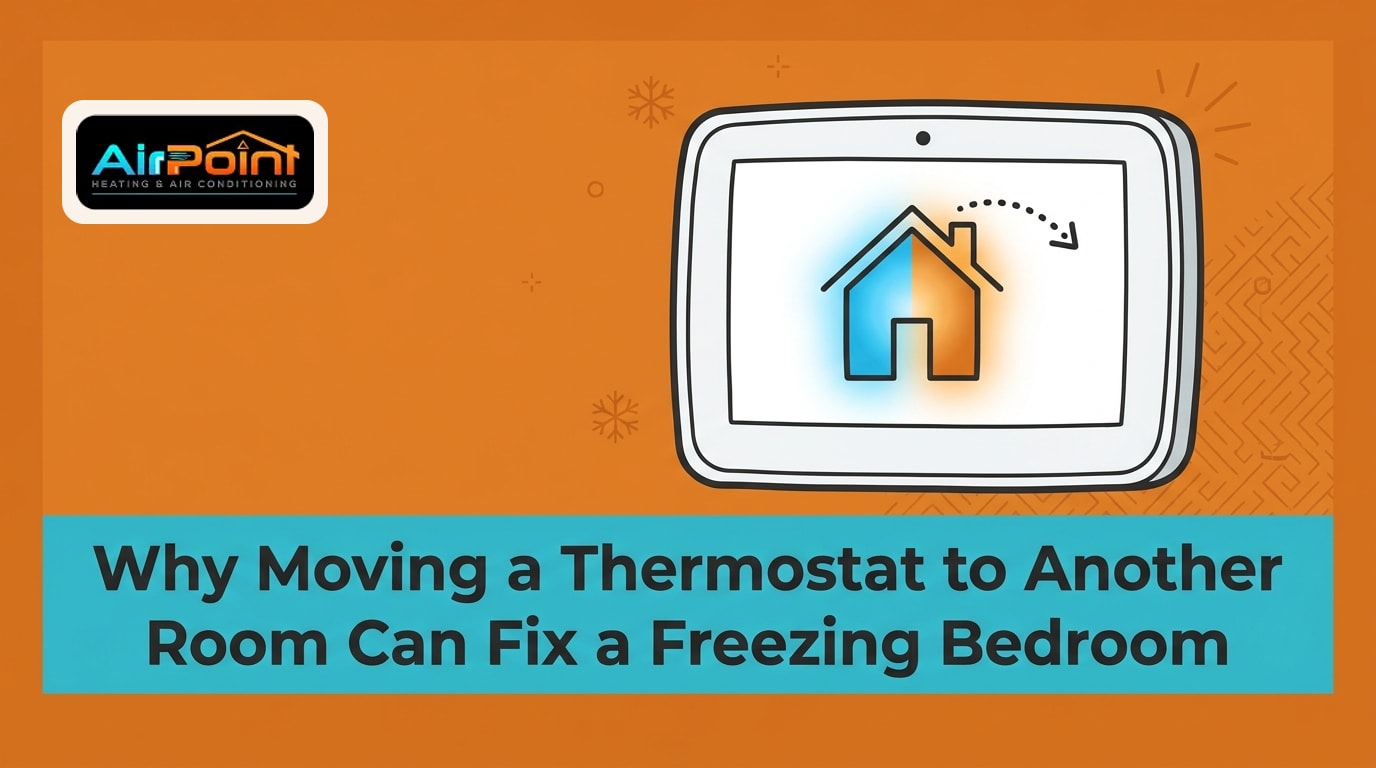
The Frustration of a Warm Hallway and a Freezing Bedroom
You know something is wrong when you are bundled in heavy blankets at night, yet the control panel in your hallway reads a comfortable 72 degrees, making you wonder if moving a thermostat to another room is the only way to get some sleep. That strange imbalance—a perfectly warm center of the house while the peripheral bedrooms remain freezing—is a classic sign that your heating equipment is getting bad information. As temperatures drop in Los Alamitos CA, this frustration becomes a nightly battle for homeowners. In our years of serving the local community, our team at AirPoint Heating & Air Conditioning has seen this exact scenario play out time and time again. Rather than relying on temporary fixes that drive up your energy bills, discovering the root cause of this uneven heating is the key to lasting comfort.
If you are tired of waking up cold, having a professional evaluate your HVAC system and schedule HVAC service can restore balance to your home.
The Hallway Trap: Why the Center Stays Warm
Our technicians frequently notice that most homes built in the last few decades feature a central hallway where builders conveniently place the main return vent and the thermostat. On paper, this central location seems logical. In reality, it creates a significant blind spot for your heating equipment. Central hallways usually lack exterior walls, have no large windows, and are completely shielded from the wind. They retain heat exceptionally well.
Your bedrooms, on the other hand, share walls with the outdoors. They have windows that lose heat and are exposed to the elements. When the heater kicks on, the small, well-insulated hallway warms up in a matter of minutes. The thermostat registers that the target temperature has been reached and shuts the entire system down long before that heated air ever makes it to the distant corners of your home. The result? A hallway that feels like a sauna and a bedroom that feels like an icebox.
How Thermal Dynamics Trick Your Thermostat
Understanding the science behind how heat moves through your home helps explain why your system seems to have a mind of its own. Los Alamitos's coastal microclimate shifts and sudden evening temperature drops heavily expose poor thermostat placement. When the afternoon sun fades and the coastal air cools rapidly, the disparity between your rooms becomes much more noticeable.
The Problem: Constant System Short-Cycling
When a thermostat sits in a small, easily heated space, it forces the furnace or heat pump to turn on and off rapidly. This process is known as short-cycling. The system blasts warm air, the hallway hits 70 degrees in five minutes, and the system shuts down. Ten minutes later, the hallway cools slightly, and the cycle repeats. Short-cycling prevents thorough, even air distribution throughout the home and puts massive strain on your blower motor and compressor.
The Cause: Misreading the True Average Temperature
Your thermostat is essentially the brain of your climate control system, but it only knows the temperature of the exact square foot of air surrounding it. If it sits in a stagnant hallway, it remains completely blind to the rapid heat loss happening in your peripheral bedrooms during your November heating prep. It is being tricked by localized thermal dynamics.
The Solution: Strategic Relocation
Placing the thermostat in a location that represents the home's true average temperature allows the system to run in longer, more efficient cycles. Longer run times give the blower motor enough time to push warm air all the way to the farthest bedrooms.
• Central Hallways — Heat Retention: High (No exterior walls) — Thermostat Impact: Heats too fast, causes short-cycling
• Kitchens — Heat Retention: Artificial (Ovens, appliances) — Thermostat Impact: Reads too hot, prevents heating
• Living Rooms — Heat Retention: Balanced (If interior wall used) — Thermostat Impact: Accurate representation of home comfort
• Peripheral Bedrooms — Heat Retention: Low (Exterior walls, windows) — Thermostat Impact: Takes longer to heat, requires longer cycles
Signs Your Thermostat Is Installed in the Wrong Place
How can you tell for sure that your thermostat's location is the culprit? In our experience troubleshooting HVAC systems across Los Alamitos, your home will usually give you a few very clear warning signs that the system is operating on bad data. We often find that a move of just 30 feet makes the difference between a freezing night and perfect comfort.
• Constant short-cycling: Your heating or cooling equipment turns on, runs for a very short burst (under ten minutes), and shuts off, only to turn back on shortly after.
• Freezing bedrooms: You notice a drastic temperature difference between the central living spaces and the peripheral rooms, especially at night.
• Direct sunlight exposure: A thermostat hit by direct sunlight through a window or skylight will read artificially high, refusing to turn the heat on even when the house is freezing.
• Drafty doors and windows: Placement near a frequently opened exterior door exposes the sensor to blasts of cold air, causing the heater to run continuously and overheat the rest of the house.
• Exterior wall placement: Thermostats mounted on exterior walls absorb the outside cold through the drywall, throwing off the internal sensor and causing erratic temperature swings.

Why Band-Aid Fixes Fail (And Why Relocation Works)
When faced with a freezing bedroom, most homeowners try to solve the problem with quick workarounds. Unfortunately, these temporary fixes rarely work and often create entirely new problems for your home.
The Hidden Costs of Space Heaters
Running space heaters in bedrooms is an inefficient, energy-draining workaround. Space heaters draw a massive amount of electricity, often tripping breakers if you plug in too many at once. They also pose a significant fire hazard if left unattended while you sleep. You are essentially paying twice for heat: once for the central furnace that isn't reaching your room, and again for the electric heater trying to make up the difference.
The Danger of Closing Vents
Another common tactic is closing the supply vents in the warm hallway or living room to "force" more air into the freezing bedroom. This is one of the worst things you can do to a modern heating system. Closing vents increases the static pressure inside your ductwork. Think of it like trying to blow air through a straw while pinching the end. The blower motor has to work twice as hard against that trapped pressure, leading to overheated heat exchangers, blown motors, and a drastically shortened system lifespan.
The Permanent Diagnostic Fix
Moving the unit just 30 feet down the hall or into a more representative living space directly addresses the root cause of the thermal imbalance. It is a necessary diagnostic step rather than just a cosmetic upgrade. By giving the system accurate data about the true temperature of your home, the equipment can run exactly as the manufacturer intended.
The Complex Reality of Moving a Thermostat (Why You Need a Pro)
When we recommend moving a thermostat, we often find homeowners are tempted to view it as a simple weekend project. However, relocating low-voltage wiring is far more complex than hanging a picture frame. The practical realities of the job require strict safety protocols and professional tools.
What the Job Actually Entails
A professional relocation involves fishing sensitive wires through dark wall cavities, navigating around fire blocks and plumbing pipes, and carefully patching drywall. More importantly, modern smart thermostats require a continuous power source, known as a C-wire. If your new location doesn't have an existing C-wire routed to it, pulling a fresh multi-strand wire all the way from the indoor air handler to the new wall location is mandatory.
The Risks of DIY Electrical Work
The wires behind your thermostat connect directly to your furnace's control board. Crossing the wrong wires, pinching a line behind the drywall, or failing to shut off the correct breaker can instantly short out the control board. A mistake that takes one second to make can result in a massive repair bill to replace the fried electronics inside your furnace.
This is exactly why our team at AirPoint Heating & Air Conditioning steps in. We've seen firsthand the costly damage caused by crossed wires, which is why we prioritize the safety and reliability of professional wall wiring over risky DIY electrical attempts. A professional diagnostic assessment determines the exact optimal placement before any holes are cut. Furthermore, before letting anyone cut into your drywall, you must verify an HVAC contractor's liability insurance to protect your property from accidental damage.
When Moving the Thermostat Isn't Enough
While relocation solves the vast majority of uneven heating issues, our team knows there are extreme cases where a single thermostat simply cannot govern the entire house accurately. Acknowledging the limitations of a centralized system is important for long-term comfort.
Dealing with Complex Layouts
Some homes feature significant room additions, converted garages, or multi-story layouts. Heat naturally rises, meaning a second floor will almost always be warmer than the ground floor. If your home has vast differences in insulation or sprawling ductwork, moving the thermostat will only shift the imbalance to a different room rather than curing it.
Creating Targeted Climate Zones
When a single control point fails, creating separate climate zones is the next logical step. Targeted, ductless solutions provide independent temperature control for stubborn peripheral rooms without overworking the central system. If your November heating prep reveals that a distant master suite simply will not stay warm regardless of where the main thermostat lives, installing a mini split allows you to heat that specific freezing bedroom directly, leaving the rest of the house perfectly balanced.
Common Questions About Thermostat Placement and Relocation
Does moving a thermostat affect heating and cooling?
Yes, moving the thermostat changes where the system measures the home's temperature, directly impacting run times and overall comfort. If you move it from a hot hallway to a cooler living room, the system will run longer, pushing more heated air into distant bedrooms. Proper placement dictates exactly how well your equipment performs.
Why is my bedroom freezing while the hallway is warm?
Hallways often trap heat and lack exterior walls, causing the thermostat to shut off the system before heated air reaches distant bedrooms. The central hallway warms up rapidly, tricking the sensor into thinking the entire house has reached the target temperature. This localized warmth prevents the blower from running long enough to distribute air evenly.
Can you move a thermostat to a different room?
Yes, a thermostat can be moved to a different room, provided new wiring is properly routed through the walls by a professional. The process involves pulling low-voltage wire from the indoor air handler to the new location. It requires careful planning to avoid hidden plumbing and electrical lines inside the wall cavity.
Where is the best place to put a thermostat?
The ideal location is on an interior wall near the center of the home, away from direct sunlight, drafts, and heat-producing appliances. It should be placed in a frequently used room, like a main living area, about five feet off the ground. This ensures it reads the true average temperature of the living space.
How long does a professional thermostat relocation take?
Depending on the distance and wall access, a professional can typically complete the wiring, patching, and calibration in a few hours. A move of just 30 feet might be faster if there is clear attic or crawlspace access to run the new wire. Complex moves through finished ceilings or multiple fire blocks will take longer.
Achieve Even, Reliable Comfort This Winter
A freezing bedroom doesn't necessarily mean you have a broken heater—it often just requires a strategic thermostat move to correct the thermal dynamics of your home. Taking action during your November heating prep ensures that your system operates efficiently before the coldest winter nights arrive. By addressing the root cause instead of relying on space heaters, you protect your equipment from unnecessary wear and tear.
If you are struggling with uneven temperatures, seek professional diagnostics to evaluate your home's unique layout. Reach out to our team to schedule HVAC service and let us help you achieve reliable, whole-home comfort this season.
Other Blogs
Latest Blog Posts
Improving Indoor Air Quality for Holiday Guests: A Pre-Party Filtration Checklist

Heat Pump Auxiliary Heat Triggers: Why Your System Switched During the First November Cold Snap
Why Positive Pressure Fails: True HVAC Solutions for Drafty Rooms

Customer Testimonials


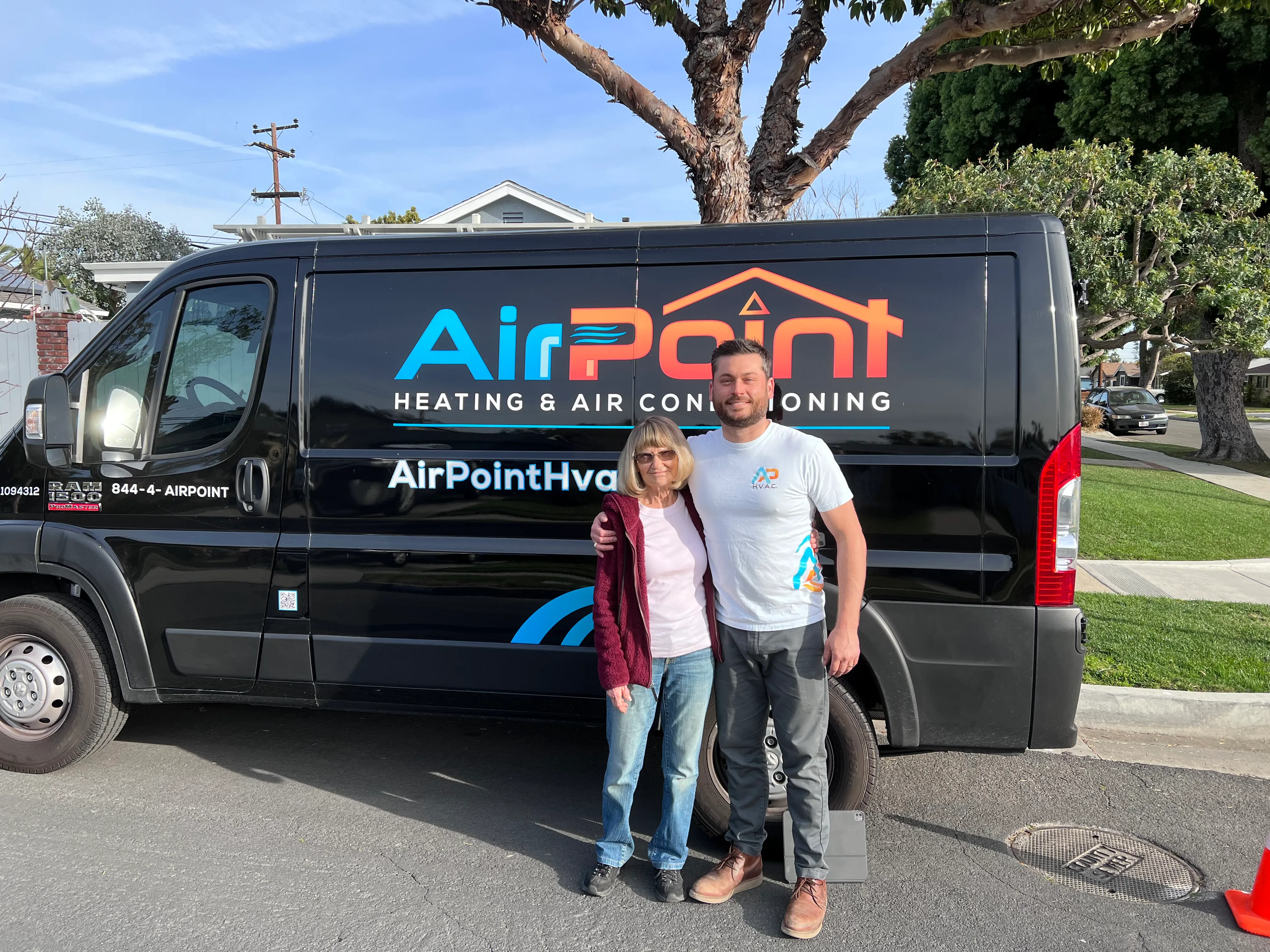
I recommend Air Point for your HVAC needs."