



When to Call an AC Technician: Navigating Your Late-Fall Home Maintenance Checklist
The Sudden Chill: Facing the First Heating Cycle of the Season
You wake up to a freezing house in late November, walk over to the thermostat, and switch your system from cooling to heating for the very first time this year. As you mentally run through your seasonal home maintenance checklist, you expect a wave of warm air, but instead, your vents immediately start blasting a harsh, burning dust smell throughout the hallway. That sudden, alarming odor is enough to make any homeowner panic and rush to turn the system off. Deciding whether this is a normal seasonal quirk or a serious safety hazard that requires professional help is a critical step in your pre-winter preparation. Proper maintenance ensures that when you need comfort the most, your equipment actually delivers without sudden, stressful breakdowns.
If you are dealing with an immediate heating failure, explore our comprehensive air conditioning services to see how we handle seasonal transitions, or schedule HVAC service today to get a professional diagnostic.
Understanding the Eight-Month Dormancy Period
Southern California heating systems experience a unique type of stress that equipment in colder climates rarely faces. In our years serving the community at AirPoint Heating & Air Conditioning, we've seen how regions with harsh winters have furnaces running consistently for half the year. However, in a mild Los Alamitos coastal climate, your air conditioner often runs heavily straight through October. This leaves the heating elements completely neglected and dormant for eight months or more, right up until a sudden temperature drop forces them into action.
During these long periods of inactivity, dust, pet dander, lint, and airborne debris settle heavily onto critical internal components. When you finally demand heat, the system experiences intense mechanical stress as it suddenly switches functions. Modern HVAC systems also rely on highly sensitive safety sensors that can easily become fouled by this accumulated grime. This extended dormancy makes the initial late November startup cycle particularly volatile, leading to strange smells, odd noises, and unexpected shutoffs.
The Mechanics of Seasonal Switching
The transition from cooling to heating requires complex mechanical shifts inside your equipment. If you use a heat pump, a component called the reversing valve must physically shift its internal mechanism to reverse the flow of refrigerant. After sitting in the cooling position for eight straight months, this valve can become sluggish or stuck.
If you have a gas furnace, the heat exchanger—a series of metal tubes that heat the air—has likely gathered a thick coat of dust. When the burners ignite, this dust instantly incinerates. The first fifteen minutes of this initial heating operation are the most critical for identifying lingering issues, as this is when dormant mechanical parts are forced to wake up and perform under pressure.
Safe and Simple Visual Checks for Homeowners
Before the first major cold snap hits, there are several safe, actionable steps you can take to prepare your system. Performing a basic visual inspection is a vital part of late November pre-winter readiness. However, it is absolutely critical to remember that you should never open equipment panels or attempt to clean internal electrical components yourself. That work requires a licensed professional.
Here is a safe checklist of items you can handle to support your home's HVAC solutions:
• Change your air filters: A clogged filter restricts airflow, forcing the blower motor to work harder. In heating mode, restricted airflow traps heat inside the furnace, which can cause the system to overheat and trigger a safety shutdown.
• Clear the outdoor unit: Over the summer, bushes, weeds, and tall grass may have grown around your outdoor heat pump. Ensure there is at least two feet of clearance on all sides so the system can pull in enough air to operate efficiently.
• Inspect the exhaust vents: Walk around the exterior of your home and visually verify that the furnace exhaust pipes are not blocked by debris, bird nests, or overgrown branches.
• Test the thermostat: Switch the thermostat to "heat" and raise the temperature a few degrees above the current room temperature to ensure the system responds properly.
Airflow and Ventilation Basics
Beyond the main equipment, your home's ductwork and ventilation play a massive role in seasonal efficiency. Walk through every room and verify that all indoor supply and return vents are fully open and unblocked by rugs or heavy furniture. Closing vents in unused rooms actually increases pressure inside the ductwork, making your system work harder. Additionally, take a moment to replace your thermostat batteries and check that the outdoor condensate drain line appears clear of mud or debris.
Normal Dust Burn-Off vs. True Safety Hazards
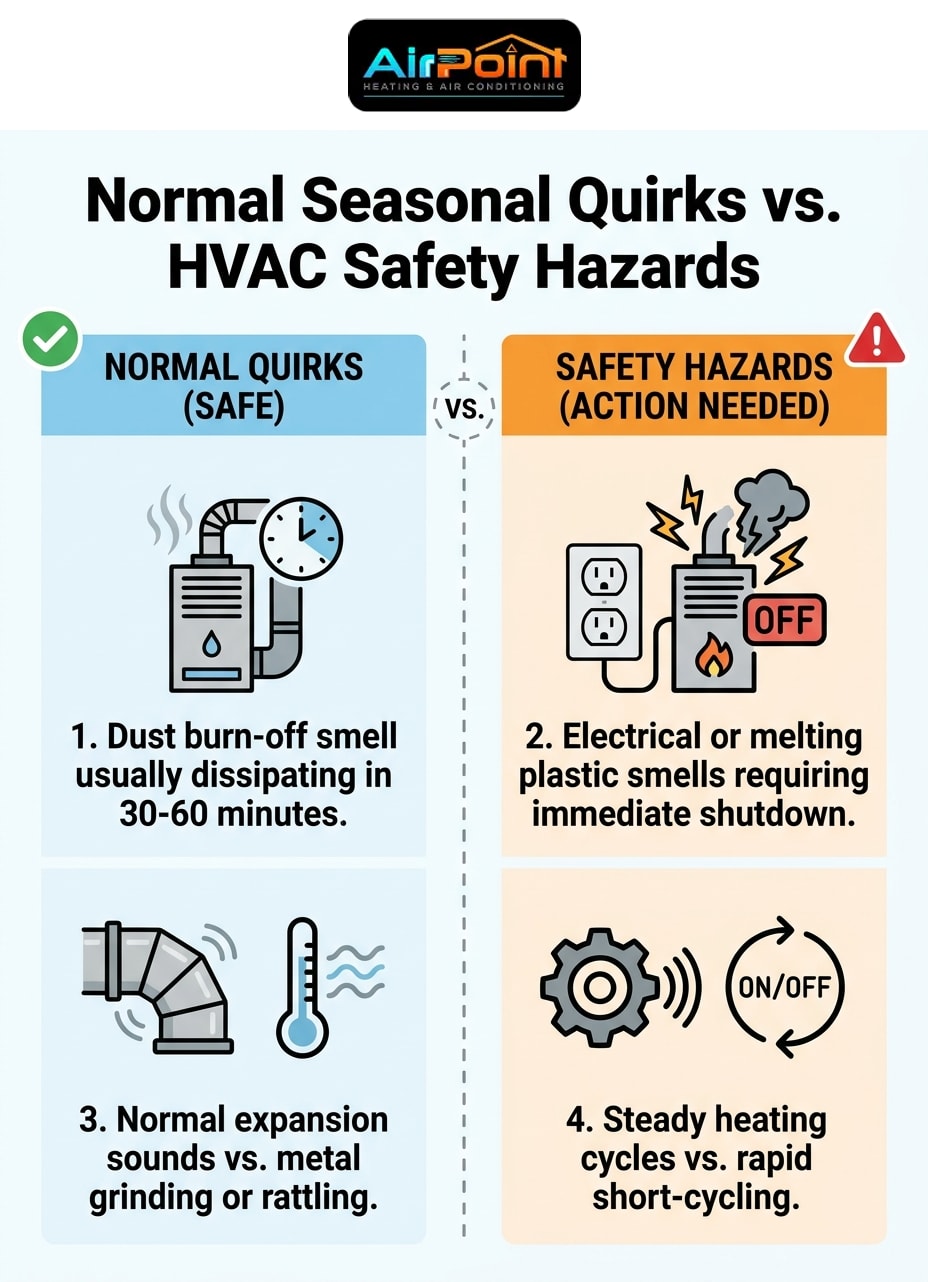
The anxiety of smelling smoke when you turn on the heater is incredibly common. In most cases, the initial "burning dust" smell is a normal part of the late November pre-winter transition. When the heat exchanger warms up for the first time, it burns off the layer of dust that settled over the summer. This smell is usually described as a dry, dusty odor and should completely dissipate within 30 to 60 minutes of continuous operation.
However, there is a distinct difference between burning dust and a true safety hazard. If you smell electrical burning, ozone, or melting plastic, shut the system down immediately at the thermostat. These odors indicate overheating wires or failing electrical components. Another major danger sign is short-cycling, which occurs when the system turns on, runs for only a minute or two, and shuts off abruptly. This usually means an internal safety switch is tripping to prevent a fire or catastrophic equipment damage.
Taking these warning signs seriously protects your property. For example, our installation crew at AirPoint Heating & Air Conditioning recently worked with a local homeowner who needed a reliable AC and heating unit installed specifically to regain proper temperature control after struggling with an unreliable system. Following our professional installation, their home maintained a perfect temperature even on the hottest or coldest days—proving the value of a system you do not have to second-guess when the weather changes.
Listening to Your System
Your ears are just as important as your nose during the first heating cycle. It is completely normal to hear a few pops or pings as the metal ductwork expands and contracts with the sudden change in temperature. However, loud metal-on-metal grinding, aggressive rattling, or high-pitched squealing are not normal. These sounds point to loose blower wheels, failing motor bearings, or broken belts, warranting an immediate shutdown and a call to a professional.
• Odors — Normal Seasonal Quirk: Dry, dusty smell lasting 30-60 minutes — Safety Hazard (Call a Pro): Smell of melting plastic, electrical burning, or rotten eggs (gas leak)
• Sounds — Normal Seasonal Quirk: Light popping or ticking from expanding ducts — Safety Hazard (Call a Pro): Grinding, heavy rattling, or loud screeching from the equipment
• Operation — Normal Seasonal Quirk: Steady heating cycles lasting 10-15 minutes — Safety Hazard (Call a Pro): Short-cycling (turning off after only 1-2 minutes)
• Airflow — Normal Seasonal Quirk: Warm air steadily flowing from all open vents — Safety Hazard (Call a Pro): Weak airflow or lukewarm air after 15 minutes of running
How Coastal Environments Stress Your HVAC Equipment
Living near the ocean offers incredible weather, but it presents distinct challenges for climate control equipment. Our technicians know firsthand that the Los Alamitos coastal climate requires special attention because the air carries microscopic salt and moisture. During the summer months, while your AC is running, this salty marine layer is constantly pulled into your outdoor unit. When your heating components sit dormant, this moisture settles on the metal surfaces.
Airborne salt and coastal moisture can significantly accelerate corrosion on heat exchangers, burner assemblies, and sensitive electrical contacts. Furthermore, fine coastal dust and sand can bypass standard fiberglass filters, coating the internal flame sensors and pilot assemblies. Systems operating in these specific environments require much more meticulous professional HVAC services and thorough cleaning than systems located in dry, inland areas.
The Threat of Hidden Corrosion
The interaction between salty moisture and dormant metal components is a silent threat. Over time, rust can compromise the structural integrity of a gas furnace's heat exchanger. If a heat exchanger develops even a microscopic crack, it can allow dangerous combustion gases, including carbon monoxide, to leak into your home's breathing air. Because this degradation happens deep inside the sealed cabinet, basic visual inspections by homeowners simply cannot detect it. Only a trained technician with specialized diagnostic tools can safely verify the integrity of these parts.
What a Certified AC Technician Actually Evaluates
When you hire a professional for pre-winter maintenance, you are paying for a comprehensive safety and performance evaluation. Choosing a local, highly-trained team like ours at AirPoint Heating & Air Conditioning means you get transparent, reliable service without high-pressure sales tactics. We understand coastal microclimates and know exactly how the late November weather impacts your specific setup.
A certified technician follows a strict checklist to demystify the maintenance process and ensure total system health:
1. Testing electrical connections: Technicians tighten all high-voltage connections and measure the voltage and amperage drawn by the blower motor and compressor to ensure they aren't working dangerously hard.
2. Checking refrigerant levels: For heat pumps, the technician measures superheat and subcooling levels to ensure the exact right amount of refrigerant is present for the winter cycle.
3. Cleaning safety sensors: The flame sensor in a gas furnace is carefully removed and polished. If this sensor is coated in coastal dust, it will fail to read the flame and shut the furnace down repeatedly.
4. Inspecting the heat exchanger: Using specialized cameras, the technician visually inspects the dormant metal components for rust, cracks, or coastal salt corrosion.
5. Calibrating the thermostat: Ensuring the thermostat accurately reads the room temperature and communicates flawlessly with the main control board.
A thorough preventative check catches minor issues before they escalate into catastrophic failures. Another homeowner in the area who suffered through a previous summer without working air conditioning wisely chose our team to install a new AC unit, furnace, and replacement ducts before severe weather arrived, ensuring the house became livable and properly cooled. Furthermore, many federal tax credits or utility energy rebates require proof of professional maintenance or installation by certified experts to remain valid, making this visit an investment in both safety and compliance.
Beyond the Basics: Safety Calibrations
While homeowners handle filters and exterior clearance, professionals dive into the critical safety calibrations. This includes testing the ignition systems to ensure burners light smoothly without a dangerous gas buildup. They also inspect the flue and venting systems to guarantee that exhaust gases have a clear, safe draft pulling them out of your home. These precision tests are the difference between a system that merely runs and a system that runs safely.
Securing Pre-Holiday Comfort and System Reliability
As late November rolls in, establishing system reliability becomes a pressing priority. Waiting until you are actively hosting holiday guests to test your heating system is a massive risk. A sudden breakdown while you have family staying over turns a minor inconvenience into a major disruption.
A clean, professionally tuned system operates far more efficiently. When internal parts are free of dust and moving smoothly, the system uses less electricity or gas to produce the same amount of heat, helping you manage seasonal utility usage effectively. If you wait until the first major winter storm hits to call for service, you will likely face long scheduling delays as our dispatch lines at AirPoint Heating & Air Conditioning often flood with calls from unprepared homeowners. If your system is over a decade old and struggling to keep up, reviewing an AC installation guide can help you decide if it is time to upgrade the entire system before the heavy winter weather arrives.
Make Confident Decisions for Your Home's Climate Control
Navigating the transition from cooling to heating in a Los Alamitos coastal climate requires attention to detail. While a brief burning dust smell can be a normal seasonal quirk, guessing about the safety and reliability of your home's heating system is never worth the risk. A thorough professional inspection cuts through the uncertainty, providing absolute clarity, safety, and reliable comfort for the months ahead.
Do not wait for a breakdown to leave you freezing on a winter night. Take control of your home's comfort and schedule HVAC service to ensure your system is fully prepared for the changing weather.
Frequently Asked Questions
Is it normal for a heater to smell like burning when first turned on?
Yes, a brief burning smell is a very common occurrence during the first heating cycle of the season. This happens because the dust that settled on the heat exchanger over the summer is quickly burning off. The odor should be dry and dusty, and it typically dissipates completely within 30 to 60 minutes of operation. If the smell resembles melting plastic or electrical wiring, shut the system down immediately and call a professional.
What should I check before turning on my heat for winter?
Start by addressing the basic airflow needs of your system. You should install a brand new air filter, ensure all indoor air vents are open and unblocked by furniture, and check that the outdoor unit is clear of overgrown vegetation. Additionally, replace the batteries in your thermostat and verify that the outdoor condensate drain is not clogged with mud. Always leave internal electrical and mechanical checks to a licensed technician.
When should I call an AC technician for heating maintenance?
You should ideally schedule a professional maintenance visit in the late fall, just before you anticipate using your heater regularly. Calling a technician is also necessary if you notice persistent burning smells, loud grinding noises, or if the system short-cycles by turning off after only a minute or two. Preventative maintenance catches small wear-and-tear issues before they cause total system failures during cold weather.
How does coastal salt air affect my dormant HVAC system?
Coastal air carries high levels of microscopic salt and moisture that get pulled into your HVAC system. When your heating components sit dormant for eight months, this salty moisture settles on the metal heat exchangers and sensitive electrical contacts. Over time, this accelerates hidden corrosion and rust, making professional inspections critical for catching structural degradation before it becomes a safety hazard.
Why is my heating system short-cycling during its first fall use?
Short-cycling happens when an internal safety mechanism forces the system to shut down prematurely to prevent damage. During the first fall use, this is often caused by restricted airflow from a dirty filter, which traps heat inside the unit and trips the high-limit switch. It can also be caused by a dirty flame sensor that fails to detect the burner flame, prompting the system to shut off the gas supply as a safety precaution.
Other Blogs
Latest Blog Posts

The Complete Homeowner's Guide to Safely Starting a Dormant Heating System in Los Alamitos
Why Your Heating System Smells Like Burning in November: Normal Dust vs. Mechanical Danger
Seasonal Home Maintenance Checklist: Safely Starting Your Dormant Heating System

Customer Testimonials


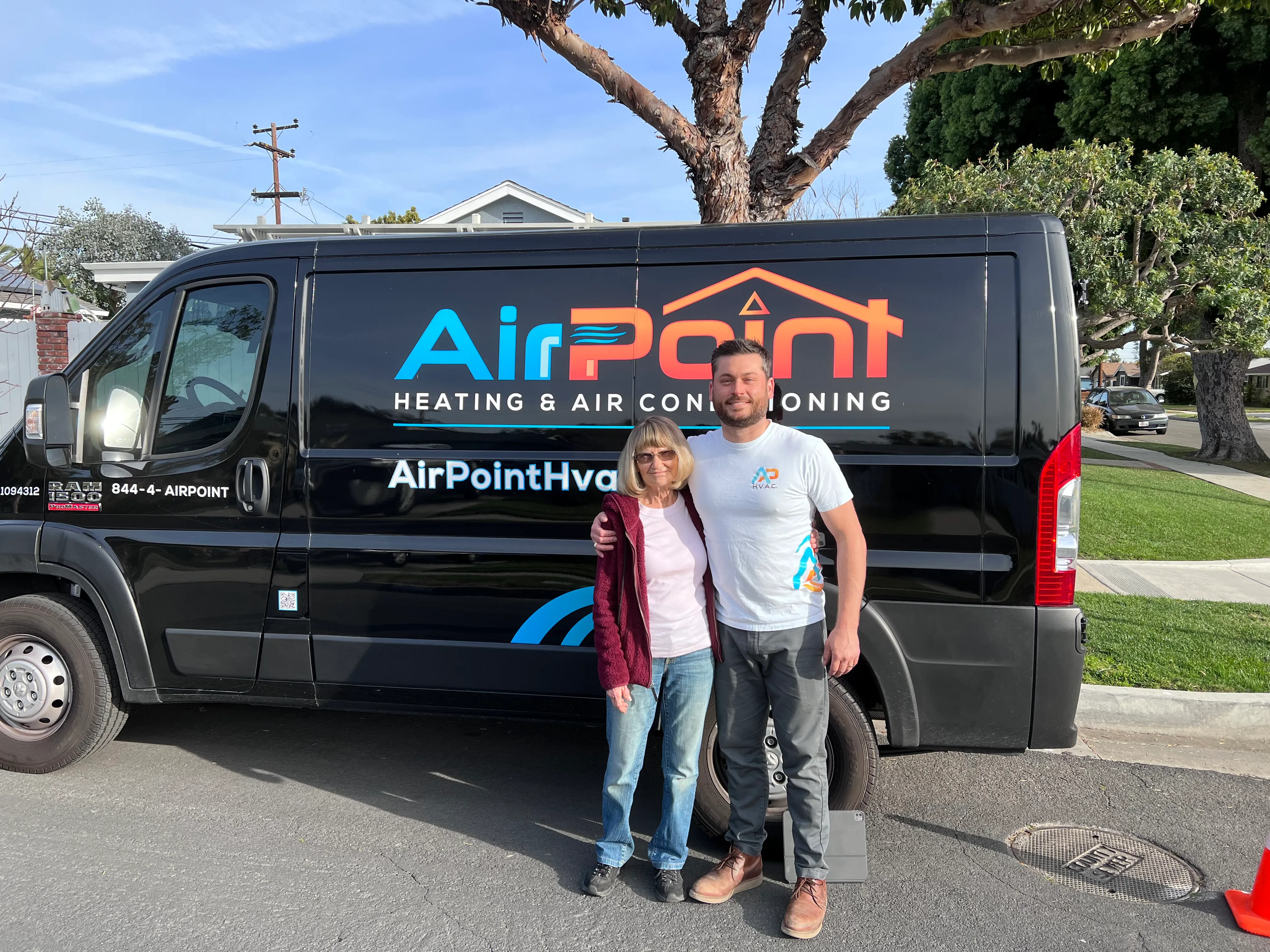
I recommend Air Point for your HVAC needs."