






How to Verify an HVAC Contractor's Liability Insurance Before They Step on Your Property
The Hidden Liability Risks of Fall HVAC Upgrades
You are gearing up for a major early fall pre-heating installation, but the biggest risk isn't choosing the wrong furnace—it is knowing exactly how to verify an HVAC contractor's liability insurance before they step on your property. In our years of serving Los Alamitos and the surrounding communities, our team at AirPoint Heating & Air Conditioning frequently sees homeowners assume that if a company has a professional-looking truck and a friendly estimator, their legal paperwork is perfectly in order. That assumption can leave you exposed to severe legal and financial liability if something goes wrong.
To secure a safe and professional project, you need reliable HVAC services backed by verified credentials. Major property upgrades involve heavy equipment, high-voltage electrical work, and significant physical movement through the most delicate areas of your home. The critical moment of protection happens before a contract is signed or a crew arrives. Knowing exactly what documents to demand is your very first line of defense against unexpected disasters.
The Seasonal Rush and Property Exposure
Southern California's mild fall weather is the prime season for major HVAC installations. Homeowners are eager to replace aging systems before the winter chill sets in. This seasonal rush increases the frequency of heavy equipment movement on residential properties. Technicians are carrying bulky furnaces up narrow stairs, hoisting air conditioning condensers over side gates, and navigating tight attic spaces.
With this increased foot traffic and heavy lifting comes an elevated risk of accidents. If a worker slips while carrying a heavy blower motor, or if a condenser unit is accidentally dropped onto your custom hardscaping, the resulting damage is significant. If you have not verified the contractor's insurance status beforehand, you might find yourself footing the bill for the repairs.
Why Heavy Equipment Tear-Outs Demand Strict Insurance Verification
The Problem: Removing old, heavy HVAC units and installing modern replacements is not a gentle process. It involves cutting through old sheet metal, disconnecting high-voltage electrical lines, dealing with pressurized refrigerants, and physically wrestling hundreds of pounds of machinery out of your home. This inherent physical reality carries significant risks to your property structure, drywall, flooring, and landscaping.
The Cause: If an uninsured worker is injured on your property during this intense labor, the homeowner can be held legally responsible for their medical bills and lost wages. Standard homeowners insurance policies are designed to protect you from random accidents, but they often contain strict clauses that deny coverage for damages caused by unlicensed or uninsured contractors working on the premises. When an uninsured contractor makes a mistake during a heating installation, your insurance company may refuse to pay for the resulting water damage, electrical fire, or structural repair.
The Solution: Verifying credentials removes the guesswork and shields your property investment. By confirming that the company holds the proper liability and workers' compensation policies, you transfer the financial risk away from your personal bank account and back onto the contractor's insurance provider. It is the only way to ensure that a dropped furnace or a damaged ceiling does not become your financial burden.
Understanding Premise Liability
In California, premise liability laws mean that property owners have a duty of care to ensure their environment is safe. However, when you hire a contractor, their workers' compensation insurance is supposed to take over that liability for their employees. If they do not carry that insurance, injured workers often look to the homeowner's property insurance for compensation. This is why strict verification is a non-negotiable step for any early fall pre-heating installation.
The Three Essential Credentials Every California Contractor Needs
Before any work begins, you must understand the difference between being licensed, being bonded, and being insured. These terms are often thrown around interchangeably, but they serve entirely different legal purposes. A legitimate contractor will carry valid California CSLB license, Workers' Compensation, and General Liability certificates.
Here is exactly what each credential does and why you need to verify it:
• CSLB License — What It Covers: Proves basic competency, criminal background checks, and legal authorization to perform HVAC work in California. — Who It Protects: The State and the Consumer (ensures baseline quality).
• General Liability Insurance — What It Covers: Covers property damage caused by the contractor during the project (e.g., dropping a unit on your floor). — Who It Protects: The Homeowner (protects your property investment).
• Workers' Compensation — What It Covers: Covers medical bills and lost wages if a technician is injured while working on your property. — Who It Protects: The Homeowner and the Worker (prevents lawsuits against you).
• Contractor's Bond — What It Covers: A state requirement that provides a small fund if the contractor abandons the job or violates state regulations. — Who It Protects: The Consumer (but it is NOT a substitute for liability insurance).
A common misconception: Many homeowners hear that a contractor is "bonded" and assume this means they are fully insured against property damage. A CSLB bond is a state requirement, but it is typically a small amount designed to cover regulatory violations or project abandonment. It does not replace comprehensive general liability coverage. You must demand to see proof of all three specific credentials.
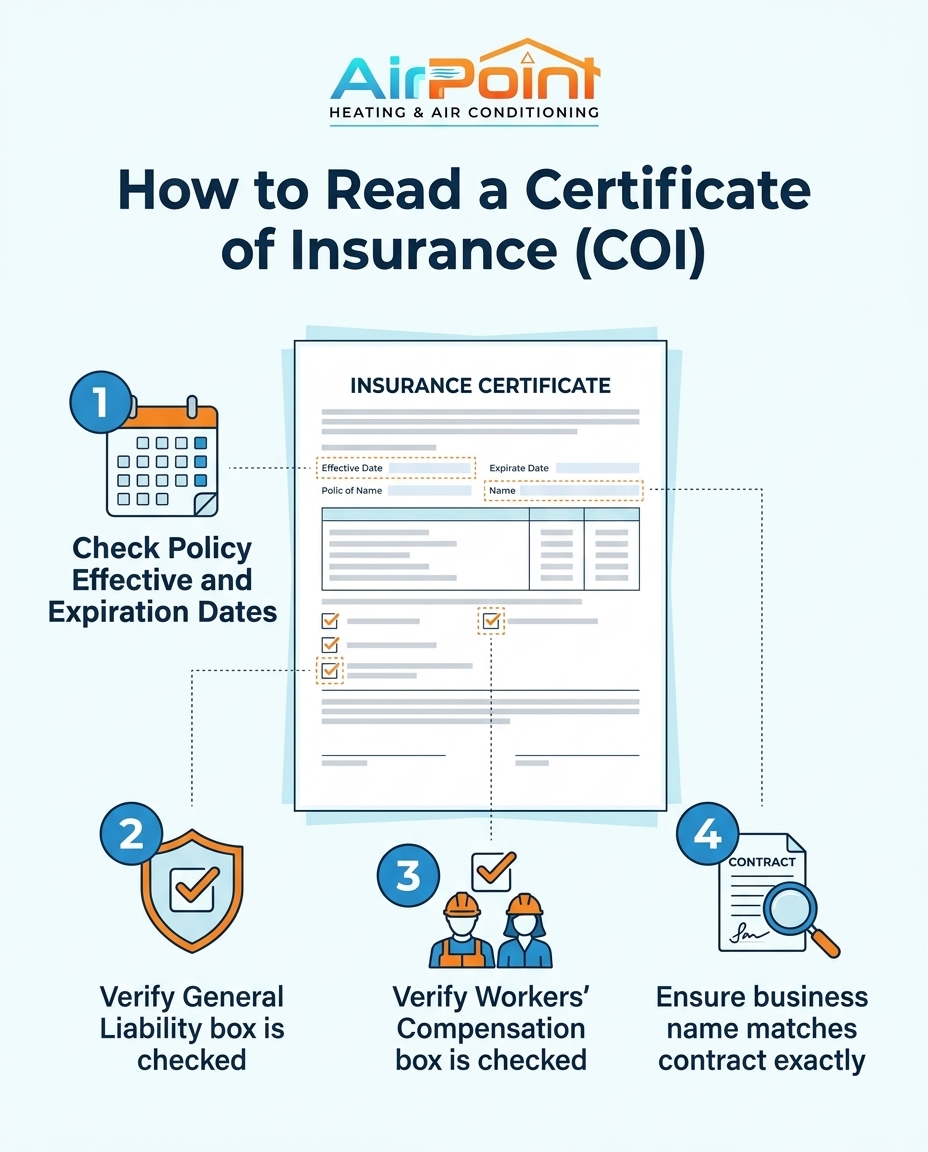
Step-by-Step: How to Read a Certificate of Insurance (COI)
When you ask a contractor for proof of insurance, they should provide a document called a Certificate of Insurance (COI). This is usually a standardized form (often an ACORD form) issued directly by their insurance broker. Knowing how our HVAC contractors ensure quality work starts with understanding this critical document.
Follow these steps to read and verify the COI correctly:
1. Request the document directly: Ask the contractor to provide the COI before any contracts are signed or any work begins. A reputable company will have this ready to email to you immediately.
2. Check the dates: Look closely at the "Policy Effective" and "Policy Expiration" dates. HVAC projects can face delays; ensure the coverage is currently active and will remain active through the expected completion date of your early fall pre-heating installation.
3. Verify the checkboxes: Look at the middle section of the form. You must verify that both the "General Liability" and "Workers' Compensation" boxes are distinctly checked. Do not accept a form where only one is marked.
4. Match the business name: The "Insured" name on the certificate must match the exact business name on your estimate, contract, and CSLB license. If the names differ, the policy might not cover the entity actually doing the work.
5. Look for the agency contact: The top right corner of the form should list the insurance agency's contact information. If you have any doubts about the document's authenticity, you can call that agency directly to verify the policy is still in force.
Navigating the CSLB Portal for Independent Verification
You should never rely solely on a piece of paper handed to you by a contractor. Documents can be outdated, altered, or simply inaccurate. The State of California provides a robust, free tool to cross-reference a contractor's claims: the Contractors State License Board (CSLB) online portal.
Here is how to independently verify California CSLB license, Workers' Compensation, and General Liability certificates:
1. Access the portal: Go to the official California CSLB website and navigate to the "Check a License" feature.
2. Enter the license number: Input the contractor's license number, which should be clearly printed on their estimate, website, and business cards. California law requires contractors to display this number on all marketing materials.
3. Check the license status: The portal will immediately tell you if the license is "Active," "Suspended," or "Expired." Only proceed if the status is strictly Active.
4. Review the Workers' Compensation section: Scroll down the profile. The state requires workers' compensation for any company with employees. The portal will list the insurance carrier and the policy number.
5. Check the Bond status: Verify that the mandatory contractor's bond is current and on file with the state.
The ultimate cross-check: Ensure the business name listed on the CSLB portal matches the name on the contract and the COI exactly. Shady operators sometimes "borrow" license numbers from legitimate businesses. Verifying the exact name and address stops this scam in its tracks.
Red Flags That Signal an Underinsured Operation
Even if you know how to check the paperwork, you must also listen to how a contractor talks about their insurance. Their attitude toward your protection reveals exactly how they will treat your property during a complex installation. A pattern we see often when stepping in to fix botched jobs across Los Alamitos is that underinsured contractors exhibit the same critical warning signs. Watch out for these red flags that should cause you to pause or cancel a project immediately.
• Hesitation or refusal: If a contractor acts annoyed, delays sending the COI, or claims you "don't need to worry about it," walk away. Legitimate businesses are proud of their credentials.
• The "Independent Contractor" excuse: If a company claims they do not need workers' compensation because their crew members are "independent contractors" or "1099 employees," be highly suspicious. California law is extremely strict about misclassifying employees to dodge insurance requirements.
• Expired documents: Providing documents with expired dates, even if they promise they just "haven't gotten the new copy yet," is a massive risk. Never let work begin without current proof.
• Poor communication about property protection: An uninsured contractor rarely cares about protecting your home. A fully insured, reputable contractor takes proactive steps.
Consider how a proper installation should look. When one homeowner required a complete air conditioning replacement after a home warranty company provided an incorrect diagnosis, the right team stepped in. They counseled the homeowner, scheduled service quickly, meticulously covered floors and furniture, vacuumed all debris, and explained the work progress step-by-step. The home was kept clean and respected during the entire process. This level of care is the hallmark of a properly licensed, fully insured company that values your property. Underinsured operations simply do not invest in this level of detail.
Why Total Transparency Should Be the Baseline
Homeowners should never have to chase down critical legal documents. You are hiring a professional to solve a problem, not to create new legal liabilities for your family. Reputable companies provide up-to-date proof of licensing, bonding, and insurance proactively, often including it with their initial estimate packet.
At AirPoint Heating & Air Conditioning, we believe in a commitment to total transparency. We readily provide proof of comprehensive liability insurance, bonding, and licensing before any work begins. We want you to see our California CSLB license, Workers' Compensation, and General Liability certificates because we know that upfront documentation reflects a broader commitment to professional, high-quality workmanship.
When a company is transparent about their legal standing, it usually means they are transparent about their pricing, their diagnostic processes, and their installation standards. Choosing a transparent contractor guarantees peace of mind throughout the entire project, allowing you to focus on the comfort of your home rather than worrying about liability claims.
Protect Your Property Before the Project Begins
Verifying insurance is a simple, straightforward step that carries massive protective benefits. By understanding the risks of heavy equipment tear-outs and knowing exactly what documents to demand, you take control of your home's safety. Take the time to review Certificates of Insurance carefully, verify the checkboxes, and always cross-reference the information on the official CSLB portal.
Do not leave your early fall pre-heating installation to chance or rely on a handshake agreement. Partner with a team that prioritizes your property's safety just as much as your indoor comfort. When you are ready to upgrade your system with a fully vetted, transparent professional, schedule HVAC service with a team that puts your peace of mind first.
Frequently Asked Questions
How do I verify a contractor's certificate of insurance?
You verify a certificate of insurance by requesting the document directly from the contractor and checking the policy effective dates. Look closely to ensure both the General Liability and Workers' Compensation boxes are checked. For ultimate peace of mind, you can call the insurance agency listed on the form to confirm the policy is currently active.
What happens if an HVAC contractor damages my property?
If an HVAC contractor damages your property, their General Liability insurance is designed to cover the cost of the repairs. If the contractor is uninsured, you may have to file a claim with your own homeowners insurance, which could lead to higher premiums or even a denied claim. This is why verifying active liability coverage before work begins is absolutely critical.
Do HVAC contractors need workers comp in California?
Yes, any HVAC contractor in California who has employees is legally required to carry workers' compensation insurance. This protects the workers if they are injured on the job and shields the homeowner from being sued for medical bills. You can verify their workers' compensation status directly on the CSLB website.
What is the difference between being licensed and being insured?
Being licensed means the contractor has met state requirements, passed background checks, and is legally allowed to perform the trade in California. Being insured means the contractor carries specific financial policies to pay for property damage or worker injuries that occur during the project. A contractor must have both to fully protect a homeowner.
Does homeowners insurance cover uninsured contractors?
Standard homeowners insurance policies often have exclusions that deny coverage for damages caused by unpermitted, unlicensed, or uninsured contractors. If an uninsured worker is injured on your property, your policy might cover it under personal liability, but you could still face lawsuits and increased insurance rates. Always hire verified, insured professionals to avoid this risk.
Other Blogs
Latest Blog Posts
Heat Pump vs. Gas Furnace: Weighing Operating Costs Under Current California Utility Rates
Why DIY Mini Split Pre-Charged Lines Often Leak Refrigerant After the First Season
How to Inspect Your Attic Ductwork for Rodent Damage Before Winter Sets In

Customer Testimonials



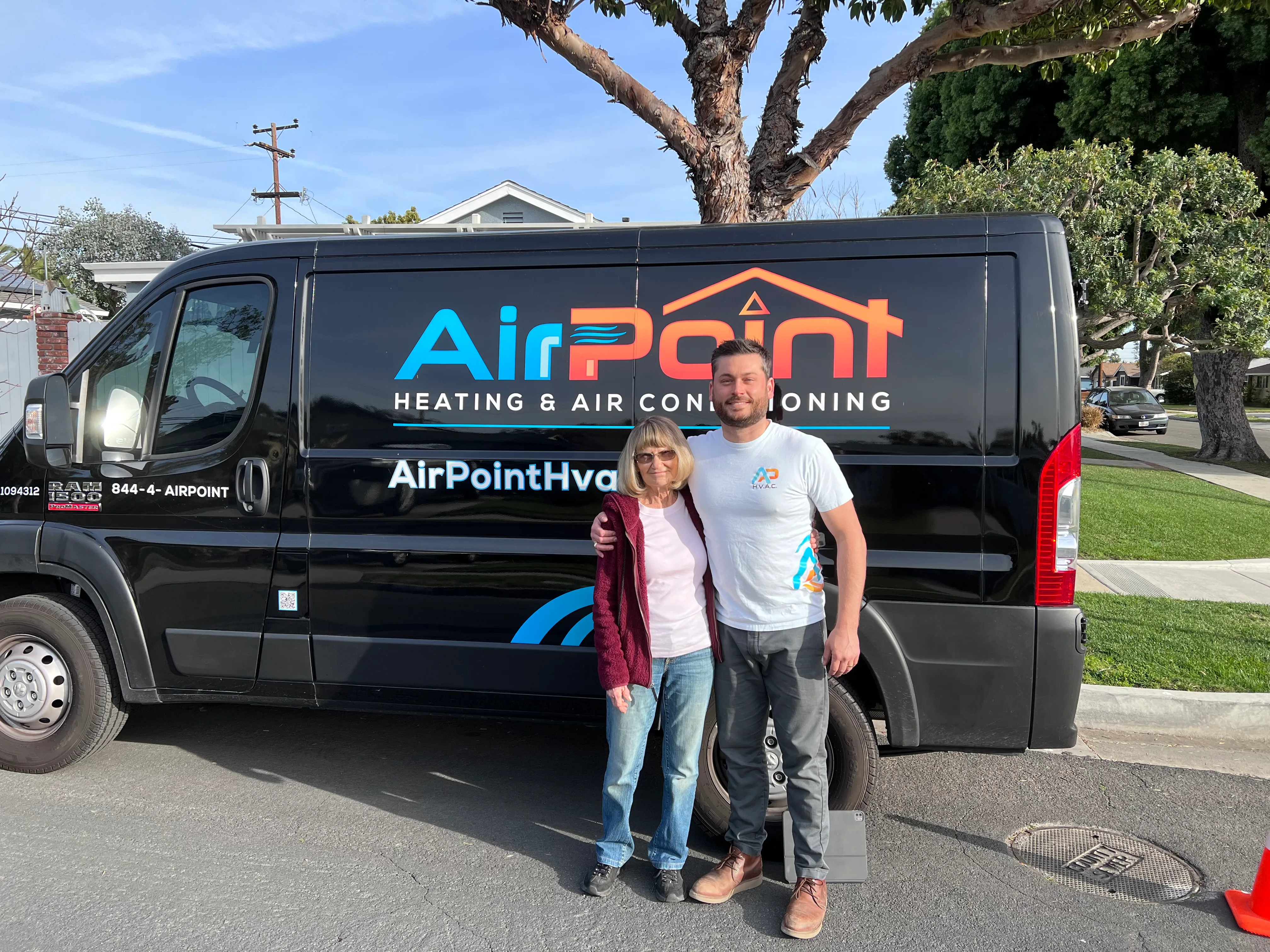
I recommend Air Point for your HVAC needs."