




Why Your Heat Pump Blows Cool Air During Damp November Nights: Understanding Defrost Mode
The Sudden Chill: When Your Heater Feels Like an Air Conditioner
Late fall is finally settling into Southern California, bringing a noticeable shift in the evening weather. As those damp November nights drop into the 40s, you walk over to the thermostat and switch your system from cool to heat for the first time in months. But instead of a cozy, welcoming breeze, you feel a chilly draft coming from the vents. If you are wondering why is my heat pump blowing cold air in winter, you are certainly not alone. At AirPoint Heating & Air Conditioning, our team fields countless calls every November from Los Alamitos homeowners experiencing this immediate moment of panic, assuming their heating equipment has failed right when they need it most as they prep their homes for the holiday season.
When you feel cool air blowing from your vents on a brisk evening, you face a quick decision: do you wait it out, or do you immediately call for an emergency repair? The good news is that in the vast majority of cases, this sudden blast of cool air is actually a temporary, self-preserving function built directly into your system. Before you assume the worst about your Heating Systems, it helps to understand exactly what your equipment is doing behind the scenes.
Modern heating equipment is designed to protect itself from the elements. When certain weather conditions align, the outdoor unit must take a brief pause from warming your home to warm itself instead. By understanding this built-in protection mechanism, you can save yourself unnecessary worry and avoid booking a service call for a machine that is actually operating exactly as it should. The secret to this behavior lies in how your system interacts with the unique coastal climate right outside your door.
Why Coastal Humidity Triggers Defrost Mode Above Freezing
Many homeowners operate under the logical assumption that ice only forms when the weather outside drops below 32 degrees Fahrenheit. Because Southern California rarely sees freezing temperatures, discovering frost on your outdoor heating equipment can be incredibly confusing. However, the formation of frost on these systems has less to do with freezing rain or snow, and everything to do with the combination of cool air and heavy moisture.
To understand why this happens, you have to look at how the technology actually works. Unlike a gas furnace that creates heat by burning fuel, your system absorbs existing heat energy from the outdoor air and moves it inside. As it extracts this heat, the temperature of the outdoor coil drops significantly—often 10 to 15 degrees colder than the ambient air surrounding it. If it is 45 degrees outside, your outdoor coil might be operating at a freezing 30 degrees. When you need professional Heat Pump Services, our technicians often spend time explaining this exact phenomenon, as it is the primary reason these units ice up in weather that feels far too warm for frost.
The Science of Frost Formation on Heat Pumps
Frost formation requires two specific ingredients: a freezing surface and airborne moisture. When your system operates on a cool evening, the outdoor coil naturally drops below the freezing point as it absorbs heat energy. This freezing coil acts as a magnet for any moisture suspended in the surrounding air.
As the outdoor fan pulls large volumes of air across these super-chilled coils, the moisture in that air rapidly condenses onto the metal fins. Because the metal is below freezing, that condensation instantly turns into frost. Over time, this thin layer of frost can build up into a thicker coating of ice, which blocks airflow and prevents the system from absorbing any more heat. Fortunately, sensors built into the outdoor unit detect this ice accumulation and trigger a specialized cycle to melt it away safely.
The Los Alamitos Marine Layer Effect
National advice articles often assume that frost only happens during deep-freeze blizzards, but our team at AirPoint Heating & Air Conditioning understands firsthand that salt-air and high-humidity microclimates impact HVAC systems very differently. In Los Alamitos, the heavy marine layer plays a massive role in how your equipment operates.
Damp November nights often bring 40-50 degree coastal temperatures with high humidity. When the evening marine layer rolls in, humidity levels can easily spike to 70% or 80%. This incredibly damp air provides a constant supply of moisture to the freezing outdoor coils, accelerating the rate at which frost forms.
• Inland / Desert Winter — Ambient Temperature: 35°F - 45°F — Humidity Level: Low (20% - 30%) — Frost Risk on Outdoor Coils: Low (Dry air lacks moisture to freeze)
• Coastal SoCal (Marine Layer) — Ambient Temperature: 40°F - 50°F — Humidity Level: High (70% - 85%) — Frost Risk on Outdoor Coils: High (Heavy moisture condenses and freezes rapidly)
• Deep Freeze / Snow — Ambient Temperature: Below 32°F — Humidity Level: Variable — Frost Risk on Outdoor Coils: High (Ambient air is already below freezing)
Because of this thick coastal moisture, your system will likely need to melt off ice much more frequently than a similar unit installed in a dry, inland desert climate—even if the desert is technically colder. The moisture acts as a catalyst, making defrosting a routine part of coastal winter operation.
What Happens During a Standard Heat Pump Defrost Cycle?
When the internal sensors detect that the outdoor coil is restricted by frost, the control board initiates a defrost cycle. This cycle is a brilliant piece of engineering designed to clear the ice quickly and restore your home's heating capacity. Knowing exactly what happens during this process can help you recognize normal operation versus a true mechanical failure.
During this cycle, the system temporarily reverses its operation. In simple terms, it switches into air conditioning mode. It takes the warm refrigerant from inside your house and sends it back outside to heat up the frosted coils. Because it is pulling heat from your indoor air to melt the outdoor ice, the indoor vents will blow cool air. Whether you have a traditional central system or highly efficient Mini Split Heat Pumps, the core mechanics of this melting process remain largely the same.
The 10 to 15 Minute Window
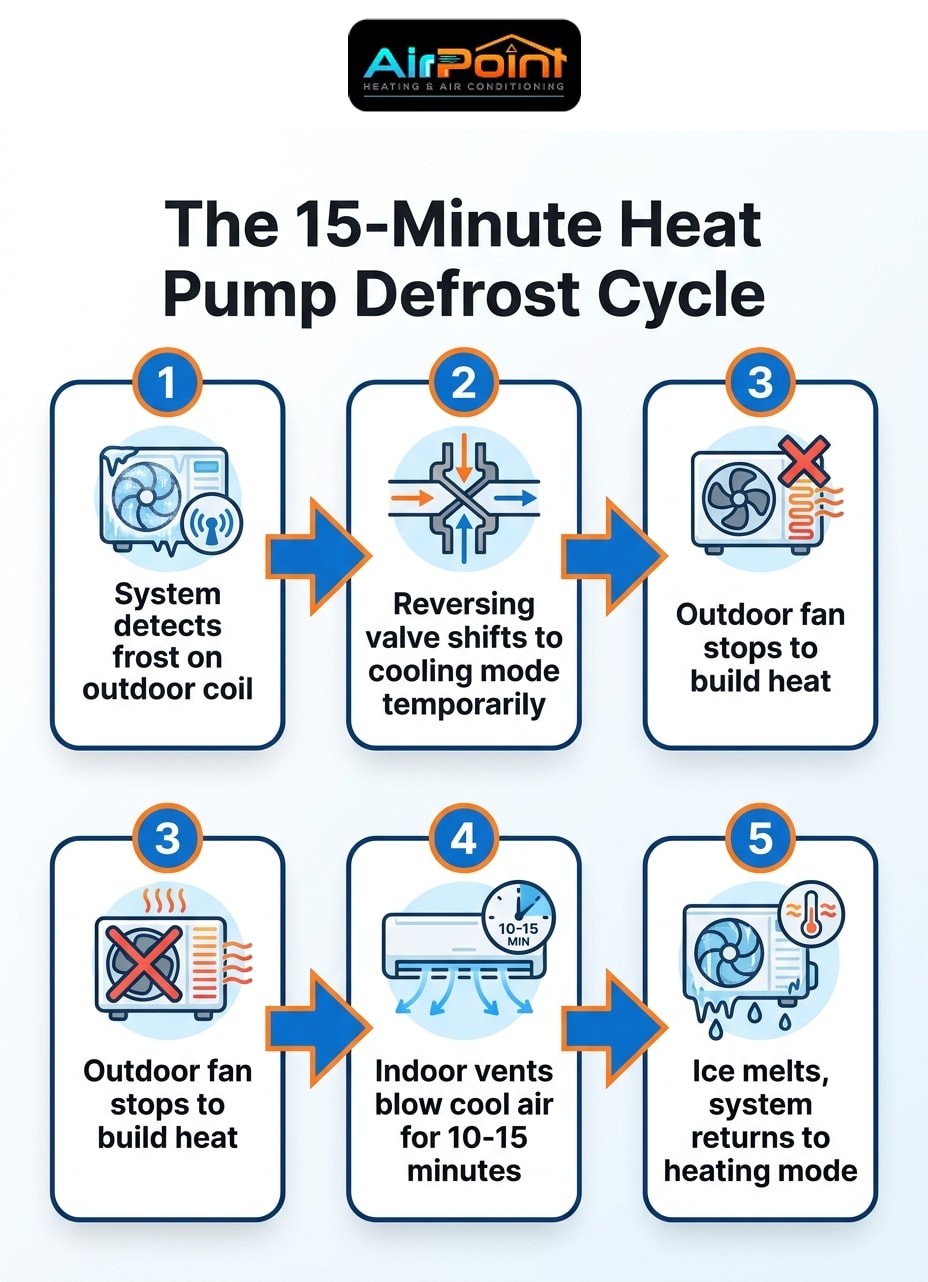
The most important thing for a homeowner to know is the timeline of this process. A standard defrost cycle is designed to be brief and highly efficient.
1. The cycle initiates: The system detects frost and triggers the reversing valve. You might hear a loud "whoosh" sound from the outdoor unit as the refrigerant flow changes direction.
2. The outdoor fan stops: The large fan on the top of the outdoor unit will stop spinning. This is intentional; the system wants to build up as much heat as possible to melt the ice quickly, and running the fan would cool the coils down.
3. The indoor fan continues: The indoor blower keeps running, which is why you feel cool air coming from the vents. (Some systems use auxiliary heat strips during this time to temper the air, but you may still notice a temperature drop).
4. The ice melts: Steam may visibly rise from the outdoor unit as the hot refrigerant melts the frost in the cool coastal air.
5. The cycle ends: Once the coil reaches a specific temperature (usually around 50 to 60 degrees), the sensors know the ice is gone.
This entire process should take no more than 10 to 15 minutes. If you feel cool air, your best first step is simply to check the clock and wait 15 minutes before taking any further action.
The Return to Normal Heating
When the defrost cycle completes, you will likely hear another "whoosh" sound as the reversing valve shifts back into heating mode. The outdoor fan will spin back up, and the compressor will resume its normal hum. Inside your home, the air coming from the vents will gradually warm up over the next few minutes until it is blowing cozy, heated air once again. If this happens within that 15-minute window, your system is working perfectly.
Simple Explanations Before Calling a Professional
While the defrost cycle explains most instances of sudden cold air on damp November nights, there are a few other common culprits that can cause a similar sensation. Before you pick up the phone to request a service visit from our team, there are several basic, non-technical issues we always recommend checking yourself. These simple checks empower you to resolve minor hiccups without spending money on an unnecessary service call.
Checking Your Thermostat Settings
Thermostat misconfigurations are something we see frequently, especially early in the season when you are adjusting to new weather patterns.
• Verify the mode: Ensure the system is actually set to "Heat" and not "Cool." Sometimes a bump of a button or a lingering schedule from summer can leave the system trying to cool the house.
• Check the fan setting: Look at the fan switch on your thermostat. It should be set to "Auto." If it is set to "On," the indoor blower will run constantly, 24/7. When the heating cycle finishes and the compressor turns off, that "On" setting will continue to circulate room-temperature air, which often feels cold blowing against your skin.
• Avoid "Emergency Heat": Unless your primary heat source has completely failed, do not switch the system to "Emergency Heat." This setting bypasses the efficient outdoor unit entirely and relies solely on expensive electric resistance strips.
The Role of Clean Air Filters
Neglected maintenance is a leading cause of heating inefficiencies. The air filter in your return vent plays a massive role in how well your equipment functions. When a filter becomes clogged with dust, pet hair, and household debris, it severely restricts the amount of air that can flow through the indoor coil.
This restricted airflow forces the entire system to work much harder. More importantly, poor indoor airflow alters the operating pressures of the refrigerant, which can actually cause the outdoor unit to freeze up faster and more frequently. If your system seems to be blowing cool air or entering defrost mode constantly, pull out your air filter. If you cannot see light through it, it is time for a replacement.
Warning Signs of a True Heating System Malfunction
While a 15-minute blast of cool air is perfectly normal during 40-50 degree coastal temperatures with high humidity, there is a distinct line between routine operation and a genuine mechanical failure. It is important to clearly differentiate between a system that is protecting itself and a system that is broken. If your equipment exhibits certain red flags, it is time to Schedule HVAC Service with a licensed professional.
Our technicians at AirPoint Heating & Air Conditioning look for these definitive warning signs:
• Continuous cold air: If the vents blow cold air continuously for more than 20 to 30 minutes without ever warming up, the defrost cycle is either stuck or the heating elements have failed.
• A solid block of ice: A light coating of white frost is normal. However, if your outdoor unit is completely encased in a thick, solid block of hard ice that remains for hours, the defrost mechanism is broken.
• Strange, aggressive noises: While a "whoosh" sound is normal, loud hissing, aggressive grinding, or heavy metal-on-metal clanking coming from the compressor indicates a serious mechanical issue.
• Frequent, back-to-back cycles: If the system defrosts for 15 minutes, heats for 5 minutes, and immediately goes back into defrost mode repeatedly, it is struggling to function and failing to warm your home.
Faulty Reversing Valves
The reversing valve is the heavy-duty brass component responsible for physically changing the flow of refrigerant, allowing the system to switch between heating and cooling. In coastal environments, salt air and heavy moisture can take a toll on outdoor components. If the reversing valve gets physically stuck or its electrical solenoid fails, the system becomes trapped. It may get stuck in cooling mode, meaning it will never exit the defrost cycle, continuously blowing cold air into your home. Diagnosing and replacing a reversing valve requires specialized local knowledge and professional tools.
Low Refrigerant Levels
Your system relies on a precise amount of pressurized refrigerant to absorb and transfer heat. If tiny micro-leaks develop in the copper lines or coils, the refrigerant level drops. Low refrigerant prevents the system from generating enough heat to properly melt the ice during a defrost cycle. The system will try to defrost, fail to melt the ice, and eventually freeze over completely. Handling, testing, and recharging refrigerant requires specific EPA certifications and must always be handled by a licensed professional.
Preparing Your Heat Pump for Southern California Winters
Transitioning from reactive troubleshooting to proactive maintenance is the best way to ensure your home stays comfortable all season long. Preparing for late fall and winter in Southern California focuses heavily on moisture management and airflow, rather than winterizing against heavy snowdrifts. By taking a few steps now, you can help your system handle damp November nights with ease.
First, keep the outdoor unit completely clear of coastal debris. Late fall winds often blow leaves, twigs, and dirt into the metal fins of the outdoor coil. Overgrown vegetation around the unit restricts the airflow needed to pull heat from the air. Trim back bushes and clear away leaves to ensure at least two feet of unobstructed clearance around the entire unit.
Second, ensure proper drainage around the base of the outdoor equipment. When the system melts frost during a defrost cycle, that water needs somewhere to go. If the unit is sitting in a puddle or the drainage path is blocked by mud and debris, that standing water can freeze again or cause premature corrosion to the base pan.
Finally, the importance of a pre-winter professional inspection cannot be overstated. A technician can test the reversing valve, verify the defrost sensors are calibrated correctly, and ensure refrigerant levels are exact. Additionally, if your system is aging, federal tax credits or local utility incentive programs may apply to qualifying heat pump installations—we always advise our customers to verify current programs with their utility or a tax professional. When choosing a professional for this maintenance, always ensure you are working with a reputable company. You can read more about how to Verify an HVAC Contractor's Liability Insurance to guarantee you are protected during any service visit.
Frequently Asked Questions About Heat Pump Operation
How long should a heat pump stay in defrost mode?
A standard defrost cycle typically lasts between 10 and 15 minutes. During this brief window, the system reverses its operation to send hot refrigerant to the outdoor coil, melting away accumulated frost. Once the sensors detect that the outdoor coil has reached a warm enough temperature (usually around 50 to 60 degrees), the cycle terminates. If your system remains in this mode for longer than 20 to 30 minutes, it likely indicates a malfunction with the defrost control board or sensors.
Why does my heat pump blow cold air when it's not freezing outside?
Your system absorbs heat from the outdoor air, which causes the outdoor coil to drop 10 to 15 degrees below the ambient temperature. On a 45-degree evening, the coil itself is operating below freezing. When high coastal humidity hits that freezing coil, it rapidly condenses and forms frost. The system must then switch into defrost mode to melt this ice, which temporarily blows cool air into your home, even when the yard itself isn't freezing.
Is it normal for a heat pump to blow cold air sometimes?
Yes, it is completely normal for a brief period during the winter. When the outdoor unit accumulates frost, the system must temporarily switch into a cooling mode to melt the ice, diverting heat away from your indoor vents for about 10 to 15 minutes. Additionally, if your thermostat fan is set to "On" rather than "Auto," the blower will circulate unheated room-temperature air between active heating cycles, which can feel cold against your skin.
Why is my heat pump blowing cold air on auxiliary heat?
Auxiliary heat is designed to supplement your primary heating system when temperatures drop too low or during a defrost cycle. If you feel cold air while auxiliary heat is active, the electric heat strips inside your air handler may be malfunctioning, or a breaker dedicated to the heat strips may have tripped. It can also indicate a severe airflow restriction, such as a completely clogged air filter, preventing the system from distributing the heat properly.
How do I know if my heat pump reversing valve is bad?
A failing reversing valve often leaves the system stuck in one mode, meaning it will only cool or only heat, regardless of what the thermostat demands. You might also hear a persistent hissing sound as refrigerant bleeds through a valve that is only partially shifted. If your system enters a defrost cycle but never returns to heating mode, continuously blowing cold air for hours, a stuck reversing valve is a highly likely culprit that requires professional diagnosis.
Can high humidity cause my heat pump to freeze up?
Absolutely. High humidity provides a massive amount of airborne moisture that acts as fuel for frost formation. In coastal areas with heavy marine layers, units will frost over much faster in 45-degree weather than they would in a dry, 30-degree inland desert. The damp air constantly supplies condensation to the cold outdoor coils, forcing the system to run its defrost cycle more frequently to keep the coils clear and efficient.
Stay Comfortable and Confident This Winter
Experiencing a sudden draft of cool air on a chilly night can be alarming, but understanding how your system responds to coastal weather is the key to peace of mind. In most cases, that temporary cool air is simply your equipment protecting itself, melting away the frost caused by damp November nights and heavy marine humidity. The best tool you have is your patience—simply watch the clock and give the system 15 minutes to complete its built-in cycle.
However, if the 15-minute mark comes and goes, or if your outdoor unit begins to resemble a solid block of ice, you don't have to face the cold alone. Recognizing the signs of a true malfunction early allows you to get ahead of the problem. If your system is struggling to keep your home warm, or if you suspect a faulty reversing valve or refrigerant leak, reach out to our team for a professional inspection. A quick tune-up can restore your comfort and ensure your home stays cozy all winter long.
Other Blogs
Latest Blog Posts
HVAC Settings for Winter Vacation: Why 62 Degrees is Ideal for Thanksgiving Travel
Why Moving a Thermostat to Another Room Can Fix a Freezing Bedroom
Improving Indoor Air Quality for Holiday Guests: A Pre-Party Filtration Checklist

Customer Testimonials



I recommend Air Point for your HVAC needs."