





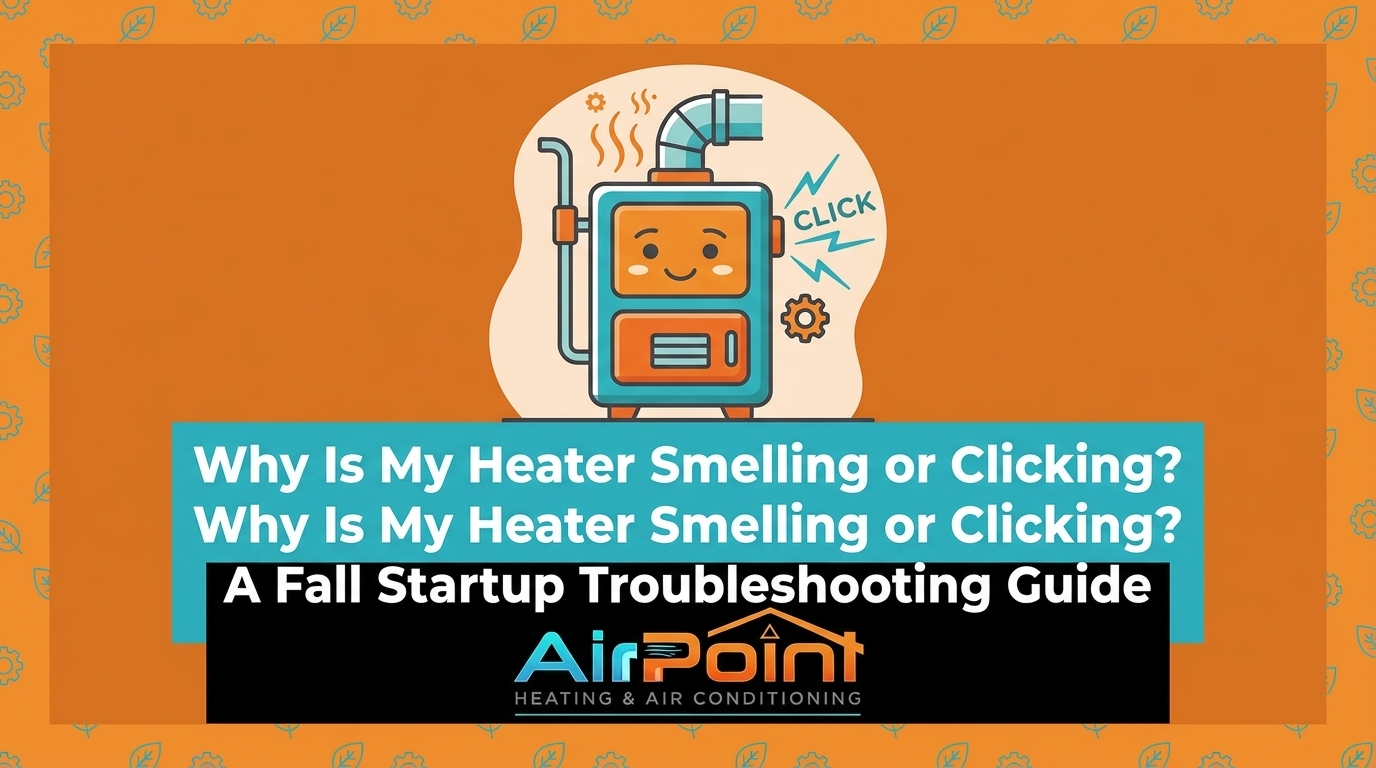
Why Is My Heater Smelling or Clicking? A Fall Startup Troubleshooting Guide
What Happens When You Turn On Your Heater for the First Time?
Are you looking for reliable home maintenance tips and troubleshooting advice because you just turned your heater on and immediately noticed a strange burning smell? You are not alone. When that first cool October morning arrives and you finally switch your thermostat from cooling to heating, unexpected odors and unusual noises can cause instant panic. You might wonder if your house is in danger, or if your system is simply shaking off the dust from a long summer slumber.
Knowing the difference between normal operational quirks and genuine safety hazards is the most critical decision you will make this season. Your heating system involves combustible gases, high-voltage electricity, and intense heat. While some smells are a harmless byproduct of the seasonal transition, others are urgent warnings that require immediate professional intervention. In our years serving Los Alamitos homeowners, our team has seen every type of startup issue. Before you stress about a potential breakdown, let's look closely at exactly what your furnace is doing behind the scenes during its initial startup sequence.
If you need help transitioning your system safely for the season, we provide expert air conditioning services and comprehensive heating diagnostics to ensure your home remains comfortable and secure.
Why Does My Heater Smell Like Burning Dust?
The problem: You turn on your thermostat, hear the furnace ignite, and within minutes, a distinct smell of burning dust fills your hallways and living spaces. It is alarming, unpleasant, and, based on the calls our dispatch team receives every October, the most common reason homeowners request emergency service in the early fall.
The cause: To understand this odor, you have to look at what happens inside your heating cabinet during the spring and summer. Your furnace shares ductwork and a blower motor with your air conditioner. As air circulates through your home for months, microscopic particles of dust, pet dander, and airborne debris bypass your air filter and settle on the internal components of your furnace. This debris accumulates directly on the heat exchanger—the metal chamber that gets incredibly hot to warm your air—and the heating elements.
When you trigger the first heating cycle of the year, those components heat up rapidly. The accumulated layer of dust literally burns off the metal surfaces. This scientific process of "dust burn-off" creates a distinct, somewhat acrid smell that gets pushed through your vents and into every room of your house.
The Normal Timeframe for Dust Burn-Off
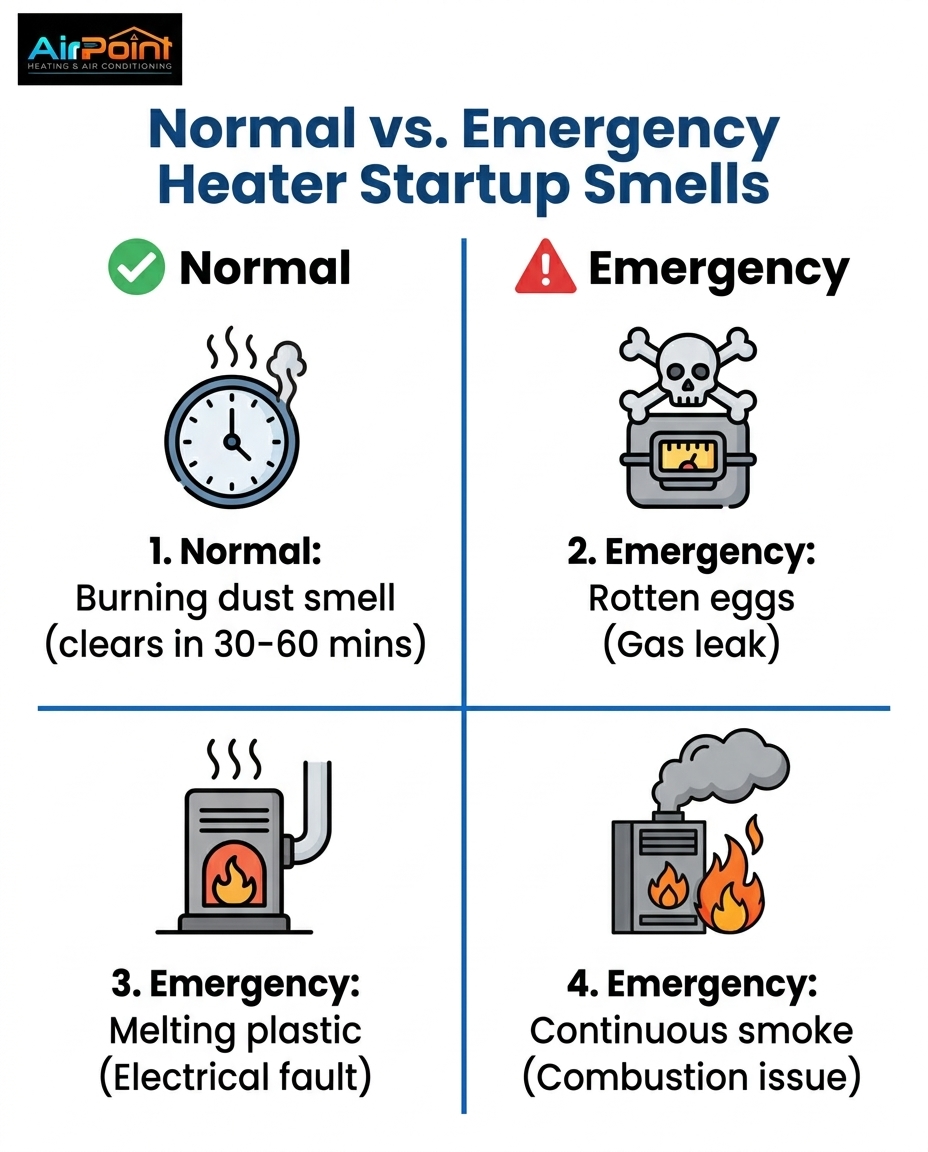
Context is everything when evaluating startup smells. Normal dust burn-off odors should begin to dissipate within 30 to 60 minutes of continuous operation. You can help clear the air by opening a few windows to allow fresh air to circulate while the system completes its first full heating cycle.
The solution: While you cannot entirely prevent dust from settling on idle equipment, you can significantly reduce the severity of the smell. Upgrading your filtration strategy captures more airborne particles before they ever reach your heat exchanger. If you consistently struggle with heavy dust, strong odors, or seasonal allergies, integrating professional indoor air quality solutions into your HVAC system will keep both your air and your internal equipment much cleaner.
How Coastal Humidity Impacts Idle HVAC Components
Heating systems do not exist in a vacuum; they are heavily influenced by the environment around them. If you live in Southern California, your furnace faces a unique set of challenges compared to systems operating in dry, arid inland deserts. Our technicians at AirPoint Heating & Air Conditioning frequently see how the specific coastal climate in Los Alamitos plays a massive role in how your heater behaves when you finally wake it up from its summer hibernation.
The Role of High Moisture and Salt Air
Coastal humidity frequently exceeds 60 percent, keeping the air consistently moist. When a furnace sits dormant for eight to nine months out of the year, this persistent moisture interacts with the metal components inside the cabinet. High humidity accelerates dust adhesion, meaning the debris that settles on your heat exchanger sticks much harder than it would in a dry climate. This stubborn layer of grime can make the initial dust burn-off smell more intense and slightly longer-lasting.
More importantly, the mild salt air and constant moisture can cause minor surface oxidation on sensitive electronic parts. Your furnace relies on a network of delicate sensors, switches, and metal contacts to operate safely. When these components oxidize over a long, humid summer, they lose their ability to communicate effectively with the control board.
Why Regional Climate Demands Proactive Care
This environmental reality makes professional pre-season inspections particularly important for coastal residents. A flame sensor coated in a microscopic layer of oxidation will fail to detect a fire, causing your system to shut down protectively. A technician understands how to properly clean these specific coastal climate impacts, ensuring your system fires up reliably when the temperatures finally drop.
Is It Normal for the Heater to Click or Rattle on Startup?
Aside from unexpected smells, unusual noises are the second most common source of homeowner anxiety during a fall heating startup. Your furnace is a large piece of mechanical equipment with moving parts, expanding metals, and a complex ignition sequence. Some noises are perfectly normal signs of operation, while others indicate a mechanical failure or a dangerous structural issue.
Understanding the Ignition Sequence
When your thermostat calls for heat, you will often hear a distinct clicking sound. This is normal. Modern furnaces use electronic igniters rather than standing pilot lights. The clicking is the sound of the spark igniter attempting to light the gas. However, if you hear continuous, rapid clicking for several minutes but no warm air follows, your system is failing to ignite. This is frequently caused by dirty or oxidized flame sensors—a direct result of summer inactivity—or a failing gas valve.
If you prefer to avoid the complexities of gas combustion entirely, our installation crews have helped many homeowners transition to ductless mini-split systems, which provide highly efficient electric heating without the need for heat exchangers or gas lines. (Keep in mind that generic federal tax credits or local utility incentives may apply to qualifying heat pump installations, so it is always worth verifying current programs with your utility provider or a tax professional.)
Decoding Furnace Noises
Use this comparison table to distinguish between harmless sounds and mechanical warnings:
• Normal Clicking — What It Sounds Like: A few sharp clicks followed by a low "whoosh" of flames. — Common Cause: The electronic igniter successfully lighting the burners. — Action Required: None. This is normal operation.
• Continuous Clicking — What It Sounds Like: Rapid, repetitive clicking that never results in heat. — Common Cause: Dirty flame sensor, faulty igniter, or blocked gas flow. — Action Required: Call a professional for diagnostics.
• Pinging or Popping — What It Sounds Like: Metallic tapping sounds coming from the walls or vents. — Common Cause: Normal thermal expansion of metal ductwork as it heats up. — Action Required: None. Harmless structural reaction.
• Loud Rattling — What It Sounds Like: A harsh, vibrating metal-on-metal sound from the cabinet. — Common Cause: Loose blower motor mounting or a cracked heat exchanger. — Action Required: Turn off system. Requires immediate inspection.
• High-Pitched Squeal — What It Sounds Like: A sharp, continuous whining noise when the blower runs. — Common Cause: A failing blower motor bearing or a worn-out fan belt. — Action Required: Schedule a repair before the motor seizes.
Warning Signs: Heater Smells That Require Immediate Attention
While a brief dust burn-off is nothing to worry about, certain odors are strict, undeniable warning signs of a severe safety hazard. Your heating system utilizes natural gas (or propane) and high-voltage electrical currents. When these systems malfunction, they pose a significant risk of fire, electrical damage, or carbon monoxide exposure. If you notice any of the following smells, you must prioritize safety over comfort.
• The smell of rotten eggs: Natural gas is inherently odorless. Utility companies add a chemical called mercaptan to the gas supply, giving it a distinct, sulfur-like "rotten egg" smell. If you smell this near your furnace or vents, you have a natural gas leak. Turn off the system immediately, evacuate the house, and call your utility provider and a professional HVAC technician.
• Electrical burning or melting plastic: If your vents smell like ozone, burning wire casing, or melting plastic, shut the system down at the thermostat. This odor signals overheating electrical wiring, a failing capacitor, or a blower motor that has seized and is drawing too much amperage. Continuing to run the system risks an electrical fire.
• Continuous smoke or heavy soot: A brief puff of dust is one thing, but visible smoke or a heavy, campfire-like soot smell indicates a severe combustion issue. This usually means the burners are misaligned, the fuel-to-air mixture is dangerously incorrect, or the exhaust flue is blocked, pushing dangerous exhaust gases back into your home.
• Formaldehyde or metallic chemical odors: A cracked heat exchanger can sometimes produce a harsh, chemical-like smell. This is a critical failure that allows carbon monoxide to mix with your breathing air.
The golden rule of heating safety: Never attempt DIY diagnostics on gas lines, combustion chambers, or high-voltage electrical components. Our field technicians have responded to countless calls where a strange smell turned out to be a serious hazard. At AirPoint Heating & Air Conditioning, we provide prompt diagnostics and a 100% Satisfaction Guarantee to give you immediate peace of mind when facing potential safety hazards. Let a licensed professional handle the risk.
Preparing Your HVAC System for the Seasonal Shift
The transition from heavy summer cooling to fall heating is the most vulnerable time for your HVAC system. Your equipment does not get a vacation; it simply shifts from one intense workload to another. In our experience maintaining local systems, understanding this seasonal handover highlights the immense value of preventative maintenance.
The Compounding Effect of Summer Wear and Tear
During intense late-summer heatwaves, your blower motor works overtime to push chilled air through your home. The electrical capacitors endure thousands of startup cycles, and the air filter captures a massive volume of dust. If your system struggled slightly in August—perhaps running longer cycles or making a faint humming noise—those lingering summer AC issues will compound into winter heating failures if left unaddressed.
The blower motor that pushes cold air in July is the exact same motor that pushes warm air in December. If it is strained, dirty, or operating with a weak capacitor, the added stress of the fall heating startup can push it to total failure. This is why understanding the most common AC problems is actually the first step in preparing for a reliable winter heating season.
The Value of a Fall Tune-Up
A professional fall tune-up addresses the specific vulnerabilities of a system that has been dormant. A licensed technician will clean the oxidized flame sensors affected by coastal humidity, meticulously inspect the heat exchanger for microscopic cracks, and test the safety limit switches. This proactive approach ensures that when you truly need the heat on a freezing winter night, your system operates safely and efficiently.
Frequently Asked Questions About Fall Heating Startup
How long should a furnace smell when first turned on?
A furnace should only smell for 30 to 60 minutes during its initial startup. This temporary odor is caused by accumulated dust burning off the heat exchanger and heating elements. If the smell persists for several hours, or if it returns every time the system cycles on days later, you should turn the unit off. Persistent odors indicate a deeper issue, such as a severely clogged filter or an electrical fault, requiring professional evaluation.
Why is my heater clicking but not igniting?
Continuous clicking without ignition is often caused by a dirty flame sensor, a faulty electronic igniter, or a gas supply issue. When the system sits idle over the summer, surface oxidation and dust can coat the flame sensor, preventing it from detecting the gas. The control board hears the call for heat, sends the spark (the click), but shuts the gas valve down protectively when it cannot confirm a flame. This requires a professional cleaning or part replacement.
What does a cracked heat exchanger smell like?
A cracked heat exchanger may produce a strong, unpleasant formaldehyde-like odor or a metallic, chemical smell. More dangerously, it may produce no smell at all while leaking deadly carbon monoxide into your home's airflow. If you notice harsh chemical odors, or if your home's carbon monoxide alarms trigger when the heat kicks on, shut the system down immediately and call for emergency service.
When should I worry about my furnace smelling?
You should worry if the smell persists beyond an hour, smells like rotten eggs, or resembles burning plastic or electrical wires. A brief, dusty odor is standard burn-off, but sulfur smells indicate a highly dangerous gas leak. Electrical odors point to failing motors or melting wire casings. Any smell that causes physical symptoms like headaches, dizziness, or nausea is an immediate emergency.
Can I clean a furnace flame sensor myself?
Because cleaning a flame sensor involves accessing the combustion chamber and working directly adjacent to gas components, this requires a licensed professional. Improper handling can damage the delicate sensor rod, disrupt the burner alignment, or compromise the safety mechanisms of the furnace. A licensed technician ensures the component is cleaned correctly and verifies that the system operates safely afterward. We always recommend leaving this critical task to the experts to prevent accidental gas leaks.
Don't Ignore Safety Warning Signs This Fall
Navigating the transition into the heating season does not have to be a source of stress. While a brief burning dust smell is a normal part of waking your system up, persistent odors, continuous clicking, or harsh mechanical rattling are clear signs that your equipment needs professional attention. As we often tell our customers, ignoring these early warning signs rarely saves money; it usually just turns a minor calibration issue into a major mid-winter emergency.
There is immense peace of mind that comes from having a licensed expert verify the safety and integrity of your heating system. You deserve to know that the equipment keeping your family warm is operating flawlessly without posing a fire or gas risk. If you are experiencing unusual smells or startup failures, do not wait for the weather to drop further. Reach out to our experienced team today to schedule HVAC service and secure a safe, comfortable home for the season ahead.
Other Blogs
Latest Blog Posts
Why Does My Heater Smell Like Burning Dust? A Mid-Fall HVAC Repair Guide
HVAC Repair: Decoding Fall Furnace Smells and Startup Issues
Home Maintenance Tips and Troubleshooting: Decoding Fall Heating Startup Symptoms

Customer Testimonials



I recommend Air Point for your HVAC needs."