




Cooling a Hot Kitchen in Winter: Why Your AC Struggles During Holiday Cooking

The Thanksgiving Heat Wave: Why Holiday Cooking Overwhelms Your Home
Late fall is finally here, and the holiday hosting season is just around the corner. Here at AirPoint Heating & Air Conditioning, one of the most common issues our technicians hear about this time of year is the frustrating problem of cooling a hot kitchen in winter when the oven has been running for hours. By the time Thanksgiving or late November rolls around, you are likely preparing massive meals for family and friends. Between a roasting turkey, simmering stovetop sides, and a crowded house, we see kitchens quickly transform into uncomfortable saunas.
When the kitchen temperature spikes, your first instinct is probably to walk over to the thermostat and turn on the central air conditioning to combat the heat. However, our team constantly reminds homeowners that running a standard AC system while outdoor temperatures are mild or actively dropping creates a severe mechanical strain on your equipment. Your central cooling system was designed to manage ambient summer heat, not to fight off the intense, localized heat generated by heavy appliance usage on a cool autumn evening.
This creates a complicated decision point. You need an effective way to manage indoor comfort and ventilation so you can cook without sweating, but you also need to do it without forcing your HVAC system into conflicting cycles or causing permanent damage to the compressor. In our experience managing local home climates safely, relying on standard air conditioning systems during cooler months requires a careful, strategic approach.
Understanding Thermostat Confusion During Kitchen Prep
To understand why your central air conditioner fails to keep your kitchen comfortable during a holiday feast, you have to look at how residential HVAC systems measure temperature. Our team commonly refers to this phenomenon as "thermostat confusion." Your central cooling system relies on a single temperature reading, usually taken from a thermostat mounted in a central hallway, a living room, or a dining room. That single sensor dictates the climate for the entire house.
In our years of serving Los Alamitos, we know that late November weather often hovers in the mild 50s and 60s. This creates an awkward temperature zone where the rest of your house requires neither heating nor cooling to stay comfortable. The hallway thermostat might read a perfectly pleasant 68 degrees, leaving the central system dormant. Meanwhile, just a few rooms away, your kitchen is experiencing a completely different climate reality.
The Physics of Localized Heat Loads
When you run a 400-degree oven for several hours to roast a turkey, you are introducing a massive localized heat load into a single room. A prolonged roasting session can easily raise the immediate kitchen temperature by 10 degrees or more. The physics of this heat transfer mean that the hot air is trapped in the kitchen, slowly radiating outward, but not quickly enough to reach the hallway thermostat.
This creates a massive thermostat vs. localized kitchen temperature differential. The thermostat remains completely unaware of the 85-degree environment in the kitchen. Because central air is designed for ambient whole-home balance rather than spot-cooling, the system simply fails to cool the kitchen. If you decide to manually override the system by dropping the thermostat to 65 degrees just to force the AC to turn on, you create a new problem. The AC will push freezing air into every room of the house, freezing out your guests in the living areas while barely making a dent in the kitchen's heat.

The Mechanical Risks of Running Central AC in Cooler Weather
Beyond the simple discomfort of thermostat confusion, there are serious technical dangers associated with running a standard central air conditioner when the weather outside is cool. According to guidelines from the Department of Energy and ASHRAE, standard residential air conditioners have strict ambient operating thresholds. Simply put, they are not designed to operate in winter weather.
Operating a standard AC unit without specialized low-ambient controls when the outdoor temperature drops below 60 degrees Fahrenheit is highly risky. As evening temperatures drop during Thanksgiving or late November, the outdoor condenser unit is pushed below its safe operating limits. When you force the system to run in these conditions just to cool down a hot kitchen, you put the most expensive components of your HVAC system in jeopardy.
Frozen Coils and Compressor Strain
The science behind this limitation comes down to how refrigerant expands and absorbs heat. Air conditioners rely on a delicate balance of pressure and temperature. When the outdoor air is too cold, the refrigerant inside the system cannot expand properly. This causes the temperature of the indoor evaporator coil to drop rapidly.
In the field, our technicians see this cascading failure look like this:
• Evaporator coils freeze: Condensation from the indoor air freezes instantly on the super-cooled coils, forming a thick block of ice that blocks airflow completely.
• Liquid slugging occurs: Because the refrigerant isn't absorbing enough heat, it fails to turn fully into a gas. It returns to the outdoor compressor as a liquid.
• Compressor failure: Compressors are designed to pump gas, not liquid. When liquid refrigerant enters the compressor, it can shatter internal valves and cause catastrophic mechanical failure.
Our dispatchers field entirely too many unnecessary and highly preventable holiday service calls because of this exact issue. To better understand the risks, consider this breakdown of operating conditions:
• Above 70°F — System Status: Normal Operation — Risk Level: Safe. Refrigerant expands properly.
• 60°F to 69°F — System Status: Marginal Operation — Risk Level: Moderate. System may struggle to maintain pressure.
• Below 60°F — System Status: Low Ambient Danger Zone — Risk Level: High. High risk of coil freezing and liquid slugging.
Effective Ventilation Strategies for Immediate Relief
If running the central AC is unsafe and ineffective, you need alternative ways to manage the heat. The best approach our team recommends involves safe, non-DIY best practices for exhausting hot air and utilizing your home's built-in indoor air quality solutions during heavy cooking sessions.
The goal here is to remove the heat at the source before it has a chance to spread, thereby minimizing the thermostat vs. localized kitchen temperature differential. By actively managing the airflow in your kitchen, you can maintain a comfortable environment without touching the thermostat.
Maximizing Your Range Hood's Efficiency
Your kitchen's exhaust fan is your first line of defense against localized heat loads. However, we notice many homeowners use their range hoods incorrectly, waiting until the kitchen is already sweltering before turning the fan on.
1. Run the exhaust fan early: Turn your range hood on 10 to 15 minutes before you start boiling water or opening the hot oven. This establishes a continuous draft that pulls heat upward and out of the room immediately.
2. Verify exterior venting: Ensure your hood actually vents to the exterior of your home rather than just recirculating the hot air through a charcoal filter back into the kitchen. Recirculating fans remove odors, but they do absolutely nothing to remove heat.
3. Utilize cross-ventilation: Strategically open a window in the kitchen and another window on the opposite side of the house. This allows the cooler outdoor autumn air to flow through the space, naturally pushing the hot, stagnant air out.
4. Isolate the heat: Close the doors leading from the kitchen to the rest of the house. This traps the heat in the kitchen so the exhaust fan can deal with it, preventing the hot air from drifting down the hallway and interfering with the central thermostat.
Targeted Comfort: How Ductless Technology Handles Kitchen Heat Loads
While ventilation is a great immediate strategy, avid home chefs and frequent holiday hosts often need a more permanent, robust solution. This is where professional ductless technology shines. Ductless mini-splits provide independent zone control specifically for the kitchen, allowing you to cool one specific room without affecting the rest of the house.
Because our team at AirPoint has extensive local expertise in balancing indoor comfort for Southern California homes during unpredictable winter holiday weather, we know firsthand that standard central systems often fall short for heavy hosts. Adding ductless cooling options (which may even qualify for general federal tax credits or local utility incentives) transforms how your kitchen handles intense heat loads.
Bypassing the Central Thermostat
The greatest advantage of a mini split installation is that it bypasses the central thermostat entirely. The ductless air handler mounted on your kitchen wall has its own built-in temperature sensor. It reads the exact temperature of the kitchen in real-time.
When the oven pushes the kitchen to 85 degrees, the mini-split senses the heat and turns on immediately, delivering targeted, high-efficiency cooling directly to the chef. Meanwhile, the central thermostat in the hallway remains completely undisturbed, keeping the guests in the living room warm and comfortable. Furthermore, professional-grade mini-splits are engineered with advanced inverter technology and low-ambient controls, meaning they are designed to operate safely and efficiently even when the outdoor winter weather drops well below 60 degrees.
Why Kitchen Cooling Upgrades Require Professional Expertise
It is important to understand that modifying your home's HVAC system to handle kitchen heat loads is not a weekend project. While it might be tempting to look for quick fixes, upgrading your kitchen cooling requires licensed professional expertise. In our experience, the kitchen is one of the most complex environments in a home for HVAC equipment.
First, when our technicians design a kitchen system, we must calculate the localized heat load accurately. This involves measuring the BTUs (British Thermal Units) generated by your specific ovens, stoves, and the average number of people in the room during a gathering. If a system is undersized, it won't cool the room; if it is oversized, it will short-cycle and fail to remove humidity.
Common risks of improper installation we repair include:
• Poor placement: Placing an air handler too close to the stove can cause the system to suck in vaporized cooking grease, quickly clogging the internal filters and coating the blower wheel in grime.
• Airflow disruption: An improperly positioned unit can blow directly across the stove, extinguishing gas burners or disrupting the exhaust hood's draft.
• Refrigerant issues: Attempting to install DIY mini split lines frequently results in slow refrigerant leaks, poor efficiency, and eventual compressor burnout.
Any electrical wiring, refrigerant handling, or system sizing strictly requires a licensed HVAC professional to ensure the system operates safely during your heavy Thanksgiving or late November cooking sessions.
Keep Your Home Comfortable This Holiday Season
Understanding why your AC struggles with a hot kitchen in cooler fall weather is the first step toward a more comfortable holiday gathering. By recognizing the limitations of your central thermostat and the mechanical risks of running your condenser in cool weather, you can avoid unnecessary breakdowns.
Relying on safe ventilation strategies, maximizing your exhaust fans, and stabilizing your whole-home temperatures will make a massive difference. If you find yourself constantly battling a sweltering kitchen, it is worth exploring professional, targeted cooling solutions with our team before the peak holiday hosting season arrives. With the right setup, you can focus on the feast while your home stays perfectly comfortable.
Frequently Asked Questions
Why does my AC struggle to cool the kitchen when I cook?
Your AC struggles because it relies on a single thermostat located in another room. When you cook, the kitchen experiences a massive localized heat spike that the hallway thermostat cannot detect. Because the central system doesn't know the kitchen is hot, it fails to turn on, leaving the room sweltering while the rest of the house remains at a normal temperature.
Is it safe to run central AC in the winter?
No, running a standard central AC in the winter is generally unsafe for the equipment. Air conditioners without specialized low-ambient controls are not designed to operate when outdoor temperatures drop below 60 degrees Fahrenheit. Doing so can cause the indoor evaporator coils to freeze and may send liquid refrigerant back to the compressor, resulting in severe mechanical damage.
How can I cool a hot kitchen without freezing the rest of the house?
The best method is to use targeted ventilation rather than the central thermostat. Turn on your range hood before the kitchen gets too hot, open a window to create cross-ventilation, and close the doors to isolate the kitchen from the rest of the house. This removes the heat at the source without forcing the central AC to blast freezing air into the living room.
Can you use a mini split in a kitchen?
Yes, a ductless mini-split is an excellent solution for a kitchen. It operates independently of the central HVAC system, reading the exact temperature of the kitchen and providing targeted cooling right where you need it. However, it must be professionally installed away from direct grease and moisture sources to ensure the filters and blower wheel remain clean.
Why does my house get so hot when I cook?
Your house gets hot because modern ovens and stovetops generate thousands of BTUs of heat, much of which escapes into the surrounding air. If your kitchen lacks proper exhaust ventilation, or if the range hood merely recirculates air instead of venting it outside, that trapped heat will slowly radiate throughout the adjoining rooms.
Does opening a window help or hurt my HVAC system during winter cooking?
Opening a window helps tremendously, provided you leave the central AC turned off. By opening a window in the kitchen and running the exhaust fan, you utilize cooler outdoor winter air to push the localized heat out of the house. This prevents the hot air from reaching the central thermostat and keeps your HVAC system from running unnecessary, conflicting cycles.
Other Blogs
Latest Blog Posts
Why Your Heat Pump Blows Cool Air During Damp November Nights: Understanding Defrost Mode
HVAC Settings for Winter Vacation: Why 62 Degrees is Ideal for Thanksgiving Travel
Why Moving a Thermostat to Another Room Can Fix a Freezing Bedroom

Customer Testimonials


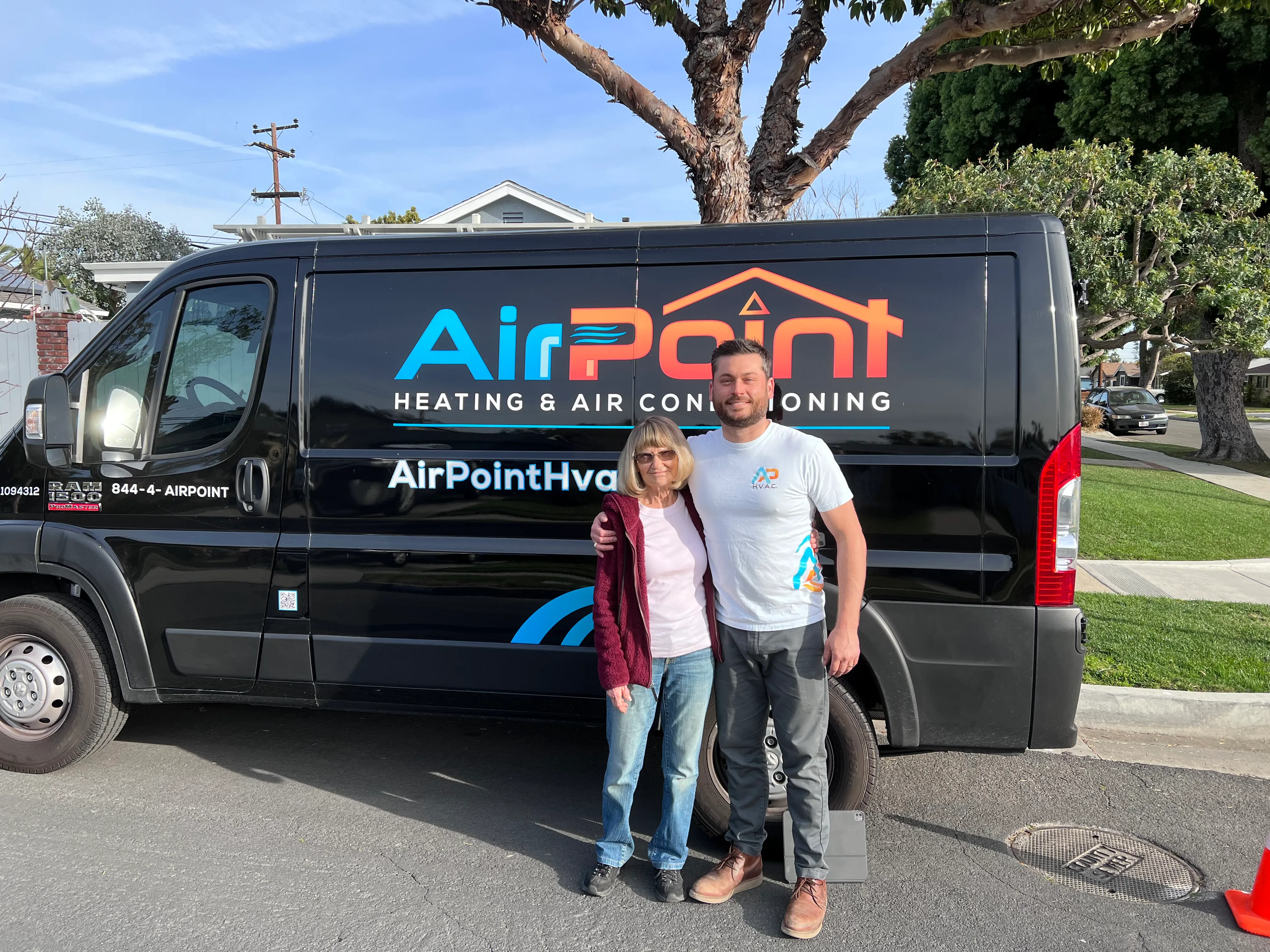
I recommend Air Point for your HVAC needs."