





Why Finding the best air filter for homes near the coast Matters More Than You Think
If you're looking for the best air filter for homes near the coast, here's a quick answer before we dive deeper:
Top picks for coastal homes:
- MERV 8-13 pleated filters - Best overall balance of particle capture and airflow for salty, humid air
- Activated carbon filters - Best for neutralizing ocean odors and VOCs
- HEPA or HEPA-style filters - Best for capturing mold spores, pollen, and fine particles down to 0.3 microns
- Washable electrostatic filters - Budget-friendly option, but require monthly cleaning and thorough drying in humid climates
Key coastal filter rules to follow:
- Replace pleated filters every 1-2 months (not the standard 3)
- Choose filters with moisture-resistant, synthetic media
- Pair your primary filter with activated carbon for odor control
- Avoid basic fiberglass filters — they simply aren't built for coastal conditions
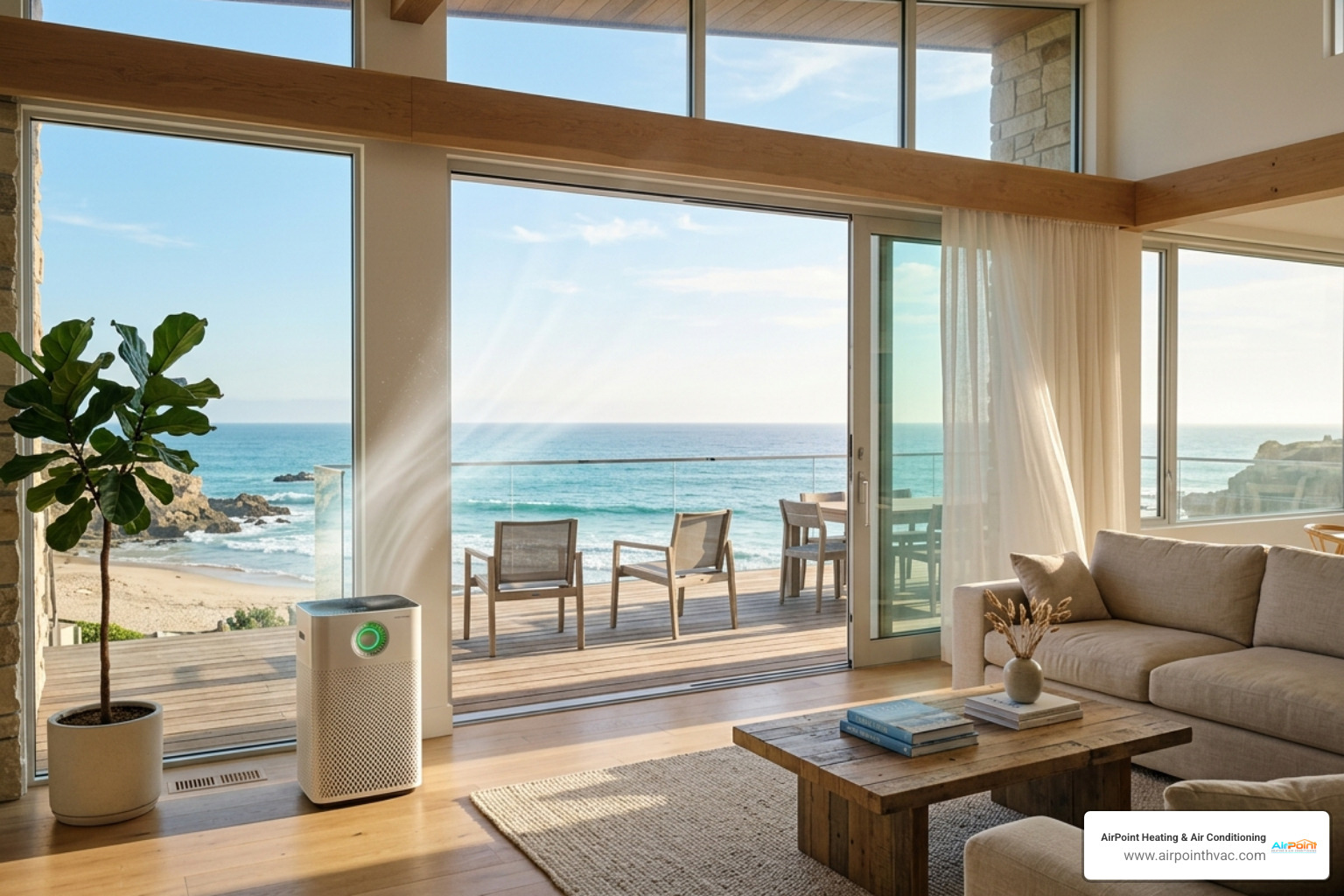
Living near the coast in Orange County has real perks — ocean breezes, mild weather, and stunning scenery. But that same coastal air carries salt spray, moisture, mold spores, and fine mineral particles directly into your home every time your HVAC system runs. Standard air filters aren't designed to handle this kind of punishment. They clog faster, wear out sooner, and can leave your family breathing air that's far from clean. For homeowners in cities like Los Alamitos, Seal Beach, and Huntington Beach, choosing the right air filter isn't just a comfort decision — it's a health and home protection decision.
Unique Air Quality Challenges for Coastal Homeowners
When we visit homes in places like Newport Beach or Huntington Beach, we often see the same thing: HVAC systems that look like they’ve aged a decade in just a few years. Why does this happen? The ocean is beautiful, but it’s also a giant factory for airborne challenges.
Salt Aerosols and Airborne Minerals
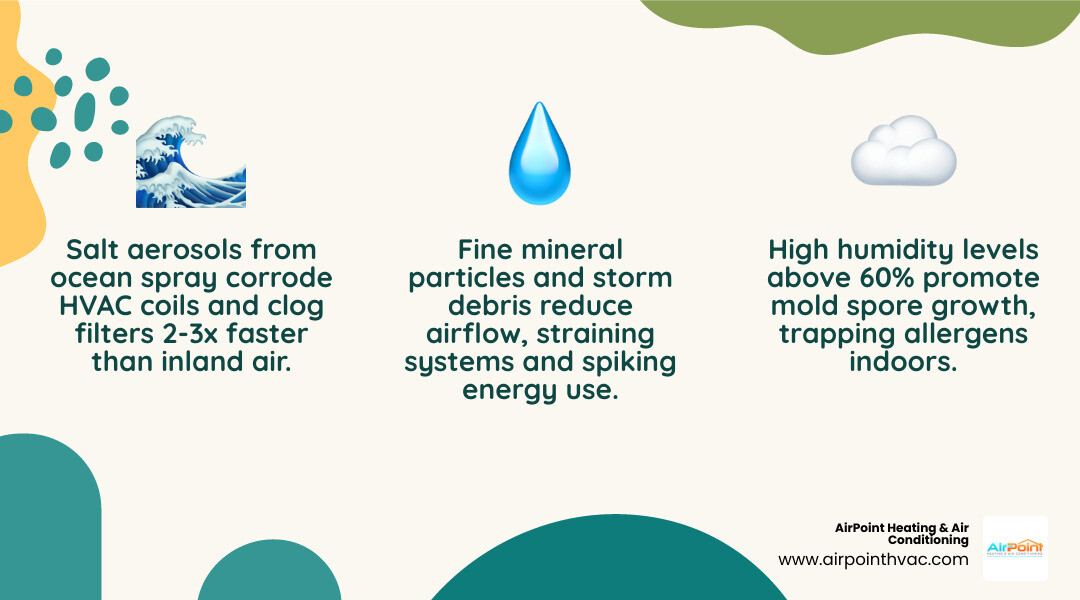
Salt isn't just for your fries; it's a major indoor air pollutant near the water. Salt aerosols are tiny droplets of seawater that evaporate, leaving behind microscopic salt crystals. These crystals are highly corrosive. When they get pulled into your HVAC system, they don't just sit there. They can eat away at metal components, especially the sensitive copper and aluminum coils. Using the best air filter for homes near the coast helps trap these minerals before they can settle on your equipment.
The Humidity and Mold Connection
High humidity is a hallmark of coastal living. While the breeze feels great, that moisture creates a breeding ground for mold and mildew. Mold spores are incredibly small and can easily bypass cheap, low-quality filters. Once inside your ductwork or on your evaporator coil, they can flourish, leading to that "musty beach house" smell and potentially triggering respiratory issues.
Storm Debris and Seasonal Pollen
Coastal storms can whip up more than just waves. They send sand, fine dust, and organic debris flying through the air. Additionally, coastal plants produce specific pollens that, when combined with high humidity, become "sticky" and cling to your filter media much faster than dry, inland dust. This is why we place such a high priority on Indoor Air Quality for our neighbors living within a few miles of the Pacific.
Selecting the best air filter for homes near the coast
Choosing a filter isn't as simple as grabbing the first one you see at the hardware store. For a home in a coastal climate, we need to look at specific features that can stand up to the elements.
MERV Ratings: The Gold Standard of Measurement
MERV stands for Minimum Efficiency Reporting Value. It’s a scale from 1 to 20 that tells you how well a filter traps particles. For coastal homes, we generally recommend a MERV rating between 8 and 13. This range is the "sweet spot" because it’s strong enough to catch salt crystals and mold spores but not so restrictive that it chokes your HVAC system’s airflow.
Moisture Resistance and Synthetic Media
In a humid environment like Seal Beach or Long Beach, you want to avoid filters made of organic materials like cotton or paper. These can absorb moisture, which makes them heavy and prone to collapsing. Worse, a damp organic filter can actually become a host for mold growth. Instead, look for filters with synthetic media. These are naturally moisture-resistant and far more durable in salty, humid air.
The Power of Pleated Design
If you look at a filter and it’s flat like a pancake, keep walking. Pleated filters are the way to go. By folding the filter material into pleats, manufacturers increase the surface area significantly. More surface area means the filter can hold more salt, dust, and debris before it needs to be replaced. This is a critical feature when you're looking for the Best Home Air Filtration Orange County CA.
Why MERV 8 to 13 is the best air filter for homes near the coast
We often get asked, "If higher MERV is better, why not just get a MERV 16?" It’s a great question! While a MERV 16 filter catches almost everything, it’s also very thick. Think of it like trying to breathe through a heavy winter coat versus a light face mask.
If your HVAC system wasn't specifically designed for a high-restriction filter, using one can cause the blower motor to work overtime, leading to higher energy bills and a shorter system lifespan. For most residential systems in Huntington Beach, a MERV 11 or 12 provides excellent protection against coastal pollutants without the risk of system strain. You can learn more about the right fit for your home by checking out our guide on Air Filter Replacement Huntington Beach CA.
Comparing Standalone Purifiers and the best air filter for homes near the coast
Sometimes, even the best HVAC filter needs a little help. This is where standalone air purifiers come in.
- HVAC Filters: Their primary job is to protect your heating and cooling equipment from dust and debris, with the secondary benefit of cleaning your indoor air.
- Standalone Purifiers: These are designed specifically for human health. They often use HEPA (High-Efficiency Particulate Air) filters, which remove 99.97% of particles down to 0.3 microns.
In coastal areas with high salt or heavy odors (like those near the Tijuana River Valley or industrial ports), we often suggest a "layered" approach. Use a high-quality MERV 11 filter in your HVAC system and a standalone HEPA purifier in the rooms where you spend the most time, like the bedroom. For those in the Anaheim area looking for comprehensive solutions, we offer Best Home Air Filtration Anaheim CA services to help you find the perfect balance.
Maintenance and Replacement Frequency in Salty Environments
One of the biggest mistakes coastal homeowners make is following the "standard" advice of changing filters every three months. In a coastal environment, that’s usually too long.
| Environment | Filter Type | Recommended Replacement |
|---|---|---|
| Inland Home | Pleated MERV 8 | Every 3 Months |
| Coastal Home (Standard) | Pleated MERV 8-11 | Every 2 Months |
| Coastal Home (Humid/Stormy) | Pleated MERV 8-11 | Every 1 Month |
| Coastal Home (Pets/Allergies) | Pleated MERV 11-13 | Every 1 Month |
The 1-2 Month Cycle
Salty air is "sticky." When salt particles hit your filter, they tend to clump together with dust and moisture, creating a thick layer that blocks airflow much faster than dry dust would. During the humid summer months or the stormy winter season, we recommend checking your filter every 30 days. If it looks gray or "fuzzy," it's time for a change. For residents in the harbor areas, staying on top of Air Filter Replacement Long Beach CA is the easiest way to prevent expensive repairs.
Visual Inspections and "Filter Bypass"
When a filter gets too clogged, the HVAC system’s vacuum pressure can actually pull air around the edges of the filter instead of through it. This is called "filter bypass," and it means all that salt and gunk is going straight onto your coils. When you change your filter, take a second to look at the frame. If you see dust streaks around the edges, the filter wasn't sealing properly.
Maximizing HVAC Longevity and Efficiency Near the Ocean
Your air filter is the first line of defense for your entire HVAC system. When you use the best air filter for homes near the coast, you aren't just cleaning the air; you're protecting a major investment.

Corrosion Prevention
The evaporator coil is the heart of your AC system. It’s made of metal and is constantly cold and wet — the perfect environment for salt to cause corrosion. Once a coil starts to corrode (often called "pitting"), it can develop tiny refrigerant leaks. Replacing a coil is a major expense. A high-quality filter traps the salt before it ever reaches the coil, acting as a shield for your system.
Energy Efficiency and Airflow
A clean filter allows your system to breathe easily. When a filter is clogged with salt and moisture, the system has to run longer to reach your desired temperature. This doesn't just raise your electric bill; it puts unnecessary wear and tear on the compressor. By maintaining a regular schedule for Air Filter Replacement Anaheim CA, you keep your system running at peak efficiency, which is better for your wallet and the environment.
Frequently Asked Questions about Coastal Air Filtration
We hear a lot of questions from our customers in Cypress, Mission Viejo, and Laguna Beach. Here are some of the most common ones we encounter.
How often should I change my filter during the humid season in Cypress?
In Cypress, we aren't right on the sand, but the humidity can still be quite high. During the peak of summer, we recommend changing your pleated filter every month. High humidity can make the filter media slightly damp, which traps dust more aggressively. A fresh filter every 30 days ensures your AC doesn't struggle during a heatwave. If you need help choosing the right size or brand, our team provides expert Air Filter Replacement Cypress CA.
Can I use a HEPA filter in my coastal HVAC system?
This is a tricky one. "True" HEPA filters are very thick and are usually designed for hospital-grade systems or standalone purifiers. Most residential HVAC systems in Mission Viejo aren't powerful enough to pull air through a true HEPA filter without causing damage to the motor. However, you can get "HEPA-type" filters or high-MERV filters (like MERV 13) that offer similar benefits. We always recommend a professional consultation for Air Filter Replacement Mission Viejo CA to ensure your system can handle the upgrade.
Do washable filters work well in humid climates like Laguna Beach?
Washable filters can be a good budget-friendly option, but they come with a big "if" in Laguna Beach. Because they are designed to be rinsed with water, they must be completely dry before you put them back in. In a humid coastal climate, it can take a long time for a filter to dry. If you put a damp filter back into your system, you are practically inviting mold to grow in your ducts. If you choose a washable filter, we recommend having a second "backup" filter to use while the first one dries. For more tips on managing air quality in the hills and coves, check out our Air Filter Replacement Laguna Beach CA services.
Conclusion
Living near the ocean is a dream, but it requires a little extra care for your home’s "lungs." By choosing the best air filter for homes near the coast — specifically a synthetic, pleated MERV 8-13 filter — you can protect your family from mold and salt while ensuring your HVAC system lives a long, healthy life.
At AirPoint Heating & Air Conditioning, we believe that "comfort is happiness." As a family-owned business based right here in Los Alamitos, we know exactly what the coastal air can do to your home. Whether you're in Huntington Beach, Yorba Linda, or Newport Beach, our award-winning, certified technicians are ready to help you breathe easier.
Don't wait for a musty smell or a high energy bill to tell you there's a problem. We offer professional Indoor Air Quality inspections and precision tune-ups to keep your home fresh and your system efficient.
Ready for cleaner air? Book now for fast, reliable service and our 100% satisfaction guarantee!
Other Blogs
Latest Blog Posts
The Essential Fall Home Maintenance Checklist: Decoding HVAC Startup Smells

Finding Your Efficiency Sweet Spot: Using a SEER Savings Calculator for HVAC Upgrades

Common Homeowner Questions Answered: Why Does My Heater Smell Like Burning Dust?

Customer Testimonials



I recommend Air Point for your HVAC needs."