






Diagnosing a Stuttering AC Compressor on the Hottest Day of the Year
The Frightening Sound of a Struggling AC Unit
Your thermostat is set to cool, but instead of the familiar, steady hum of cold air, you hear a harsh, grinding noise from the side of your house. Diagnosing a stuttering AC compressor on the hottest day of the year starts with recognizing this alarming symptom before it gets worse. When your outdoor unit kicks on with a violent stutter, and you notice the house lights dimming momentarily, you are facing a critical decision point. Do you leave the system running and hope it eventually catches, or do you turn it off?
The most important first step you can take during an August late-summer heatwave is making the decision to shut the system down at the thermostat immediately. Turning the cooling cycle off stops the immediate electrical draw and prevents a potentially minor issue from escalating into a catastrophic equipment failure. A struggling noise is your system's way of asking for help, and forcing it to run will only cause further damage.
If you are dealing with a stuttering unit, learning about how your air conditioning systems handle electrical loads is the first step toward getting your home comfortable again.
Why the Noise Sounds So Alarming
Air conditioners are designed to start smoothly. When the internal components fail to provide the necessary power, the compressor motor physically struggles to turn. This mechanical resistance creates the harsh, stuttering, or buzzing sound you hear. It sounds frightening because the heavy metal components inside the sealed compressor are vibrating under intense electrical stress without actually spinning.
Many homeowners panic, assuming the loud noise means the entire unit is completely destroyed. While a stuttering start is certainly an emergency that requires professional attention, the root cause is often a smaller electrical component failing under the intense stress of the summer heat.
How Peak Thermal Load Stresses Your Cooling Equipment
The Problem: Air conditioning systems are engineered to operate within specific ambient temperature ranges. When outdoor temperatures spike, the condenser unit faces maximum thermal stress, pushing every component to its absolute limit.
The Cause: The primary job of your outdoor unit is to release the heat that was absorbed from inside your home. In our years of keeping Los Alamitos and surrounding Southern California areas cool, our team at AirPoint Heating & Air Conditioning constantly sees how severe late-summer temperature spikes create an environment where the outdoor air is already incredibly hot. Because heat naturally moves toward cooler areas, your system has to work significantly harder to dump heat into air that is already baking at 95 or 100 degrees.
The Solution: Understanding this thermal load helps explain why breakdowns almost always happen on the hottest days. Operating above design ratings significantly accelerates the degradation of internal electrical components. The heat prevents the system from dissipating its own mechanical heat efficiently, creating a compounding stress loop that eventually causes weak parts to fail.
The Compounding Heat Loop
When your system struggles to release heat, the compressor has to run longer and harder to achieve the target temperature on your thermostat. This extended run time generates additional internal heat within the motor.
• Higher operating temperatures: The internal electrical windings get hotter than normal.
• Increased electrical resistance: As wires get hotter, they resist the flow of electricity, requiring more power to do the same amount of work.
• Component degradation: The sensitive electrical parts that help the motor start are baked by both the sun and the machine's own internal heat.
This cycle continues until a component simply cannot handle the thermal load anymore, resulting in the stuttering start you hear outside.
Why Do the House Lights Dim When the AC Tries to Start?
A normal air conditioner requires a brief surge of power to start, but a struggling one demands an excessively high electrical draw. When a compressor stutters and fails to spin, it pulls a massive amount of electricity from your home's electrical panel. This sudden, heavy demand starves the rest of your home of power for a split second, causing the lights to dim or flicker.
Understanding Locked Rotor Amps (LRA)
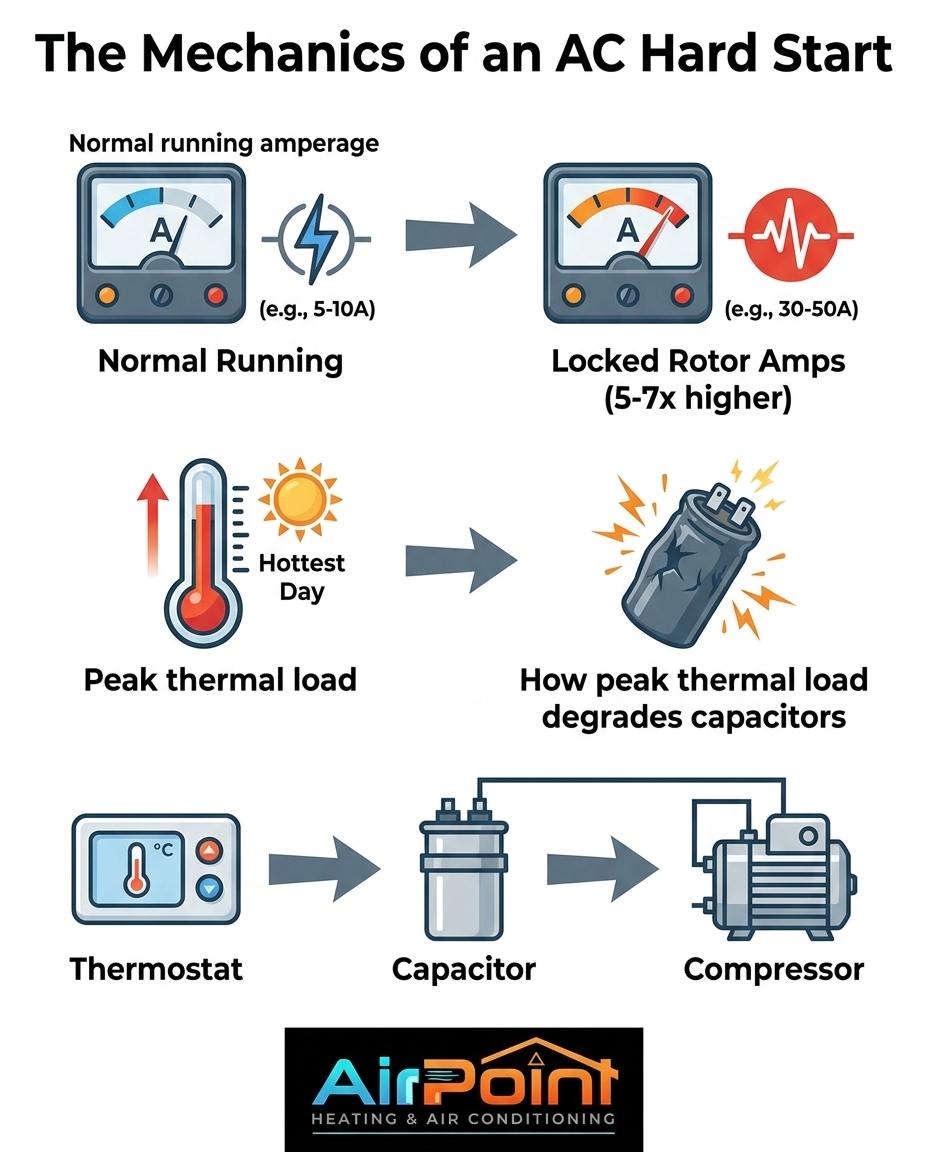
In the HVAC industry, this phenomenon is known as Locked Rotor Amps (LRA). When a motor is locked—meaning it is receiving power but physically cannot turn—it pulls 5 to 7 times its normal running amperage.
If your system normally uses 15 amps to run, a locked or stuttering compressor might suddenly demand 75 to over 100 amps just to try and force itself to spin. This massive sudden draw causes a temporary voltage drop across your entire home's electrical system. It is a clear, visible indicator that the system is mechanically or electrically stuck.
• Sound — Normal AC Startup: Smooth, steady click followed by a consistent fan hum. — Struggling AC Startup: Harsh grinding, buzzing, or violent stuttering.
• Lights — Normal AC Startup: No change, or a barely noticeable micro-flicker. — Struggling AC Startup: Distinct dimming of interior house lights for several seconds.
• Airflow — Normal AC Startup: Warm air exhausts from the top of the outdoor unit. — Struggling AC Startup: Fan may not spin at all, or spins slowly without exhausting heat.
• Electrical Draw — Normal AC Startup: Brief, normal starting amps. — Struggling AC Startup: Sustained Locked Rotor Amps (5-7x higher).
When you see the lights dim alongside a stuttering noise, you have visual confirmation that the motor is pulling dangerous levels of electricity. This is why shutting the system off is the only safe immediate action.
The Dual Run Capacitor: A Small Part with a Massive Job
While a harsh grinding noise sounds like a destroyed motor, the actual culprit is frequently much smaller. The dual run capacitor acts as a powerful battery that gives the compressor the extra jolt of energy it needs to start spinning. Because the compressor requires so much torque to begin pumping refrigerant, it cannot rely on the home's standard electrical supply alone.
Capacitors are highly sensitive to extreme heat. They contain a dielectric fluid that helps store electrical charges. When subjected to the brutal temperatures of a Los Alamitos summer, combined with the heat generated by the system itself, this fluid breaks down. The capacitor loses its ability to hold a charge, and eventually, it fails completely.
A Cry for Electrical Help
When the capacitor dies, the compressor still tries to start, but it lacks the necessary electrical kick. This results in the stuttering sound. A stuttering start is frequently a cry for electrical help—a dying capacitor—rather than a mechanical death sentence for the compressor itself.
Recognizing the early signs of AC capacitor failure can save you from a much larger repair bill. Replacing a capacitor is a straightforward electrical fix for a licensed professional. However, because these components hold a lethal electrical charge even when the power is turned off, they must never be handled or tested by a homeowner.
The Immediate Danger of Forcing a Struggling System to Run
The Problem: Ignoring the stutter and leaving the thermostat set to "cool" forces the compressor to repeatedly try and fail to start.
The Cause: Every time the system attempts to kick on without enough electrical support, it pulls Locked Rotor Amps. This massive surge of electricity flows through the copper windings inside the compressor motor. Because the motor isn't spinning, it cannot cool itself down. Each failed attempt generates massive internal heat within the compressor's motor windings.
The Solution: Shutting the system off immediately at the thermostat is the only way to protect the most expensive component in the unit. If the system is left to struggle, this repeated stress will eventually melt the internal insulation protecting the copper wires.
The Path to Catastrophic Burnout
Once the thin layer of insulation melts away, the copper wires touch each other or the metal casing of the compressor. This creates an electrical short to ground, commonly known in the industry as a compressor burnout.
A burnout is a catastrophic failure. Not only is the compressor completely ruined, but the extreme heat and electrical arcing create highly acidic sludge that contaminates the entire refrigerant line set. What could have been a simple electrical repair suddenly becomes a massive, highly complex system overhaul. Turning the thermostat to "off" the moment you hear a stutter stops this destructive chain reaction.
Honest Diagnostics vs. Premature Replacements
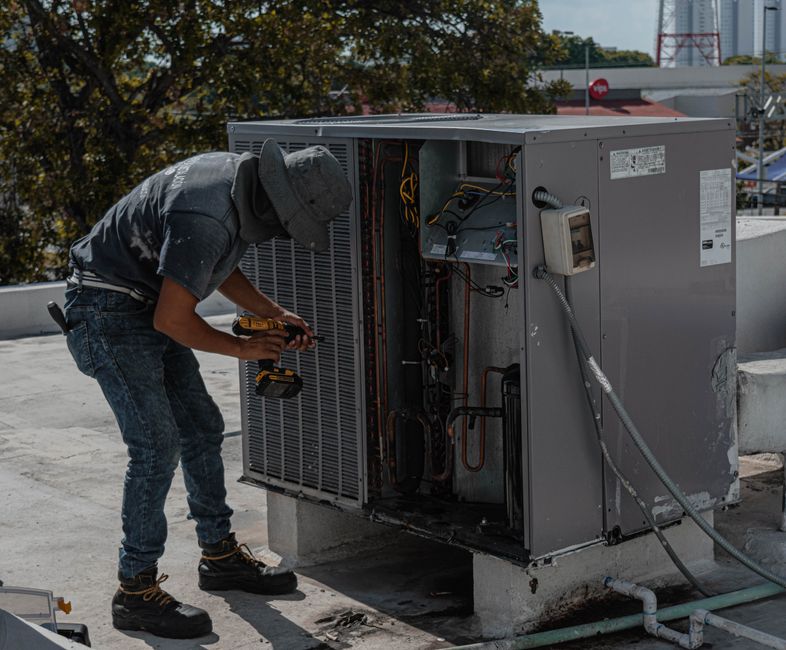
It takes an expert eye to distinguish between a relatively simple electrical fix and a true mechanical death rattle. When a system is stuttering, a proper diagnostic approach involves testing the electrical components, like the capacitor and the contactor, before making any assumptions about the compressor itself.
Homeowners should beware of premature recommendations to condemn the entire compressor without thorough electrical testing. A technician must use a specialized multimeter to measure the microfarads of the capacitor and check the voltage drops across the contactor. Emphasizing an honest diagnostic approach means technicians look for the common electrical failure first, rather than prematurely pushing for a full system replacement.
Real-World Diagnostics in Action
At AirPoint Heating & Air Conditioning, our diagnostic approach prioritizes saving your existing equipment and providing peace of mind. For example, our team recently helped a local homeowner who experienced an AC failure right during the back-to-school late-summer heatwave. They reached out to us for help, and one of our technicians arrived within 24 hours. Instead of assuming the worst, we honestly showed the homeowner exactly what was needed to get the AC working again. By properly diagnosing the root cause, we repaired the system quickly and efficiently, restoring comfort without unnecessary pressure.
When you schedule HVAC service with our team, you can trust that our technicians will take the time to test the small components first, ensuring you aren't replacing a compressor that simply needed a new electrical boost.
Protecting Your Cooling System for the Rest of the Season
Once the immediate issue is resolved, regular check-ups are vital to ensure the system can handle ongoing heat. An August late-summer heatwave is unforgiving, and proactive care extends the lifespan of the entire cooling system. Here is how you can protect your equipment after a hard start repair:
1. Keep the condenser coils clean: The outdoor unit needs plenty of airflow to dump heat. Keep bushes, leaves, and debris at least two feet away from the unit. Clean coils help the system dissipate heat, reducing the thermal load on sensitive electrical parts.
2. Change your indoor air filters: A dirty air filter restricts airflow inside the house, which forces the outdoor compressor to run longer cycles. Longer cycles mean more internal heat and faster degradation of the capacitor.
3. Monitor system performance: Listen to how your unit sounds when it starts. A smooth, immediate hum is normal. If you hear a slight hesitation or a buzzing noise before the fan kicks on, it is time to call a professional before the system locks up completely.
4. Invest in proactive care: Routine monitoring of system performance can catch degrading parts before they fail on the hottest day. Enrolling in a preventative maintenance membership ensures a licensed professional tests your electrical components before the severe heat arrives.
Get Expert Help Before Your Compressor Fails
A clear understanding of why peak heat causes hard starts can save you from unnecessary panic. When the lights dim and the outdoor unit stutters, you now know exactly what is happening inside the machine. Rest assured that a stuttering unit frequently points to a replaceable dual run capacitor, not a ruined system.
The most vital takeaway is to turn the system off immediately to protect the compressor from melting its internal windings. Never attempt electrical repairs yourself; the high-voltage components inside an air conditioner are incredibly dangerous. Always rely on a licensed professional to diagnose the root cause accurately and safely restore your comfort.
Frequently Asked Questions
Why do my lights dim when the AC kicks on?
Your lights dim because the AC compressor is pulling a massive amount of electricity, known as Locked Rotor Amps, trying to force itself to start. This heavy draw causes a temporary voltage drop across your home's electrical panel. It is a clear sign that the motor is struggling mechanically or lacks the electrical boost it needs from the capacitor.
Is a stuttering AC compressor ruined?
Not necessarily. A stuttering compressor is often just struggling to start because a smaller electrical component, like the dual run capacitor, has failed. If you turn the system off immediately, the compressor itself is usually fine. However, forcing it to keep running can cause permanent damage.
Can extreme heat cause an AC capacitor to fail?
Yes, extreme heat is the leading cause of capacitor failure. Capacitors store electrical energy using a sensitive dielectric fluid that breaks down under high thermal stress. During a late-summer heatwave, the combination of outdoor ambient heat and the system's internal operating heat frequently pushes older capacitors past their breaking point.
What happens if I keep running a struggling AC?
If you leave the thermostat on while the AC struggles, the compressor will repeatedly try to start and fail, generating intense internal heat. This heat will eventually melt the insulation on the motor windings, causing an electrical short. This results in a catastrophic compressor burnout that requires a highly expensive replacement.
How can a professional tell the difference between a bad capacitor and a bad compressor?
A professional technician uses a specialized multimeter to test the electrical components directly. They will measure the microfarads of the capacitor to see if it is holding a charge and check the voltage at the contactor. If the electrical components test perfectly but the compressor still pulls high amperage and refuses to start, they can definitively determine the compressor has failed.
Other Blogs
Latest Blog Posts
The Definitive Guide to Membership Plan vs Pay Per Visit Comparison
The Ultimate Guide to Repair vs Replace HVAC System
How HVAC Load Calculations Work in 5 Simple Steps

Customer Testimonials



I recommend Air Point for your HVAC needs."