





Why Knowing How to Choose the Right Air Filter for Your System Matters for Your Home
Knowing how to choose the right air filter for your system comes down to four key steps:
- Find your correct filter size — check the frame of your existing filter for the printed dimensions (length × width × thickness)
- Pick the right MERV rating — MERV 8 is a safe, all-around choice for most homes; MERV 11–13 is better for allergies, pets, or poor outdoor air quality
- Match the filter to your system's capacity — thicker filters (4-inch) handle higher MERV ratings without restricting airflow; 1-inch filters should stay at MERV 8–11
- Replace on schedule — every 3 months for 1-inch filters, every 12 months for 4-inch filters, and more often if you have pets or live near wildfire-prone areas
Most people spend around 90% of their time indoors — and a lot of that time is at home, breathing whatever is floating through the air. Dust, pollen, pet dander, mold spores, smoke particles — your HVAC filter is the front line of defense against all of it. But here's the thing: the wrong filter can actually hurt your system just as much as no filter at all. Too dense, and you choke off airflow. Too thin, and you're not catching the particles that matter. Getting it right means understanding a few simple concepts — size, ratings, and filter type — and matching them to your home's actual needs.
For homeowners in Los Alamitos and across Orange County, where wildfire smoke and coastal air quality can fluctuate, picking the right filter isn't just about comfort. It's about protecting your family's health and keeping your HVAC system running efficiently for years to come.
Understanding Ratings: MERV, MPR, and FPR Explained
When you walk down the aisle of a home improvement store in Long Beach or Anaheim, the sheer number of acronyms on filter packaging can be dizzying. To understand how to choose the right air filter for your system, we first need to decode the industry's shorthand.
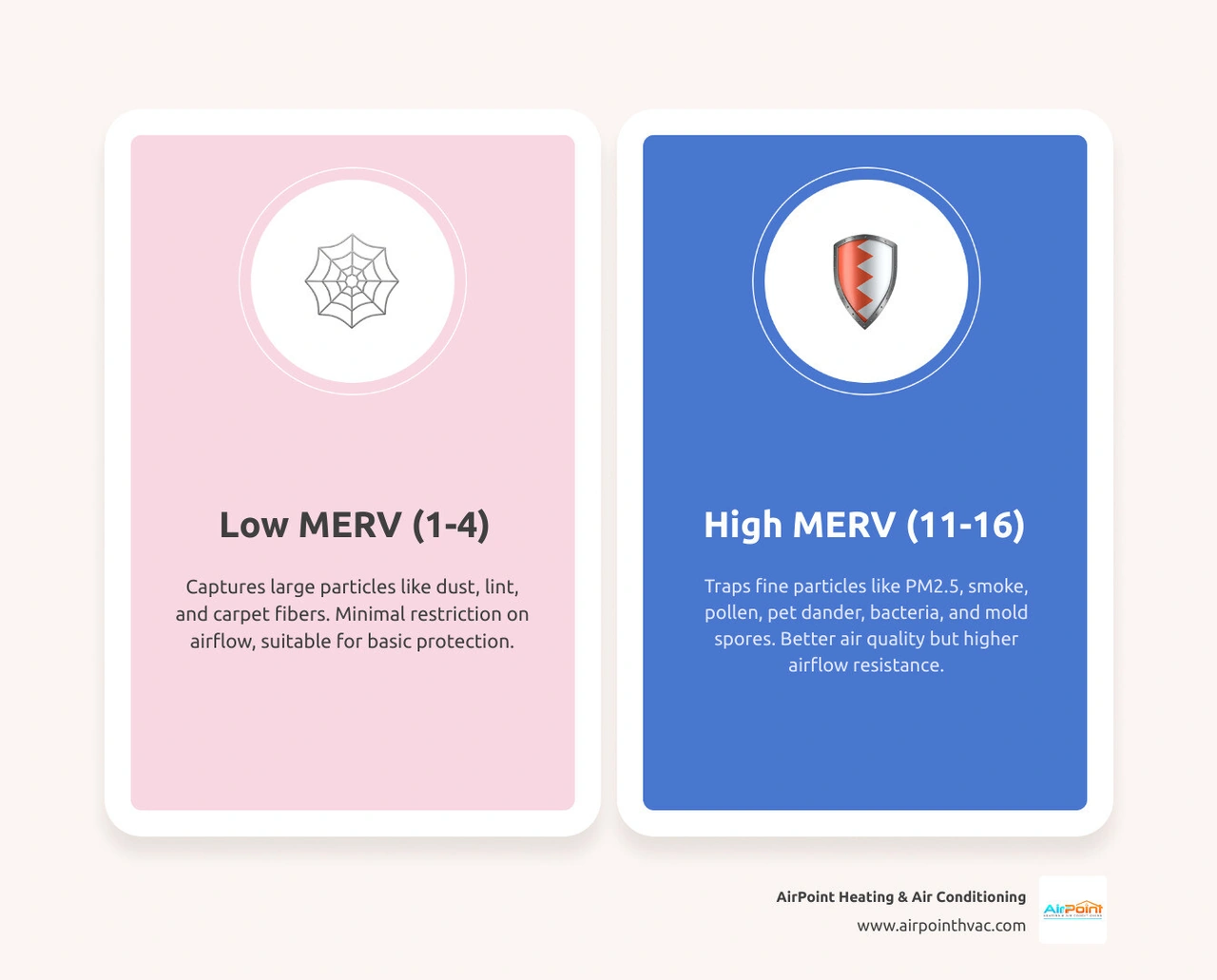
The gold standard is the MERV rating, which stands for Minimum Efficiency Reporting Value. This scale ranges from 1 to 16 for residential and commercial systems (though it can go up to 20 for specialized cleanrooms). It measures how effectively the filter captures particles between 0.3 and 10 microns. The higher the number, the smaller the particles it can trap. Understanding How Air Filters Impact Your HVAC System is crucial because while a higher MERV rating means cleaner air, it also means the filter is denser, which can make your blower motor work harder.
You might also see MPR (Microscopic Particulate Rating), which is a brand-specific scale used by 3M. It focuses specifically on the filter's ability to capture the tiniest particles, those smaller than 1 micron. Then there is FPR (Filter Performance Rating), a system used by some major retailers that ranks filters on a 1–12 scale based on their ability to capture large and small particles, as well as the filter's weight gain over its life.
Comparing Particle Capture Capabilities
To put these ratings in perspective, consider the size of the "enemies" we are fighting. A human hair is about 50–70 microns wide. Pollen and large dust are around 10 microns. However, the real health concerns often come from PM2.5—fine particles that are 2.5 microns or smaller, like smoke, bacteria, and even some virus carriers.
| MERV Rating | MPR (Approx) | FPR (Approx) | What It Traps |
|---|---|---|---|
| MERV 1–4 | <300 | N/A | Large dust, lint, carpet fibers |
| MERV 5–8 | 300–600 | 4–5 | Mold spores, hair spray, dust mites |
| MERV 9–12 | 1000–1900 | 6–9 | Humidifier dust, lead dust, pet dander |
| MERV 13–16 | 2200–2800 | 10 | Bacteria, smoke, microscopic allergens |
If you are looking for the Best Home Air Filtration Irvine CA has to offer, you'll likely want to aim for a MERV 11 or higher to ensure these microscopic threats are neutralized.
How to Choose the Right Air Filter for Your System Based on Your Needs
There is no "one-size-fits-all" answer to the air filter question. Your choice should be dictated by who lives in your home and the environment around it. If you live in a coastal area like Newport Beach, your needs differ from someone living in an area more prone to inland dust or wildfire smoke.
For households dealing with asthma or severe respiratory issues, a higher-efficiency filter is a non-negotiable. During the 2026 wildfire seasons, we’ve seen how quickly outdoor air quality can deteriorate. A standard fiberglass filter won't do much against fine smoke particles. In these cases, Air Filter Replacement Huntington Beach CA services often recommend upgrading to a pleated filter with a higher MERV rating to maintain a safe "indoor sanctuary."
How to Choose the Right Air Filter for Your System Based on MERV Ratings
For most Orange County homes, MERV 8 is the "sweet spot." It’s efficient enough to catch dust mites and pollen without putting excessive strain on your air conditioner. However, if you have furry friends, you might want to step up to MERV 11, which is better at snagging pet dander.
MERV 13 is often considered the entry point for hospital-grade filtration in a residential setting. It is highly effective at capturing viruses and smoke. However, before you jump to the highest number available, you need to ensure your system can handle it. If you're searching for the Best Home Air Filtration Mission Viejo CA, a professional can help you determine if your ductwork and blower motor are rated for the resistance of a MERV 13 filter.
Selecting Filter Types: Fiberglass vs. Pleated vs. HEPA
- Fiberglass Filters: These are the inexpensive, flat filters you can practically see through. Their primary job is to protect the HVAC equipment from large "bunnies" of dust and hair. They do very little for your actual air quality.
- Pleated Filters: These are made from polyester or cotton folds. The pleats increase the surface area, allowing the filter to trap more particles without immediately clogging. Many are electrostatically charged, acting like a magnet for dust. This is the most common recommendation for Air Filter Replacement Garden Grove CA.
- HEPA Filters: High-Efficiency Particulate Air filters are the titans of filtration, catching 99.97% of particles down to 0.3 microns. However, most residential HVAC systems cannot use a true HEPA filter because they are so dense they would completely block the airflow, potentially burning out your motor. HEPA is usually reserved for standalone air purifiers or specialized whole-home systems with their own dedicated fans.
- Washable Filters: While eco-friendly, they often have low MERV ratings and can grow mold if they aren't 100% dry before being reinstalled.
Sizing and Installation: Getting the Perfect Fit
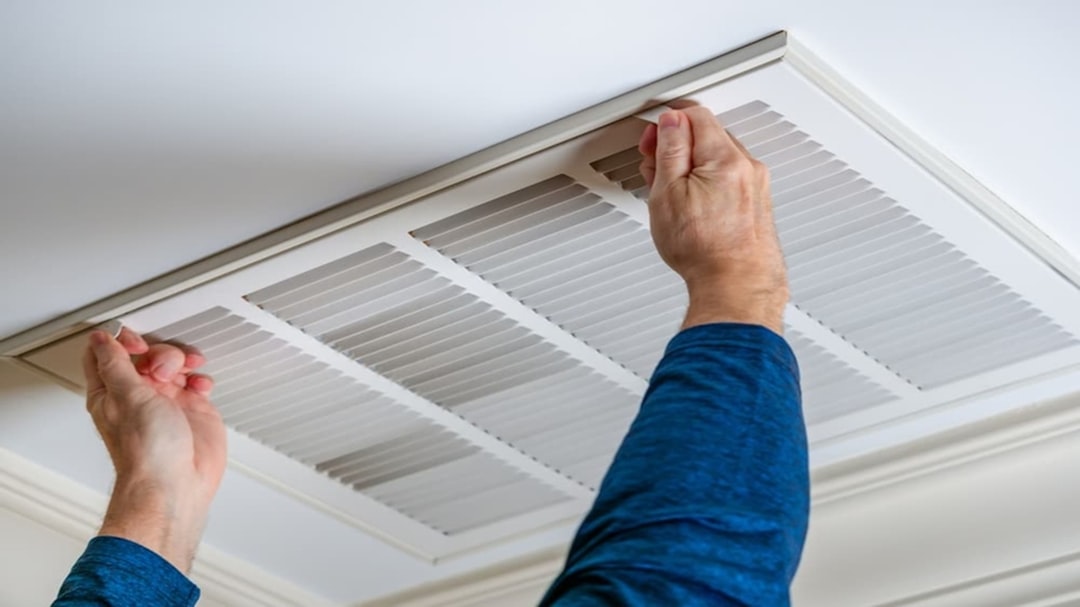
You could buy the most advanced filter in the world, but if it doesn't fit perfectly, it's useless. Air is lazy; it will always take the path of least resistance. If there is a half-inch gap around your filter, the air will simply whistle through that gap, carrying all the dust and allergens right into your system and your lungs.
When looking at sizes, you'll see two sets of numbers: Nominal Size and Actual Size. The nominal size is the "name" of the filter (e.g., 20x25x1), usually rounded to the nearest whole inch. The actual size is the exact measurement (e.g., 19.5 x 24.5 x 0.75). Always go by what is printed on your current filter or check your owner's manual. For expert help with Air Filter Replacement Newport Beach CA, we always recommend double-checking these measurements before purchasing.
How to Choose the Right Air Filter for Your System Size
If the markings on your old filter have faded, grab a measuring tape. Measure the length, width, and thickness of the slot where the filter goes. Most residential filters are 1 inch thick, but many newer, high-efficiency systems in places like Seal Beach use 4-inch or 5-inch "media filters." These thicker filters are fantastic because they have significantly more surface area, meaning they can provide high-level filtration (MERV 11–13) while still allowing plenty of air to pass through. If you're unsure, checking the return vents or the cabinet next to your furnace is the best place to start for Air Filter Replacement Seal Beach CA.
Balancing Filtration Efficiency with HVAC Performance
This is where the "science" of HVAC comes in. Every filter creates something called static pressure. Think of it like trying to breathe through a straw versus a thick piece of fabric. The thicker the fabric, the harder your lungs have to work.
If you put a high-MERV, 1-inch filter into an older system, you might "choke" the blower motor. This leads to:
- Higher energy bills (the motor works harder)
- Uneven cooling or heating
- Frozen AC coils in the summer
- A cracked heat exchanger in the winter
The goal is to find the "sweet spot" where you get the cleanest air possible without compromising the longevity of your equipment. For those seeking Whole House Air Filtration Anaheim CA, we often suggest a professional "static pressure test" to see exactly how much filtration your specific system can handle safely.
Maintenance and Replacement Frequency
"How often should I change it?" is the most common question we get. While the package might say "lasts up to 90 days," that is a maximum, not a rule. In Orange County, several factors can shorten that lifespan:
- Pets: If you have a Golden Retriever or a long-haired cat, you likely need to change your filter every 30–45 days.
- Wildfires/Pollution: During high-smog days or wildfire events, filters can clog in just a few weeks.
- System Usage: If your AC is running 24/7 during a July heatwave, the filter is processing more air and getting dirty faster.
- Filter Thickness: 1-inch filters usually need changing every 1–3 months. 4-inch media filters can often last 6–12 months.
A good rule of thumb for Air Filter Replacement Cypress CA is to check the filter once a month. If it looks gray and "fuzzy," it’s time for a swap.
Factors that affect filter lifespan:
- Number of occupants in the home
- Presence of indoor smokers
- Nearby construction or high-traffic roads
- Whether you leave windows open frequently
Frequently Asked Questions about Air Filters
Can my HVAC system handle a MERV 13 filter?
It depends on the age and design of your system. Most modern systems are designed to handle higher resistance, but older units might struggle. A MERV 13 filter in a 1-inch thickness is very dense. If you want high-level filtration, it is often better to have a technician modify your filter cabinet to accept a 4-inch filter. If you're in the area, we can provide a quick assessment for Air Filter Replacement Los Alamitos CA.
What is the best filter for homes with pets?
We recommend at least a MERV 11 or an MPR rating of 1000 or higher. These are specifically designed to capture pet dander, which is much smaller and "stickier" than standard household dust. Frequent replacement is the key here; don't wait the full 90 days. For the Best Home Air Filtration Cerritos CA residents can get, look for filters labeled "Pet Pro" or "Allergen Defense."
How do I know if my filter is installed correctly?
Look for the arrow on the side of the filter frame. This arrow must point toward the furnace or air handler (the direction the air is moving). If you install it backward, the structural wire mesh won't be able to support the filter media, and it could collapse into your blower fan. Ensuring a snug fit with no gaps is the final step for a successful Air Filter Replacement Lakewood CA.
Conclusion
Choosing the right air filter is one of the simplest and most cost-effective ways to take control of your home’s comfort and health. By matching the right MERV rating to your lifestyle and ensuring a proper fit, you protect your expensive HVAC equipment from premature wear and tear while breathing easier every day.
At AirPoint Heating & Air Conditioning, we’ve spent years helping our neighbors in Los Alamitos and across Orange County achieve the perfect balance of air purity and system efficiency. As a family-owned, award-winning business, we stand behind our work with a 100% satisfaction guarantee. Whether you need a simple filter swap, a system tune-up, or a complete air quality overhaul, we are here to provide honest, expert service.
Ready to breathe easier? For fast, reliable service in Orange County, Explore our Indoor Air Quality Solutions today!
Other Blogs
Latest Blog Posts
Navigating Belmont Heights' Historic District Rules for Exterior HVAC Equipment Replacements
Deciding Whether to Repair a Failing AC in September or Wait Until Spring
Upgrading Your Air Filtration System to Handle Fall Allergens in Los Alamitos

Customer Testimonials



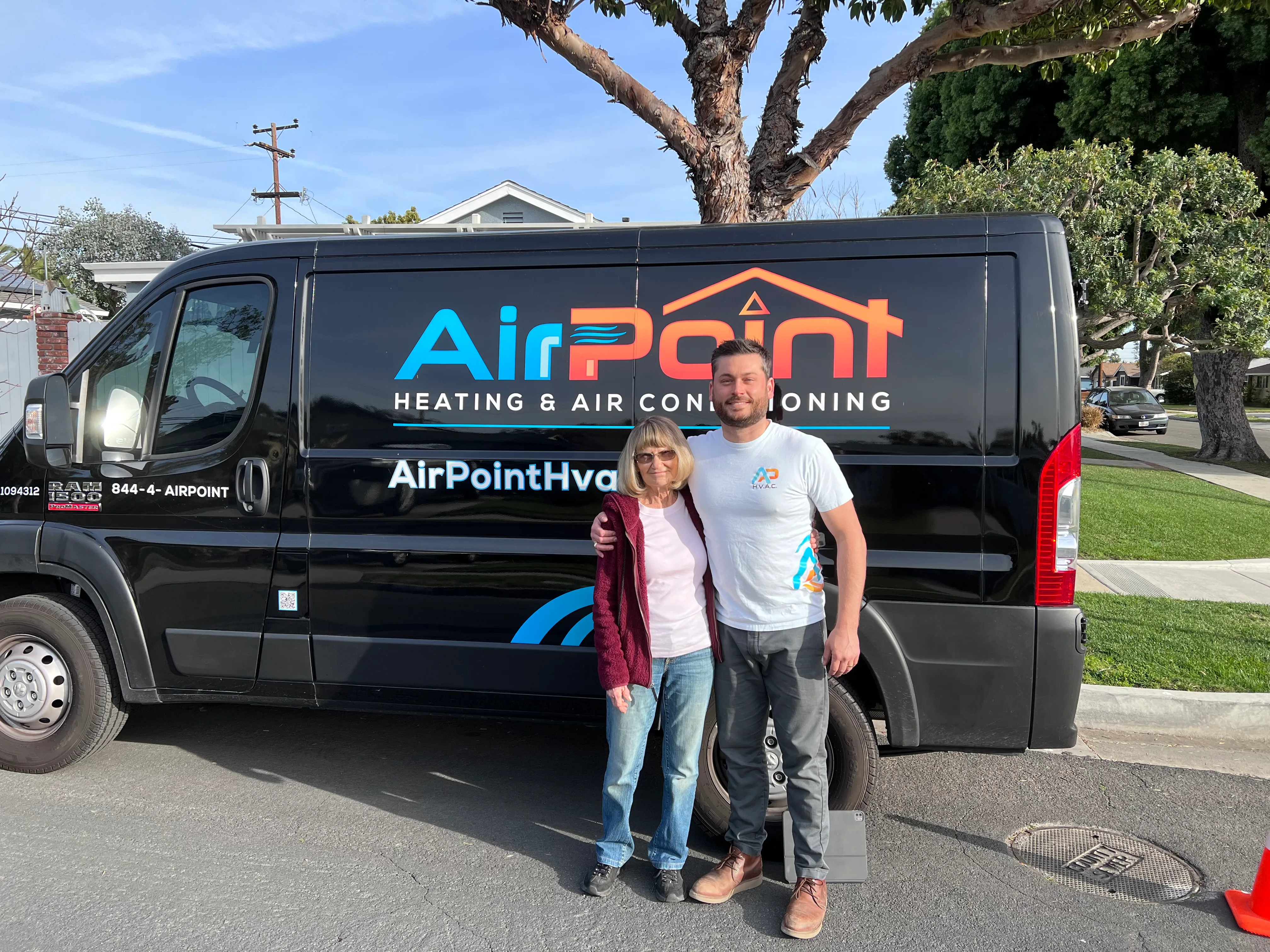
I recommend Air Point for your HVAC needs."