






Why Your AC Smells Like Dirty Socks in Late August and How We Treat It
Why Does My AC Suddenly Smell Musty?
Is your home suddenly filled with an odor that strongly resembles a high school locker room every time the cooling cycle kicks on? If you are searching for answers about why your AC smells like dirty socks in late August and how we treat it, you are experiencing one of the most common, yet alarming, end-of-season cooling issues in the HVAC industry. This foul, musty scent is appropriately nicknamed "Dirty Sock Syndrome." While the smell is incredibly unpleasant, it rarely happens by accident, and more importantly, it is almost never a sign of mechanical failure within your air conditioning system.
Instead, Dirty Sock Syndrome is a biological issue. It represents the culmination of prolonged system use throughout the heavy summer months. When your air conditioner runs day after day to combat the summer heat, it constantly generates condensation. If that moisture cannot drain or evaporate efficiently, it creates the perfect breeding ground for microscopic organic growth. By the time late August arrives, these microbial colonies have matured enough to emit a highly noticeable, pungent odor into your ductwork and living spaces. Because this is a biological contamination rooted deep within the system's internal components, simple DIY fixes are ineffective, making professional intervention an absolute necessity to restore your home's air quality.
The Science Behind 'Dirty Sock Syndrome'
To truly understand why your home smells like stale gym clothes, it is essential to look at the biological timeline and mechanics of how your cooling equipment operates. Air conditioners do not just cool the air; they also dehumidify it. This dual action is central to your comfort, but it is also the exact mechanism that can lead to biological growth when conditions align perfectly. When we look at the root cause of these odors, we have to examine the environment created inside the air handler unit during prolonged end-of-season cooling periods. By upgrading to comprehensive indoor air quality solutions, homeowners can combat these exact biological processes.
The Role of the Evaporator Coil
The heart of the indoor cooling process is the evaporator coil. Located inside your home's air handler or furnace plenum, this network of copper or aluminum tubing is filled with frigid liquid refrigerant. As warm, unconditioned indoor air blows over these chilled coils, the refrigerant absorbs the heat. Simultaneously, the moisture suspended in the warm air condenses on the cold metal surface of the coil, much like water droplets forming on the outside of a glass of iced tea on a hot day.
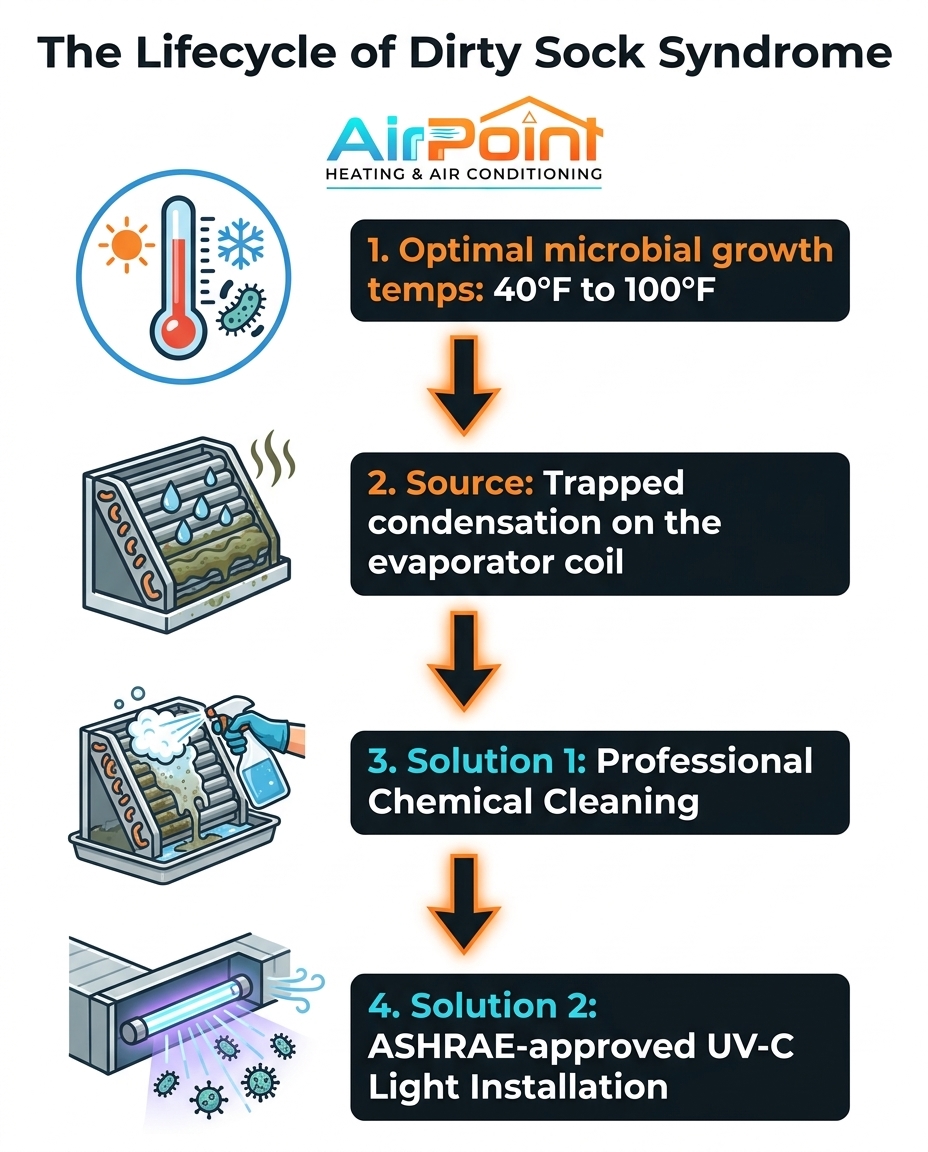
Under normal circumstances, this condensation drips off the coil, falls into a drain pan, and is safely routed outside your home. However, during peak usage months, the evaporator coil remains perpetually wet. It extracts gallons of water from your indoor air every single week. Because the coil is housed in a dark, enclosed cabinet, it never sees sunlight, and it rarely gets a chance to dry out completely between cooling cycles.
Bacterial and Fungal Maturation
This perpetually wet, dark environment is exactly what microbes need to thrive. Bacteria and fungi flourish in dark, damp environments where temperatures fluctuate between 40 and 100 degrees Fahrenheit—which perfectly describes the operating conditions of an active evaporator coil. As airborne organic matter, dust, and microscopic skin cells bypass the air filter, they stick to the wet condensation on the coil.
This organic debris serves as a food source. Over months of continuous moisture accumulation, microscopic biological colonies begin to feed, multiply, and mature. They form a thin, slimy biofilm over the delicate metal fins of the coil. As these bacterial and fungal colonies digest the organic matter, they release volatile organic compounds (VOCs) as a byproduct. These VOCs are the exact source of the musty, stale odor. The specific timing of the smell—peaking in late August—is directly connected to the cumulative runtime of the system. It takes months of heavy summer usage for the biofilm to grow thick enough to produce odors strong enough to permeate the entire house.
How Coastal Humidity Traps Moisture in Your AC
While Dirty Sock Syndrome can happen anywhere, regional climate factors play a massive role in how quickly and severely the biological growth develops. In Los Alamitos, the specific coastal humidity profile creates the exact environmental conditions needed for these microbial colonies to thrive. The combination of intense late-summer heat and lingering marine-layer humidity places an immense dehumidification load on local air conditioning systems.
When ambient coastal humidity remains high, the evaporation rate of the condensation on the indoor coils slows down dramatically. In a drier climate, the residual moisture on the evaporator coil might evaporate during the off-cycle when the compressor shuts down. However, in Los Alamitos, the air is often too saturated to absorb that leftover moisture quickly. Consequently, the coil stays damp around the clock.
Furthermore, if an air conditioning system is slightly oversized for the home, it may engage in "short-cycling." This happens when the system cools the house too quickly and shuts off before it has had a chance to properly dehumidify the air. Short-cycling prevents the system from running long enough to flush the condensation down the drain line effectively, leaving stagnant water trapped between the microscopic fins of the coil. This prolonged dampness acts as a high-efficiency incubator for biological growth, accelerating the timeline from a clean coil to a foul-smelling home.
Why Changing Your Air Filter Isn't Enough
When homeowners first notice a foul odor coming from their vents, their immediate instinct is often to check and replace the HVAC air filter. While staying on top of your filter changes is a fantastic first step for general system maintenance and airflow protection, it is rarely the cure for Dirty Sock Syndrome. Understanding the limitations of standard filtration is critical to permanently resolving the issue.
Standard fiberglass or pleated air filters are designed to catch physical particulate matter—such as dust, pet dander, lint, and larger debris—before it enters the air handler. They are highly effective at protecting the blower motor from physical buildup. However, they cannot eliminate established biological growth that has already formed on the coil itself. If you are exploring the reasons why your air conditioner smells, it is important to recognize the difference between airborne particulates and embedded surface biofilms.
• Primary Target — Standard Air Filter: Airborne dust, hair, and debris — Professional Coil Cleaning: Embedded bacterial and fungal biofilm
• Location in System — Standard Air Filter: Return air duct or blower intake — Professional Coil Cleaning: Deep inside the sealed air handler cabinet
• Impact on Odors — Standard Air Filter: Minimal; cannot neutralize VOCs — Professional Coil Cleaning: High; physically removes the odor source
• Maintenance Level — Standard Air Filter: Routine DIY homeowner task — Professional Coil Cleaning: Requires a licensed HVAC technician
• End-of-Season Effectiveness — Standard Air Filter: Prevents new dust entry — Professional Coil Cleaning: Eradicates accumulated summer growth
Furthermore, the physical location of the evaporator coil makes it inaccessible for standard DIY maintenance. The coil is sealed behind sheet metal panels, often requiring the removal of specialized screws, tape, and mastic sealant to access safely. Because standard filters cannot reach this area, many homeowners attempt to use over-the-counter masking sprays or aerosol air fresheners near their intake vents. These sprays only temporarily mask the smell with artificial perfumes; they do not kill the underlying bacteria. Once the perfume dissipates, the late August end-of-season cooling odors will return immediately.
Eradicating Bacteria With Professional Chemical Coil Cleaning
Because the root cause of the odor is a living biological colony embedded deep within the system, the only way to truly eliminate the smell is to physically and chemically remove the biofilm. AirPoint Heating & Air Conditioning approaches this problem with definitive, scientific eradication methods rather than ineffective DIY sprays. Professional chemical coil cleaning is the first critical step in neutralizing the odor at its source.
This process requires a licensed technician due to the delicate nature of the equipment and the specialized nature of the cleaning agents. The aluminum fins on an evaporator coil are incredibly thin and easily crushed; even the slight pressure of a stiff brush or an improper vacuum attachment can flatten the fins, severely restricting airflow and damaging the system.
The high-level professional cleaning process includes:
1. System Isolation and Access: The technician safely powers down the high-voltage equipment and carefully removes the sealed access panels to expose the A-coil or N-coil inside the air handler.
2. Drain Pan Inspection: The condensate drain pan and drain line are inspected for algae clogs or standing water, which often contribute to the musty odors in Los Alamitos homes.
3. Chemical Application: A professional-grade, self-foaming chemical cleaner is applied directly to the coil surface. This specialized formula is designed to expand between the tightly packed fins.
4. Biofilm Extraction: As the chemical foams up, it actively lifts and pushes out the embedded biological matter, dirt, and microbial slime from deep within the coil structure.
5. Neutralization and Rinsing: Depending on the specific chemical used, the coil is either rinsed clean or allowed to naturally rinse via the system's own condensation once it is restarted, leaving a sanitized, odor-free surface.
If you are tired of masking the smell and want to truly sanitize your system, it is time to schedule HVAC service. Professional chemical cleaning guarantees that the bacterial source is destroyed without risking damage to your expensive cooling equipment.
Preventing Future Growth With UV Light Purification
While a thorough chemical cleaning will completely eradicate the existing biological growth and stop the immediate odors, it does not change the environmental conditions inside the air handler. The coil will still get wet, and the cabinet will still be dark. To prevent Dirty Sock Syndrome from returning next summer, we must alter the environment. This is where advanced indoor air quality solutions step in, specifically the installation of UV-C light purification systems.
AirPoint Heating & Air Conditioning offers UV light installation as a specialized professional service to permanently resolve recurring biological odors. Ultraviolet (UV) light technology has been used for decades in hospitals and water treatment facilities to sanitize environments, and it is highly effective when applied to residential HVAC systems. In fact, the American Society of Heating, Refrigerating and Air-Conditioning Engineers (ASHRAE) recognizes and supports the use of UV-C lamps on HVAC coils to inactivate microbial organisms.
How UV-C Destroys Microbes
When a specialized UV-C lamp is installed directly inside the air handler, it is positioned to shine continuously on the surface of the evaporator coil and the condensate drain pan. The science behind this is fascinating and highly effective. UV-C light operates at a specific wavelength (typically around 254 nanometers) that is lethal to microorganisms.
When bacteria, mold spores, or viruses are exposed to this high-intensity light, the UV-C energy penetrates their cellular walls and disrupts their DNA and RNA. This cellular disruption prevents the microbes from reproducing or functioning. Even though the coil remains wet from late August end-of-season cooling condensation, the continuous irradiation ensures that the moisture remains sterile. The light continuously sanitizes the coil surface 24 hours a day, 7 days a week, even when the air conditioner is not actively running a cooling cycle. Framing this as an investment in your home means you are not just eliminating odors; you are actively protecting your family's long-term indoor air quality and ensuring your HVAC system runs at peak efficiency without the restriction of biological buildup.
Frequently Asked Questions About Dirty Sock Syndrome
Why does my AC smell like dirty socks?
The foul odor is caused by a buildup of bacteria and mold on the indoor evaporator coil. During heavy summer usage, the coil generates trapped condensation, creating a dark, damp environment. Over time, microbes feed on dust and organic matter in this moisture, releasing volatile organic compounds that smell like stale, musty gym socks.
How do you get rid of dirty sock syndrome?
Professional chemical coil cleaning followed by the installation of a UV-C light system is the most effective eradication method. The chemical foaming agents physically push the embedded biological slime out of the delicate coil fins, while the UV light prevents any future microbes from taking root and multiplying.
Is dirty sock syndrome dangerous?
While it is primarily known as a severe nuisance odor, it does indicate active biological growth inside your ductwork. For healthy individuals, it is mostly unpleasant, but the continuous circulation of mold spores and bacterial byproducts can significantly aggravate allergies, asthma, and respiratory sensitivities in vulnerable family members.
Can I clean AC coils myself?
It is highly discouraged. Evaporator coils feature incredibly delicate aluminum fins that can be crushed by improper brushing or vacuuming, which ruins system efficiency. Furthermore, accessing the sealed cabinet and handling the specialized foaming chemicals required to dissolve biofilm safely requires the training and tools of a licensed HVAC professional.
Does UV light kill dirty sock syndrome?
Yes, ASHRAE-approved UV-C lights are a proven, scientific solution for this issue. When installed inside the air handler in Los Alamitos homes, the light continuously irradiates the wet coil surface, actively destroying the DNA of the microbes and completely inactivating the bacteria that cause the foul odors.
Eliminate Odors and Restore Your Indoor Air Quality
Ignoring the foul, musty smells coming from your vents will not make them go away. Because Dirty Sock Syndrome is a biological issue fueled by trapped moisture and late August end-of-season cooling, the bacterial colonies will only continue to mature and spread if left untreated. Fortunately, you do not have to live with a home that smells like a locker room.
Professional treatments are quick, safe, and highly effective. From deep chemical coil cleaning to the installation of preventative UV-C light purifiers, our team has the scientific solutions required to eradicate the problem at its source. We encourage you to reach out for a comprehensive coil inspection and cleaning before the season ends. Be sure to check our current HVAC promotions to see how you can upgrade your indoor air quality and breathe easier today.
Other Blogs
Latest Blog Posts
The Essential Fall Home Maintenance Checklist: Decoding HVAC Startup Smells

Finding Your Efficiency Sweet Spot: Using a SEER Savings Calculator for HVAC Upgrades

Common Homeowner Questions Answered: Why Does My Heater Smell Like Burning Dust?

Customer Testimonials



I recommend Air Point for your HVAC needs."