







Your AC Is Running but the House Is Still Hot — Here's Why
If you're wondering why is my ac running but not cooling, you're not alone — and the fix is often simpler than you think. Your system is clearly getting power, the fan is blowing, and you can hear it humming away. But the air coming out of your vents is warm, and your home in Los Alamitos just keeps getting hotter.
The most common reasons your AC runs without cooling are:
- Dirty or clogged air filter — restricts airflow and can freeze the evaporator coil
- Incorrect thermostat settings — fan set to "On" instead of "Auto," or wrong temperature
- Frozen evaporator coils — caused by poor airflow or low refrigerant
- Low refrigerant due to a leak — prevents the system from absorbing heat
- Dirty or blocked outdoor condenser unit — can't release heat efficiently
- Failed capacitor or fan motor — outdoor unit runs but can't complete the cooling cycle
- Leaky or blocked ductwork — conditioned air escapes before reaching your rooms
- Undersized or aging AC system — can't keep up with Orange County's summer heat
Some of these you can fix in minutes. Others need a licensed HVAC technician. This guide walks you through both — starting with the easiest checks and moving to the issues that require professional hands.

Why is my AC running but not cooling?
To understand why is my ac running but not cooling, it helps to know that an air conditioner doesn't actually "create" cold air. Instead, it works through a heat exchange process. It pulls heat out of your indoor air and moves it outside. In the humid climate of Orange County, this process is even more critical because your AC also acts as a dehumidifier.
When your system runs but the temperature doesn't drop, there is a break in this cycle. This usually falls into two categories: airflow issues or mechanical failures. Airflow issues mean the air can't move through the system correctly, while mechanical issues mean the components responsible for the heat exchange (like the compressor or refrigerant) aren't doing their job.
In places like Los Alamitos and Huntington Beach, salt air and high summer temperatures can accelerate wear and tear on these components. If you notice your system humming but the house feels like a sauna, check for Common Causes of AC Issues to see if it's a simple fix or a sign of a deeper mechanical problem.
Common Airflow and Filtration Issues
Airflow is the lifeblood of your HVAC system. When airflow is restricted, the entire cooling process grinds to a halt. One of the biggest culprits is the air filter. A clogged filter forces your blower motor to work twice as hard, leading to overheating and potential system failure.
Many homeowners in Irvine or Newport Beach use high-MERV (Minimum Efficiency Reporting Value) filters to improve indoor air quality. While these are great for catching allergens, if they aren't changed regularly, they can suffocate your system. There are significant Benefits of Regular AC Maintenance, as keeping air passages clear prevents the #1 cause of cooling failures.
Airflow Comparison Table
| Feature | Clean Filter | Clogged Filter |
|---|---|---|
| Airflow Volume | High / Unrestricted | Low / Restricted |
| Blower Motor Strain | Low | High |
| Cooling Efficiency | Optimal | Poor |
| Risk of Frozen Coils | Very Low | High |
| Energy Consumption | Standard | Increased 5–15% |
Why is my AC running but not cooling due to a dirty filter?
A dirty air filter is the most common reason for an AC Unit Not Cooling. Over 30 to 90 days, dust, pet dander, and pollen accumulate on the mesh, eventually forming what looks like a gray felt blanket.
When air can't pass through the filter, the evaporator coil (the part that gets cold) doesn't have enough warm air blowing over it. This causes the coil to drop below freezing temperatures, turning any moisture into ice. Once the coil is a block of ice, it acts as an insulator, preventing the system from cooling your home entirely. If you haven't checked your filter in May 2026, now is the time!
Blocked Vents and Leaky Ductwork
Sometimes the AC is working perfectly, but the cold air never makes it to your living room. The Department of Energy estimates that the typical home loses 20 to 30 percent of its conditioned air through duct leaks.
In older homes in Long Beach or Whittier, ducts in the attic or crawlspace can become disconnected or torn. If you have rooms that stay hot while others are freezing, or if you see your energy bills skyrocketing, you might be cooling your attic instead of your bedroom.
Signs of Duct Leaks Include:
- High utility bills during summer months.
- Rooms that are difficult to cool or heat.
- Tangible dust blowing out of vents.
- Visual gaps or "kinks" in flexible ductwork in the attic.
Thermostat and Electrical Troubleshooting
Before you assume the worst, check the "brain" of your system: the thermostat. Electrical issues, such as tripped breakers or blown capacitors, are also frequent flyers on our service calls in South County.
If your outdoor unit isn't making any noise at all, or if you hear a faint humming but the fan isn't spinning, you may be dealing with AC Capacitor Failure Signs. The capacitor acts like a giant battery that gives the motors the "push" they need to start.
Incorrect Thermostat Settings
It sounds simple, but we see it often: a thermostat accidentally bumped into the wrong mode.
- Fan "On" vs. "Auto": If your fan is set to "On," it will blow air through your house 24/7, even when the cooling cycle isn't running. This results in warm air blowing out of your vents between cooling cycles. Always set it to "Auto."
- Heat Source Interference: Is your thermostat near a sunny window, a lamp, or a kitchen appliance? "Ghost readings" can trick the thermostat into thinking the house is warmer than it is, or vice versa.
- Dead Batteries: If your thermostat screen is blank or flickering, replace the batteries immediately.
Capacitor and Fan Motor Failures
The outdoor condenser unit has two main jobs: the compressor pumps refrigerant, and the fan blows heat away. If the fan motor fails or the capacitor dies, the refrigerant won't cool down.
You can safely inspect this by looking at your outdoor unit. If the fan isn't spinning but you hear a hum, turn the system off immediately. Running a system with a failed fan can destroy the compressor, which is a much more expensive repair.
Refrigerant Problems and Frozen Coils
Refrigerant is the chemical that travels between your indoor and outdoor units, absorbing heat from your home and releasing it outside. It circulates in a closed loop, meaning it is never "used up." If you are low on refrigerant, you have a leak.
When the refrigerant level drops or the airflow is blocked, the evaporator coil gets too cold and begins to freeze. This is a common cause of Troubleshooting AC Water Leaks, as the melting ice can overwhelm your drain pan.
Why is my AC running but not cooling when coils are frozen?
If you see ice on the copper lines leading to your outdoor unit or frost on the indoor cabinet, your coils are frozen. Ice acts as a thermal barrier. Even though the ice is cold, it prevents the refrigerant inside the pipes from "reaching" the warm air in your home.
If this happens, you will notice the AC Blowing Warm Air. How to thaw your AC:
- Turn the thermostat to OFF.
- Turn the fan setting to ON. This blows warm air over the ice to melt it.
- Wait 2–4 hours. Do not try to pick the ice off with a tool, as you could puncture the delicate coils.
- Replace your air filter.
Low Refrigerant and System Leaks
A hissing or bubbling sound near your AC unit is a classic sign of a refrigerant leak. Because refrigerant is a hazardous substance, it must be handled by a professional to ensure the system is recharged or repaired safely.
Low refrigerant levels cause the compressor to work under extreme stress, which can lead to a total system "burnout." If you suspect a leak, don't just "top it off." The leak must be found and repaired to ensure your system operates efficiently in the long run.
Maintaining Your Outdoor Condenser Unit
Your outdoor unit needs to "breathe" to release the heat it gathered from inside your house. In coastal areas like Seal Beach or Newport Beach, salt, sand, and even lawn clippings can clog the delicate fins of the condenser.
We recommend maintaining at least a 2-foot clearance around the unit. Trim back any bushes, remove weeds, and ensure no patio furniture is blocking the airflow. You can gently rinse the coils with a garden hose (with the power off!), but never use a pressure washer, as it will flatten the fins and ruin the unit. Understanding Why Regular AC Maintenance Is Crucial can save you from an emergency breakdown in the middle of a July heatwave.
Frequently Asked Questions about AC Performance
Should I turn off my AC if it's not cooling?
Yes. If your AC is running but the temperature is rising, continuing to run it will only waste energy and potentially cause permanent damage. If the issue is a frozen coil or a bad capacitor, running the system can lead to a compressor failure — a major repair that can be avoided. Turn it off and call a professional.
How do I reset my AC unit correctly?
Sometimes the system's internal safety switches trip, and a reset can get things moving again.
- Turn the AC off at the thermostat.
- Find your circuit breaker panel and turn the AC breaker to OFF.
- Wait at least 5 minutes. This allows the refrigerant pressure to equalize (the "3-minute rule").
- Turn the breaker back to ON.
- Set the thermostat to COOL and wait 10 minutes to see if cold air returns.
Why does my AC take so long to cool the house?
If your system is running constantly but struggling to drop the temp, it may be undersized for your home's square footage or your insulation may be poor. During extreme Orange County heat waves, even a perfectly functioning unit might only be able to keep the indoors 20 degrees cooler than the outdoors. If it's 105°F in Yorba Linda, your AC might struggle to get the house below 80°F.
Conclusion
When your home isn't reaching the comfort levels you deserve, don't suffer through the heat. Whether it's a simple filter change or a complex refrigerant leak, the team at AirPoint Heating & Air Conditioning is here to help. As a family-owned business serving Los Alamitos and the surrounding Orange County communities, we stand behind our work with a 100% satisfaction guarantee.
We know that "comfort is happiness," and we’re dedicated to restoring that happiness to your home quickly and honestly. Curious about what happens during a professional visit? Check out What to Expect From AC Service to see how our expert technicians diagnose and fix your cooling issues.
Don't let a warm house ruin your summer. Book your precision tune-up today for fast, reliable cooling to get your system back on track!
Other Blogs
Latest Blog Posts
HVAC Repair: Decoding Fall Furnace Smells and Startup Issues
Home Maintenance Tips and Troubleshooting: Decoding Fall Heating Startup Symptoms

The Truth About Smart Thermostat Auto-Switch Features During Unpredictable Fall Weather

Customer Testimonials



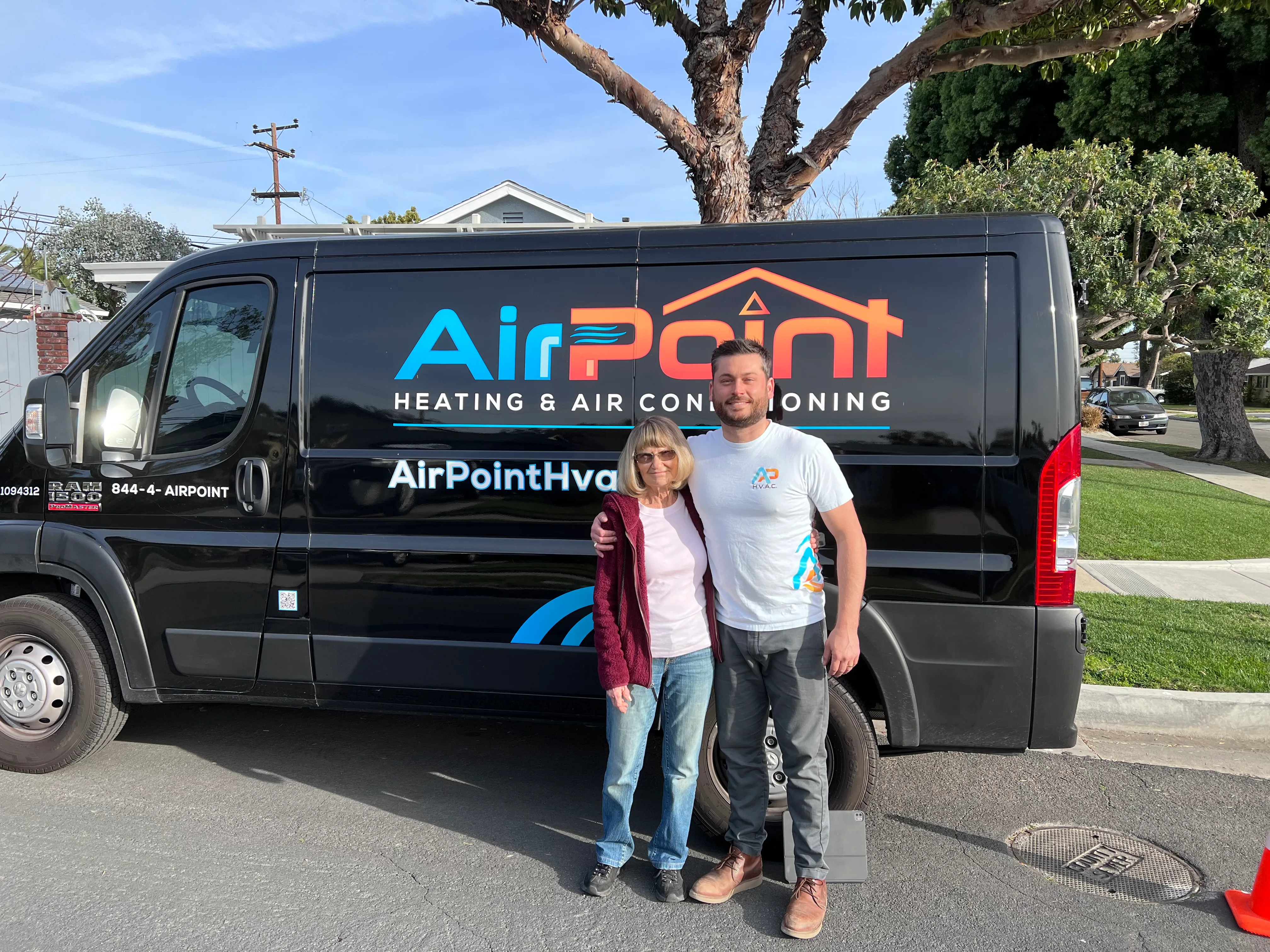
I recommend Air Point for your HVAC needs."