






Is a High Efficiency System Worth the Extra Cost for Los Alamitos Homeowners?
Is a high efficiency system worth the extra cost? For most Los Alamitos and Orange County homeowners, the answer is yes — but it depends on a few key factors.
Quick answer based on your situation:
| Your Situation | Is It Worth It? |
|---|---|
| You plan to stay 5+ years | Very likely yes |
| You have an older system (10+ years) | Yes — big savings potential |
| Your home is in a hot or cold climate | Yes — faster payback |
| You plan to move within 1-2 years | Probably not |
| You're in a mild climate with low energy bills | Run the numbers first |
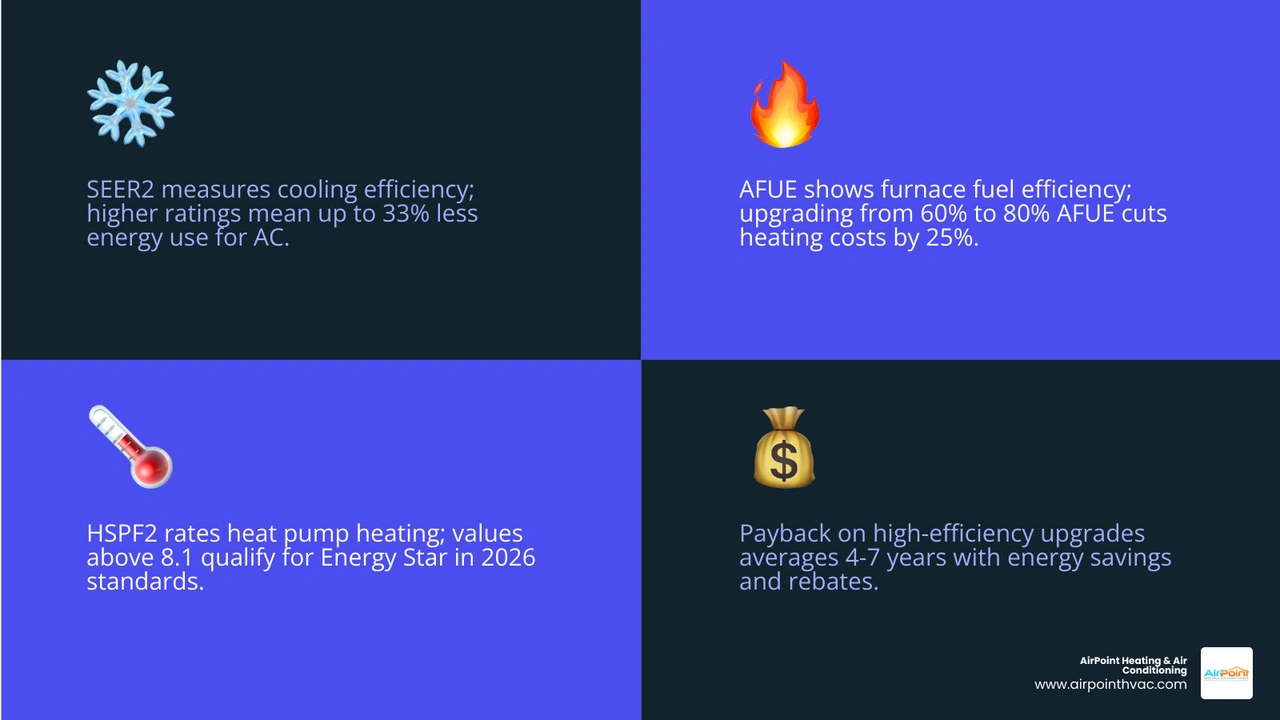
High-efficiency systems cost more upfront, but they use significantly less energy. Upgrading from a 10 SEER air conditioner to a 15 SEER unit, for example, can cut cooling energy use by 33%. Moving from an older 60% AFUE furnace to an 80% AFUE model can reduce heating costs by 25% per year. On average, homeowners recover the cost difference in 4 to 7 years — well within the 15-year lifespan of most systems.
But the financial case is only part of the story. Higher-efficiency systems also run quieter, maintain more even temperatures, filter the air better, and handle humidity more effectively — all things that matter a lot if your family deals with allergies, uneven hot and cold spots, or stuffy rooms.
This guide walks you through the real numbers, the comfort benefits, and the honest scenarios where upgrading makes sense — and where it might not. If your system is aging, your energy bills keep climbing, or your home just never feels quite right, you're in the right place.
Understanding the Metrics: SEER2, AFUE, and HSPF2
When we talk about high-efficiency systems in April 2026, we’re looking at specific numbers that tell us how much "bang" you get for your utility buck. If you’ve looked at the yellow EnergyGuide label on a new unit lately, you’ve likely seen acronyms like SEER2, AFUE, and HSPF2. Here is what they actually mean for your home in Huntington Beach or Anaheim.
SEER2 for Cooling
SEER stands for Seasonal Energy Efficiency Ratio. Think of it like miles-per-gallon for your car, but for your air conditioner. As of 2023, the Department of Energy updated these standards to SEER2, which uses more rigorous testing to reflect real-world ductwork conditions. While a standard unit might sit around 14.3 SEER2, high-efficiency models can soar to 20 or higher. For example, moving from an old 10 SEER unit to a modern 20 SEER system can literally cut your cooling energy use in half.
AFUE for Gas Furnaces
Annual Fuel Utilization Efficiency (AFUE) measures how much of the fuel your furnace burns actually turns into heat for your home. An 80% AFUE furnace wastes 20 cents of every dollar as flue gas. High-efficiency condensing furnaces reach 90% to 98% AFUE. These units use a secondary heat exchanger to squeeze every bit of warmth out of the combustion process, leaving only about 2 to 4 cents of waste per dollar.
HSPF2 for Heat Pumps
For our neighbors in Newport Beach or Irvine using heat pumps, HSPF2 (Heating Seasonal Performance Factor) is the number to watch. It measures heating efficiency over a typical season. High-efficiency heat pumps today are incredibly advanced, providing 100% of your heating needs even when temperatures dip toward freezing, which is perfect for our cool coastal nights.
To keep these numbers high over time, we always recommend AC Tune-Ups: Maximizing HVAC Efficiency to ensure your system continues to meet its EnergyStar certified potential.

Is a high efficiency system worth the extra cost for Orange County homeowners?
Living in Orange County offers a unique set of challenges for HVAC systems. From the sunny afternoons in Yorba Linda to the humid mornings in Seal Beach, our systems work hard year-round. When asking is a high efficiency system worth the extra cost, we have to look at the long-term Return on Investment (ROI).
In 2026, utility rates aren't getting any lower. A high-efficiency system acts as a hedge against rising energy prices. While the upfront investment is higher, the annual energy consumption is significantly lower. For instance, a 17-SEER unit can save hundreds of dollars over its lifespan compared to a base-model 14-SEER unit. When you factor in federal tax credits and local utility rebates available for EnergyStar rated equipment, that "extra cost" starts to shrink immediately.
The payback period—the time it takes for your energy savings to equal the extra money you spent upfront—typically ranges from 4 to 7 years. Given that a well-maintained system in our area can last 15 to 20 years, you could enjoy over a decade of "pure profit" in the form of lower monthly bills.
Evaluating if a high efficiency system worth the extra cost based on home tenure
Your plans for the future play a huge role in this decision. If you are in your "forever home" in Mission Viejo, the long-term savings make a high-efficiency system a no-brainer. However, if you're planning to relocate to a different city within a year or two, you might not stay long enough to see the energy savings pay for the upgrade.
That said, don't forget about resale value. Buyers in 2026 are savvy; they look for modern, efficient homes. Knowing How a New HVAC System Increases Home Value can help you realize that even if you don't stay for 10 years, the upgrade can make your home much more attractive to potential buyers, often allowing you to recoup the cost during the sale.
Why a high efficiency system worth the extra cost in the coastal California climate
Our coastal climate requires a system that can handle more than just temperature. Humidity management is a major factor in areas like Laguna Beach and Newport Beach. High-efficiency systems often feature variable-speed fans and two-stage compressors. These units run longer, lower-intensity cycles, which are twice as effective at pulling moisture out of the air than standard "on-or-off" systems.
Furthermore, salt air can be tough on outdoor equipment. Understanding How Coastal California Climate Affects Your HVAC System is vital. High-efficiency units often come with better-built components and superior warranties, which is crucial when considering How Long Does an HVAC System Last in Coastal California.
Comfort and Health: The Non-Financial Benefits of Upgrading
While we often focus on the "math" of energy bills, the most immediate change you’ll notice isn't in your wallet—it’s in how your home feels. Standard HVAC systems are either 100% on or 100% off. This leads to the "blast of air" followed by a slow drift into discomfort.
High-efficiency systems utilize modulating technology and variable-speed fans. Instead of a sudden roar of air, these systems adjust their output to match your home's needs exactly. This results in:
- Consistent Temperatures: No more hot spots in the upstairs bedroom or chilly corners in the living room.
- Whisper-Quiet Operation: Because the system often runs at 40% or 60% capacity rather than 100%, you’ll hardly even know it’s on.
- Superior Air Quality: Longer run cycles mean your air is moving through your high-quality filters more often. This is a massive win for families dealing with allergies or respiratory issues. We discuss this further in our guide on HVAC Efficiency and Health.
- Humidity Control: By running longer at lower speeds, the system has more time to remove sticky humidity, making 75 degrees feel much cooler and more comfortable.
Maximizing Your Investment Through Proper Installation and Care
You could buy the most expensive, high-efficiency system on the market, but if it’s installed poorly, it will perform like a budget model. At AirPoint Heating & Air Conditioning, we emphasize that "efficiency" is a team effort between the machine and the installation.
Sizing and Calibration
We use Manual J load calculations to ensure your system is perfectly sized for your home's square footage, window orientation, and insulation levels. An oversized system will "short cycle," turning on and off too quickly to dehumidify the air or reach peak efficiency. An undersized system will run forever and still leave you sweating.
The Role of Maintenance
Once your investment is in place, protecting it is key. Regular HVAC Maintenance System Efficiency is the best way to ensure those SEER2 ratings stay where they belong. Without a yearly check-up, dust and wear can cause a high-efficiency system to work harder, eventually negating the energy savings you paid for. Check out our HVAC Preventative Maintenance Guide for a checklist of what we look for during a precision tune-up.
Smart Controls
Pairing your new system with a programmable or smart thermostat can save an additional $180 per year on average. These devices ensure you aren't cooling an empty house while you're at work in Long Beach or out for dinner in Fullerton.
Frequently Asked Questions about HVAC Upgrades
What is the typical payback period for a high-efficiency system?
Most homeowners in the Orange County area see their incremental cost (the extra money spent on high efficiency vs. standard) recovered in 4 to 7 years. This calculation depends on your local utility rates and how often you run your system. In warmer areas like Buena Park or Whittier, where the AC runs frequently, the payback is often on the shorter end of that scale.
Do high-efficiency systems require more frequent maintenance?
Not necessarily "more frequent," but they do require more precise maintenance. Because these systems have advanced components like secondary heat exchangers and variable-speed motors, they shouldn't be ignored. Keeping your filters clean is especially important, as high-efficiency motors are sensitive to airflow restrictions.
Can a high-efficiency system improve my home's air quality?
Yes, significantly. Because these units are designed to run for longer periods at lower speeds, they provide constant air circulation. This means your air is being filtered more continuously, reducing dust, pet dander, and pollen. When combined with advanced filtration, the difference in indoor air quality is often one of the first things our customers notice.
Conclusion
At AirPoint Heating & Air Conditioning, we believe that "comfort is happiness." As a family-owned business serving the Los Alamitos community and surrounding cities like Cypress and Lakewood, we know that every home has different needs.
Is a high efficiency system worth the extra cost? If you value lower monthly bills, a quieter home, and superior air quality, the answer is a resounding yes. We are here to help you navigate the rebates, the technology, and the installation to ensure you get the absolute best value for your investment. Our award-winning, licensed technicians are ready to provide honest communication and a 100% satisfaction guarantee.
Don't settle for "good enough" when it comes to your family's comfort. Schedule your high-efficiency HVAC consultation today for fast, reliable service that keeps your home feeling perfect all year long.
Other Blogs
Latest Blog Posts
HVAC Repair: Decoding Fall Furnace Smells and Startup Issues
Home Maintenance Tips and Troubleshooting: Decoding Fall Heating Startup Symptoms
The Truth About Smart Thermostat Auto-Switch Features During Unpredictable Fall Weather

Customer Testimonials



I recommend Air Point for your HVAC needs."