





 Blog
BlogSingle-Stage vs. Two-Stage Furnaces: Which Actually Makes Sense for Mild Orange County Winters?
Is a Premium Furnace Necessary When It Rarely Freezes?
Are you currently weighing your options for a heating upgrade and wondering about single-stage vs. two-stage furnaces: which actually makes sense for mild Orange County winters? At AirPoint Heating & Air Conditioning, our team hears this question constantly as Los Alamitos homeowners prepare for the fall weather transition. Most of the HVAC advice you find online is written for homeowners living in the Midwest or the Northeast, where surviving sub-zero blizzards requires maximum heating power. Here in Southern California, our climate demands a completely different approach to indoor comfort. If you are planning a September pre-heating-season replacement, you need a system designed for moderate temperature dips, not arctic freezes.
For comprehensive heating services or to schedule an HVAC consultation, our team is ready to help you make the right choice for your home.
The Disconnect Between National Advice and Local Reality
When you research furnace upgrades, you will quickly find articles praising high-end heating systems as absolute necessities. The concrete problem for local homeowners is determining if the operational benefits of a two-stage furnace actually justify the premium investment when our temperatures rarely drop to freezing. It is easy to assume that a more advanced system simply outputs more heat, making it overkill for our region. However, the decision point is rarely about raw heating power. Instead, choosing the right system before the cooler weather arrives is about evaluating comfort, efficiency, and how the equipment manages mild weather without overworking itself.
Orange County winters are famously mild. We spend most of our winter dealing with chilly evenings rather than freezing days. Because of this, standard national heating advice is often less relevant to our specific needs. A system that blasts maximum heat might be perfect for a home in a snowy climate, but here, it can actually create more problems than it solves. Making an informed choice requires looking past the generic recommendations and focusing on how the equipment will actually operate inside your specific home.
Understanding Single-Stage Furnace Mechanics
To make a fair comparison, you first need to understand the baseline operation of a standard heating system. A single-stage furnace is the traditional standard for residential heating that has been installed in homes for decades. Its mechanics are straightforward and highly reliable, which is why it remains a popular choice today.
The "All or Nothing" Approach to Heating
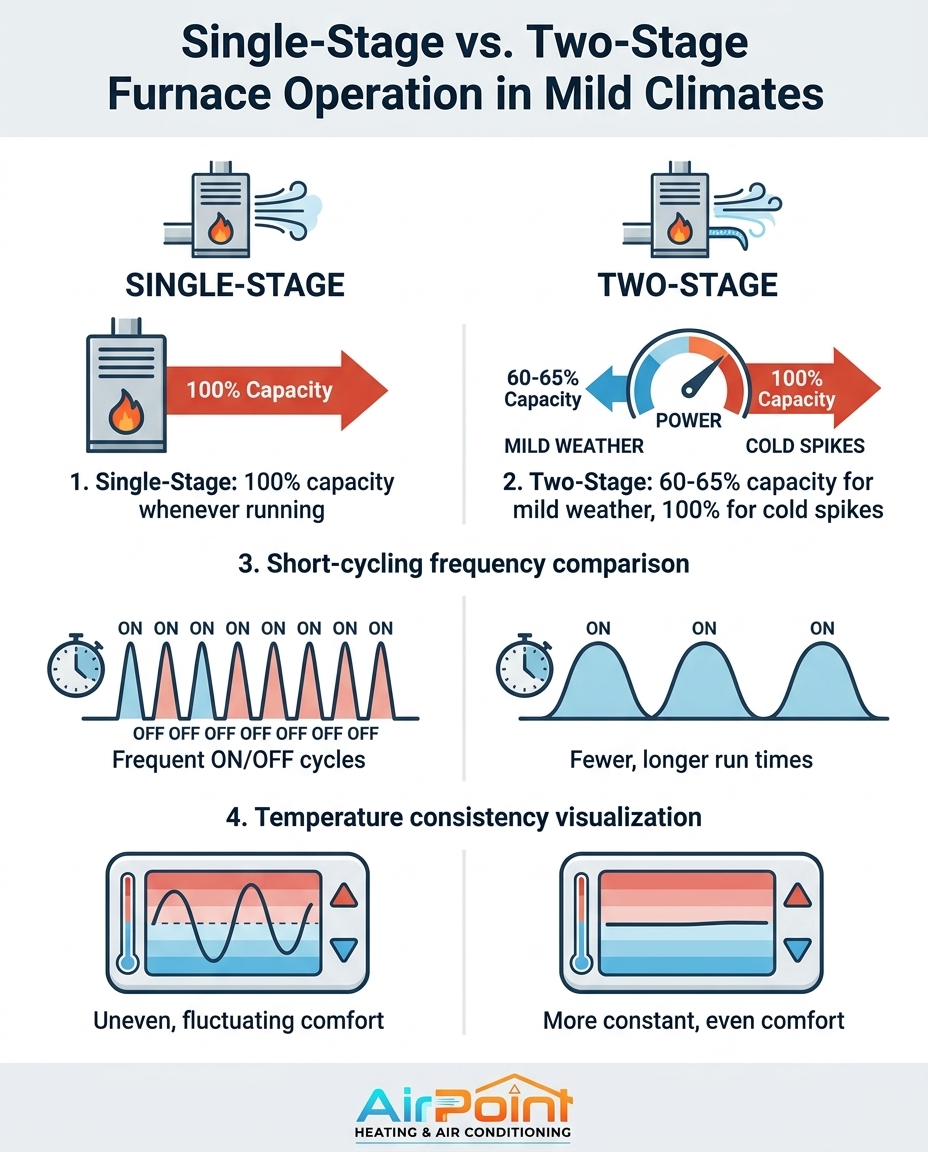
The defining characteristic of a single-stage furnace is that it operates at 100% capacity whenever it is turned on. Think of it like a light switch that only has two positions: completely off, or glaringly bright. When your thermostat detects that the house has dropped below your set temperature, it signals the furnace to ignite. The gas valve opens fully, the burners ignite at maximum capacity, and the blower motor pushes a massive volume of hot air into your living spaces.
This all-or-nothing approach means the furnace blasts maximum heat regardless of whether your home needs a minor temperature bump or a major warm-up. If your house is just two degrees cooler than you prefer, the system still activates with the exact same intensity as it would if the house were ten degrees too cold.
Limitations in a Moderate Climate
While this single-stage operation is incredibly effective at generating heat quickly, it has distinct limitations in moderate climates. Here are a few characteristics of how this plays out in a typical home:
• Sudden temperature swings: The rapid influx of maximum heat often pushes the indoor temperature slightly past the thermostat setting before shutting off.
• Noticeable operational noise: Because the blower motor kicks on at full speed immediately, you hear a distinct "whoosh" of air every time the system cycles on.
• High energy consumption bursts: Running at full capacity requires the maximum amount of gas and electricity for every single heating cycle.
For many decades, this was simply how homes were heated. The technology is proven, the parts are widely available, and the initial installation is generally budget-friendly. However, as home construction has improved and homeowners have begun prioritizing consistent comfort, the limitations of the all-or-nothing approach have become more apparent.
How Two-Stage Heating Adapts to 50-Degree Evenings
A two-stage furnace introduces a more nuanced approach to climate control. Instead of a simple on-and-off switch, this system operates more like a light with a dimmer switch, allowing it to adjust its output based on the actual heating demand of the home.
The Mechanics of Dual-Capacity Heating
The core difference lies in the gas valve and the blower motor. A two-stage furnace features a gas valve that can open partially or fully. According to U.S. Department of Energy data regarding furnace operation basics, a two-stage furnace typically operates at 60% to 65% capacity during its first stage. When the thermostat calls for heat, the system defaults to this lower, energy-saving stage first.
This 60-65% lower stage is the perfect match for 50-degree mild winter evenings, providing gentle, continuous warmth. Because the system is not rushing to blast the house with maximum heat, it runs for longer, quieter cycles. The air mixes more thoroughly, eliminating cold spots and maintaining a steady, comfortable environment.
When the Second Stage Kicks In
You might wonder what happens if the lower stage isn't enough to warm the house. That is where the second stage comes into play. If the system runs on the first stage for a set period (usually 10 to 15 minutes) and the indoor temperature has not reached the thermostat setting, the furnace automatically shifts into its second stage. The gas valve opens fully, the blower motor ramps up to maximum speed, and the system operates at 100% capacity—exactly like a single-stage furnace.
In Southern California, that second stage is rarely needed. It acts as a reserve gear, only kicking in during unusually cold spikes or when you first turn the system on after returning from a winter vacation. For the vast majority of our mild winter season, the furnace will cruise comfortably in its lower, quieter, and more efficient first stage.
The Hidden Issue of Short-Cycling in Local Homes
Understanding the mechanical differences is helpful, but applying them to our local weather reveals a very specific, prevalent problem: oversizing. When a heating system's output is too large for the actual demand, it leads to a destructive operational pattern known as short-cycling.
What is Short-Cycling?
Short-cycling occurs when a furnace turns on, runs for a very brief period, shuts off, and then turns back on again shortly after. This happens because the system heats the immediate space around the thermostat too quickly. The thermostat registers that the target temperature has been reached and shuts the system down. However, because the cycle was so brief, the warm air never had a chance to circulate to the back bedrooms or the edges of the house. Minutes later, the temperature drops, and the cycle repeats.
When you have a single-stage furnace blasting 100% heat into a home during a mild evening, you are essentially forcing the system to short-cycle. It is simply too much heat, too fast, for our moderate weather.
The Toll on Your System and Comfort
The negative impacts of short-cycling go far beyond simple annoyance. If you are experiencing signs you need a furnace replacement, short-cycling is often a leading culprit. The consequences include:
• Uneven heating: The living room where the thermostat is located feels like a sauna, while the master bedroom remains freezing cold.
• Increased wear and tear: The most stressful part of a furnace's operation is the startup sequence. Starting and stopping constantly puts immense strain on the igniter, the blower motor, and the heat exchanger.
• Higher energy bills: It takes more energy to repeatedly start a heavy mechanical system than it does to keep it running steadily at a lower capacity.
Solving the Root Cause
A pattern our team at AirPoint Heating & Air Conditioning sees often across Los Alamitos is how this short-cycling plays out in real life. We recently helped a local homeowner who experienced this firsthand during a winter cold snap. They had a persistent heater issue caused by an aging, inefficient setup that was constantly cycling on and off. After our technician arrived and got the system working the same day to restore immediate comfort, we provided quick replacement options. Ultimately, replacing everything with a more efficient system and upgraded ductwork solved the root issue of uneven heating and constant cycling.
Across Los Alamitos and Orange County, a two-stage system's continuous, lower-level operation eliminates this problem entirely. By matching the heat output to the actual mild demand of the home, the system runs longer, regulates the temperature evenly, and avoids the start-and-stop stress that destroys older units.
Side-by-Side Comparison: Performance in Mild Weather
To help you weigh the decision, it is helpful to look at how these two systems compare directly across several key performance metrics during a typical Southern California winter.
• Temperature Consistency — Single-Stage Furnace: Noticeable fluctuations; can overshoot the target temperature. — Two-Stage Furnace: Even, consistent heating; maintains temperature within one degree.
• System Noise Levels — Single-Stage Furnace: Loud blasts of air every time the system cycles on. — Two-Stage Furnace: Quiet, continuous operation; lower blower speeds reduce airflow noise.
• Energy Efficiency (Mild Weather) — Single-Stage Furnace: Lower efficiency due to frequent, high-draw startup cycles. — Two-Stage Furnace: Higher efficiency by cruising at 60-65% capacity for longer periods.
• Wear and Tear — Single-Stage Furnace: Higher mechanical stress from constant starting and stopping (short-cycling). — Two-Stage Furnace: Reduced stress due to fewer on/off cycles and gentler operation.
Analyzing the Comparison Data
Temperature Consistency: The primary benefit you will feel on a daily basis is the elimination of hot and cold spots. A single-stage unit forces you to constantly adjust the thermostat, while a two-stage unit allows you to set the temperature and forget it.
System Noise Levels: If your furnace closet is located near a bedroom or a main living area, the noise reduction of a two-stage system is significant. The lower blower speed during the first stage moves air so quietly that you often won't even realize the system is running.
Energy Efficiency: While both systems have AFUE (Annual Fuel Utilization Efficiency) ratings, a two-stage system maximizes its efficiency in mild weather by avoiding the energy spikes associated with constant startups.
Wear and Tear: Over the lifespan of the equipment, fewer startup cycles mean fewer opportunities for mechanical failure, potentially extending the life of critical components like the heat exchanger.
Alternative Options: Are Heat Pumps a Better Fit?
While comparing gas furnaces is important, it is also worth considering an entirely different approach to home comfort that is highly relevant to moderate climates. If your air conditioning system is also aging, a heat pump might be a better fit for your home than a traditional furnace.
How Heat Pumps Differ from Furnaces
Unlike a gas furnace that burns fuel to create heat, a heat pump uses electricity to move heat from one place to another. During the summer, it acts exactly like an air conditioner, pulling heat out of your home. During the winter, the cycle reverses. It extracts ambient heat from the outside air—even when it feels cold outside—and pumps it indoors.
Because heat pumps provide both heating and cooling from a single unit, they are incredibly efficient for Southern California's climate. Our winters rarely get cold enough to challenge a heat pump's efficiency, making them a fantastic alternative to traditional gas heating.
Advanced Staging in Heat Pumps
Just like furnaces, modern heat pumps offer variable or multi-stage operation. A high-end heat pump can adjust its output in tiny increments, providing the exact same continuous, gentle warmth as a two-stage furnace. If you are interested in moving away from fossil fuels or simply want to upgrade your entire HVAC system at once, exploring heat pump installation is a smart move.
Additionally, generic energy rebates or federal tax credits may apply to qualifying heat pump installations. While you should always check current utility programs and consult a tax professional for the exact details, these incentives can make upgrading to advanced multi-stage technology much more accessible.
Honest Assessments: When to Stick with a Single-Stage Unit
With all the benefits of dual-capacity heating, it might sound like a two-stage system is the only logical choice. However, in our years of installing and servicing HVAC systems across Orange County, the team at AirPoint Heating & Air Conditioning believes in providing honest assessments. We won't push a two-stage upgrade if a single-stage makes more financial sense for your specific situation.
Situations Where Single-Stage Makes Sense
A single-stage furnace is still a perfectly adequate and reliable way to heat a home. There are several scenarios where the premium upgrade might not be necessary:
• Smaller square footage: If you live in a smaller condo or a compact single-story home, the volume of air is smaller. A properly sized single-stage unit can heat the space effectively without excessive short-cycling.
• Excellent insulation: Homes with modern, high-quality insulation and upgraded windows hold heat exceptionally well. If your home's thermal envelope is tight, a single-stage furnace won't need to cycle on as frequently.
• Budget considerations: Balancing the desire for premium comfort against realistic household budgets is important. If the initial investment of a two-stage system puts a strain on your finances, a high-quality single-stage unit will still keep your family safe and warm.
The key is ensuring that the single-stage unit is sized perfectly for your home. An oversized single-stage furnace is a nightmare, but a correctly sized one is a dependable workhorse. If budget is a concern, we also offer flexible financing options to help you balance your upfront costs with long-term comfort goals.
Make a Confident Heating Choice This Fall
Ultimately, the true value of a two-stage furnace locally is eliminating temperature swings and reducing mechanical wear, not surviving blizzards. By understanding how these systems operate differently during our mild winter evenings, you can make a choice that aligns with your comfort preferences and your budget.
As we move through the September fall-prep season, now is the ideal time to evaluate your current system's performance before the cooler weather sets in. Do not wait until the first chilly night to discover your old furnace is failing. We encourage you to seek a professional, localized assessment to weigh your specific options. If you are ready to explore the best heating solutions for your home, schedule an HVAC consultation with our experienced team today.
Frequently Asked Questions
Is a two-stage furnace worth it in a mild climate?
Yes, a two-stage furnace is highly beneficial in a mild climate because it operates at a lower capacity for the majority of the time. This lower setting provides gentle, continuous heat that perfectly matches moderate weather. It eliminates the aggressive blasts of hot air and temperature swings associated with standard systems.
How does a two-stage furnace prevent short cycling?
A two-stage furnace prevents short cycling by running at 60-65% capacity during its first stage. Because it outputs less heat at a slower pace, the system runs for longer, more consistent cycles. This prevents the thermostat from shutting the system down prematurely before the entire house is evenly warmed.
What is the disadvantage of a two-stage furnace?
The primary disadvantage of a two-stage furnace is the higher initial investment for the equipment and installation. The internal components, such as the multi-stage gas valve and variable blower motor, are more complex than those in a standard furnace. However, many homeowners find that the increased comfort and reduced mechanical wear offset the initial costs over time.
Does a two-stage furnace run constantly?
While a two-stage furnace runs for longer cycles than a single-stage unit, it does not run constantly. It is designed to run long enough to thoroughly mix the air in your home and maintain a precise temperature. Once the thermostat setting is satisfied, the system will shut off until the temperature drops again.
Can a single-stage furnace effectively heat a two-story home in Southern California?
A single-stage furnace can heat a two-story home, but it often struggles with even temperature distribution. Because heat rises, the second floor may become uncomfortably warm while the first floor remains chilly when the system blasts heat at 100% capacity. Proper ductwork sizing and zoning are critical if you choose a single-stage system for a multi-level home.
Other Blogs
Latest Blog Posts

Upgrading Your Air Filtration System to Handle Fall Allergens in Los Alamitos
Why Your First Time Turning on the Heater Smells Like Burning Dust (And When to Worry)
Managing Garden Grove's Sudden September Heatwaves When You've Already Switched to Heating

Customer Testimonials



I recommend Air Point for your HVAC needs."