






Is Adding Cooling Without Ductwork Right for Your Orange County Home? Here's How the Options Compare
When adding cooling without ductwork options compared side by side, most homeowners quickly find that not all solutions are created equal. Here's a quick look at your main choices:
| Option | Best For | Efficiency | Installation |
|---|---|---|---|
| Ductless Mini-Split | Whole-home or zoned cooling | Up to 35 SEER2 | 1 day, 3-inch wall hole |
| High-Velocity Small-Duct | Historic or older homes | 14-18 SEER | 2-3 days, minimal demo |
| Window AC Unit | Temporary single-room cooling | 10-15 EER | DIY, no permit |
| Portable AC | Renters or short-term fixes | 8-12 EER | No installation needed |
Many older homes across Orange County — especially in Los Alamitos and Seal Beach — were built long before central air conditioning became standard. That means no ductwork, and retrofitting traditional ducts can be a costly, disruptive project that tears through walls and ceilings before a single unit ever gets installed. Meanwhile, summer heat in Southern California doesn't wait. Homeowners are left choosing between uncomfortable rooms, loud window units propped in their sills, or a full renovation they didn't budget for.
The good news? Modern ductless technology has changed the equation entirely. Today there are permanent, efficient, and surprisingly non-invasive ways to cool your home — whether you're dealing with a stubborn hot room, a finished basement, or an entire older home with no existing duct system. Understanding which option fits your situation is the key to staying cool without breaking your walls or your budget.
Why Homeowners Are Adding Cooling Without Ductwork Options Compared to Central Air
For decades, traditional central air conditioning was considered the ultimate standard for home comfort. However, as energy conservation standards evolve in 2026, homeowners are realizing that standard ducted systems have a massive, built-in flaw: the ducts themselves.
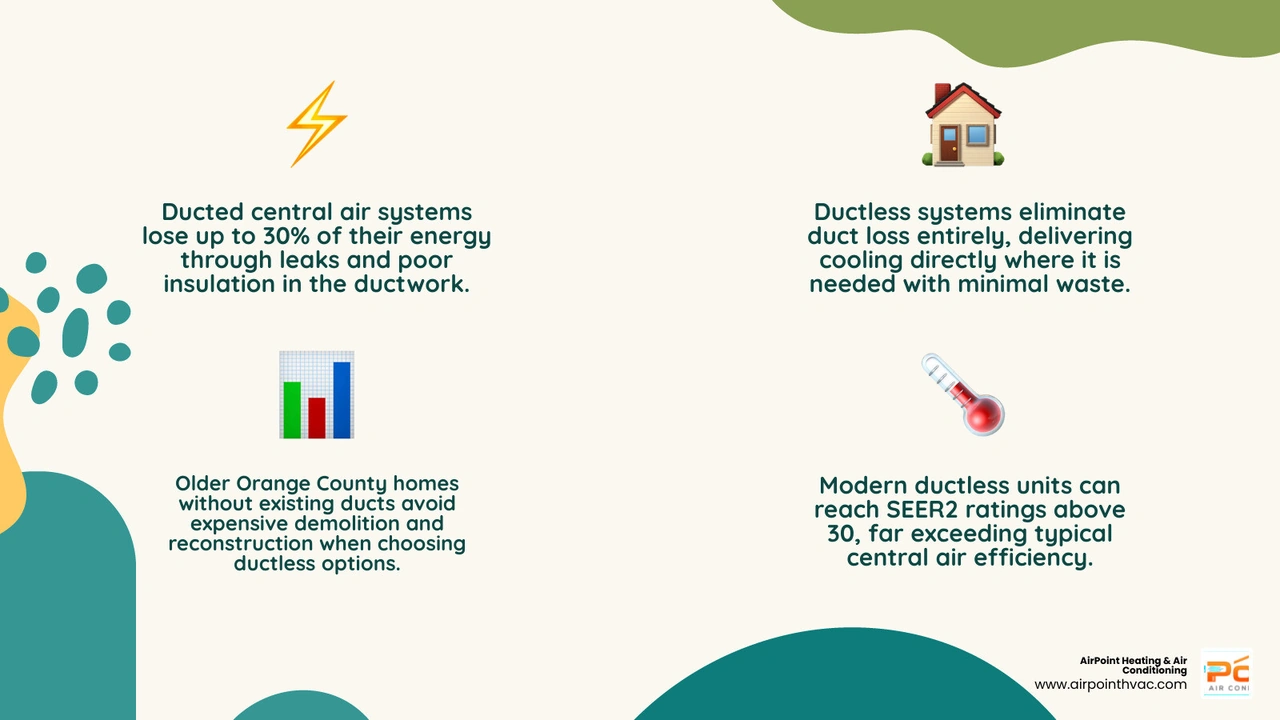
According to the U.S. Department of Energy, traditional ducted systems can lose up to 30% of their cooling energy through leaks, poor insulation, and loose connections. Imagine buying a gallon of milk at a grocery store in Huntington Beach, only to watch 30% of it leak out of the carton before you even reach your refrigerator. That is exactly what happens to your cooled air as it travels through hot attics or crawlspaces.
By bypassing ductwork entirely, ductless systems eliminate this energy loss. When we look at adding cooling without ductwork options compared to traditional central setups, several major benefits stand out:
- Zoned Comfort: Traditional systems use a single thermostat to control the entire house, leading to the classic upstairs-downstairs temperature battle. Ductless configurations allow you to set independent temperatures for individual zones. If you aren't using the guest suite in Yorba Linda, you don't have to waste money cooling it. This zoned approach can reduce your monthly energy consumption by up to 40%.
- Inverter Technology: Traditional central AC units operate like a standard light switch—they are either 100% on or completely off, leading to frequent, loud starts and temperature swings. Modern ductless systems utilize variable-speed inverter technology, which acts more like a dimmer switch. The system runs continuously at a lower, ultra-efficient speed to maintain a steady temperature, saving wear and tear on components.
- A Simple Upgrade: Extending a central system to a new home addition or an attic conversion in Irvine often requires a complex load calculation. If your existing central unit doesn't have the capacity, forcing it to cool extra square footage will cause it to run constantly and fail prematurely.
To dive deeper into how these systems stack up against traditional ducted options, check out our Central AC vs Ductless Mini Split Comparison. You might also want to read up on some common misconceptions in our guide on Ductless AC Myths You Should Stop Believing.
The Major Contenders: Ductless Mini-Splits vs. High-Velocity Systems
If you want a permanent, high-efficiency cooling solution that doesn't require standard ductwork, your search will generally lead you to two primary contenders: ductless mini-splits and high-velocity small-duct systems. Both offer excellent performance, but they approach the problem of air distribution in very different ways.
Ductless Mini-Split Systems: The Gold Standard When Adding Cooling Without Ductwork Options Compared
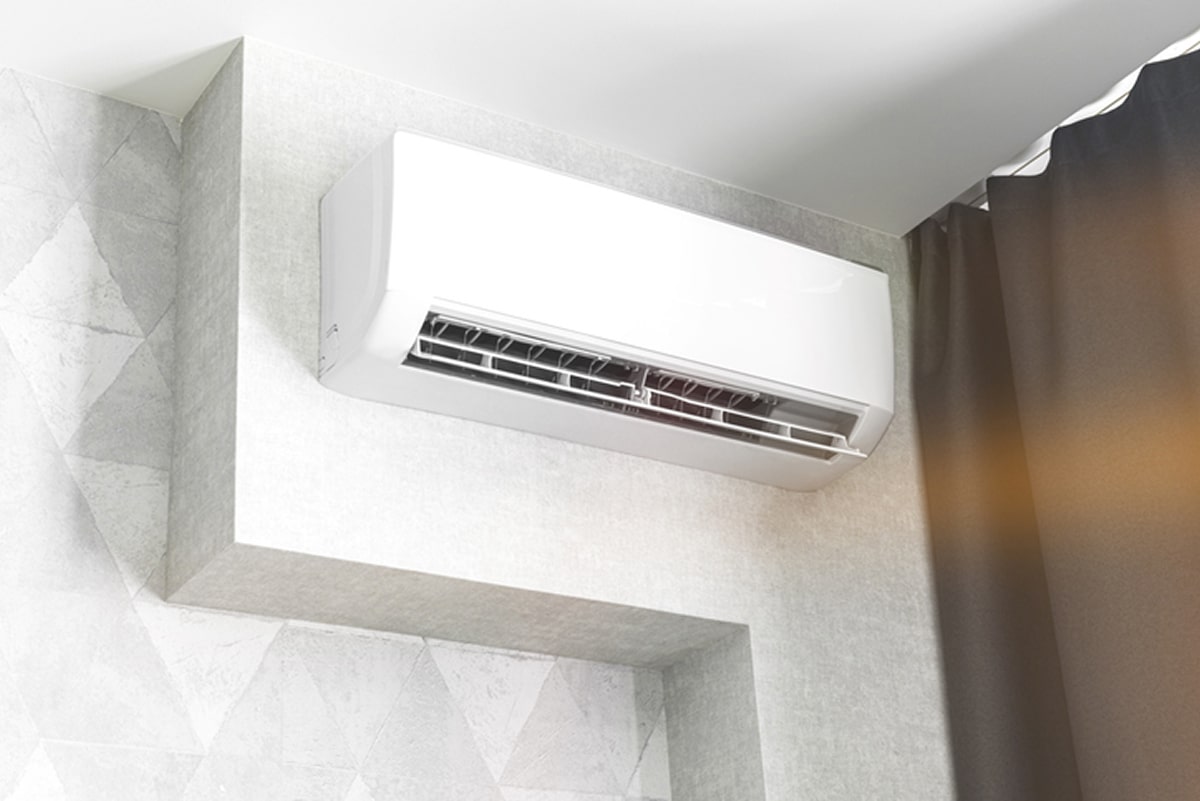
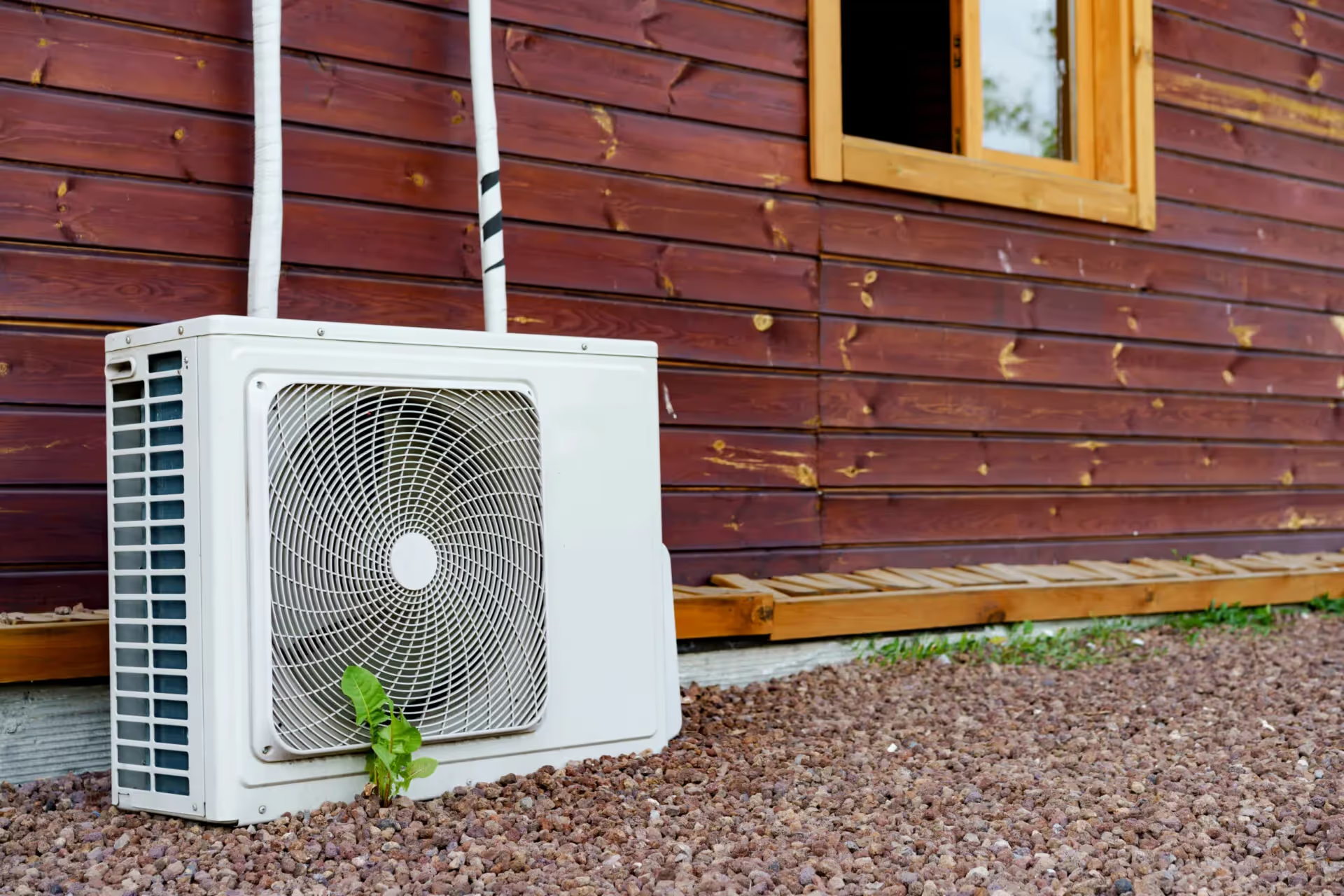
Ductless mini-splits are widely considered the gold standard for homes lacking existing vents. These systems consist of two primary parts: an outdoor condenser unit and one or more indoor air handlers. The two units are connected by a small conduit housing the power cable, refrigerant lines, and a condensate drain.
Installing a mini-split requires only a small 3-inch hole through an exterior wall. Because there are no ducts, there is zero duct-related energy loss. Plus, a single outdoor condenser can power multiple indoor units, giving you incredible multi-zone flexibility. You can mix and match wall-mounted units, floor-mounted consoles, or ceiling cassettes depending on the layout of your room.
To understand the mechanics of how these systems work, you can read our detailed breakdown: What is a Ductless Mini Split System. For a look at how they can lower your utility bills and improve your home, explore our article on Ductless AC System Benefits.
High-Velocity Small-Duct Systems for Architectural Preservation
High-velocity systems are a unique alternative designed specifically for homes where preserving the original wall space is the top priority. Instead of large, rectangular metal ducts, these systems use flexible, insulated mini-ducts that are only 2 inches in diameter. These small tubes can be snaked through existing wall cavities, crawlspaces, and ceilings much like electrical wiring, completely eliminating the need for major demolition or dropping ceilings.
Rather than gently dropping cold air into a room, high-velocity systems operate on the "aspiration principle." Air is delivered through small, circular vents (about the size of a CD) at a high speed. This rapid stream creates a gentle suction that draws the room's existing air into the stream, creating a highly consistent temperature from floor to ceiling.
Because the cooling coils in a high-velocity system are kept much colder than standard systems, they can remove up to 30% more moisture from the air. This exceptional dehumidification is incredibly helpful during humid summer days in coastal areas like Newport Beach and Laguna Beach.
Temporary vs. Permanent: Window Units and Portable ACs
When the summer heat hits, it is tempting to run to the nearest big-box store in Anaheim or Fullerton and grab a temporary window unit or a portable air conditioner. While these "band-aid" solutions have a low upfront cost, they come with substantial hidden drawbacks.
Window units are notoriously loud, operating at 50 to 65 decibels—about the volume of a noisy restaurant. They block your natural light, ruin your home’s curb appeal, and create a significant home security risk by leaving a window partially unlocked.
Portable air conditioners are even less efficient. Most single-hose portable units pull warm air from the room to cool the condenser, then vent that air outside. This process creates a "negative pressure" effect inside the room, which actually sucks warm, humid outdoor air in through cracks around your doors and windows, reducing the unit's effective cooling power by up to 40%.
| Feature | Ductless Mini-Split | High-Velocity Small-Duct | Window AC Unit | Portable AC Unit |
|---|---|---|---|---|
| Efficiency (SEER2/EER) | Up to 35 SEER2 | 14-18 SEER | 10-15 EER | 8-12 EER |
| Noise Level (dB) | 19 - 30 dB (Whisper-quiet) | 30 - 45 dB | 50 - 65 dB | 52 - 60 dB |
| Lifespan | 15 - 20+ Years | 15 - 20 Years | 5 - 8 Years | 3 - 6 Years |
| Aesthetic Impact | Sleek wall/ceiling units | Tiny 2-inch circular vents | Blocks window, bulky exterior | Bulky floor footprint, exhaust hose |
| Security Risk | None | None | High (Unsecured window) | Moderate (Hose vent in window) |
Key Performance Factors: Efficiency, Noise, and Lifespan
When evaluating any HVAC upgrade, three factors should guide your decision: how much it will cost to run (efficiency), how comfortable it is to live with (noise), and how long it will last (longevity).
Ductless mini-splits are the undisputed leaders in quiet operation. Because the noisy compressor is located outside, the indoor air handler operates at noise levels as low as 19 decibels—literally quieter than rustling leaves. High-velocity systems are also quiet, though you may hear a gentle rush of air near the small vents.
In terms of lifespan, a properly maintained ductless mini-split or high-velocity system will easily last 15 to 20 years. Compare that to window or portable units, which typically burn out after 3 to 8 years of heavy summer use. Maintenance for a mini-split is straightforward: simply rinse the reusable indoor filters every 2 to 4 weeks during peak season and schedule an annual professional check-up to keep your system running at peak performance.
Sizing and Efficiency Ratings When Adding Cooling Without Ductwork Options Compared
Proper sizing is critical for any cooling system. If a system is oversized, it will cool the room too quickly without running long enough to remove moisture, leaving your home feeling cold and clammy. If it is undersized, it will run continuously, driving up your energy bills and wearing out the compressor.
To size a system correctly, we perform a professional Manual J load calculation. This calculation takes into account:
- The square footage of the room (a basic rule of thumb is 20 to 25 BTUs per square foot).
- Ceiling height and window orientation (south-facing windows in sunny Yorba Linda generate a lot of solar heat gain).
- Insulation quality and local climate conditions.
Modern ductless mini-splits boast incredible efficiency ratings, often ranging from 16 to 35 SEER2. To make these permanent upgrades even more accessible in June 2026, the federal government offers significant incentives under the Inflation Reduction Act. Homeowners can claim a Section 25C tax credit covering 30% of the cost of qualifying high-efficiency heat pump installations, up to $2,000 annually.
To learn more about the installation process and how we ensure your system is sized perfectly, read our Mini Split AC Installation Complete Guide.
Year-Round Comfort: Heating and Cooling Performance in 2026
Most modern ductless systems are actually air-source heat pumps. This means they don't just cool your home; they can reverse their cycle to provide highly efficient heating during our cooler Southern California winter nights.
Because heat pumps move heat rather than creating it through combustion, they are incredibly eco-friendly and up to 400% efficient. In 2026, the HVAC industry has fully transitioned to eco-conscious refrigerants like R-32, which offer better thermodynamic properties and a significantly lower environmental impact. Additionally, multi-stage advanced filtration systems built into modern mini-splits actively capture dust, pollen, and pet dander, drastically improving your indoor air quality.
For more information on how these systems handle cold weather and provide year-round comfort, check out our guides on Mini Split Heat Pumps Installation Advantages and Ductless Heater Installation Advantages.
Specialized Solutions for Historic and Older Orange County Homes
Older homes in historic neighborhoods of Los Alamitos, Seal Beach, and Long Beach possess a unique architectural charm that is impossible to replicate. However, their plaster-and-lath walls, original woodwork, and lack of closet space make installing traditional central air ductwork a logistical nightmare.
For these homes, ductless mini-splits are a game changer. Because the installation only requires a single 3-inch hole through an exterior wall, we can preserve your home's historic plaster walls and original architectural features. The copper linesets on the exterior of your home can be neatly routed and encased in decorative covers that match your home's exterior paint, making them virtually invisible.
If you are wondering what to expect on the day of your upgrade, we have put together two helpful resources: our Guide to Ductless Mini Split Installation and our overview of Ductless HVAC Installation Expectations.
Frequently Asked Questions about Ductless Cooling
Can a ductless system provide both heating and cooling?
Yes! Most modern ductless systems are air-source heat pumps. They use a reversing valve to change the flow of refrigerant, allowing them to extract heat from your home and dump it outside during the summer, or extract heat from the outside air and bring it indoors during the winter. They are incredibly efficient and provide uniform comfort all year long.
How long does the installation process take?
A standard single-zone ductless mini-split installation can typically be completed in just one day. Because there is no messy drywall cutting, plaster repair, or duct construction, the disruption to your daily routine is minimal. Multi-zone systems with several indoor units may take two days to install.
Are there tax credits or rebates available in 2026?
Absolutely. Under Section 25C of the Inflation Reduction Act, homeowners who install qualifying ENERGY STAR certified heat pump mini-splits can receive a federal tax credit of up to 30% of the project cost, capped at $2,000. Additionally, local Southern California utility companies frequently offer rebates that can be combined with federal incentives to maximize your savings.
Conclusion
When it comes to adding cooling without ductwork options compared, the choice is clear. While window and portable units are cheap temporary fixes, they are loud, inefficient, and insecure. High-velocity systems are an excellent choice for purists who want to keep their walls completely clear. However, for the ultimate blend of energy efficiency, whisper-quiet operation, zoned comfort, and long-term value, ductless mini-split systems are the modern gold standard.
At AirPoint Heating & Air Conditioning, we are proud to be a family-owned, award-winning business serving Los Alamitos and surrounding Orange County communities. We back all of our repairs, maintenance, and system upgrades with a 100% satisfaction guarantee and honest, transparent communication.
Ready to reclaim your home from the summer heat? Visit our Ductless page to book your professional consultation and find the perfect cooling solution for your space!
Other Blogs
Latest Blog Posts

The Truth About Smart Thermostat Auto-Switch Features During Unpredictable Fall Weather

Why Coastal Long Beach Homes Often Need Different Heat Pump Defrost Cycles
Factoring in Heating Efficiency (HSPF) When Comparing Heat Pump Options in Fall

Customer Testimonials



I recommend Air Point for your HVAC needs."