





Why Dust From Santa Ana Winds Clogs Your System Faster Than You Think
How dust from Santa Ana winds clogs your system is one of the most urgent — and overlooked — home comfort problems in Southern California. When the "Devil Winds" sweep down from the Great Basin and Mojave Desert toward Orange County, they carry massive loads of fine desert silt, sand, and debris. That dust doesn't just settle on your patio furniture. It gets pulled directly into your HVAC system, where it can cause serious damage in as little as 24 to 48 hours.
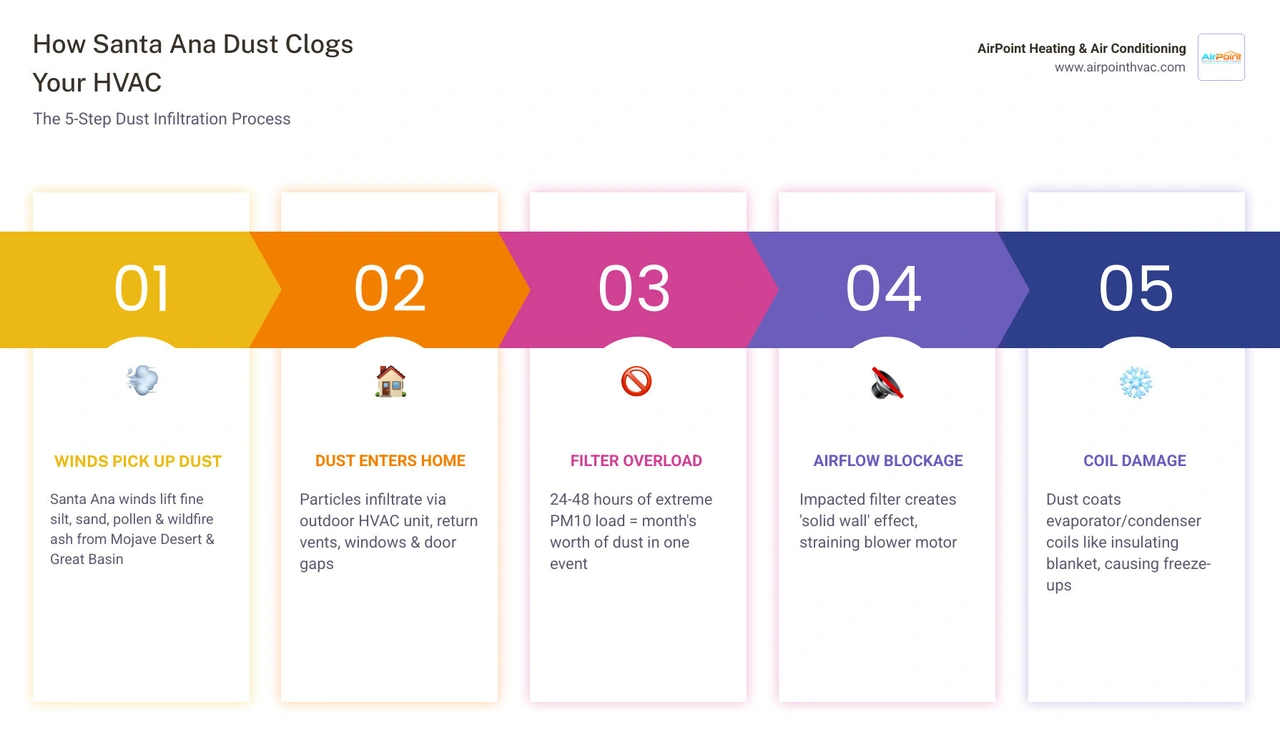
Here is a quick breakdown of how it happens:
- Winds pick up fine particulate matter — including desert silt, sand, pollen, and wildfire ash — from arid source regions
- Dust enters your HVAC system through the outdoor unit, return air vents, and gaps around windows and doors
- Your air filter gets overwhelmed — during a heavy Santa Ana event, it can receive the equivalent of a full month's worth of dust in just 48 hours
- The filter becomes "impacted" — clogged so completely it acts more like a solid wall than a filter
- Airflow drops sharply — forcing your blower motor to strain, your evaporator coil to freeze, and your whole system to work harder just to keep up
- Dust coats your coils — acting like an insulating blanket that blocks heat transfer and drives up energy bills
For homeowners in Los Alamitos and across Orange County, the Santa Ana season isn't just a fire and air quality concern. It's a direct threat to the HVAC system keeping your family comfortable at home.
The Science of the "Devil Winds" and Dust Infiltration
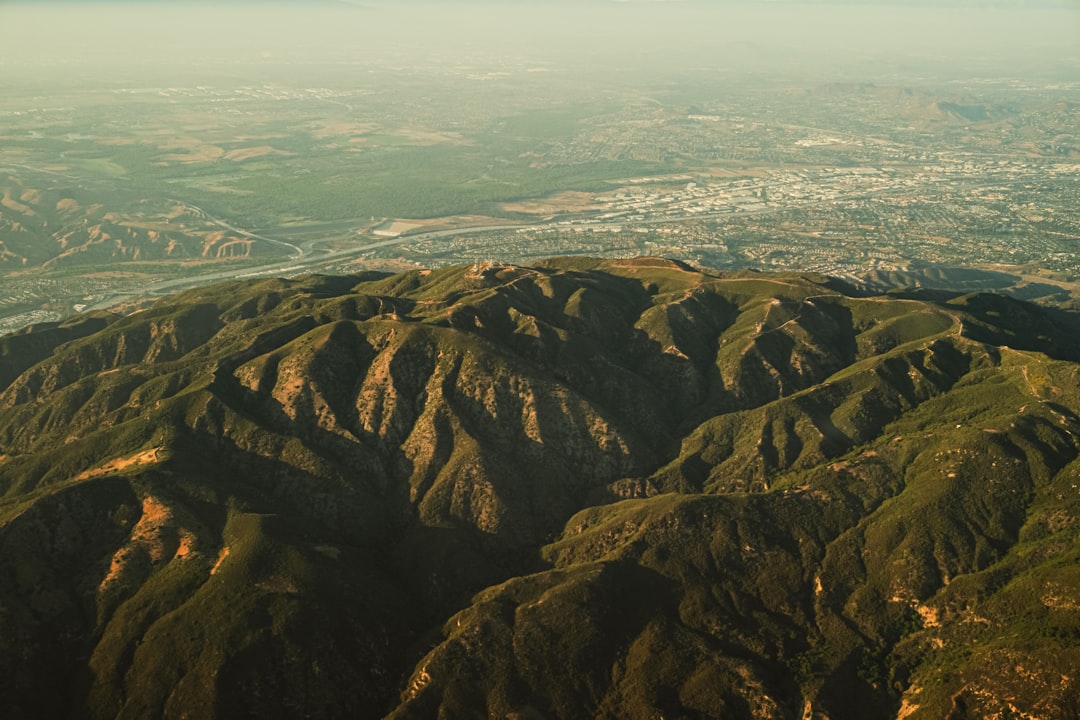
To understand how dust from Santa Ana winds clogs your system, we first have to look at where these winds come from. Known scientifically as katabatic winds, the Santa Anas originate in the high-altitude Great Basin and the Mojave Desert. As this air spills over the mountains and descends toward the Southern California coast, it undergoes "compression heating." This means the air warms up by about 5°F for every 1,000 feet it drops.
By the time these gusts reach cities like Huntington Beach, Irvine, or Anaheim, they are hot, incredibly fast (often 40–60 mph), and bone-dry. This weather pattern creates a "dust bowl" effect, transporting hundreds of thousands of tons of desert silt directly into our neighborhoods. Because the air is moving so fast and is so dry, it holds onto fine particulates much longer than usual, turning the sky hazy and making life difficult for your air conditioner. For a deeper look at how these events impact your home, check out our Santa Ana Winds HVAC Guide and our Huntington Beach Air Quality Guide.
The Role of Low Humidity and Static Charge
One of the most fascinating—and frustrating—parts of a Santa Ana event is the humidity. It’s common for relative humidity to drop below 10%, which is actually drier than the Sahara Desert. This extreme dryness creates a massive amount of static electricity.
In HVAC, static electricity is a nightmare. It creates a "molecular stickiness" that causes dust particles to adhere aggressively to everything they touch. Instead of dust simply bouncing off your AC filter or settling on the floor, the static charge makes it "glue" itself to the filter fibers, blower fan blades, and sensitive electrical components. This is a major reason how coastal California climate affects your HVAC system differently than other regions; the dust doesn't just sit there—it clings.
How Dust From Santa Ana Winds Clogs Your System
During an extreme wind event, the concentration of PM10 (particulate matter 10 micrometers or less) can skyrocket. In some recorded events in Southern California and neighboring Baja, PM10 levels have reached over 2000 µg/m³, which is astronomically higher than national air quality standards.
When your HVAC system is running, it acts like a giant vacuum, pulling this massive concentration of debris into your home’s "lungs." We often see air filters go from brand new to completely "impacted" within 24 to 48 hours. An impacted filter is one that has reached its maximum capacity; the dust has filled every gap in the material, creating a solid barrier that blocks airflow. This creates immense static pressure within the system, which is one of the primary ways how air filters impact your HVAC system.
The "Santa Ana Soup" of debris typically includes:
- Fine Desert Silt: Microscopic particles that can slip through low-quality filters.
- Desert Sand: Abrasive grains that act like sandpaper on moving parts.
- Wildfire Ash: Chemically reactive and sticky particulates from regional fires.
- Organic Matter: Dried leaves, twigs, and pollen that can get sucked into the outdoor condenser.
Why Your Filter Becomes a "Solid Wall" in 48 Hours
Most homeowners are used to changing their filters every three months. However, during a 48-hour Santa Ana event, your system can receive a full month's worth of dust. When the filter becomes that "solid wall," the blower motor has to work twice as hard to pull air through it. This doesn't just increase your energy bill; it creates significant mechanical strain that can lead to a total motor burnout. If you live in high-dust areas, maintaining your indoor air quality in Huntington Beach, CA requires a much more aggressive filter-checking schedule during the windy season.
The Impact of Wildfire Ash and Alkaline Residue
Santa Ana winds and wildfires often go hand-in-hand. The ash carried by these winds is particularly dangerous for HVAC systems because it is often alkaline and abrasive. When ash mixes with the natural moisture on your indoor evaporator coils, it can cause corrosion. This often leads to "Dirty Sock Syndrome"—a foul, musty smell caused by organic buildup and bacterial growth on the coils. Understanding how the right air filter improves your indoor air quality is essential during fire season to keep these reactive soot particles out of your living space.
Mechanical Damage: Beyond the Air Filter
While the filter is the first line of defense, it isn't the only part of the system at risk. Your outdoor condenser unit is sitting right in the line of fire.

When high-velocity winds blow sand and grit against your outdoor unit, it creates a "sandblasting" effect. This can physically wear down the delicate metal fins on your condenser coils. Furthermore, the dust that settles on these coils acts like an insulating blanket. Your AC works by releasing heat from your home through these coils; if they are covered in silt, the heat stays trapped, the system runs longer, and your cooling efficiency plummets. Following ultimate HVAC maintenance tips for Coastal California can help you prevent this "insulating" effect from killing your system's performance.
Evaporator Coil Freezing and Airflow Failure
One of the most common service calls we get during Santa Ana winds is for a "frozen" AC unit. It sounds counterintuitive—how can an AC freeze when it's 95°F outside?
It all goes back to the clogged filter. When airflow is restricted by a "solid wall" of dust, the cold refrigerant in the evaporator coil doesn't have enough warm air passing over it to stay above freezing. The temperature of the coil drops, moisture in the air turns to ice, and soon you have a block of ice where your cooling should be. Most systems are designed for a 20-degree differential; when you push them past their design temperature with zero airflow, they fail.
Proactive Steps to Protect Your Orange County Home
You don't have to be a victim of the "Devil Winds." There are several tactical steps you can take to protect your system:
- Switch to Recirculation Mode: This prevents the system from pulling in "fresh" (but dusty) outdoor air and focuses on cleaning the air already inside.
- Seal the Gaps: Use weatherstripping or caulk to seal cracks around windows and doors where dust sneaks in.
- Create a Windbreak: If your outdoor unit is in a high-wind corridor, a breathable fence or hedge (kept 2 feet away) can act as a shield.
- Keep Spares Ready: Always have a multi-pack of filters on hand during the fall and winter months.
Finding the best air filter for homes near the coast is a great first step in your defense strategy.
Choosing the Right Filtration Strategy
Not all filters are created equal. During Santa Ana season, we generally recommend a pleated filter with a MERV rating between 8 and 13.
| MERV Rating | Effectiveness | Best Use Case |
|---|---|---|
| MERV 1-4 | Low (Fiberglass) | Not recommended for Santa Ana dust. |
| MERV 8-11 | Medium (Pleated) | The Sweet Spot: Balances filtration and airflow. |
| MERV 13+ | High (HEPA-like) | Great for allergies, but requires a strong motor. |
To understand which one is right for your specific unit, read our guide on air filter types and MERV ratings explained.
Frequently Asked Questions about Santa Ana Dust
How quickly can dust from Santa Ana winds clog your system?
In extreme conditions, your filter can go from clean to completely impacted in just 24 to 48 hours. Because the particulate load is so high, we recommend checking your filter daily during active wind events.
What are the signs that dust from Santa Ana winds clogs your system?
Look out for:
- Weak Airflow: Air coming out of the vents feels faint.
- Unusual Noises: The blower motor sounds like it's struggling or whistling.
- Rising Energy Bills: An unexplained spike in your electricity usage.
- Frozen Coils: Visible ice on the indoor or outdoor refrigerant lines.
- Dust Near Vents: Seeing a "dust ring" around your supply registers.
Should I run my HVAC system during a heavy dust storm?
You can, but you should switch it to Recirculation Mode to minimize the intake of outdoor pollutants. If the dust is so thick that visibility is affected, it may be safer to turn the system off briefly to prevent the motor from choking on a massive "gulp" of silt.
Conclusion
At AirPoint Heating & Air Conditioning, we know that "comfort is happiness," especially when the winds are howling outside. Whether you are in Los Alamitos, Newport Beach, or Yorba Linda, your HVAC system is your home's primary defense against the elements. Don't let a few days of desert dust lead to a multi-thousand-dollar repair bill.
Our team of licensed and certified technicians is ready to provide the precision tune-ups and maintenance your system needs to survive the Santa Ana season. From cleaning "sandblasted" coils to inspecting your blower motor for static-charged dust buildup, we offer same-day service to keep your home running efficiently.
Is your system struggling after the latest wind event? Book your professional HVAC maintenance now or call us for fast, honest service you can trust.
Other Blogs
Latest Blog Posts
Home Maintenance Tips and Troubleshooting: Navigating Your First Fall Heater Startup
Common Homeowner Questions Answered: Is That Fall Heater Burning Smell Normal?
Common Homeowner Questions Answered: Why Does My Heater Smell Like Burning?

Customer Testimonials



I recommend Air Point for your HVAC needs."