






Is Your AC Low on Refrigerant? Here Are the Warning Signs
The most common low refrigerant signs in your AC system are easy to spot once you know what to look for:
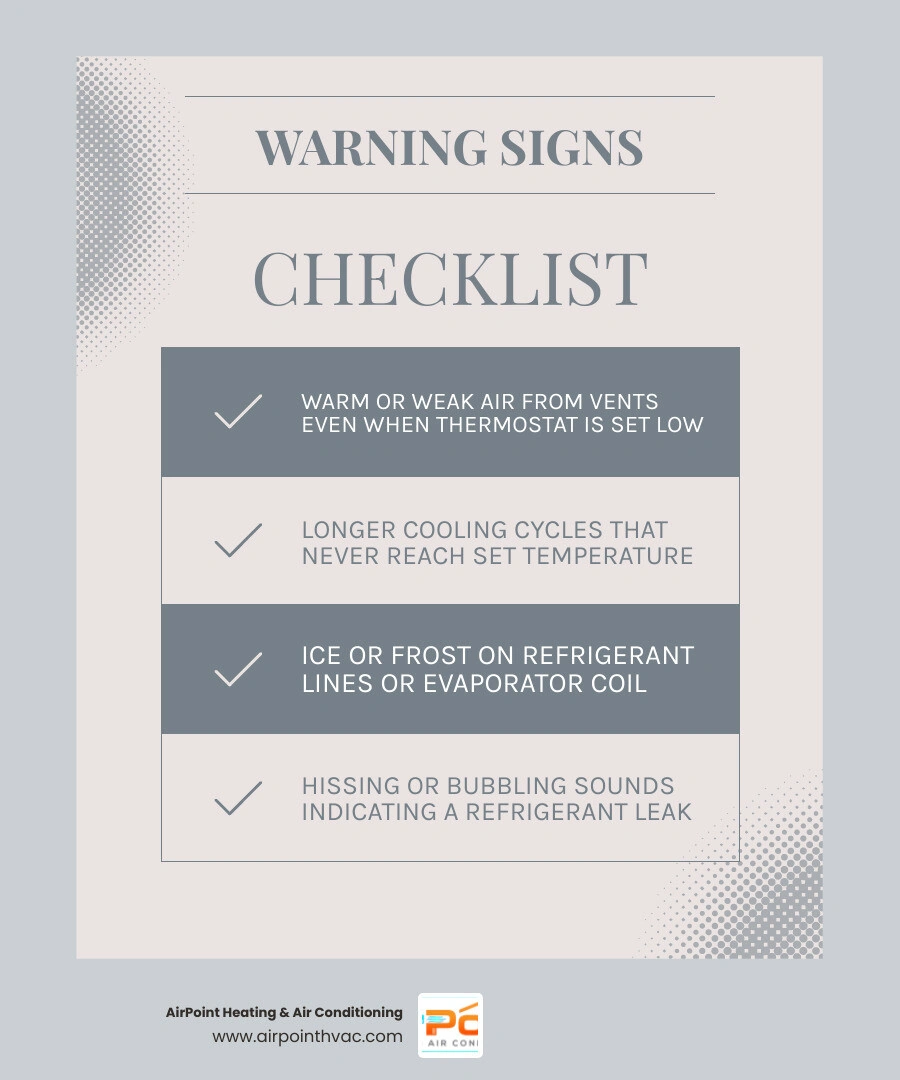
- Warm or weak air blowing from your vents even when the thermostat is set low
- Longer cooling cycles — your AC runs and runs but never quite reaches the set temperature
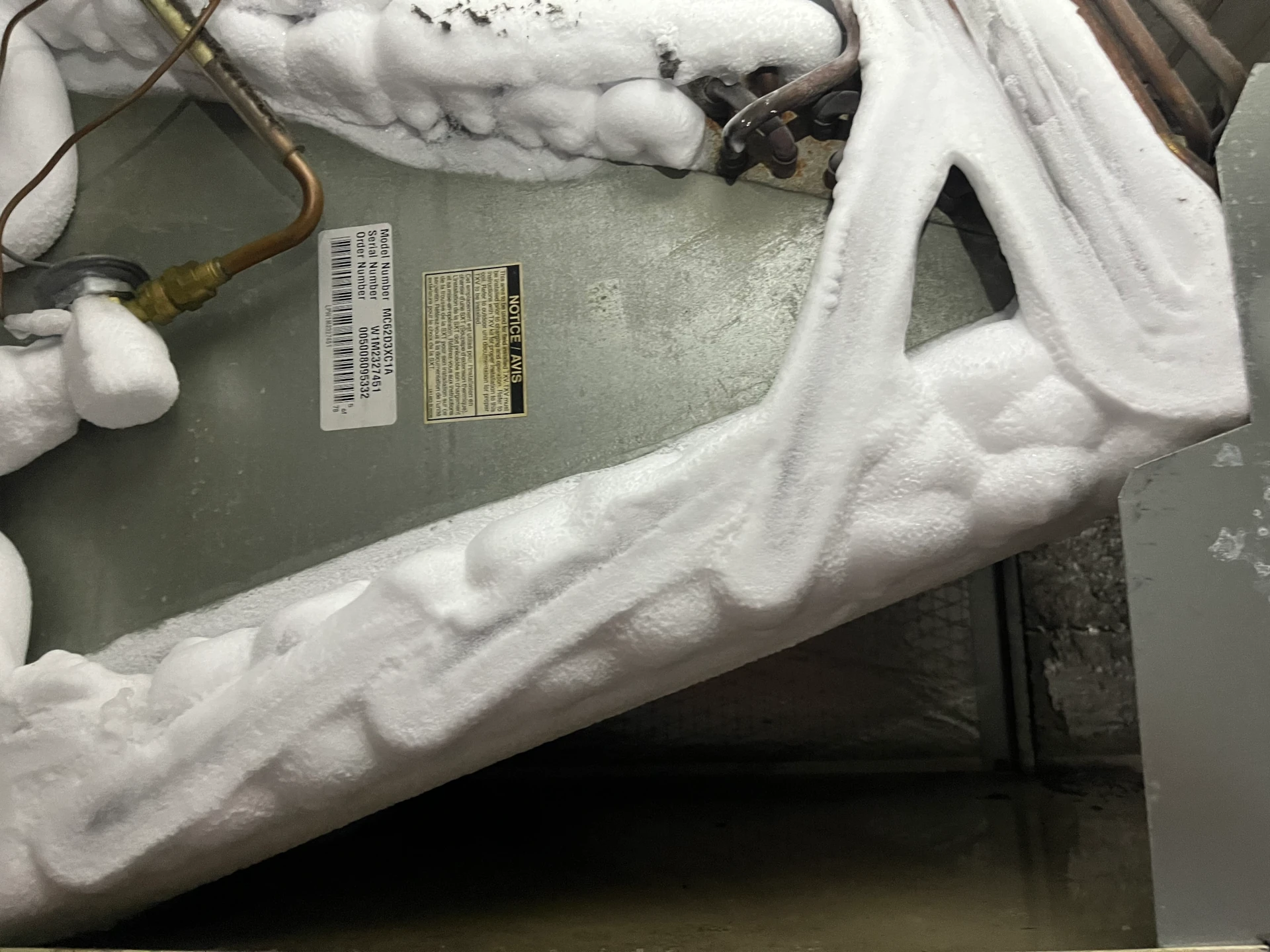
- Ice or frost forming on the refrigerant lines or evaporator coil
- Hissing or bubbling sounds coming from the unit, which can indicate a refrigerant leak
- Higher energy bills with no clear explanation
- Increased indoor humidity — the air feels sticky or muggy inside
- Water pooling near your indoor unit as ice melts off the coil
If any of these sound familiar and you live in Los Alamitos or the surrounding Orange County area, your AC may be running low on refrigerant — and that's not something to put off.
Refrigerant is the substance your air conditioner uses to absorb heat from inside your home and release it outdoors. It cycles continuously through a closed-loop system, meaning it should never run low on its own. When it does, there's almost always a leak somewhere in the system. Left unaddressed, low refrigerant doesn't just hurt your comfort — it can lead to compressor failure, one of the most expensive repairs in any HVAC system.
In this guide, AirPoint Heating & Air Conditioning walks you through every sign to watch for, what causes refrigerant leaks, and why getting a professional diagnosis matters.
Understanding Refrigerant and How It Cools Your Home
To understand why a shortage of refrigerant causes such major issues, it helps to understand what refrigerant actually is and how your cooling system uses it. Many homeowners believe refrigerant is a fuel that the air conditioner consumes over time, similar to gasoline in a car. In reality, refrigerant is a heat-transfer medium that operates in a completely closed loop. It is never "used up" or worn out.
The cooling process relies on fundamental thermodynamics and phase changes. The refrigerant cycles continuously through four primary components: the compressor, the condenser coil, the expansion valve, and the evaporator coil.
- Evaporator Coil (Indoors): Cold, low-pressure liquid refrigerant flows through the indoor evaporator coil. As warm indoor air is blown across this coil by the blower fan, the refrigerant absorbs the heat from the air. This heat absorption causes the liquid refrigerant to boil and transform into a low-pressure gas.
- Compressor (Outdoors): This gas travels to the outdoor compressor, often called the "heart" of your AC. The compressor squeezes the gas, raising its pressure and temperature significantly.
- Condenser Coil (Outdoors): The hot, high-pressure gas enters the outdoor condenser coil. A large fan blows outdoor air across this coil, releasing the heat trapped inside the refrigerant to the outside environment. As it cools, the refrigerant condenses back into a high-pressure liquid.
- Expansion Valve: The liquid refrigerant passes through an expansion valve, which reduces its pressure, cooling it down rapidly before it heads back to the indoor evaporator coil to repeat the cycle.
If your system is operating with an incorrect charge, this entire delicate balance of pressure and temperature is disrupted. When there is an AC Unit Not Cooling properly, a refrigerant leak is one of the most common culprits. Understanding these basics makes it much easier to identify the Common Causes of AC Issues and protect your equipment from severe damage.
How to Spot Low Refrigerant Signs in Your AC System
When your air conditioner’s refrigerant level drops, its overall cooling efficiency plummets. Because the system can no longer absorb heat effectively, it has to work twice as hard to achieve the temperature you set on your thermostat. This extra work translates directly into system strain, wear and tear on electrical components, and comfort issues inside your home.
If you suspect your system is struggling, check your thermostat settings first. If you set your thermostat to a comfortable 72°F on a warm afternoon, but the indoor temperature remains stuck at 78°F or 80°F despite the system running constantly, you are likely dealing with a refrigerant issue. To help you rule out other problems, let's explore how to evaluate the system using your senses of touch, sight, and hearing. You can also read our guide on AC Not Cooling Properly What to Check for a step-by-step troubleshooting checklist.
Physical Low Refrigerant Signs in Your AC System to Watch For
The most immediate indicators of a low refrigerant charge are the physical changes in your indoor air quality and comfort. Here are the primary physical signs you will notice:
- Warm Air Blowing From Vents: If you place your hand over a supply register and the air feels lukewarm, room-temperature, or only slightly cool, the refrigerant is likely too low to absorb indoor heat.
- Weak Airflow: While weak airflow can sometimes point to a clogged air filter or duct issues, it also occurs when ice builds up on the evaporator coil due to low refrigerant, physically blocking the passage of air.
- Extremely Long Cooling Cycles: Modern air conditioners should typically cool a room in 15 to 20 minutes, or lower the temperature of a standard home by about 10°F within three hours. If your AC runs continuously for hours without cycling off, it is desperately trying to compensate for its lost cooling capacity.
- High Indoor Humidity: Your air conditioner is responsible for dehumidifying your home as it cools. It does this by condensing moisture out of the air when it contacts the cold evaporator coil. When refrigerant is low, the coil doesn't get cold enough to extract moisture, leaving your indoor air feeling sticky, heavy, and muggy.
Running your system continuously under these conditions places immense strain on your outdoor unit. This can lead directly to AC Compressor Issues in Los Alamitos Heat, which can cause the compressor to overheat and permanently fail.
Auditory and Visual Low Refrigerant Signs in Your AC System
You don't always have to guess if your system is low on refrigerant; often, your AC will show you visual clues or make distinct sounds that point directly to a leak.
Hissing vs. Bubbling Sounds
Because refrigerant is pressurized, a leak in the copper lines or coils will often produce distinct noises. If you hear a hissing sound near your indoor or outdoor unit, it usually indicates that refrigerant is escaping in its gas form. If the leak is located in a section of the line where the refrigerant is still a high-pressure liquid, you are more likely to hear a bubbling noise, similar to air escaping through a wet straw. If you notice these sounds, read more about what they mean in our guide on AC Making Strange Noises What They Mean.
Ice Buildup and Frozen Coils
It seems counterintuitive that a system running low on cooling fluid would freeze, but ice buildup is a classic visual sign of low refrigerant. When the refrigerant level drops, the pressure inside the evaporator coil drops along with it. This drop in pressure causes the temperature of the coil to fall below 32°F (freezing).
As warm, humid indoor air passes over this freezing coil, the moisture in the air instantly freezes onto the copper tubing. Over time, this frost builds up into a thick sheet of ice, insulating the coil and completely blocking heat transfer. You may also see ice traveling along the copper refrigerant lines all the way to your outdoor unit.
Water Pooling Around the Furnace or Indoor Unit
When the ice on your indoor evaporator coil eventually melts—either because you turned the system off or because the airflow is completely blocked—it creates a massive amount of water. This sudden deluge can easily overwhelm your AC's condensate drain pan and drain line, leading to water pooling around your indoor furnace, closet, or attic space, which can cause significant water damage.
Why Low Refrigerant Causes System Inefficiency and High Bills
When your system is low on refrigerant, it has to run much longer to satisfy your thermostat, which causes your energy bills to skyrocket. Operating a system with an incorrect charge is incredibly inefficient.
| Operational Factor | Normal AC Operation | Low Refrigerant Operation |
|---|---|---|
| Cooling Cycle Length | 15–20 minutes per cycle | Continuous running or short-cycling |
| Air Vent Temperature | 15°F to 20°F cooler than return air | Lukewarm or room-temperature air |
| Energy Consumption | Standard, predictable utility bills | Sudden, unexplained bill spikes |
| Coil Temperature | Above freezing (approx. 40°F–45°F) | Below freezing (leads to ice buildup) |
| Compressor Stress | Low to moderate, normal wear | Extreme heat, risk of burnout |
Because the system runs continuous cycles to keep up with the summer heat, your electricity usage climbs dramatically. A system running low on refrigerant can work two to three times harder than normal, turning a mild spring-sized utility bill into a mid-summer nightmare.
Furthermore, this continuous operation severely strains other vital components. The electrical parts of your system, such as the capacitors, must work overtime to keep the fan motors and compressor running. This extra workload can lead to premature failure, which is why understanding AC Capacitor Failure Signs is so important for homeowners trying to avoid sudden breakdowns.
Common Causes of Refrigerant Leaks in AC Systems
Because your air conditioner's refrigerant loop is a sealed system, the only way it can run low on refrigerant is if a leak develops or if it was improperly charged during installation. Here are the most common reasons refrigerant leaks occur:
- Formicary Corrosion: This is the leading cause of pinhole leaks in copper evaporator coils. It occurs when copper tubing reacts with naturally occurring household pollutants and acids, such as those found in cleaning products, paints, building materials, and cosmetics (like formaldehyde). Over time, this chemical reaction etches microscopic tunnels through the copper walls, allowing refrigerant to seep out.
- Vibration Damage: When your air conditioner runs, the compressor and outdoor fan generate constant, subtle vibrations. If the copper refrigerant lines are not properly secured, anchored, or insulated, these vibrations can cause the lines to rub against other metal components or weaken the soldered joints over time, eventually causing a crack.
- Joint and Seal Wear: The connections where copper lines meet the indoor and outdoor units rely on rubber seals, valves, and brass fittings. Over years of seasonal temperature fluctuations, these seals can dry out, shrink, and crack, leading to slow leaks.
- The 10-to-15-Year Vulnerability: As systems age, they become significantly more prone to leaks. After a decade or more of constant heating and cooling cycles, the metal copper tubing naturally weakens from expansion and contraction.
To catch these issues before they turn into costly system failures, regular preventative maintenance is essential. Learn more about how routine tune-ups protect your system by reading Why Regular AC Maintenance Is Crucial.
Why Simply Adding Refrigerant Without Fixing the Leak Is Dangerous
When homeowners realize their AC is low on refrigerant, their first instinct is often to ask an HVAC company to simply "top it off" or add more refrigerant. However, simply adding refrigerant without locating and repairing the leak is highly irresponsible, dangerous, and a waste of money.
First, refrigerant handling is strictly regulated by the Environmental Protection Agency (EPA) under Section 608. It is illegal to knowingly vent ozone-depleting refrigerants (like older R-22) or high-global-warming greenhouse gases (like modern R-410A) into the atmosphere. Simply refilling a leaking system means that the newly added refrigerant will eventually leak right back out into the environment.
Second, adding refrigerant to a leaking system is only a temporary fix. The leak will continue to grow, and you will find yourself dealing with the exact same cooling issues, high energy bills, and frozen coils a few weeks or months down the road.
Most importantly, running your system with low refrigerant—or constantly cycling it between low and full charges—places your compressor at extreme risk. The compressor relies on the cool, returning refrigerant gas to keep its internal motor cool. When refrigerant is low, the compressor overheats, which can cause its internal lubricants to break down, leading to mechanical failure or a complete system burnout.
Instead of temporary patches, investing in professional leak detection and repair is the only way to protect your system. Discover how preventative care keeps your system running smoothly by reading about the Annual AC Tune Up Benefits.
Frequently Asked Questions About AC Refrigerant
How do HVAC professionals diagnose and repair low refrigerant?
Professional HVAC technicians use advanced diagnostic tools to safely locate and repair refrigerant leaks. First, they connect manifold pressure gauges to the service valves on your outdoor unit to measure the operating pressures and temperatures while the system is running. This confirms whether the charge is actually low.
To find the exact location of the leak, technicians use several methods:
- Electronic Leak Detectors: Highly sensitive hand-held wands that "sniff" the air for halogenated gases escaping from copper lines or joints.
- Dye Testing: Injecting a safe, fluorescent ultraviolet (UV) dye into the system. As the refrigerant circulates, the dye escapes through the leak, allowing the technician to locate it using a specialized UV light.
- Bubble Solutions: Applying a specialized soap solution to joints and valves to watch for physical bubbles forming.
Once the leak is found, the technician must safely evacuate and recover any remaining refrigerant according to EPA guidelines, cut out and replace the damaged copper tubing or coil, braze the new joints, pull a deep vacuum to remove moisture and air, and then recharge the system with the exact weight of refrigerant specified by the manufacturer. During this process, they may also check electrical controls to ensure no damage occurred, which is detailed in our guide on Diagnosing AC Circuit Board Failures.
Can a dirty air filter cause the same symptoms as low refrigerant?
Yes! A severely clogged or dirty air filter restricts airflow across your indoor evaporator coil. Without enough warm indoor air passing over the coil, the refrigerant inside cannot absorb enough heat. This causes the coil temperature to drop below freezing, leading to ice buildup, weak airflow, warm air from the vents, and extremely high energy bills—the exact same symptoms as low refrigerant.
Before calling for professional service, always check your air filter. If the filter is dirty, replace it, turn your system off for a few hours to allow any ice on the coil to melt completely, and then turn it back on. If the symptoms return with a clean filter, you are likely dealing with a true refrigerant leak.
Why does my AC smell sweet or chemical when refrigerant is low?
If you notice a faint, sweet, or chemical-like odor coming from your supply vents, it could be a sign of a refrigerant leak in your indoor evaporator coil. Modern refrigerants can carry a distinct chemical smell, and when a leak occurs indoors, the blower fan can distribute this odor throughout your home.
Because indoor air quality is vital to your family's health, any unusual smells should be investigated immediately. You can read more about identifying different air conditioner odors in our article on 7 Reasons Why Your Air Conditioner Smells.
Conclusion
Spotting the low refrigerant signs in your AC system early can save you from a complete system breakdown, high energy bills, and expensive compressor replacements. Refrigerant does not get used up over time; if your system is low, you have a leak that requires professional attention.
At AirPoint Heating & Air Conditioning, we believe that "comfort is happiness." As a family-owned, licensed, and certified HVAC provider serving Los Alamitos and surrounding Orange County communities—including Seal Beach, Huntington Beach, Cypress, Garden Grove, Fullerton, Yorba Linda, and Newport Beach—we are dedicated to keeping your home cool and efficient. Our team provides fast, honest service backed by a 100% satisfaction guarantee.
If you suspect your air conditioner is low on refrigerant, don't wait for your system to freeze over or your compressor to fail. Book fast, reliable AC service today! to schedule your precision diagnostics and leak repair.
Other Blogs
Latest Blog Posts
Home Maintenance Tips and Troubleshooting: Navigating Your First Fall Heater Startup
Common Homeowner Questions Answered: Is That Fall Heater Burning Smell Normal?
Common Homeowner Questions Answered: Why Does My Heater Smell Like Burning?

Customer Testimonials




I recommend Air Point for your HVAC needs."