





The Simple Answer to How Often You Should Change Your HVAC Air Filter
Knowing how often should you change your HVAC air filter is one of the most important — and most overlooked — parts of keeping your home comfortable and your system running efficiently.
Here is a quick-reference guide based on your household type:
| Household Type | Recommended Replacement Frequency |
|---|---|
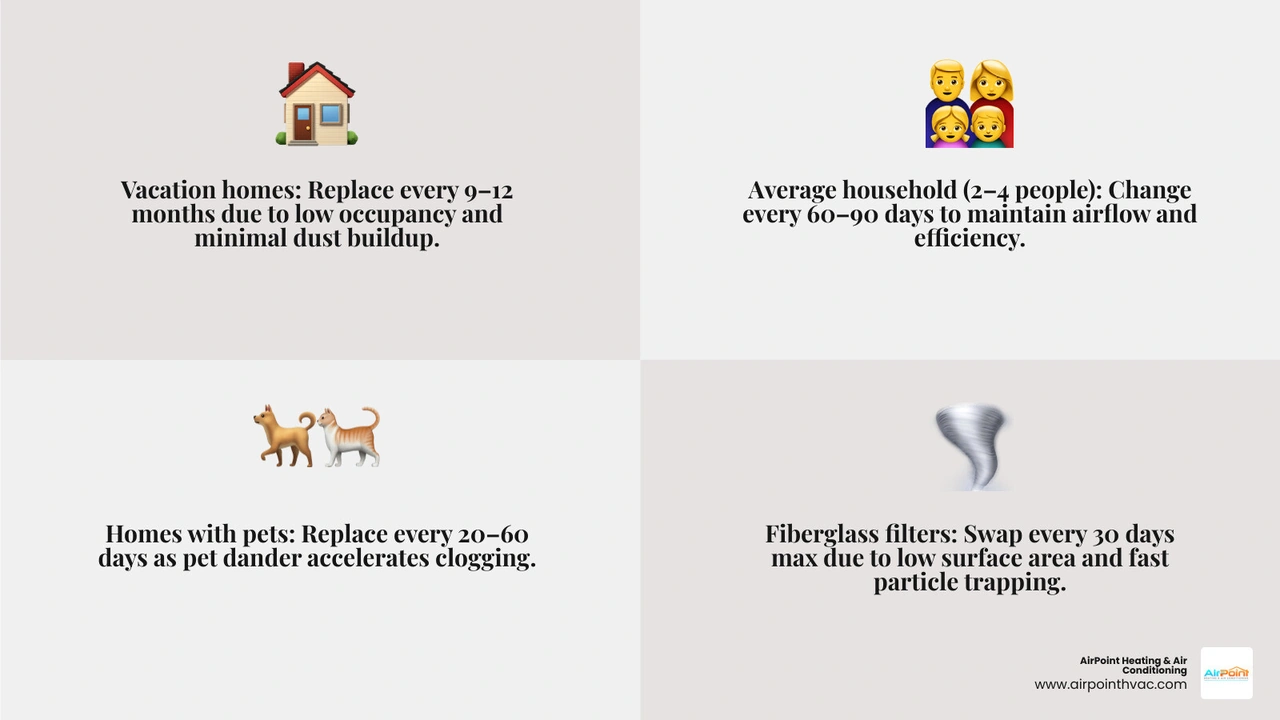
| Vacation home / rarely occupied | Every 9–12 months |
| Single occupant, no pets, no allergies | Every 90 days |
| Average household (2–4 people, no pets) | Every 60–90 days |
| Home with 1–2 pets | Every 60 days |
| Home with children or mild allergies | Every 60 days |
| Multiple pets or allergy/asthma sufferers | Every 20–45 days |
| Fiberglass filters (any household) | Every 30 days |
| 1-inch pleated filters | Every 30–90 days |
| 4-inch media filters | Every 6 months |
| 5-inch high-capacity filters | Every 12 months |
The short answer: most homes should change their HVAC air filter every 30 to 90 days, depending on filter type, household size, pets, and air quality conditions.
But the truth is, there is no single number that works for every home. A family in Los Alamitos with two dogs and a child who has asthma needs a very different maintenance schedule than a single homeowner with no pets in a rarely used vacation property. Dust, dander, pollen, and even wildfire smoke all play a role in how quickly your filter becomes clogged — and a clogged filter does not just mean dusty air. It means your HVAC system is working harder than it needs to, which can drive up energy bills by as much as 5 to 15 percent and shorten the life of your equipment.
This guide walks you through everything you need to know to set the right replacement schedule for your specific home.
How Often Should You Change Your HVAC Air Filter?
The industry "rule of thumb" for air filter replacement is 90 days, but this is a bare minimum. If you wait until the 90-day mark without considering your specific home environment, you might already be breathing in unfiltered air or putting unnecessary strain on your furnace and AC. For many of our neighbors in Southern California, a Air Filter Replacement Guide for Homeowners is the best way to determine if you are on the right track.
The material of the filter itself is the first major factor. Fiberglass filters, which are the thin, blue or white mesh filters often sold in bulk, are designed primarily to protect the HVAC equipment from large debris rather than to clean your air. These must be changed every 30 days or less because they have very little surface area to trap particles. On the other hand, pleated media filters are made of folded fabric or paper, which creates a much larger surface area to trap dust, mold, and pollen. These can often last up to 90 days in a clean, pet-free environment.
How often should you change your hvac air filter for different filter thicknesses?
One of the biggest secrets to a longer-lasting filter is its physical thickness. Most standard homes use 1-inch filters, which have a limited capacity for holding dust. These typically need a swap every 1 to 3 months.
However, many modern systems are designed to accommodate 4-inch media filters or even 5-inch high-capacity filters. Because these filters have deep pleats, they have a massive amount of surface area—sometimes as much as 30 to 50 square feet of material folded into that small space. This allows them to hold a significant amount of debris without restricting airflow. While a 1-inch filter might clog in 60 days, a 5-inch filter can often last a full 12 months before needing a replacement.
How often should you change your hvac air filter with pets and allergies?
If you share your home with furry friends, your filter has a much harder job. Pets are essentially "filter killers." Between the shedding fur and the dander (tiny flakes of skin), a filter can become "carpeted" in debris much faster than you’d expect. For homes with 1–2 pets, we recommend a 60-day cycle. If you have multiple pets or long-haired breeds, you should check the filter every 20 to 30 days.
The same urgency applies to respiratory health. If someone in your home suffers from allergies or asthma, the air filter is your first line of defense. Using a high-quality filter and changing it every 45 days can improve indoor air quality by 20–30%, significantly reducing triggers like dust mites and pollen. If you need assistance choosing the right filtration level for your family, our team provides expert Air Filter Replacement Long Beach services to keep your air clean and breathable.
Lifestyle Factors That Accelerate Filter Clogging
Your lifestyle dictates how much air—and how much "stuff"—moves through your vents. A large family of five creates significantly more dust, skin cells, and hair than a couple living alone.
| Factor | Impact on Filter Life | Recommended Check-In |
|---|---|---|
| Home Size | Larger homes circulate more air volume, trapping more debris. | Every 30–60 days |
| Occupancy | More people = more dust, hair, and biological contaminants. | Every 45 days |
| Construction | Drywall dust and sawdust can clog a new filter in days. | Immediate replacement after project |
| Indoor Smoking | Smoke particles saturate filter fibers extremely quickly. | Every 30 days |
For residents looking for comprehensive solutions, Air Filter Replacement Orange County services can help tailor a maintenance plan to your specific household occupancy.
Seasonal usage and air quality impacts
In areas like Newport Beach and Garden Grove, the weather plays a huge role in how often should you change your HVAC air filter. During the "peak" seasons—the hottest weeks of summer and the coolest weeks of winter—your HVAC system runs almost constantly. More run-time means more air passing through the filter, which leads to faster clogging. We recommend monthly inspections during these high-use periods.
Outdoor air quality is another critical factor. When Southern California experiences wildfire smoke or high city smog levels, your air filter works overtime to keep those pollutants out of your lungs. During a wildfire event, a filter can reach its capacity in as little as two weeks. If you live in high-traffic areas, our Air Filter Replacement Newport Beach experts recommend checking your filter immediately after any period of hazy skies or "Spare the Air" alerts.
Vacation homes vs. primary residences
If you own a property in Seal Beach that sits empty for several months of the year, you don't need to change the filter every 90 days. Since the HVAC system isn't circulating air, dust isn't being pulled into the filter. For these types of properties, a 9-month or even 12-month interval is usually sufficient. However, it is a good idea to start the season with a fresh filter to ensure any settled dust doesn't cause a "musty" smell when you first turn the AC on. For seasonal residents, Air Filter Replacement Seal Beach services can ensure your system is ready for your arrival.
Understanding Filter Types and MERV Ratings
When shopping for a filter, you will see a MERV rating (Minimum Efficiency Reporting Value). This rating, which ranges from 1 to 20, tells you how effective the filter is at trapping small particles.
- MERV 1–4: Basic fiberglass filters. Good for protecting the motor, bad for air quality.
- MERV 8–11: The "sweet spot" for most residential homes. These trap dust, pollen, and pet dander without putting too much strain on the blower motor.
- MERV 13–16: High-efficiency filters often used in hospitals. These are great for allergies but can sometimes be too restrictive for older home systems.
Understanding Air Filter Types and MERV Ratings Explained is vital because choosing a rating that is too high can actually damage your system by causing a "pressure drop"—essentially making the system struggle to "breathe" through a filter that is too thick.
Choosing the right MERV for residential systems
For most of our customers, we recommend a MERV 8 or MERV 11 pleated filter. This provides an excellent balance of air filtration and system efficiency. If you go higher than MERV 11, you must ensure your HVAC system's blower motor is powerful enough to handle the increased airflow resistance. If you're unsure, our Air Filter Replacement Garden Grove technicians can test your system's static pressure to find the perfect match.
High-efficiency HEPA and coastal considerations
For homes directly on the coast, salt air and high humidity can cause filter fibers to become "heavy" or damp, which can lead to mold growth if neglected. While true HEPA filters are the gold standard for trapping ultrafine particles, they often require a specialized housing because they are too thick for standard 1-inch slots. If you are looking for the Best Air Filter for Homes Near the Coast, consider a pleated synthetic filter that resists moisture better than traditional paper-based models.
The Consequences of Neglecting Filter Maintenance
What happens if you just... forget? A dirty filter is the leading cause of HVAC system failure. When the filter is clogged, the blower motor has to work twice as hard to pull air through the blockage. This leads to 15% efficiency loss almost immediately, which shows up on your monthly utility bill.
Beyond the bills, a clogged filter restricts the flow of warm or cool air. In the summer, this can cause the evaporator coil to freeze solid, turning your AC into a literal block of ice. In the winter, it can cause the heat exchanger to overheat and crack, which is a major safety hazard. Understanding How Air Filters Impact Your HVAC System is the first step in avoiding these preventable disasters.
System strain and mechanical failure
The "domino effect" of a dirty filter usually starts with short cycling, where the system turns on and off rapidly because it can't maintain the correct temperature. This puts immense wear and tear on the blower motor and electrical components. Eventually, these parts will fail, leading to expensive repairs that far outweigh the cost of a simple filter change.
Impact on indoor air quality and health
When a filter is full, it can no longer "grab" new particles. Instead, the air pressure can actually force dust and mold spores through the filter and back into your living space. This results in more dust on your furniture and more irritants in your lungs. By simply staying on top of your schedule, you can achieve a 30% IAQ (Indoor Air Quality) improvement, making your home a much healthier place for children and seniors. If you've noticed a musty odor or increased dust, it might be time for Air Filter Replacement Whittier to refresh your home's air.
How to Inspect Your Filter and Remember Replacements
You don't have to guess how often should you change your HVAC air filter. Your eyes are the best tool you have. We recommend a quick visual inspection once a month. If the filter looks gray, ashy, or is covered in visible "fuzz" or pet hair, it needs to go. For residents in Fountain Valley, our Air Filter Replacement Fountain Valley team can show you exactly what to look for during a routine maintenance visit.
The DIY "Light Test" method
If you aren't sure if a filter is "dirty enough" to change, try the Light Test.
- Remove the filter from your system.
- Hold it up toward a bright light source (like a window or a lamp).
- If the light passes through clearly, the filter still has life left.
- If the light is blocked or looks very dim, the fibers are clogged with microscopic debris and it's time for a new one.
Tips for staying on schedule
Life gets busy, and the air filter is often "out of sight, out of mind." Here are a few expert tips to help you remember:
- Set a Calendar Alert: Put a recurring reminder on your phone for the first of every month to "Check Filter."
- Write the Date on the Filter: Use a permanent marker to write the installation date directly on the cardboard frame of the new filter.
- Smart Thermostats: Many modern thermostats have a built-in reminder based on how many hours the system has actually been running.
- Subscription Services: Sign up for a service that mails you a new filter every 60 or 90 days. When it arrives on your porch, you know it's time to swap it out.
For those in the Downey area, Air Filter Replacement Downey services can include setting up a regular maintenance schedule so you never have to worry about it again.
Frequently Asked Questions
How do I know if my air filter needs immediate replacement?
Beyond the visual "Light Test," look for signs like a "dirty sock" smell when the air kicks on, a noticeable increase in household dust, or a whistling sound coming from your return vents. If your energy bills have spiked for no apparent reason, a clogged filter is the most likely culprit.
Is there a difference between furnace filters and AC filters?
In most central HVAC systems, the furnace and the air conditioner use the exact same filter. The filter is usually located in the return air duct or the blower compartment of the furnace/air handler. Whether you are heating or cooling, the air passes through this same point.
Can I wash and reuse a disposable pleated filter?
No. Unless a filter is specifically labeled as "washable" or "permanent," do not get it wet. Water will ruin the structural integrity of a disposable filter and destroy the electrostatic charge that helps it trap small particles. Damp filters can also become a breeding ground for mold.
Conclusion
At AirPoint Heating & Air Conditioning, we believe that "comfort is happiness." Keeping your air filters clean is the easiest and most cost-effective way to ensure your home stays comfortable and your family stays healthy. Based in Los Alamitos, our family-owned business is dedicated to providing honest, expert service to all our neighbors across Orange County.
Whether you need a precision tune-up, a high-efficiency filter upgrade, or a complete system replacement, we are here to help with a 100% satisfaction guarantee. Don't let a dirty filter compromise your home's air quality or your system's lifespan.
Ready to breathe easier? Breathe easier with professional indoor air quality solutions from AirPoint Heating & Air Conditioning. Book your service online today!
Other Blogs
Latest Blog Posts

Why Does My Furnace Smell Like Burning? Fall Heating Startup FAQ

Using a SEER Savings Calculator: Balancing Efficiency Upgrades with Fall HVAC Prep

Troubleshooting Heating Startup Smells: Is Your Furnace Safe for Fall?

Customer Testimonials



I recommend Air Point for your HVAC needs."