






What Every Orange County Homeowner Should Know About HVAC Filter Changes During Santa Ana Wind Events
HVAC filter changes during santa ana wind events are one of the most important — and most overlooked — home maintenance tasks for Southern California homeowners. Under normal conditions, a standard filter might last 60 to 90 days. But when Santa Ana winds roll through Orange County, that same filter can become completely clogged in as little as 24 to 48 hours. That's because these powerful desert winds carry fine dust and particulate matter at concentrations 5 to 10 times higher than normal background air levels.
Here's a quick summary of what you need to know:
- Check your filter every 1 to 2 days during an active Santa Ana event, not monthly
- Use a MERV 8 to 11 pleated filter for most homes; MERV 13 if your system can handle the added resistance
- Replace immediately if you notice reduced airflow, dust near registers, or your system short-cycling
- Rinse the outdoor condenser gently with a garden hose after winds subside
- Schedule a professional inspection after any severe or prolonged wind event
A dirty filter during extreme wind conditions isn't just an inconvenience — it can be the tipping point between a system that keeps up and one that breaks down entirely. For Los Alamitos homeowners and families across Orange County, understanding how to respond quickly can protect both your comfort and your equipment.

Quick hvac filter changes during santa ana wind events terms:
- how dust from santa ana winds clogs your system
- how santa ana winds affect your hvac system
- how to prepare your hvac for santa ana conditions
Why Santa Ana Winds Are Your HVAC System's Worst Enemy

To understand why these weather patterns are so brutal on your air conditioning and heating systems, we have to look at the physics of how they form. Santa Ana winds are katabatic winds. They originate from high-pressure systems over the Great Basin in the interior Western United States. As this cool, dry air is pushed toward the lower pressure of the Southern California coast, it gravity-feeds down through mountain passes and canyons.
As the air drops in elevation, it undergoes a process called adiabatic compression. This means the air compresses and rapidly heats up—warming at a rate of roughly 5°F for every 1,000 feet of descent. By the time these winds reach coastal valley cities like Yorba Linda, Anaheim, and Irvine, they are incredibly hot, fast, and bone-dry.
During these events, relative humidity in Orange County routinely drops into the single digits—sometimes below 10%, which is drier than the Sahara Desert. This extreme dryness triggers another invisible threat: static electricity.
Low humidity creates a highly charged atmospheric environment. At a molecular level, this static electricity acts like a magnet, causing dust, pollen, and fine mineral particles to stick together and cling tightly to your indoor HVAC filter fibers. Rather than passing harmlessly through or settling slowly, the charged dust forms a dense, tightly bonded mat over the face of your filter. This "molecular glue" effect, combined with the sheer volume of debris carried from the desert, is why we refer to the Santa Ana wind season as the annual "Dust Bowl" of Southern California.
For a deeper dive into how our local weather patterns interact with your home's comfort systems, read our comprehensive Santa Ana Winds HVAC Guide.
The Critical Role of HVAC Filter Changes During Santa Ana Wind Events
Because Santa Ana winds carry fine particulate concentrations that are 5 to 10 times higher than normal background air, your HVAC system is forced to process a massive volume of debris. In fact, a single 48-hour Santa Ana event can deliver a month’s worth of dust directly to your home's air intake.
Under normal June 2026 conditions, dust settles slowly and filters load gradually over a 60-to-90-day period. However, during active wind storms, the filter is bombarded continuously. If you do not perform timely hvac filter changes during santa ana wind events, this extreme particulate load creates an immediate physical barrier to airflow.
When your system cannot pull enough air through a clogged filter, its overall efficiency plummets. The blower motor has to work twice as hard to draw air through the impacted dirt mat, which dramatically increases your energy consumption and places massive mechanical stress on the entire system.
To prevent your system from choking on this airborne debris, you should review our guide on How Often to Replace Your HVAC Air Filter to understand normal versus extreme weather replacement schedules.
Best Practices for HVAC Filter Changes During Santa Ana Wind Events
When selecting filters for the wind season, the material and design of the filter make all the difference. Many homeowners make the mistake of buying cheap, flat fiberglass filters, thinking they can just swap them out daily. However, standard fiberglass filters are highly ineffective during high-dust events; they only capture large particles, allowing fine desert dust and abrasive wildfire ash to pass straight through. This bypass dust settles on your indoor evaporator coils, which can lead to mold, musty odors (often called "dirty sock syndrome"), and permanent coil corrosion.
Instead, we recommend upgrading to pleated air filters. Pleated filters have significantly more surface area to trap fine particulates without immediately choking off your system's airflow. For a detailed breakdown of different filter materials, check out our Air Filter Replacement Guide for Homeowners.
To help you choose, here is a quick comparison of how these filter types perform during heavy wind and dust events:
| Feature / Performance | Flat Fiberglass Filters | Pleated Medium-Efficiency Filters (MERV 8-11) |
|---|---|---|
| Filtration Efficiency | Very Low (captures < 20% of fine dust) | High (captures 70-85% of fine dust & pollen) |
| Dust holding Capacity | Extremely Low (clogs almost instantly) | Very High (large surface area distributes dust) |
| Airflow Resistance | Low (when clean, but offers poor protection) | Balanced (designed to protect system and air quality) |
| Wildfire Ash Protection | Poor (ash passes directly into your ductwork) | Excellent (captures fine ash and soot particles) |
| Recommended for Santa Ana | No | Yes (Highly Recommended) |
While pleated filters are superior, you must be careful with the Minimum Efficiency Reporting Value (MERV) rating. While a MERV 13 filter is excellent for capturing ultra-fine PM2.5 wildfire smoke particles, it also creates higher static pressure (resistance to airflow). If your HVAC system's blower motor isn't designed to handle a MERV 13 filter, pairing it with heavy Santa Ana dust can restrict airflow so severely that it mimics a completely blocked system. For most residential systems in Los Alamitos, Huntington Beach, and surrounding areas, a pleated filter rated between MERV 8 and MERV 11 provides the perfect balance of high-capacity filtration and safe airflow.
Warning Signs You Need Immediate HVAC Filter Changes During Santa Ana Wind Events
You shouldn't wait for the wind to stop to check on your system. Keep a close eye and ear out for these immediate warning signs that your filter has reached its capacity limit:
- A noticeable drop in airflow coming from your supply registers.
- A high-pitched whistling or whistling-hum noise near your return air grille, indicating the system is struggling to suck air through a blocked filter.
- Short-cycling, which is when your heating or cooling system turns on and off rapidly in short bursts.
- Visible dark dust rings or gray ash settling on the ceiling or walls directly around your supply vents, indicating that dust is bypassing a overloaded filter.
- The system running continuously without ever reaching the temperature set on your thermostat.
If you observe any of these signs, turn off your system immediately and swap out the filter. To learn more about how proper filtration directly impacts your family's health during these events, read about How the Right Air Filter Improves Your Indoor Air Quality.
What Happens to Your System When Filters Clog in High Winds?
When a filter becomes heavily impacted during high-wind, low-humidity conditions, it triggers a dangerous chain reaction inside your HVAC system. The primary consequence of a clogged filter is a drastic increase in static pressure. Because the blower fan cannot pull enough air across the indoor evaporator coil, the temperature of that coil drops rapidly.
Without sufficient warm indoor air flowing over it to facilitate heat transfer, the refrigerant inside the coil drops below freezing. Moisture in the air quickly condenses onto the cold metal and freezes solid. Before you know it, you have a completely frozen evaporator coil encased in a block of ice.
A frozen coil acts as a physical barrier, completely blocking all air from entering your home. If the system continues to run in this state, liquid refrigerant can flood back into your compressor—the heart of your outdoor unit—causing permanent, catastrophic compressor failure.
Additionally, the blower motor will run continuously at maximum capacity, overheating as it fights the high static pressure. This extra strain can burn out the motor windings and cause your energy bills to skyrocket by 15% to 20% in a matter of days.
To learn more about how Southern California's unique weather patterns affect your system's long-term health, read How Coastal California Climate Affects Your HVAC System.
Protecting Your Outdoor Condenser Unit and Operating Safely
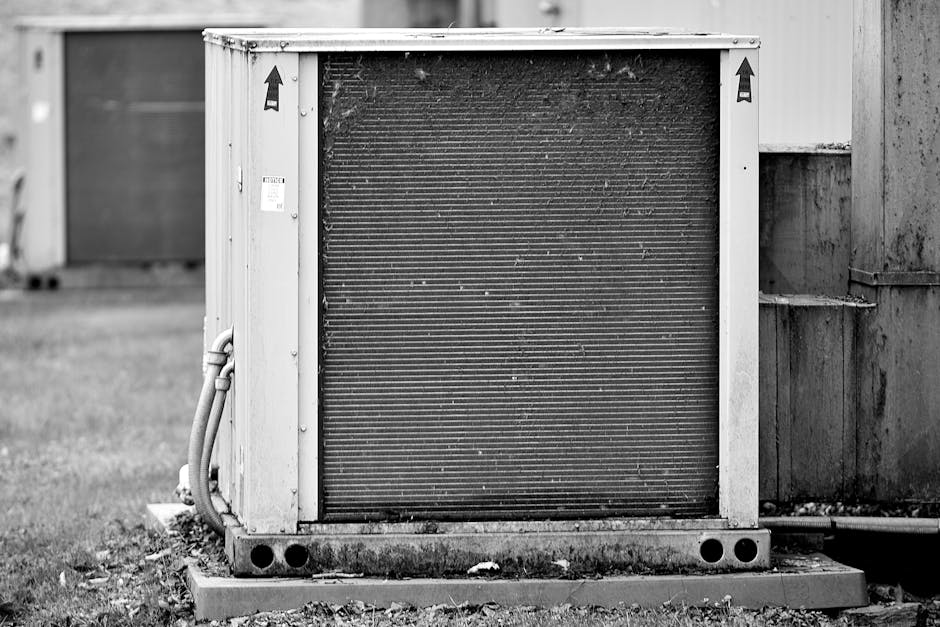
While your indoor filter is keeping your indoor air clean, your outdoor condenser unit is taking a direct beating from the wind. The outdoor unit relies on a large fan to pull outdoor air through its metal condenser coils to release heat. During a Santa Ana event, these coils act like an accidental giant dust filter, trapping leaves, twigs, dust, and fire ash between the delicate aluminum fins.
To protect your outdoor condenser unit during active wind storms, follow these safety steps:
- Maintain a clear perimeter: Ensure there is at least a 2-foot clearance zone around your outdoor unit. Trim back any shrubs, vines, or low-hanging branches in advance.
- Secure loose yard items: Patio furniture, toys, and trash cans can easily become high-velocity projectiles in 50+ mph gusts, denting your condenser or bending the fan blades.
- Set your system to Recirculate: If your system has a fresh-air intake damper, close it during active dust or wildfire smoke events. Set your thermostat fan setting to "ON" rather than "AUTO" to keep the indoor air continuously passing through your high-quality pleated filter.
- Know when to shut it off: If wind gusts exceed 50 to 60 mph and there is a visible, heavy dust haze or active wildfire smoke nearby, it is best to temporarily turn your HVAC system completely off. Running the unit under these extreme conditions forces massive amounts of abrasive debris into the coil fins and risks electrical damage from voltage sags.
For homeowners living in coastal areas like Huntington Beach, Seal Beach, or Newport Beach, managing outdoor debris is even more critical due to the combination of salt air and dust. You can find specialized tips in our guide on the Best Air Filter for Homes Near the Coast.
Post-Event HVAC Maintenance and Restoration Steps
Once the wind finally dies down and the red flag warnings are lifted, it is time to restore your HVAC system to peak operating condition. Do not simply turn your system back on and assume everything is fine. Follow this simple post-event checklist:
- Step 1: Perform a visual inspection. Check the outdoor unit for any trapped branches, leaves, or plastic bags that may have wrapped around the cabinet.
- Step 2: Clean the outdoor condenser coils. Turn off the power to your AC unit at the outdoor disconnect box. Grab your garden hose and gently rinse the condenser coils from top to bottom. Use a soft spray pattern—never use a pressure washer, as the high pressure will instantly bend the delicate aluminum fins, permanently restricting airflow and requiring professional repair.
- Step 3: Change your indoor air filter. Even if you changed it during the wind event, check it one more time. If it looks grey, heavy, or loaded with fine dust, replace it with a fresh pleated filter.
- Step 4: Check your indoor air quality. Wipe down supply registers and vacuum around return grilles to clear any settled dust that managed to slip through during the storm.
For more actionable strategies on keeping your home's air clean year-round, check out our Enhancing Indoor Air Quality Tips.
Frequently Asked Questions About Santa Ana Winds and HVAC Care
During the peak of wind season, our team in Los Alamitos receives many questions from concerned homeowners. If you have pets, keep in mind that pet dander combined with desert dust can clog filters even faster; read How Pets Affect How Often You Change Your Filter to adjust your replacement schedule accordingly.
Can Santa Ana winds permanently damage my AC condenser?
Yes, they can. While a single moderate wind event won't destroy a healthy system, the cumulative effect of multiple wind storms can cause severe damage. Abrasive desert sand and dust blown at high speeds can erode the delicate aluminum coil fins over time, reducing heat transfer efficiency. Heavy debris like branches can bend fan blades, causing the fan to become unbalanced and wear out the motor bearings. Furthermore, fine dust acting as an insulating blanket on the coils forces the compressor to run much hotter and longer, which can shorten its lifespan from 15–20 years down to just 10–12 years.
What MERV rating is best for filtering wildfire smoke and dust?
For homes experiencing heavy dust and nearby wildfire smoke, the EPA recommends a MERV 13 filter because it is highly efficient at capturing microscopic PM2.5 particles (including smoke, soot, and fine ash). However, before you slide a MERV 13 filter into your system, you must ensure your HVAC unit has the blower capacity to handle the increased resistance. If your system is older or not designed for high-static pressure, stick with a high-quality MERV 11 pleated filter, which still provides excellent dust and allergen protection without risking system freeze-ups.
Should I cover my outdoor AC unit during a windstorm?
Generally, no. You should never fully cover your outdoor unit with a plastic tarp or sealed cover, especially if there is any chance the system might turn on. Sealed covers trap moisture inside the cabinet, which leads to rapid electrical corrosion and rusted coils, and they also create a warm, protected environment that invites rodents to nest and chew on wiring. If you want to protect the unit from falling branches during a severe storm, you can use a breathable, top-only mesh cover designed specifically to keep large debris out of the fan cavity while keeping the sides open for airflow.
Conclusion
Protecting your home from the harsh conditions of a Southern California Santa Ana wind event doesn't have to be a stressful experience. By staying proactive with your hvac filter changes during santa ana wind events, choosing high-quality pleated filters, and taking simple steps to protect your outdoor condenser unit, you can ensure your system runs smoothly and efficiently no matter how hard the winds blow.
At AirPoint Heating & Air Conditioning, we are proud to be a family-owned, award-winning business serving our neighbors in Los Alamitos, Seal Beach, Huntington Beach, Cypress, and throughout Orange County. We back all of our work with a 100% satisfaction guarantee and honest, transparent communication.
Ready for fast, reliable service from local experts who care? Book your professional HVAC maintenance online today!
Other Blogs
Latest Blog Posts
Home Maintenance Tips: Troubleshooting a Burning Smell During Your Fall Heating Startup
Home Maintenance Tips and Troubleshooting: Navigating Your First Fall Heater Startup
Common Homeowner Questions Answered: Is That Fall Heater Burning Smell Normal?

Customer Testimonials



I recommend Air Point for your HVAC needs."