






Why How HVAC Condition Affects Home Appraisals Can Cost — or Save — You Thousands
How HVAC condition affects home appraisals is one of the most financially significant factors homeowners in Los Alamitos and across Orange County overlook when preparing to sell, refinance, or apply for a home equity line of credit. Your heating and cooling system isn't just about comfort — it's a core component of your home's value, evaluated right alongside your roof, plumbing, and electrical systems.
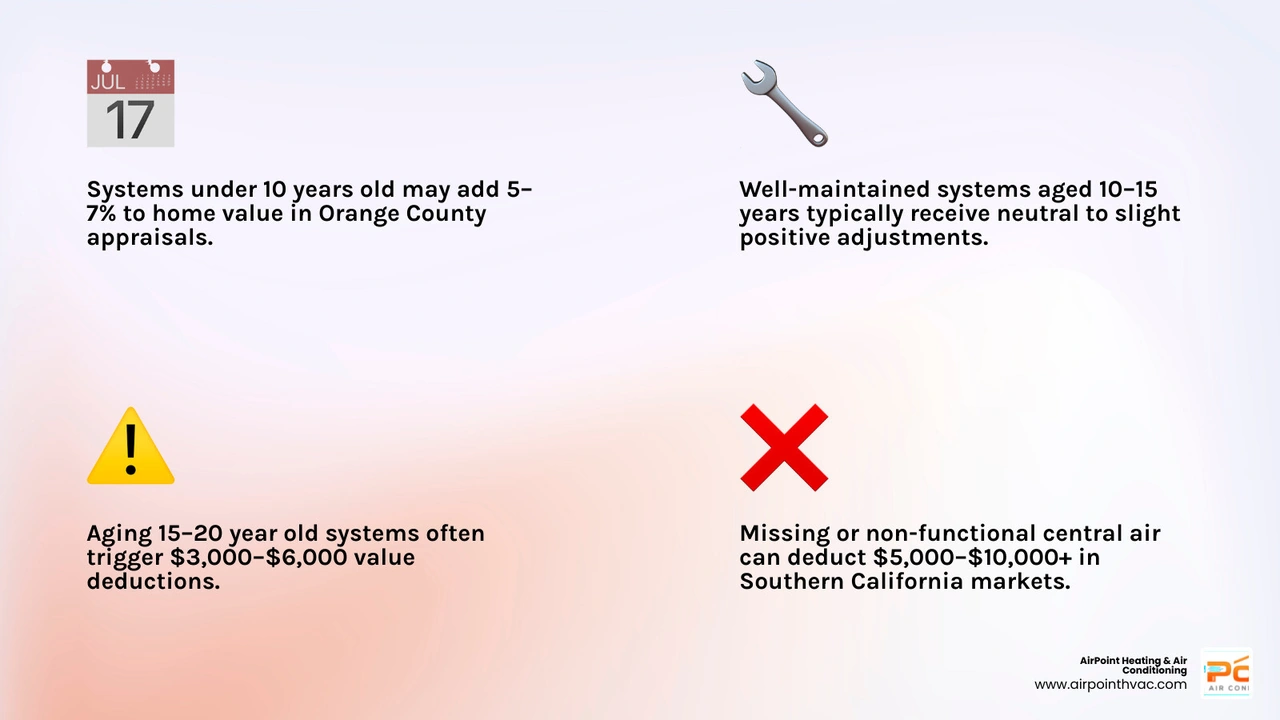
Here's a quick summary of how HVAC condition typically impacts your appraised value:
| HVAC System Condition | Typical Appraisal Impact |
|---|---|
| New or high-efficiency (under 10 years) | May add 5–7% to home value |
| Well-maintained older system (10–15 years) | Neutral to slight positive |
| Aging system (15–20 years) | Moderate downward adjustment |
| Failing or non-functional system | Significant value deduction |
| Missing central air (where expected) | Substantial functional obsolescence penalty |
In Southern California's warm climate, central air conditioning isn't a luxury — it's an expectation. Appraisers know this, and they factor it into every evaluation. A system that's aging, poorly maintained, or simply absent can quietly erase equity before the appraiser even finishes the walkthrough.
This guide covers everything Los Alamitos homeowners need to know: how appraisers evaluate your system, which red flags trigger value deductions, how to document your HVAC upgrades, and when it actually makes financial sense to replace before an appraisal.
How hvac condition affects home appraisals terms made easy:
How HVAC Condition Affects Home Appraisals: The Appraiser's Checklist
When an appraiser steps onto your property in Huntington Beach, Cypress, or Newport Beach, they are not just looking at your updated kitchen countertops or your fresh landscaping. They are evaluating the structural integrity and core mechanical systems of your home. Under the Uniform Residential Appraisal Report (URAR), your HVAC system is categorized under the "Physical Condition" and "Functional Utility" sections.
Appraisers do not perform a deep, technical diagnostic check like an HVAC technician would. They won’t pull apart your furnace or measure your system's exact refrigerant pressures. Instead, they run through a standardized mental and physical checklist designed to assess the system's overall condition, safety, and remaining useful life.
The core metrics they look at include:
- System Type and Fuel Source: Is it a central split system, a modern heat pump, ductless mini-splits, or outdated wall heaters?
- Physical Integrity: Are there signs of visible damage, rust, or severe neglect on the indoor and outdoor units?
- Age and Serial Numbers: Appraisers will locate the manufacturer's data plate on your outdoor condenser and indoor furnace. They record the brand, model, and serial number, then use industry databases to decode the exact month and year of manufacture.
- Remaining Useful Life (RUL): If a system is over 15 years old, appraisers begin evaluating its remaining useful life with a critical eye. A system nearing the end of its typical 15-to-20-year lifespan is often flagged as a looming financial liability.
Keeping your system in peak condition is vital to passing this visual check. Regular HVAC Maintenance Keeps System Running smoothly, preventing the visual wear and tear that instantly signals neglect to an appraiser.
Visual and Functional Testing During the Walkthrough
During the physical walkthrough, the appraiser performs basic functional testing. This is typically as simple as turning on the thermostat, switching from heating to cooling, and verifying that the system responds promptly.
They will check:
- Thermostat Response: Does the system kick on without unusual delays or loud, alarming noises?
- Airflow and Temperature: Is the system blowing air at a comfortable, appropriate temperature through the vents?
- Visual Wear Indicators: They look for heavy rust on the condenser fins, water stains around the indoor evaporator coil or furnace base, and clogged, dusty return vents.
- Even Distribution: Does the home feel consistently conditioned, or are there obvious hot and cold zones that suggest an undersized or failing system?
A neglected system with a thick layer of dust and a rattling fan instantly lowers an appraiser's confidence in the rest of the home's maintenance. Knowing Is an HVAC Maintenance Plan Worth It can help you decide if keeping your system professionally tuned year-round is the right strategy to protect your property's overall condition rating.
How HVAC Condition Affects Home Appraisals for Government-Backed Loans
If your buyer is financing their purchase with an FHA, VA, or USDA loan, the appraisal process becomes significantly stricter. These government-backed loans require the property to meet strict Minimum Property Standards (MPS) to ensure safety, security, and soundness.
Under these guidelines, a non-functional or unsafe HVAC system isn't just a point of negotiation — it can cause an automatic loan denial until the issue is fully resolved. For example:
- Heating Requirements: Even in mild Southern California coastal areas like Seal Beach or Laguna Beach, FHA and VA guidelines require homes to have a permanently installed, functional heating source capable of keeping the living spaces at a safe temperature.
- Safety Hazards: Cracked heat exchangers (which can leak carbon monoxide), exposed electrical wiring on the outdoor condenser, or venting issues with gas furnaces are flagged as immediate safety hazards.
- Required Re-inspections: If the appraiser flags an HVAC issue on an FHA or VA appraisal, they will mandate a "subject to repair" condition. The loan cannot close until a licensed contractor repairs or replaces the system and the appraiser returns for a paid re-inspection to sign off on the work.
Financial Impact: Value Protection vs. Value Creation
To understand the financial mechanics of an appraisal, it helps to distinguish between value protection and value creation. Your HVAC system is primarily a defensive asset. Having a fully functional, standard system does not necessarily add a massive premium to your home’s value; instead, it protects you from severe downward adjustments.
When appraisers evaluate your home against recently sold comparable properties (comps) in Irvine or Mission Viejo, they make adjustments based on differences. If a comp has a brand-new, high-efficiency HVAC system and your home has a failing 22-year-old unit, the appraiser will deduct value from your home to account for the deferred maintenance.
| Feature Comparison | Subject Home (Your Property) | Comparable Sale A | Appraisal Adjustment |
|---|---|---|---|
| HVAC Age / Condition | 20-year-old system (Failing) | 3-year-old system (Excellent) | Significant downward adjustment on your home |
| Cooling Adequacy | Window Units Only | Central AC | Substantial functional obsolescence penalty |
| Efficiency Premium | Standard Efficiency | ENERGY STAR / High SEER2 | Minor downward adjustment on your home |
These deductions represent the impact of deferred maintenance or functional obsolescence. If your system is non-functional, the appraiser knows a buyer will have to replace it immediately upon moving in, and the appraisal value will reflect that burden.
The ROI of Upgrading to High-Efficiency Systems
If you decide to replace your system before listing your home or refinancing, upgrading to a high-efficiency model can shift your HVAC from a defensive asset to an active value creator. Appraisers recognize modern efficiency metrics like SEER2 (Seasonal Energy Efficiency Ratio 2) for cooling, AFUE (Annual Fuel Utilization Efficiency) for gas furnaces, and ENERGY STAR certifications.
A high-efficiency system (such as an 18+ SEER2 air conditioner or a variable-speed heat pump) offers several financial benefits:
- Positive Value Adjustments: In competitive Orange County markets like Yorba Linda or Fullerton, a documented high-efficiency system can justify a positive adjustment over standard-efficiency comps.
- Strong Return on Investment: While standard HVAC replacements typically recoup a significant portion of their cost in immediate appraisal value, upgrading to a high-efficiency system can offer an even higher ROI in added value, especially when paired with lower monthly utility bills.
To explore whether a premium system aligns with your goals, read more about HVAC Replacement Return on Investment and ask yourself, Is a High Efficiency System Worth the Extra Cost for your home's long-term equity.
How HVAC Condition Affects Home Appraisals for HELOCs and Refinancing
If you are applying for a Home Equity Line of Credit (HELOC) or refinancing your mortgage, you aren’t dealing with a buyer, but you are dealing with a lender's strict Loan-to-Value (LTV) ratio.
A lower appraisal directly reduces your usable equity:
- Borrowing Limits: Lenders typically let you borrow up to 80% or 85% of your home's appraised value minus your outstanding mortgage. If an aging or broken HVAC system triggers a significant deduction on your appraisal, it directly shrinks your borrowing limit.
- LTV Benchmarks: A drop in appraised value can push your LTV ratio above key benchmarks, potentially disqualifying you for the best interest rates or forcing you to pay Private Mortgage Insurance (PMI) on a refinance.
- Equity Protection: Maintaining or upgrading your HVAC system before the appraiser arrives ensures you protect every dollar of your hard-earned equity, maximizing your financial flexibility.
Common HVAC Red Flags That Lower Appraised Value
Appraisers are trained to spot signs of neglect. When they walk around your property in Downey or La Mirada, certain red flags will immediately signal that the HVAC system is a liability.
The most common red flags include:
- Obsolete R-22 Refrigerant: If your air conditioner was manufactured before 2010, there is a high chance it uses R-22 refrigerant (Freon). Because R-22 has been phased out entirely due to environmental regulations, repairing these systems is incredibly expensive and parts are scarce. Appraisers recognize R-22 units as having zero remaining useful life, often triggering immediate value deductions.
- Visible Rust and Corrosion: Heavy rust on the outdoor condenser's cabinet or fins indicates exposure to coastal salt air (a common issue in coastal cities like Newport Beach and Huntington Beach) and suggests the system is nearing structural failure.
- Unusual Noises: If your furnace shrieks, rattles, or bangs when it turns on, the appraiser will note mechanical distress.
- Uneven Temperatures: If the master bedroom is ice-cold but the living room is stifling, it indicates ductwork issues or an improperly sized system.
If your system is showing these symptoms, it’s critical to understand the Signs Your HVAC Needs Replacing Not Just Fixing before an appraiser marks it down.
Missing Central Air and Functional Obsolescence
In Orange County, central air conditioning is no longer considered an optional upgrade — it is a baseline market expectation. If your home lacks central air in a neighborhood where every comparable home has it, appraisers will apply a penalty for functional obsolescence.
- What is Functional Obsolescence? This term refers to a reduction in a property's usefulness or desirability due to an outdated design feature that cannot be easily changed.
- The Window Unit Trap: Many homeowners attempt to bypass this by installing window AC units or portable plug-in coolers. However, appraisers classify window units as personal property, not real property, because they can be easily unplugged and removed. They do not count toward your home's appraised value and will not spare you from a functional obsolescence penalty.
- The Financial Penalty: Missing central air in a warm Southern California market can trigger an automatic and substantial deduction on your appraisal report.
If your home currently relies on window units, investing in a professional HVAC Replacement Orange County CA is one of the most effective ways to eliminate this penalty and instantly boost your home's marketability and value.
Strategic Steps to Prepare Your System Before the Appraiser Arrives
Just like staging your living room or washing your windows, taking a few strategic steps to prepare your HVAC system can make a massive difference in how the appraiser perceives your home's overall condition.
Use this checklist to prepare before your appraisal appointment:
- Replace the Air Filter: A dirty, clogged filter restricts airflow and can cause your system to struggle or short-cycle during the appraiser's functional test. A clean, fresh filter signals that you take routine maintenance seriously.
- Clear Around the Outdoor Condenser: Ensure there is at least a three-foot clear radius around your outdoor unit. Trim back bushes, remove weeds, and clear away any stored items or debris.
- Clean the Cabinets: Gently wipe down the indoor furnace and the outdoor condenser cabinet to remove dust, cobwebs, and dirt. A clean system looks newer and better maintained.
- Check the Thermostat: Ensure your thermostat is working properly, has fresh batteries, and responds instantly when you adjust the temperature.
- Set a Comfortable Temperature: Turn your system on at least an hour before the appraiser arrives. Setting the home to a comfortable, even temperature proves the system is fully functional and creates a positive first impression the moment they step inside.
Taking these steps shows pride of ownership. How you care for your system now directly impacts its longevity, and understanding How a Maintenance Plan Extends Equipment Life can save you from stressful pre-appraisal scrambles in the future.
Creating a Homeowner's HVAC Portfolio
Don’t rely on the appraiser to guess the history or quality of your heating and cooling system. The best way to secure full credit for your HVAC assets is to hand the appraiser a professional HVAC Portfolio when they arrive.
This binder or folder should contain:
- Permit Records: Proof that your system was installed legally and up to local building codes in your Orange County city.
- Installation Invoices: Documenting the date of installation, the brand, and the model numbers of the equipment.
- Warranty Documentation: Showing if the equipment warranty is registered and transferable to a new owner.
- Service History Logs: Dated invoices showing regular professional tune-ups and cleanings.
- Efficiency Labels: Manufacturer brochures highlighting high SEER2, AFUE, or ENERGY STAR certifications.
Providing this documentation removes all guesswork, forcing the appraiser to rely on hard facts rather than conservative estimates. If you are unsure of your system's standing, learning When to Plan for HVAC Replacement can help you decide whether to gather your paperwork or start planning an upgrade.
Frequently Asked Questions About HVAC and Appraisals
Will a new HVAC system increase my HELOC credit limit?
While installing a new HVAC system won't instantly skyrocket your borrowing limit on its own, it acts as a critical equity safeguard. By replacing an old, failing system, you prevent a steep deferred maintenance deduction from your home's appraised value. This protects your maximum appraised value and keeps your Loan-to-Value (LTV) ratio as favorable as possible, allowing you to access the maximum amount of equity available.
How old does an HVAC system need to be before it hurts my appraisal?
Generally, the 15-year mark is the transition zone where an HVAC system goes from an asset to a potential liability. Most standard air conditioners and heat pumps have a useful life expectancy of 15 to 20 years (furnaces can sometimes last 20 to 25 with exceptional care). Once a system crosses 15 years, appraisers will look closely at its physical condition and may apply a downward adjustment for its limited remaining useful life, even if it is currently functional. However, a documented history of professional maintenance can help extend a neutral rating for older systems.
Is getting my HVAC serviced before an appraisal worth it?
Absolutely. Scheduling a professional HVAC service visit right before an appraisal is one of the smartest, most cost-effective moves a homeowner can make. A fresh service sticker from a licensed technician, a brand-new air filter, and clean system components provide operational proof that the system is safe and fully functional. This builds immediate appraiser confidence, helping you secure a more favorable overall Condition Rating for your entire home.
Conclusion
Your heating and cooling system is a vital component of your home's comfort, safety, and financial value. Whether you are preparing to sell your home in Los Alamitos, refinancing your property in Cypress, or looking to maximize your borrowing power in Huntington Beach, understanding how HVAC condition affects home appraisals is key to protecting your hard-earned equity.
If you are ready to ensure your HVAC system is a certified asset rather than a liability, we are here to help. From precision tune-ups that build appraiser confidence to high-efficiency upgrades that maximize your home's resale value, our family-owned team is dedicated to your comfort and peace of mind.
To learn about local savings, check out the California Energy Rebates for HVAC Upgrades, or explore our full range of professional heating, cooling, and indoor air quality solutions by visiting our AirPoint Heating & Air Conditioning Services page.
Ready to secure your home's value? Book your professional system evaluation online for fast, reliable service!
Other Blogs
Latest Blog Posts
Home Maintenance Tips: Troubleshooting a Burning Smell During Your Fall Heating Startup
Home Maintenance Tips and Troubleshooting: Navigating Your First Fall Heater Startup
Common Homeowner Questions Answered: Is That Fall Heater Burning Smell Normal?

Customer Testimonials



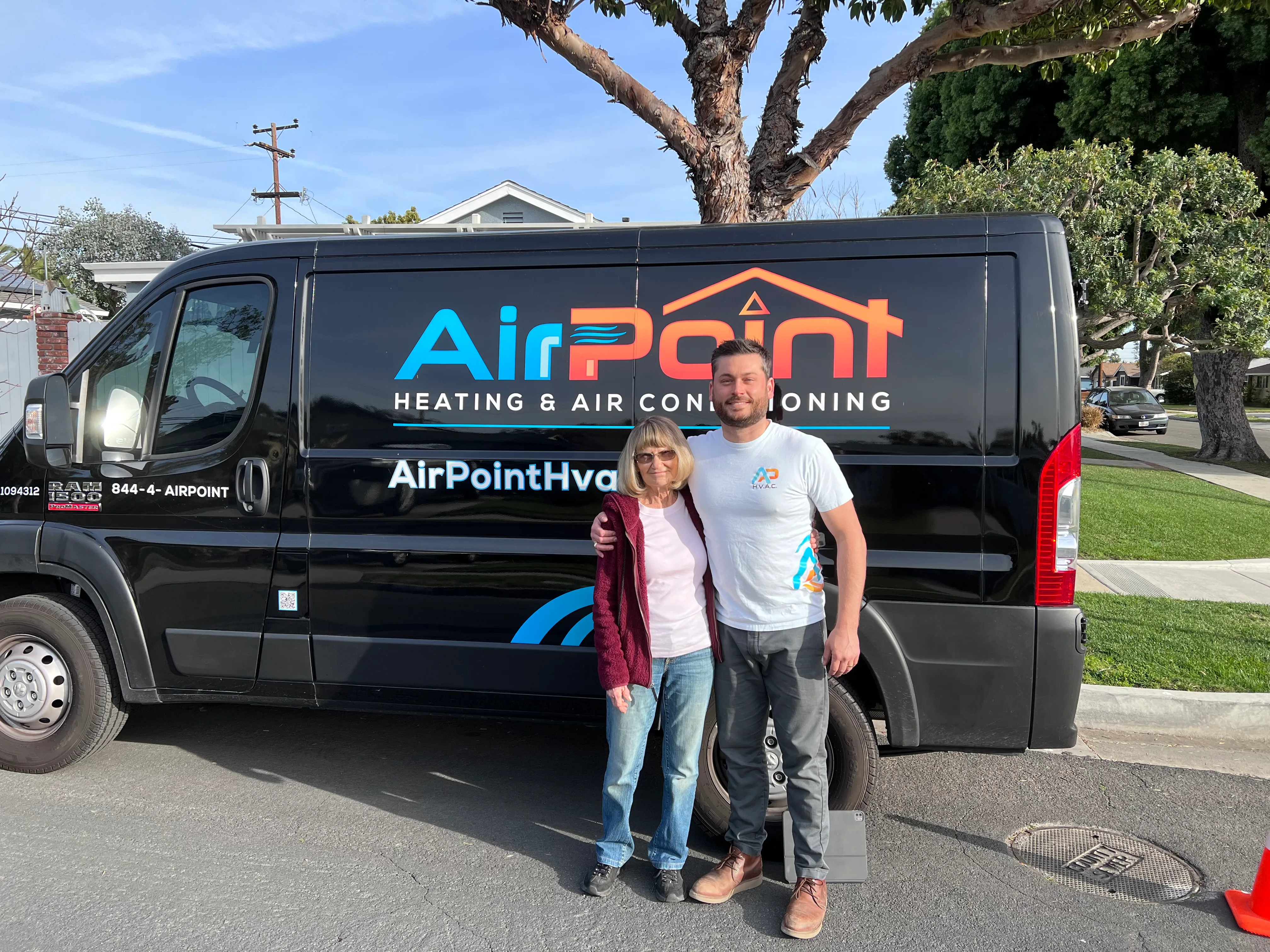
I recommend Air Point for your HVAC needs."