






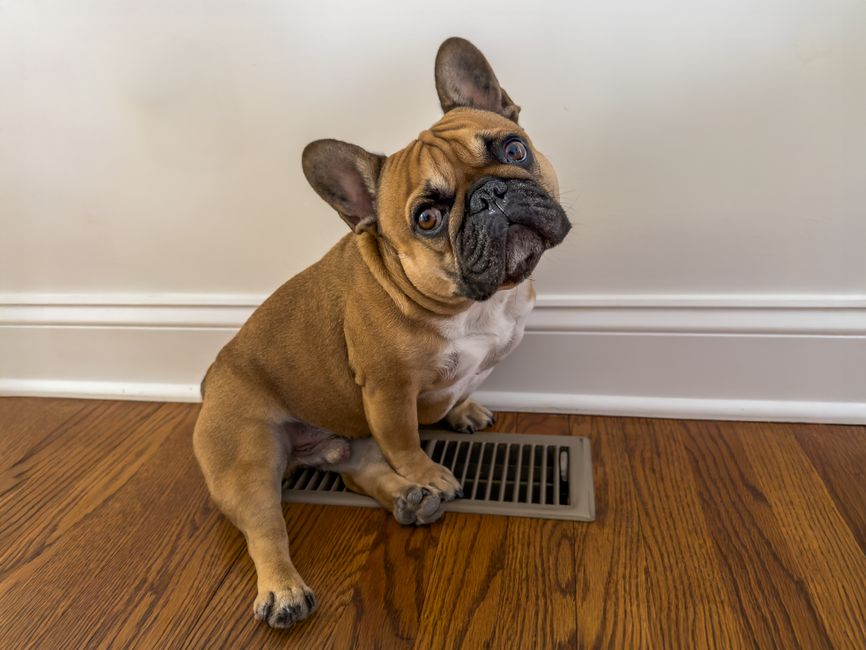
Why Pets Change How Often You Should Replace Your Air Filter
Understanding how pets affect how often you change your filter is one of the most overlooked parts of home HVAC maintenance. The standard advice says replace your filter every 90 days — but for pet owners, that schedule can leave your system struggling weeks before you ever think to check it.
Quick Answer: How Often to Change Your Filter With Pets
| Household Type | Recommended Replacement Frequency |
|---|---|
| No pets | Every 90 days |
| One small or low-shedding pet | Every 60 days |
| One large dog or multiple pets | Every 30-45 days |
| Multiple large or heavy-shedding pets | Every 30 days |
| Pets + allergy sufferers in the home | Every 20-30 days |
Every time your dog shakes off or your cat grooms itself, tiny particles of fur and dander become airborne. Your HVAC system pulls that air through the return vents and straight into the filter. Over time, those particles build up fast — far faster than regular household dust alone. A filter that looks clean from the outside can already be packed with microscopic pet dander that is quietly recirculating through your home and making your system work harder than it should.
Research shows that dirty filters can raise energy consumption by 5 to 15%, and replacing a clogged filter can improve indoor air quality by 20 to 30%. For families in Los Alamitos and across Orange County who share their home with pets, staying on top of filter changes is one of the simplest ways to protect both your HVAC system and the air your family breathes every day.

Understanding How Pets Affect How Often You Change Your Filter
When we think about pet messes, we usually think about muddy paw prints in the hallway or a stray toy under the sofa. However, the biggest impact our pets have on our homes is often invisible. To truly grasp how pets affect how often you change your filter, we have to look at what is happening inside your ductwork.
Your HVAC system acts like the lungs of your home. It breathes in air from your rooms, heats or cools it, and breathes it back out. The air filter is the "mask" that prevents contaminants from entering the sensitive mechanical parts of your furnace or air conditioner. In a pet-free home, this mask mostly catches lint and dust. In a home with a Golden Retriever or a fluffy Maine Coon, that mask is suddenly trying to catch thousands of hairs and millions of microscopic dander particles.
The Science of Particle Load
"Particle load" refers to the total amount of solid matter floating in your air. Pets increase this load significantly. Pet dander is particularly tricky because it is incredibly small — often between 2.5 and 10 microns. For comparison, a human hair is about 70 microns wide. Because dander is so light and tiny, it stays airborne for hours, just waiting to be sucked into your return vent.
Once these particles hit your filter, they don't just sit on the surface. They embed themselves deep into the fibers of the filter media. This creates "airflow restriction." As the gaps in the filter fill up with dander, your blower motor has to work twice as hard to pull air through the "clog." This is why understanding How Air Filters Impact Your HVAC System is so important; a restricted system uses more electricity and wears out its parts much faster.
How Pets Affect How Often You Change Your Filter During Shedding Seasons
If you live in Newport Beach or Huntington Beach, you know that our "seasons" are a bit different than the rest of the country. However, your pets still follow their biological clocks. In May 2026, as the weather warms up, many dogs and cats go through a period of "blowing their coat."
During spring and fall shedding seasons, the amount of fur entering your ventilation system can triple. We recommend that Orange County pet owners perform weekly inspections during these transition months. Even if you just changed the filter two weeks ago, a heavy shedding period from a Siberian Husky or a German Shepherd can coat a filter in a thick layer of "felt" almost overnight.
If you ignore these seasonal spikes, that airborne fur can bypass a saturated filter and settle on your evaporator coils. Once hair gets onto those coils, it mixes with condensation to create a sticky grime that is very difficult to clean and can eventually lead to a system breakdown.
How Pets Affect How Often You Change Your Filter in Multi-Pet Homes
The math is simple: more paws mean more particulates. In a high-traffic household with two dogs and a cat, the cumulative dander levels are significantly higher than in a single-pet home. We often see that The Right Air Filter Improves Your Indoor Air Quality most dramatically in these multi-pet environments.
In these homes, the "30-day rule" isn't just a suggestion — it’s a necessity. Microscopic particulates from multiple animals can lead to respiratory health issues for the humans in the house, even if they aren't technically allergic. When a filter reaches its capacity, it can no longer grab new particles, meaning every time your pets run through the living room, they are stirring up a cloud of dander that just keeps circulating.
Recommended Replacement Schedules for Orange County Pet Owners
Because we serve diverse communities from the coastal breezes of Seal Beach to the inland heat of Yorba Linda, we’ve developed a localized guide for replacement intervals. Your specific needs depend heavily on the "shed factor" of your furry friends.
| Pet Breed / Type | Shedding Level | Recommended Check | Recommended Swap |
|---|---|---|---|
| Poodles, Maltese, Yorkies | Low | Every 30 Days | Every 60-90 Days |
| Labs, Golden Retrievers | High | Every 14 Days | Every 30-45 Days |
| German Shepherds, Huskies | Extreme | Every 7 Days | Every 21-30 Days |
| Indoor Cats (Short hair) | Moderate | Every 30 Days | Every 45-60 Days |
| Maine Coons, Persians | High | Every 14 Days | Every 30 Days |
If you are a new homeowner in Irvine or Mission Viejo, checking our Air Filter Replacement Guide for Homeowners can help you establish a routine that keeps your air fresh. These are guidelines. If your dog loves to spend time at the Huntington Dog Beach and brings home half the beach in their fur, you’ll likely need to change that filter even sooner!
Choosing the Right MERV Rating for a Pet-Friendly Home
Not all filters are created equal. When you’re at the hardware store in Cypress or La Mirada, you’ll see a "MERV" rating on the packaging. MERV stands for Minimum Efficiency Reporting Value. It’s a scale from 1 to 16 that tells you how good the filter is at catching small particles.
- MERV 1-4: These are usually cheap fiberglass filters. We generally advise pet owners to skip these. They are designed to catch "boulders" (like large clumps of hair) but let the "sand" (dander and allergens) fly right through.
- MERV 8: This is the baseline for a home with a single, low-shedding pet. It catches most dust and some dander without putting too much strain on your system.
- MERV 11: This is the "sweet spot" for most Orange County pet owners. It is dense enough to trap pet dander, mold spores, and even some bacteria, providing a significant boost to your indoor air quality.
- MERV 13: If anyone in your family suffers from asthma or severe pet allergies, MERV 13 is the gold standard. However, because these filters are so thick, they can restrict airflow. We recommend having one of our technicians verify that your system can handle a MERV 13 filter before you make the switch.
To dive deeper into these numbers, check out our guide on Air Filter Types and MERV Ratings Explained.
Signs Your Filter is Clogged with Pet Dander and Hair
How do you know if you've waited too long? Your home will usually give you a few "whispers" before the HVAC system screams for help.
- Gray Discoloration: A new filter is usually crisp white. If you pull it out and it looks like the color of a rainy day in Laguna Beach (gray, brown, or black), it’s past its prime.
- Dust on Furniture: If you find yourself dusting your coffee table in Fullerton every two days, your filter is likely full and can no longer pull dust out of the air.
- Weak Airflow: Stand under a vent in your home. If the air feels like a weak breeze rather than a steady flow, the filter is likely acting like a wall, blocking the air from moving.
- Stuffy Indoor Air: Does your home have a lingering "doggy" smell even after a bath? A clogged filter traps odors and recirculates them.
- Increased Energy Bills: If your utility bill in Anaheim or Buena Park takes an unexpected jump, your HVAC system might be running longer cycles just to keep up with the restricted airflow.
For those living in coastal areas, salt air can also play a role in how filters perform. You might find our tips on the Best Air Filter for Homes Near the Coast particularly helpful for managing both pet dander and coastal humidity.
Proactive Steps to Extend Your Filter’s Lifespan
You don't have to just sit back and let the fur fly. There are several ways to reduce the "particle load" before it ever reaches your HVAC system.
Regular Brushing and Grooming
Regular grooming can extend your filter life by 30 to 50%. By brushing your pet two to three times a week, you capture loose fur in the brush rather than letting it become airborne. Whenever possible, groom your pets outdoors. If you live in a beautiful neighborhood like Rossmoor or College Park, a quick brushing session on the patio means that fur stays in the yard (where birds can use it for nests!) instead of in your ducts.
HEPA Vacuuming
Standard vacuums often suck up hair but blow tiny dander particles back out the exhaust. Using a vacuum with a certified HEPA filter ensures that once you pick up the dander, it stays trapped. Focus on high-traffic areas where your pets sleep or play.
Use Standalone Air Purifiers
If you have a "pet room" or a specific area where your dogs congregate, a standalone air purifier with a HEPA and activated carbon filter can do a lot of the heavy lifting. This takes the pressure off your central HVAC filter and helps eliminate odors.
The "Paw Wipe" Method
Every time your dog comes in from a walk in Garden Grove or Long Beach, they are tracking in pollen, dust, and dirt. Keeping a container of pet-safe wipes by the door to clean their paws and coats can significantly reduce the amount of outdoor contaminants that end up in your air filter.
Frequently Asked Questions about Pet-Related Filter Maintenance
How often should I change my filter if I have two large dogs?
In a home with two large dogs — especially high-shedders like Golden Retrievers or Labs — we recommend changing your filter every 30 days. During the peak of summer or winter when your system is running constantly, you might even want to check it every 20 days.
Can pet dander cause my HVAC system to break down?
Yes, absolutely. It’s a chain reaction. First, the filter clogs. Then, the blower motor has to work harder and gets hotter. Eventually, the lack of airflow can cause your evaporator coils to freeze over or your heat exchanger to crack. These are major repairs that can often be avoided with a simple monthly filter swap.
Does grooming my pet really reduce how often I need to buy filters?
It really does! Think of it as "pre-filtering." Every hair you catch with a brush is one less hair that your HVAC system has to deal with. Homeowners who groom their pets consistently report that their filters last up to 50% longer and their homes feel much less "stuffy."
Conclusion: Keeping Your Orange County Home Comfortable
At AirPoint Heating & Air Conditioning, we believe that "comfort is happiness." We know that your pets are family, and we want to make sure your home stays a healthy, clean environment for everyone — two-legged and four-legged alike.
Whether you're in Los Alamitos, Seal Beach, or any of our surrounding Orange County communities, staying on top of your air filters is the best gift you can give your HVAC system. Regular maintenance not only lowers your energy bills but also ensures that your system lasts for years to come.
If you’ve noticed your home feels a bit dustier than usual, or if you can’t remember the last time you checked your filter, we’re here to help. Our expert team can provide precision tune-ups, indoor air quality assessments, and advice on the best filtration for your specific pet situation.
Ready for fresher air and a more efficient home?Book Now for fast, reliable service at https://www.airpointhvac.com/indoor-air-quality or call us today to schedule your next maintenance visit. We back all our work with a 100% satisfaction guarantee, because your family's comfort is our top priority.
Other Blogs
Latest Blog Posts
How to Inspect Your Attic Ductwork for Rodent Damage Before Winter Sets In
Addressing Fullerton's Unique Microclimate Shifts During Fall HVAC Transitions
Why We Check Your Carbon Monoxide Detectors Before Firing Up Older Gas Furnaces

Customer Testimonials



I recommend Air Point for your HVAC needs."