





Diagnosing a Furnace That Won't Ignite on the First Chilly Night in Rossmoor
Facing a Cold House: Why Won't Your Furnace Turn On?
Is your heating system actually broken, or just struggling to wake up? Diagnosing a furnace that won't ignite on the first chilly night in Rossmoor is a predictable challenge for many local homeowners. It is early fall (September), the temperature is dropping rapidly, and you finally switch your thermostat to "Heat." Instead of a rush of warm air, you hear a distinct clicking noise from the hallway, followed by silence. The sudden panic of dropping temperatures can make a failed ignition feel like a major disaster, especially when your family is shivering.
For immediate professional help, explore our heating services to restore your comfort safely.
Hearing a click from the unit with no warm air following it is a highly common, predictable issue after months of dormancy. A modern gas heating system operates on a very strict sequence of events. If any single step in that sequence fails or detects an unsafe condition, the entire system shuts down to protect your home. We will help you determine if this is a simple airflow or power issue you can check yourself, or an internal component failure that requires an expert to safely resolve.
The Impact of Summer Dormancy on Southern California Heating Systems
To understand why your heater is struggling, you have to look at the environment it lives in. The microclimate shifts in the Los Alamitos and Rossmoor area create a unique challenge for HVAC equipment. We often experience lingering daytime heat that sharply contrasts with sudden, cold autumn nights. Because of these mild winters and long, hot summers, your heating system likely sits completely idle for eight to nine months out of the year.
During that long period of summer dormancy, significant dust, pet dander, and airborne debris accumulate inside the cabinet. While your air conditioner was running all summer, the heating components were quietly gathering a layer of insulation. Modern systems have highly sensitive built-in safety mechanisms that monitor the ignition process. If these sensors are coated in a layer of summer dust, they cannot properly read the conditions inside the combustion chamber.
When you hear that clicking sound, it means the system is attempting to fire, but a sensor is telling the control board to abort the process. A failure to ignite on the first try is often the system protecting itself from a perceived hazard, rather than a catastrophic mechanical breakdown. If you want to bypass the guesswork and have an expert evaluate the system, you can schedule HVAC service right away.
The Standard Ignition Sequence
Understanding the steps your system takes to start can help you narrow down where the failure is occurring. Here is what normally happens when you ask for heat:
• 1. Thermostat Call — What It Does: Sends a signal to the control board requesting heat. — What You Hear: A soft click at the thermostat on the wall.
• 2. Inducer Motor — What It Does: Starts pulling air through the heat exchanger to clear exhaust gases. — What You Hear: A gentle hum or whirring sound from the unit.
• 3. Igniter Activation — What It Does: The electronic igniter sparks or glows red hot. — What You Hear: A rapid clicking or no sound at all (if a hot surface igniter).
• 4. Gas Valve Opens — What It Does: Releases fuel into the burners to be ignited. — What You Hear: A distinct "clunk" or "click" from the gas valve.
• 5. Flame Sensor — What It Does: Verifies that a steady, safe flame is present. — What You Hear: The whoosh of burners lighting, followed by the blower fan.
Safe Preliminary Checks to Perform Yourself
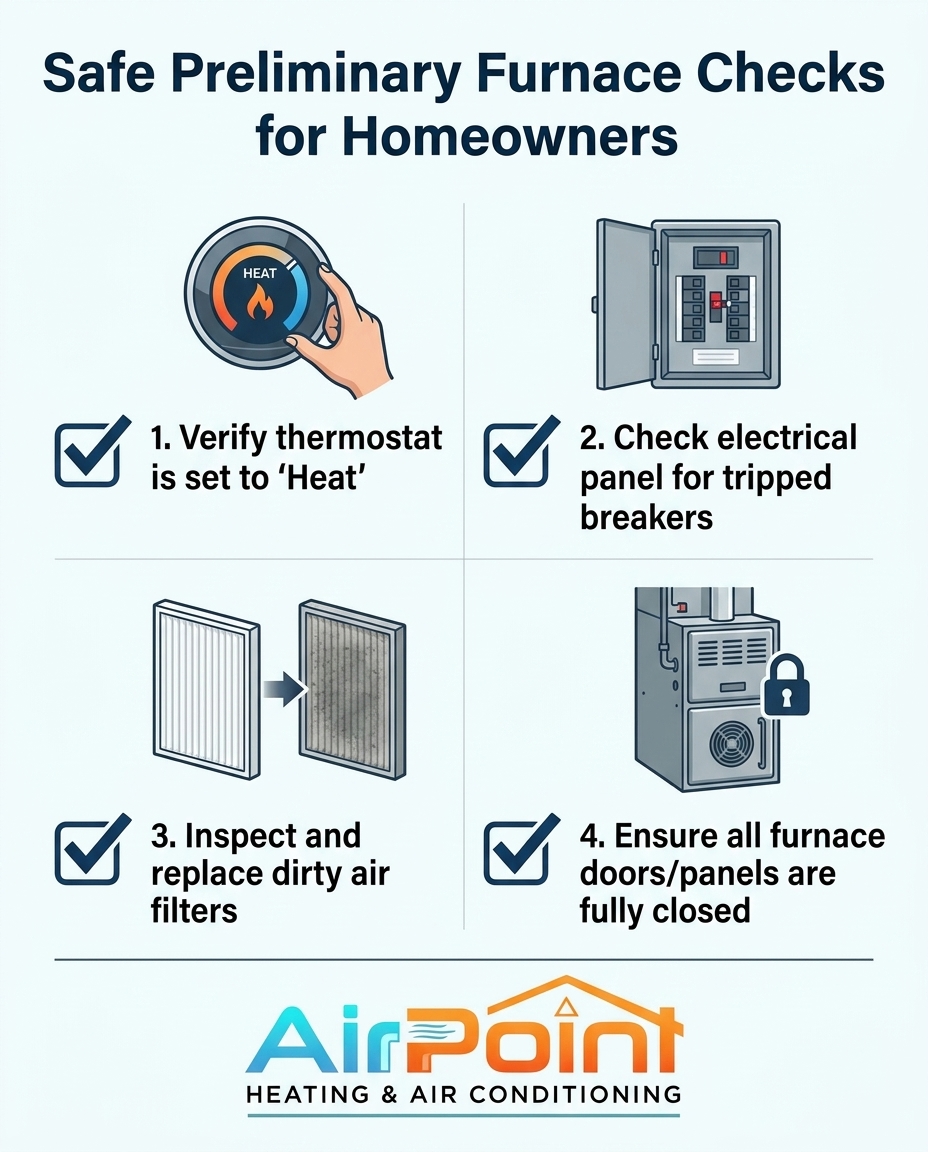
Before assuming the worst about your system in early fall (September), there are several basic, entirely safe troubleshooting steps you can perform. These checks focus on external factors like airflow and power, ensuring you do not accidentally tamper with hazardous internal components.
1. Verify the thermostat settings: It sounds overly simple, but always double-check that the thermostat is physically switched to "Heat" rather than "Auto" or "Cool." Ensure the target temperature is set at least three to five degrees higher than the current room temperature to force the system to call for heat.
2. Check the electrical panel for a tripped breaker: Even though it burns gas for heat, your system requires electricity to power the control board, the inducer motor, and the blower fan. If the dedicated breaker has tripped, the ignition sequence cannot even begin. Reset the breaker once; if it trips again immediately, leave it off and call a professional.
3. Inspect and replace the air filter: A severely clogged air filter restricts the volume of air moving over the heat exchanger. If the system cannot breathe, the internal temperature rises rapidly, eventually tripping a safety device called the high-limit switch. Replacing a filthy filter is the easiest way to restore proper airflow and prevent overheating.
4. Ensure all furnace doors and panels are securely closed: Modern units are equipped with a mechanical safety switch located on the blower compartment door. If the panel was bumped, left loose after a summer AC check, or not seated correctly, this switch remains open and cuts all power to the unit. Firmly press the doors into place to ensure the switch is engaged.
Decoding the Clicking Sound: Flame Sensors and Roll-Out Switches
If you have verified the power, airflow, and thermostat, but the system still clicks and shuts down, the issue lies deeper within the cabinet. The clicking noise you hear in a Rossmoor home is almost always the sound of the electronic spark igniter trying to light the gas, or the gas valve opening and rapidly closing. This specific symptom points directly to a few critical internal safety components.
The Role of the Flame Sensor
The flame sensor is a thin metallic rod situated directly in the path of the gas burners. Its sole job is to detect the presence of a fire. When the gas valve opens and the burners ignite, the flame envelops this rod. The sensor sends a tiny electrical current (measured in microamps) through the flame and back to the control board. If the board receives this signal, it knows combustion is happening safely and keeps the gas flowing.
However, if summer dust, oxidation, or carbon buildup coats that sensor, it acts as an electrical insulator. The burners may actually light for three to five seconds, but because the dirty sensor cannot feel the flame, the control board assumes the fire failed to light. To prevent raw gas from flooding your home, it instantly slams the gas valve shut. This results in a brief ignition followed by an immediate shutdown.
The Roll-Out Switch
Another crucial component is the flame roll-out switch. This sensor detects if heat and flames are venting improperly. If there is a blockage in the exhaust flue—such as a bird's nest, leaves, or spider webs built up over the summer—the exhaust gases have nowhere to go. The flames will physically "roll out" backward toward the front of the cabinet. The roll-out switch detects this dangerous misdirection of fire and cuts the power immediately.
Recognizing these internal failures is one of the most common signs you need a professional furnace repair. Establishing a firm, safety-first boundary is critical: homeowners should never attempt to bypass, clean, or reset these internal combustion components themselves.
Why Internal Furnace Diagnostics Require a Licensed Professional
It can be tempting to search for a quick online tutorial to get the heat running on a cold night in early fall (September). However, opening the sealed combustion chamber or tampering with gas valves introduces severe risks to your home and family. Natural gas appliances demand strict adherence to safety protocols.
Cleaning a flame sensor improperly is a common DIY mistake. The metallic rod is highly sensitive; using the wrong abrasive material can leave deep scratches that harbor even more carbon buildup, permanently ruining the component. Worse, working near the burners without proper training can misalign the gas orifices, creating a severe fire hazard or increasing the risk of carbon monoxide leaks.
A licensed technician uses specialized diagnostic tools that go far beyond basic visual inspections. They use sensitive multimeters to test the exact microamp draw of the flame sensor and manometers to measure the precise pressure of the gas manifold. If a safety switch like the roll-out limit is repeatedly tripping, resetting it without fixing the root cause is incredibly dangerous. The switch is doing its job by warning you of a critical failure in the exhaust or heat exchanger.
Real-world experience proves the value of prompt, professional intervention. One local homeowner reached out during a sudden temperature drop last winter when their heater was not working and needed to be fixed immediately. A technician was dispatched the same day to run a full diagnostic, identifying the internal failure safely. The system was repaired, optimized, and running efficiently before evening, restoring the home's comfort without compromising safety. If you find yourself in a similar situation, relying on a 24-hour heating service in Rossmoor is always the smartest choice.
Frequently Asked Questions About Furnace Ignition Failures
When the temperature drops in Rossmoor and the heat refuses to turn on, homeowners often have the same urgent questions. Here are the most common inquiries we receive regarding ignition failures.
Why is my furnace clicking but not igniting?
A clicking sound usually indicates the electronic igniter is trying to spark, but either gas isn't flowing or the flame sensor is dirty and immediately shutting it down. The click is often the sound of the gas valve opening and then rapidly closing as a safety precaution when combustion cannot be verified.
What causes a furnace to not turn on after sitting idle all summer?
Dust accumulation on critical sensors, dormant moving parts seizing up, or dead thermostat batteries are the most common culprits. Because the system sits unused for months, a thick layer of airborne debris coats the internal components, insulating sensors and preventing the control board from operating normally.
Is it safe to clean a furnace flame sensor myself?
No. Accessing and cleaning the flame sensor exposes you to electrical and gas hazards, and scratching the sensor with improper tools can ruin it entirely. Always hire a licensed professional who has the training to handle combustion components safely.
Why does my heater turn on for a few seconds then shut off?
This rapid on-and-off cycle is called short-cycling. It happens when a safety switch, like the high-limit switch (often tripped by a severely dirty filter) or the flame sensor, detects an unsafe condition and cuts the power to protect the unit from overheating or leaking gas.
How long does a typical furnace diagnostic take?
A trained technician can usually pinpoint the exact cause of an ignition failure within 30 to 60 minutes using specialized diagnostic tools. Once the problem is identified, many common sensor or airflow issues can be resolved during the same visit.
Restoring Your Heat Safely and Quickly
Facing a sudden lack of heat in early fall (September) is stressful, but understanding how your system operates can help you manage the situation calmly. While basic checks like swapping out a dirty air filter or verifying your thermostat settings are perfectly safe, internal failures involving clicking igniters and shutting gas valves require expert intervention. Tampering with combustion components is never worth the risk to your home's safety.
A prompt response from a trained technician can quickly resolve these start-of-season hiccups. We back our work with a 100% Satisfaction Guarantee and offer 24-hour emergency availability to rescue homeowners trapped without heat. If your system is struggling to wake up for the season, take advantage of a furnace diagnostic special and let our licensed professionals restore your comfort safely and efficiently.
Other Blogs
Latest Blog Posts
The Essential Fall Home Maintenance Checklist: Decoding HVAC Startup Smells

Finding Your Efficiency Sweet Spot: Using a SEER Savings Calculator for HVAC Upgrades

Common Homeowner Questions Answered: Why Does My Heater Smell Like Burning Dust?

Customer Testimonials



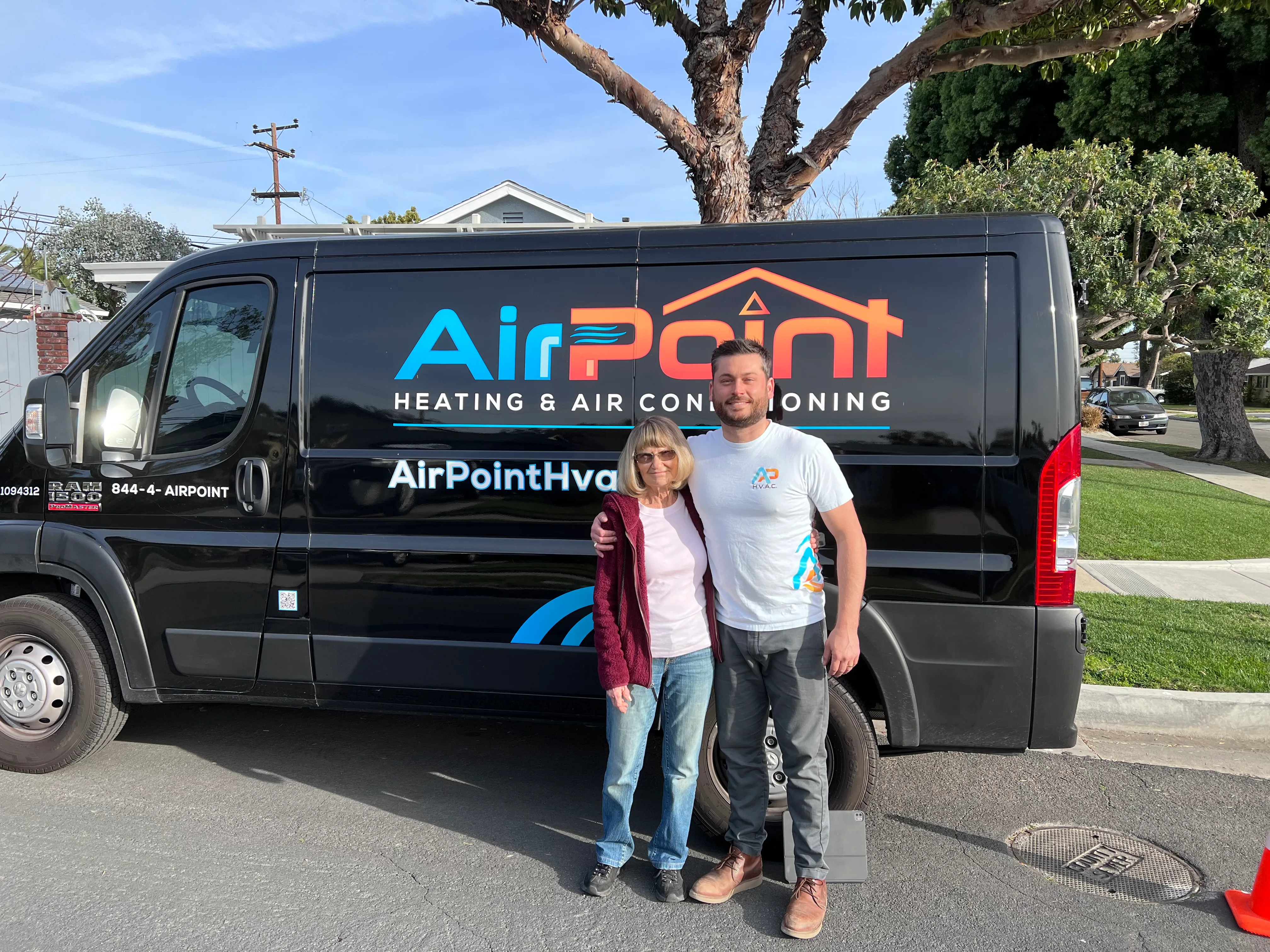
I recommend Air Point for your HVAC needs."