






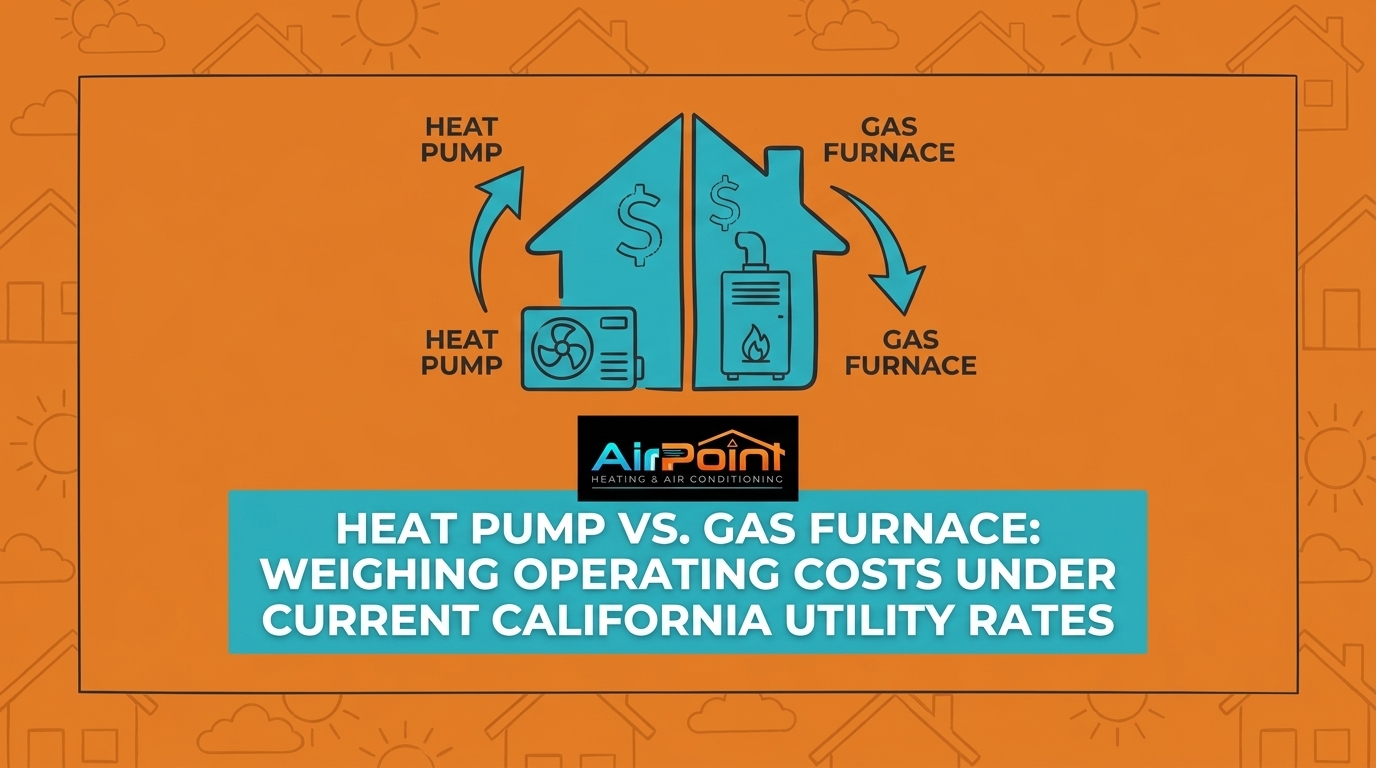
Heat Pump vs. Gas Furnace: Weighing Operating Costs Under Current California Utility Rates
Navigating California's Heating Dilemma: Gas vs. Electric
Your older heating system is showing its age, and as you face an impending replacement, understanding the choice between a Heat Pump vs. Gas Furnace: Weighing Operating Costs Under Current California Utility Rates is the single most practical step you can take. Southern California homeowners consistently struggle to compare long-term heating costs because natural gas prices fluctuate unpredictably, and electricity billing relies on complex Time-of-Use (TOU) rates. You are caught in a frustrating guessing game right at the decision point: do you stick with a traditional gas furnace, or transition to an electric heat pump before the winter chill arrives?
To make sense of your options, learn more about our Heat Pump Systems or explore our comprehensive Heating Services.
As we enter the September pre-heating season, making the right choice requires looking past outdated rules of thumb. Comparing these two systems is often confusing because they use entirely different energy consumption units. Gas furnaces measure energy in therms, while heat pumps use kilowatt-hours (kWh). Trying to compare a therm to a kilowatt-hour using static dollar amounts is a trap, because those commodity prices change every season. Instead, the smartest way to evaluate your long-term operating costs is to look at the relative operational efficiency of the equipment itself, combined with how and when you draw power from the local grid. By understanding the mechanical differences between creating heat and moving heat, you can make an objective, data-driven decision for your home.
How 300% Efficiency Changes the Math
To truly understand operational costs, you first have to look at how each system generates warmth. Traditional combustion heating and modern heat transfer operate on entirely different physical principles, which creates a massive gap in their potential efficiency.
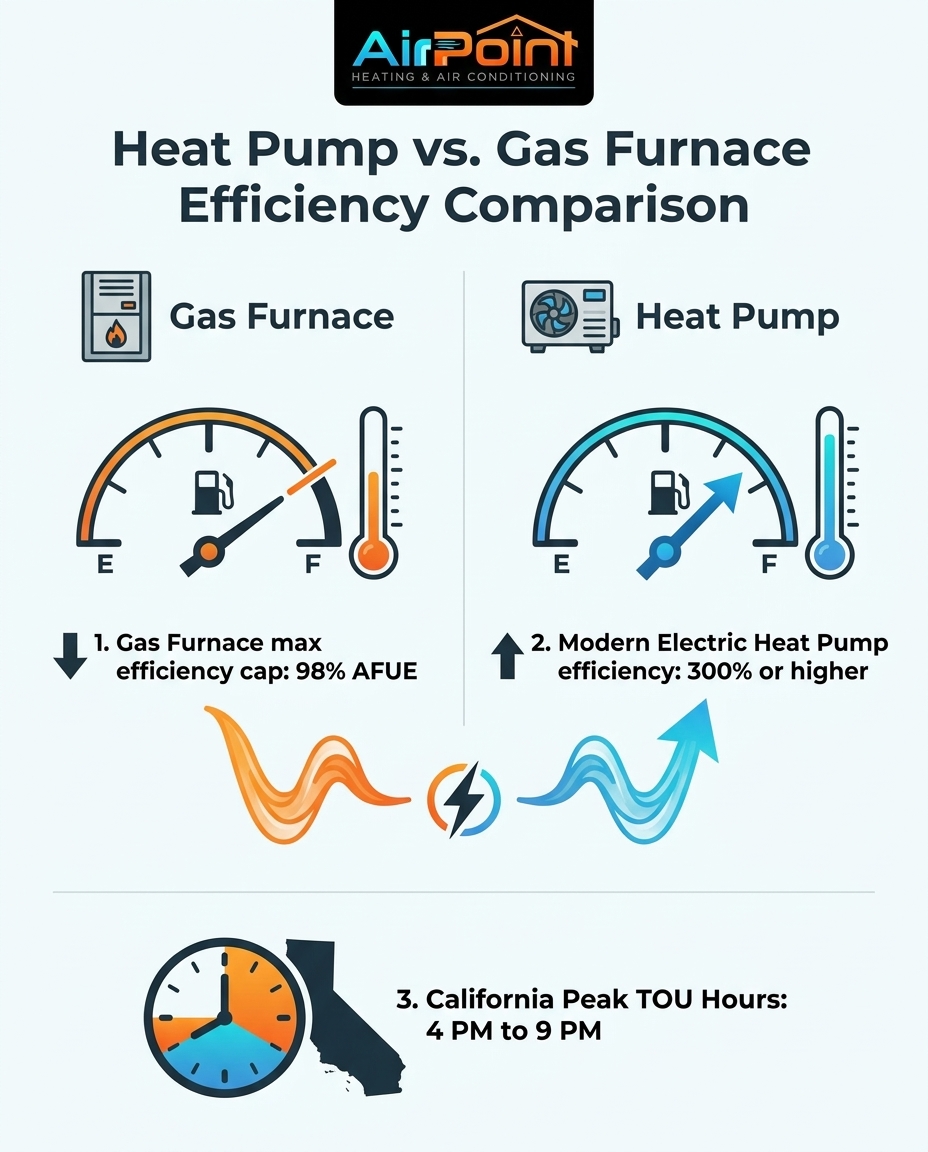
Gas furnaces are rated using Annual Fuel Utilization Efficiency (AFUE). This percentage tells you how much of the natural gas consumed is actually turned into usable heat for your home. Even the absolute highest-efficiency, top-of-the-line condensing gas furnaces max out at a 98% AFUE rating. That means for every unit of energy burned, 98% becomes heat, and 2% is safely vented outside as exhaust gas. Older or standard models often sit closer to 80% AFUE, meaning a full fifth of the energy consumed is lost up the flue pipe. A gas furnace can never exceed 100% efficiency because it is bound by the limits of combustion—you cannot create more energy than the fuel contains.
Electric heat pumps bypass this limitation completely because they do not generate heat; they simply move it. By using electricity to power a compressor and circulate refrigerant, a heat pump absorbs ambient thermal energy from the outside air and transfers it inside. Because moving heat requires far less energy than generating it from scratch, you see 300% or higher efficiency ratings for modern electric heat pumps. For every one unit of electrical energy the system consumes, it can deliver three or more units of thermal energy into your living space. This fundamental mechanical difference completely alters the cost comparison against natural gas therms.
Operational Comparison: Combustion vs. Heat Transfer
• Energy Source — Natural Gas Furnace: Natural gas (measured in therms) — Electric Heat Pump: Electricity (measured in kWh)
• Heating Method — Natural Gas Furnace: Combustion (burning fuel to create heat) — Electric Heat Pump: Heat transfer (moving ambient heat indoors)
• Maximum Efficiency Cap — Natural Gas Furnace: 98% AFUE (some energy always lost as exhaust) — Electric Heat Pump: 300%+ (delivers more heat energy than electrical input)
• Primary Cost Driver — Natural Gas Furnace: Commodity market natural gas pricing — Electric Heat Pump: Time-of-Use (TOU) electricity schedules
If you are currently evaluating options to replace an aging gas unit, understanding the jump from combustion to heat transfer is the first step. You can also review the differences between Single-Stage vs. Two-Stage Furnaces to see how staging affects gas efficiency, but even a fully modulating gas valve cannot compete with the 300% baseline of a modern heat pump.
Why Southern California Winters Favor Heat Pumps
A common myth surrounding electric heating is that heat pumps lose their efficiency and struggle to keep homes warm in freezing weather. While it is true that extreme sub-zero temperatures force older heat pumps to work harder, that limitation is largely irrelevant for Los Alamitos and surrounding Southern California communities. The regional climate plays a massive role in why electrification makes operational sense here.
During the coldest months, Southern California average winter low temperatures remain comfortably in the mid-40s. Because the temperature rarely drops below 40 degrees, a heat pump operates in its absolute peak efficiency zone all season long. It never has to rely on energy-heavy electrical resistance auxiliary heating strips, which is what typically drives up winter electric bills in colder northern climates. The system simply absorbs the abundant ambient heat present in the mild 45-degree outdoor air and compresses it to warm your home.
Furthermore, these dual-purpose systems provide both cooling in the summer and efficient heating in the winter, regulating temperatures evenly throughout the home from a single piece of equipment. A typical pattern we see during system upgrades involves homeowners consolidating their equipment. For example, during a recent full-system replacement, an outdated, inefficient air conditioning unit was completely removed and the aging furnace was relocated into the attic to improve airflow and zoning. When transitioning to a heat pump in a similar scenario, that single high-efficiency attic air handler takes over both heating and cooling duties. Replacing an aging, unevenly heating system with a modern heat pump provides year-round climate control without the need to maintain two separate mechanical systems.
Mastering Time-of-Use (TOU) Electricity Rates
While the 300% or higher efficiency ratings for modern electric heat pumps provide a massive mechanical advantage, capturing those savings on your monthly bill requires navigating California's specific electricity billing structure. The California Public Utilities Commission (CPUC) mandates Time-of-Use (TOU) rates for most residential customers. Under a TOU plan, the cost of a kilowatt-hour is not flat; it changes based on the time of day you consume it.
Electricity costs significantly more during peak demand hours, which typically run from 4 PM to 9 PM. This is the exact window when families return home, turn on appliances, and bump up the thermostat as the sun goes down. If you run a heat pump aggressively during this five-hour window, the higher cost per kWh can eat into the savings generated by the system's high efficiency. Understanding and adapting to these TOU schedules is the key to unlocking the true cost-saving potential of electric heating. AirPoint Heating & Air Conditioning's transparent, localized approach ensures homeowners understand exactly how to manage these complex utility rates before a new system is ever installed.
Strategies for Off-Peak Heating
Because your home acts as a thermal battery, you can use a programmable thermostat to shift your heating load away from expensive peak hours. By following a few simple steps, you keep the house comfortable while paying off-peak rates:
1. Pre-condition the home: Program your smart thermostat to raise the indoor temperature by a few degrees starting around 2 PM or 3 PM, while electricity rates are still at their lowest.
2. Coast through peak hours: At 4 PM, have the thermostat automatically drop the target temperature by a degree or two. The heat pump will cycle off, and your home's insulation will hold the warmth generated during the afternoon.
3. Maintain steady operation: Heat pumps operate most efficiently when maintaining a steady temperature. Avoid aggressive, massive temperature swings that force the system to run at maximum capacity during the expensive 4 PM to 9 PM window.
4. Resume normal heating: After 9 PM, when rates drop back to off-peak pricing, the thermostat can resume its normal overnight heating schedule.
By shifting the heavy lifting to the early afternoon, you maximize the ROI of a high-efficiency electric system and avoid the grid's most expensive billing hours entirely.
The Reality of Fluctuating Natural Gas Prices
If managing a thermostat around Time-of-Use rates sounds like a hassle, the alternative is sticking with a natural gas furnace. While gas furnaces heat up a home quickly and operate independently of the electrical grid's peak hours, their operational cost is entirely dependent on volatile commodity pricing. Analyzing the operational realities of natural gas reveals a different set of financial challenges.
Natural gas usage spikes drastically across the country during the winter months. Because natural gas is a globally traded commodity, this high winter demand historically leads to unpredictable price per therm surges. You might start the September pre-heating season paying one rate for a therm of gas, only to see that rate double by January due to supply constraints or cold snaps in other parts of the country. Unlike electricity rates, which are heavily regulated and published well in advance, natural gas bills can deliver massive mid-winter surprises.
When you compare the predictability of off-peak electricity rates against the less predictable nature of winter natural gas bills, the long-term planning advantage often goes to electric. We highly encourage homeowners to evaluate their own past utility statements. Look at the total therms used during last January and February. Then, consider how many kilowatt-hours a 300% efficient system would have needed to deliver that same amount of heat. To help visualize how efficiency impacts long-term costs, you can use a SEER savings calculator to see how upgrading outdated equipment changes your energy consumption profile.
Factoring in Generic Energy Rebates and Tax Credits
Beyond the monthly operational costs, the initial installation investment is a major factor in the gas versus electric decision. Fortunately, generic electrification incentives currently lower the barrier to entry for upgrading to a heat pump. Transitioning from a fossil-fuel gas furnace to a high-efficiency electric system often qualifies for various generic federal, state, and local utility incentives.
These incentives are explicitly designed to encourage energy efficiency and reduce the strain on older power grids. By offsetting the initial installation costs, these programs make the transition to electric heating much more accessible for the average homeowner. A typical scenario we see involves homeowners who suffered through a hot summer without reliable cooling, prompting a pre-summer or early fall project to replace damaged ducts and install a new furnace. By choosing to upgrade to a heat pump during that replacement window instead of installing another gas unit, they solve both their heating and cooling needs while qualifying for electrification incentives.
Because program availability and qualifications change frequently, we always advise readers to consult with their local utility provider or a qualified tax professional to verify currently available programs. Connecting the strategic timing of early fall upgrades to these incentives allows you to take advantage of available programs before winter equipment demand peaks and manufacturer supplies tighten.
Frequently Asked Questions About California Heating Costs
Is it cheaper to heat with gas or electricity in California?
The answer depends heavily on your specific utility provider's rates and how you manage your thermostat. Generally, the 300% or higher efficiency ratings for modern electric heat pumps give electricity a strong operational advantage. If you can shift your heating schedule to avoid peak Time-of-Use rates between 4 PM and 9 PM, heating with a high-efficiency electric system often costs less over a winter season than relying on unpredictable natural gas therms.
Are heat pumps worth it in Southern California?
Yes, heat pumps offer exceptional value in Southern California due to the region's mild climate. Because they provide both high-efficiency heating in the winter and reliable air conditioning in the summer, you get year-round utility from a single system. The moderate winter temperatures allow the equipment to operate at maximum efficiency without the strain experienced in colder climates.
At what temperature does a heat pump become inefficient?
Standard heat pumps begin to lose some efficiency when outdoor temperatures drop below freezing (32°F), as there is less ambient heat available to absorb. However, modern cold-climate models can operate efficiently down to sub-zero temperatures. In Southern California, where winter lows rarely approach freezing, a heat pump will remain highly efficient throughout the entire heating season.
How efficient are heat pumps in Southern California winters?
They operate at peak performance, often achieving efficiencies well over 300%. Because local winter temperatures generally stay in the mid-40s, the system easily extracts heat from the outdoor air. The climate completely prevents the unit from needing to activate energy-heavy auxiliary heating strips, ensuring your electrical consumption stays as low as possible.
How do Time-of-Use rates affect my winter heating bills?
Time-of-Use rates mean you pay more for electricity during peak demand hours, usually late afternoon through the evening. If your heat pump runs continuously during this window, your bills will increase. By using a smart thermostat to pre-heat your home during cheaper off-peak hours and coasting through the evening, you can keep your home warm while avoiding the highest utility charges.
Make Your Heating Transition This Fall (Heat Pump vs. Gas Furnace: Weighing Operating Costs Under Current California Utility Rates)
Ultimately, the choice between gas and electric comes down to weighing the 300% efficiency of a modern heat pump and manageable TOU rates against the fluctuating commodity pricing of natural gas therms. While gas furnaces have been the traditional default, the mechanical advantages of heat transfer in a mild climate are impossible to ignore.
The September pre-heating season is the optimal time to transition systems, allowing you to make a calculated upgrade before winter weather arrives and natural gas demand spikes. We encourage homeowners to schedule a professional assessment to evaluate their specific home's heating load, ductwork condition, and long-term goals. If you are ready to explore flexible payment solutions, review our HVAC financing options to see how accessible a new system can be. As you finalize your decision on a Heat Pump vs. Gas Furnace: Weighing Operating Costs Under Current California Utility Rates, reach out to our team to book your comprehensive heating services today.
Other Blogs
Latest Blog Posts
Why DIY Mini Split Pre-Charged Lines Often Leak Refrigerant After the First Season

How to Inspect Your Attic Ductwork for Rodent Damage Before Winter Sets In
Addressing Fullerton's Unique Microclimate Shifts During Fall HVAC Transitions

Customer Testimonials



I recommend Air Point for your HVAC needs."