






How Heat Pumps Save Energy During Summer (And Why It Matters for Your Home)
Understanding how heat pumps save energy during summer starts with one key fact: instead of generating cold air, a heat pump simply moves heat from inside your home to the outside. That single difference is why heat pumps can be 30–40% more efficient in cooling mode than traditional air conditioners.
Here's a quick summary of how heat pumps save energy in summer:
- They transfer heat, not create cold — Heat pumps use refrigerant to pull heat out of your indoor air and release it outside, using far less electricity than systems that generate cooling through other means
- Inverter technology adjusts output automatically — Variable-speed compressors match cooling output to your home's actual needs, avoiding the energy waste of constant on/off cycling
- They dehumidify while cooling — Removing humidity makes your home feel cooler at a higher thermostat setting, which means less energy used overall
- No ductwork losses (with mini-splits) — Ductless systems deliver cooled air directly to each room, skipping the energy losses common in leaky duct systems
- Consistent operation is more efficient — Heat pumps held at a steady temperature use less energy than systems frequently adjusted up and down
For homeowners in Los Alamitos and across Orange County, where summer heat can push comfort to its limits and energy bills to their peak, this efficiency gap adds up fast. Cooling a typical home with an efficient heat pump instead of a standard AC can save a meaningful amount every single month — and over a full summer, that difference is hard to ignore.
The sections below walk you through exactly how this works, what to watch for, and how to get the most out of your heat pump all summer long.
The Mechanics: How Heat Pumps Save Energy During Summer
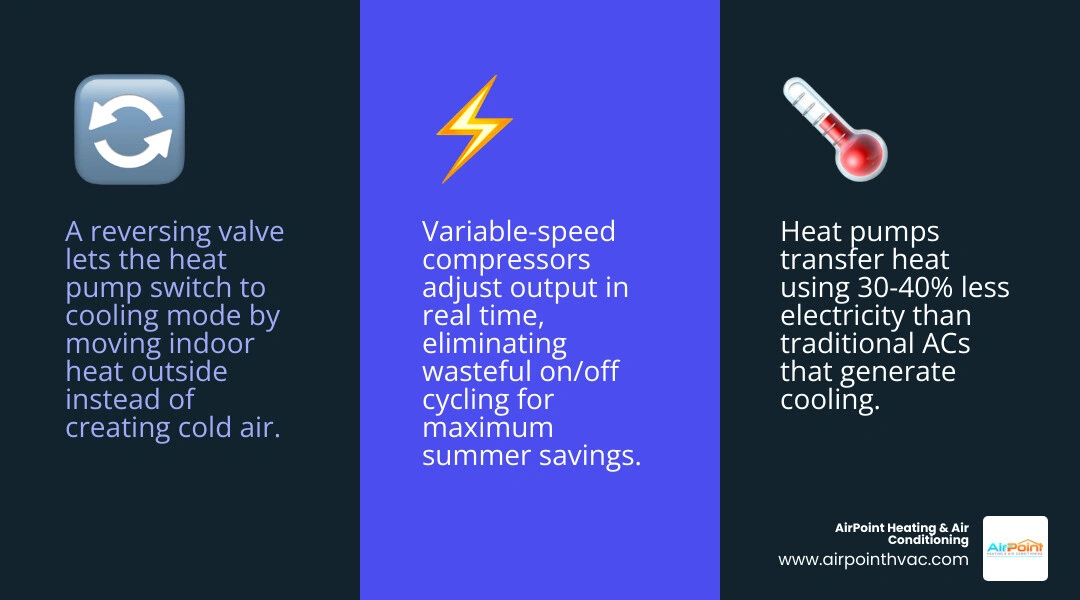
To appreciate the thermodynamic magic of a heat pump, it helps to understand that it is essentially a two-way air conditioner. While a standard AC is a "one-way street" designed only to expel heat from your home, a heat pump contains a specialized component called a reversing valve. As we head into the warm months of May 2026, this valve directs the flow of refrigerant so that the system extracts heat from your indoor living spaces and dumps it outdoors.

The heart of this process is the refrigerant cycle. A chemical refrigerant moves between the indoor and outdoor units, changing states from liquid to gas and back again. Because it takes a massive amount of thermal energy to change a liquid into a gas, the refrigerant acts as a highly effective sponge for heat.
By utilizing this continuous physical transition, the system avoids the energy-intensive process of creating cooling from scratch. It simply relocates existing thermal energy. To dive deeper into how these systems maintain such high performance, you can read more about Heat Pump Efficiency.
Thermal Exchange: How Heat Pumps Save Energy During Summer in Cooling Mode
During a typical summer afternoon in Huntington Beach or Newport Beach, the air outside is warm, but the air inside your home is holding onto trapped heat from appliances, sunlight, and occupants. Inside your home, the heat pump's indoor unit houses the evaporator coil.
- Absorption: Cold, low-pressure liquid refrigerant flows through the indoor evaporator coil. As warm indoor air is blown across this coil by the fan, the refrigerant absorbs the heat from the air.
- Evaporation: This absorption of heat causes the refrigerant to warm up and evaporate into a gas. The air blowing past the coil, now stripped of its heat, is pushed back into your home as refreshing, cool air.
- Compression & Release: The gaseous refrigerant travels outdoors to the compressor, which squeezes the gas, raising its temperature and pressure. It then flows through the outdoor condenser coil, where the outdoor fan blows air across the coil to release the concentrated heat into the outdoor air.
- Expansion: Finally, the refrigerant passes through an expansion valve, cooling back down to a low-pressure liquid, ready to repeat the cycle.
This thermal exchange is incredibly elegant because it relies on transferring heat rather than generating it through mechanical or chemical combustion. This process is particularly advantageous for residents along the coast, as detailed in our guide on Heat Pump Benefits for Coastal California Homeowners.
Inverter Technology: How Heat Pumps Save Energy During Summer with Variable Speeds
Traditional air conditioners operate on a binary system: they are either 100% on or completely off. When your home warms up, the AC kicks on at full blast, runs until it reaches the target temperature, and then shuts off. This constant cycling is highly inefficient—similar to driving a car in stop-and-go traffic.
Modern heat pumps solve this problem by utilizing inverter-driven, variable-speed compressors. Instead of shutting down completely, an inverter heat pump can scale its speed up or down in tiny increments, often operating at capacity levels as low as 25%.
By running continuously at a lower, whisper-quiet speed, the system maintains a perfectly steady indoor temperature. This continuous, low-load matching eliminates the massive electrical inrush currents required to start a compressor from a dead stop, significantly reducing your monthly utility draw. To learn how to get the absolute most out of this technology, explore how to Optimize Heat Pump Efficiency.
Heat Pumps vs. Traditional Air Conditioners
When evaluating summer cooling options for your home in Anaheim, Fullerton, or Cypress, comparing a heat pump directly to a standard central air conditioner is eye-opening. While both systems use the same basic refrigeration cycle to cool your home, their overall efficiency, technology, and performance profiles differ in key areas.
| Feature | Modern Heat Pump | Traditional Air Conditioner |
|---|---|---|
| Cooling Efficiency | 30% to 40% more efficient | Standard baseline efficiency |
| SEER2 Ratings | Typically ranges from 16 to 22+ | Typically ranges from 13 to 18 |
| Compressor Type | Variable-speed (Inverter) | Single-stage or two-stage |
| Dehumidification | Superior (runs longer, slower cycles) | Moderate (cycles off before removing deep moisture) |
| Versatility | Dual-action (heats and cools) | Cooling only (requires separate furnace) |
| Typical Monthly Cooling Cost | Lower | Higher |
Because heat pumps are designed to optimize energy usage year-round, they are engineered to meet strict modern performance standards. While a standard AC might struggle during a sudden heatwave in Irvine or Mission Viejo, a variable-speed heat pump smoothly adjusts its output to keep your living spaces perfectly comfortable without causing your electric meter to spin out of control.
This long-term operational advantage makes them an exceptionally smart investment for Southern California properties. For a detailed breakdown of these financial benefits, check out our article on Energy Savings with Heat Pumps.
Maximizing Your Summer Savings and Comfort
To get the absolute best performance and lowest possible energy bills from your heat pump during the peak of summer, how you operate the system matters just as much as the technology itself.
Here are the best practices to keep your home comfortable and your energy usage minimal:
- Set It and Forget It: Unlike older systems where you might turn the thermostat up and down throughout the day, heat pumps perform best when holding a steady temperature. Avoid turning the system off when you leave for work; instead, set it to a moderate temperature (like 75°F to 78°F) and let the variable-speed compressor manage the load efficiently.
- Utilize Zone Control: If you have a ductless mini-split system installed in your home, take advantage of zone control. There is no need to waste energy cooling guest rooms or empty spaces. Cool only the rooms you are currently occupying, such as the living room during the day and bedrooms at night.
- Leverage Smart Thermostats: Pair your system with a smart thermostat to establish gentle, automated schedules. This allows the system to make gradual, highly efficient adjustments rather than forcing the compressor to work at maximum capacity during the hottest hours of the day.
- Run in "Dry Mode" on Muggy Days: When the coastal humidity rolls into Seal Beach or Long Beach, your home can feel warm and sticky even if the temperature isn't exceptionally high. Running your heat pump in "Dry Mode" slows down the indoor fan speed, allowing the coil to extract maximum moisture from the air without over-cooling your home.
Preventing Efficiency Losses: Maintenance and Troubleshooting
Even the most advanced heat pump can suffer from reduced efficiency if it isn't properly maintained. When dust, dirt, and neglected components get in the way, your system has to work twice as hard to deliver the same amount of cooling.
To prevent these common efficiency drains, keep an eye on these critical areas:
- Air Filter Maintenance: A clogged return air filter forces your indoor blower motor to work harder, restricting the crucial airflow over your evaporator coil. Check your filters monthly and replace or clean them every 1 to 3 months.
- Keep the Outdoor Unit Clear: Your outdoor condenser unit needs room to breathe to expel heat. Ensure there are at least two feet of clear space around the unit, free of shrubs, weeds, leaves, and outdoor storage items.
- Clean Evaporator and Condenser Coils: Dirt acts as an insulator on your coils, blocking the transfer of heat. Keeping these coils clean ensures the refrigerant can absorb and release thermal energy with minimal resistance.
Neglecting these simple tasks can lead to serious issues, including restricted airflow, low refrigerant levels, and even frozen coils. To keep your system in top-tier shape, read through our Essential Heat Pump Maintenance Tips and discover how Regular Heat Pump Maintenance Saves Money.
Professional Care for Peak Summer Performance
While keeping your filters clean is a great DIY task, there are highly technical aspects of your heat pump that require a professional touch. A certified technician has the specialized tools to check refrigerant levels, measure electrical draw, inspect the reversing valve, and deep-clean the internal components of both the indoor and outdoor units.
Scheduling a professional tune-up before the summer heat hits its stride is the single best way to guarantee reliable, low-cost cooling all season long. To understand what goes on during these visits, read about the Scheduling Heat Pump Tune-Up Importance and explore our comprehensive Heat Pump Professional Maintenance Services.
Frequently Asked Questions About Summer Heat Pump Efficiency
Do heat pumps actually cool as well as standard air conditioners in extreme heat?
Yes, absolutely. A modern heat pump is fundamentally an air conditioner with a reversing valve; in cooling mode, it uses the exact same refrigeration cycle, compressor technology, and SEER2 ratings. Premium heat pumps with oversized coils and advanced variable-speed compressors handle extreme temperatures incredibly well. Whether it is a standard summer afternoon or a record-breaking heatwave in Yorba Linda, a properly sized heat pump will keep your home perfectly cool and comfortable.
Why does my heat pump freeze up during the summer?
A freezing heat pump is almost always caused by one of two issues: restricted airflow or low refrigerant. If the air filter is severely clogged or the indoor blower motor is failing, there isn't enough warm air passing over the cold evaporator coil to keep it from dipping below freezing. Alternatively, a leak in the refrigerant lines drops the system's operating pressure, causing the coil temperature to plummet and turn condensation into ice.
If you notice ice forming on your indoor unit or the copper lines outside, turn the system off immediately to protect the compressor and call for professional service. To learn why ignoring this issue can be incredibly costly, read about Why Regular Heat Pump Service is Essential.
How does the "Dry Mode" on a heat pump save energy?
"Dry Mode" is a specialized setting designed to prioritize dehumidification over direct cooling. In this mode, the heat pump runs its compressor at a low, steady speed while dropping the indoor fan speed to its lowest setting. This allows warm, humid air to linger on the cold evaporator coil longer, causing more moisture to condense out of the air and drain away.
Because dry air naturally feels much cooler to the human skin than humid air, "Dry Mode" allows you to feel perfectly comfortable at a higher thermostat setting, saving you a substantial amount of energy.
Conclusion
When it comes to keeping your home cool, comfortable, and energy-efficient during the beautiful Southern California summers, heat pumps are a clear winner. By shifting heat instead of fighting to create cold air, utilizing advanced variable-speed inverter technology, and providing unmatched dehumidification, these systems are built to keep your utility bills low and your indoor comfort high.
At AirPoint Heating & Air Conditioning, we are proud to provide fast, expert HVAC solutions right here in Los Alamitos and throughout our surrounding Orange County communities. As a family-owned, award-winning business, we stand firmly behind our work with a 100% satisfaction guarantee, honest communication, and prompt, reliable service.
Whether you need a quick repair, a precision summer tune-up, or are ready to upgrade to a high-efficiency heat pump system, our licensed and certified technicians are here to help.
Ready to lower your energy bills and maximize your summer comfort? Book professional AC maintenance in Orange County today for fast, reliable service!
Other Blogs
Latest Blog Posts
Why Clearing Dry Leaves from Your Heat Pump is Crucial Before the Santa Ana Winds Arrive

How to Verify an HVAC Contractor's Liability Insurance Before They Step on Your Property
Heat Pump vs. Gas Furnace: Weighing Operating Costs Under Current California Utility Rates

Customer Testimonials



I recommend Air Point for your HVAC needs."