






How to Inspect Your Attic Ductwork for Rodent Damage Before Winter Sets In
Why Early Fall Is the Critical Time to Check Your Attic
Before the first true chill hits Los Alamitos, there is one critical area of your home you need to evaluate: learning how to inspect your attic ductwork for rodent damage before winter sets in. September marks a distinct seasonal shift in Southern California. As the long, hot summer fades and nighttime temperatures begin to drop, outdoor pests—particularly roof rats and field mice—start looking for warm, elevated places to ride out the cooler months. Your attic provides the perfect sanctuary, offering shelter from the elements, safety from predators, and an abundant source of nesting material right inside your heating system.
The concrete problem many homeowners face is that these rodents do not just live in the attic space; they actively seek out the warmth radiating from exposed flex ductwork. In their search for a cozy nest, they chew through the outer layers of your ducts, compromising the entire system. This damage creates a direct threat to both your heating efficiency and your home's indoor air quality. The challenge is knowing exactly how to safely spot the visual signs of this damage on your own, and understanding the definitive boundary of when a visual inspection must transition into a professional assessment.
Catching early fall pest intrusions before you turn your heating system on for the season is essential. If you wait until winter is in full swing, you run the risk of blowing contaminated air throughout your living space while simultaneously forcing your equipment to work twice as hard just to keep the house warm.
The Hidden Impact of Pest Intrusion on Your HVAC System
The problem starts small but escalates rapidly. Rodents are incredibly agile and can squeeze through entry points as small as a quarter. Once they gain access to your attic, they treat your flexible ductwork as both a highway and a housing development. Flex ducts are constructed with an inner wire helix, a layer of fiberglass insulation, and a thin plastic vapor barrier on the outside. A determined roof rat can tear through that outer jacket in minutes.
The cause of the resulting system failure is twofold. First, the physical breach in the ductwork destroys the closed-loop pressure of your HVAC system. Second, the biological waste left behind by the pests is introduced directly into the air stream that feeds your living room, bedrooms, and kitchen.
The solution requires understanding the full scope of the damage. Pest intrusion is not just a nuisance; it is a mechanical and respiratory hazard that fundamentally alters how your system operates.
Heat Loss and Skyrocketing Utility Bills
When rodents chew through the silver or black vapor barrier of a flex duct, they expose the fiberglass insulation underneath. Once that barrier is compromised, conditioned air escapes into the uninsulated attic space instead of reaching your vents. According to energy efficiency data, compromised ductwork can reduce your overall HVAC efficiency by up to 20 to 30 percent. Your heating unit will run longer cycles, straining the blower motor and heat exchanger as the thermostat struggles to reach the set temperature. You end up paying to heat your attic while your living space remains drafty and cold.
Airborne Pathogens and Allergen Circulation
The health risks associated with torn ducts are severe. As air moves rapidly through the ductwork, the system's negative pressure can actually pull attic air—along with microscopic contaminants—into the breaches. Rodent droppings, urine, and nesting materials dry out and break down into fine particles. When the blower fan kicks on, these biological contaminants are aerosolized and circulated through your vents. This creates a significant risk of respiratory irritation and exposure to serious pathogens like Hantavirus. Furthermore, understanding air filter types and MERV ratings is important, but even the best standard residential filters are not designed to capture the heavy load of biological contaminants introduced downstream of the filter housing.
A Safe, Visual-Only Guide to Spotting Rodent Damage
If you suspect pest activity due to scratching noises at night or an unexplained drop in heating performance, a visual inspection is your first line of defense. However, this must be done with strict safety protocols. You should never touch, move, or disturb compromised ductwork. Your goal is simply to observe and document the visual signs of torn fiberglass insulation or missing vapor barriers on flex ducts.
• Gear up appropriately: Wear a high-quality N95 mask, safety goggles, and bring a strong LED flashlight.
• Maintain a safe distance: Stand on secured attic decking or a sturdy ladder. Do not crawl over joists into tight, unlit spaces where nesting activity is highest.
• Look for structural breaches: Scan the length of the visible duct runs, paying close attention to bends, junctions, and areas where the duct meets the ceiling register.
• Observe the strict no-touch rule: If you see damage, do not attempt to peel back insulation or poke at the tears. Disturbing the area can release a cloud of hazardous particulates.
Inspecting the Vapor Barrier
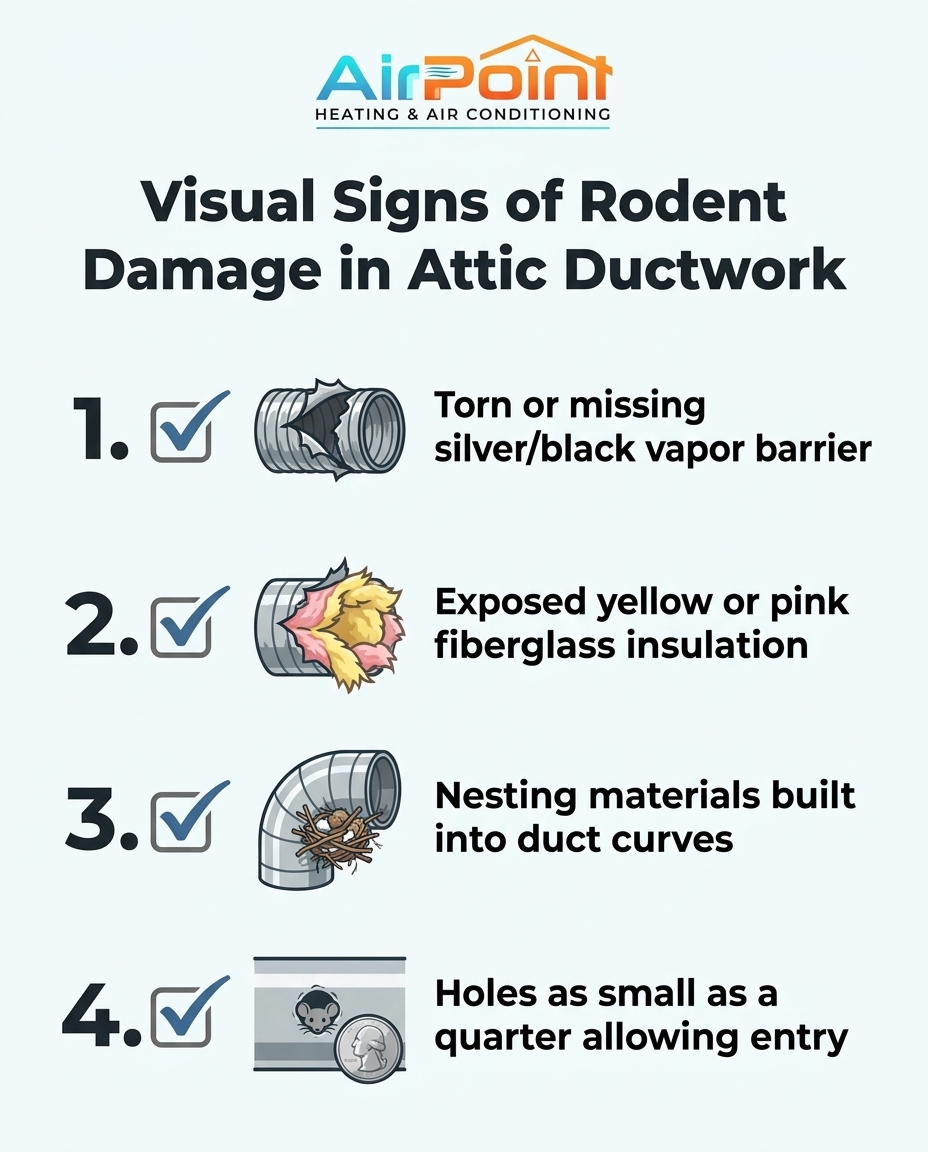
The outer jacket of your flex duct is your system's primary defense against moisture and air leaks. Shine your flashlight slowly along the top and sides of the duct runs. You are looking for missing patches of the silver or black plastic layer. Rodent damage rarely looks like a clean cut; it usually appears as jagged, frayed edges where the plastic has been gnawed away. You may also notice distinct scratch marks, tiny entry holes, or greasy rub marks along the top of the duct where rats use it as a runway across the attic.
Identifying Exposed Fiberglass
Once the vapor barrier is breached, the inner insulation becomes visible. Spotting yellow, pink, or white torn fiberglass insulation spilling out of the duct jacket is a definitive sign of intrusion. Rodents often pull this insulation out to build nests nearby, or they burrow directly into it, creating compressed, tunneled areas. If you notice a section of ductwork that looks deflated, flattened, or packed with outside debris like leaves and twigs, you are likely looking at an active or abandoned rodent nesting bed.
Why You Should Never Attempt DIY Duct Cleanup
When homeowners spot a hole in their ductwork, the immediate temptation is to grab a roll of standard duct tape and patch it. This is a dangerous mistake for multiple reasons, primarily concerning your family's health and the physics of HVAC operation.
The risk of aerosolizing pathogens: Dried rodent droppings are highly hazardous. When you attempt to clean the area, push insulation back into place, or wrap tape around a torn duct, you inevitably disturb these droppings. This action aerosolizes the pathogens, making them easy to inhale. Without professional-grade HEPA vacuums and proper personal protective equipment (PPE), you are putting yourself at direct risk for respiratory illnesses, including Hantavirus pulmonary syndrome.
The failure of standard adhesives: From a mechanical standpoint, DIY patching simply does not work on heavily damaged flex ducts. HVAC systems generate significant static pressure. Furthermore, attic temperatures fluctuate wildly, expanding and contracting the duct materials. Standard hardware store tapes will dry out, lose their adhesive grip, and blow off within a matter of weeks, leaving the hole exposed again.
Pushing contaminants deeper: Improper handling of a chewed duct often forces nesting materials and droppings deeper into the inner liner. Once this debris falls into the main airflow channel, it will be blown directly into your living space the next time the heater cycles on. Professional abatement and strict isolation protocols are required to safely manage and remove compromised materials without contaminating the rest of the home.
Pest Control vs. HVAC Professionals: Who Does What?
Resolving a rodent-damaged HVAC system requires a strict sequence of events. Many homeowners mistakenly call an HVAC technician first, only to be told that work cannot begin until the active infestation is cleared. Conversely, pest control experts can remove the rats, but they cannot restore your heating efficiency. Understanding the distinct roles of each professional ensures your home is fully protected.
• Pest Control Expert — Primary Responsibilities: Trap and remove active rodents, clean up exterior attic droppings, and seal exterior entry points to the home. — What They Cannot Do: Cannot repair inner duct liners, cannot test HVAC static pressure, and cannot restore system heating efficiency. — Required Sequence: Step 1: Must be completed first to ensure the attic is safe and secure.
• HVAC Professional — Primary Responsibilities: Assess the extent of duct damage, remove contaminated runs safely, install new sealed ductwork, and test airflow. — What They Cannot Do: Cannot work in an attic with an active, untreated infestation due to safety and liability risks. — Required Sequence: Step 2: Completed after pest control to restore air quality and heating performance.
A pest control company focuses on the structure of the house and the biology of the pest. They will find the quarter-sized hole under your eaves and seal it. However, they are not licensed to calculate airflow, balance duct systems, or ensure that your heating equipment is operating safely. Once the pest control team gives the all-clear, the HVAC professionals step in to handle the mechanical and respiratory recovery of your home.
What a Professional Ductwork Assessment Looks Like
Once the attic is cleared of active pests, a licensed technician must evaluate the fallout. A professional ductwork assessment is incredibly thorough, moving far beyond a simple visual check. At AirPoint Heating & Air Conditioning, our local expertise in Los Alamitos means we understand exactly how Southern California weather patterns impact attic environments and system performance. We take a comprehensive, honest diagnostic approach designed to protect your family's health and restore your system's efficiency.
1. System-Wide Static Pressure Testing: The technician will measure the air pressure inside the ducts. Significant pressure drops indicate hidden breaches, even if the damage isn't immediately visible from the attic access point.
2. Visual Documentation: Using high-powered lighting and inspection cameras, the technician maps out every compromised run. You will be provided with clear before-and-after photos to show you the exact scope of the damage without you ever having to set foot in the hazardous environment.
3. Plenum and Blower Motor Inspection: The assessment evaluates the main heating system unit to ensure that rodents haven't chewed their way into the return plenum. The technician checks the blower motor and heat exchanger to verify that no debris or nesting material has been pulled into the sensitive mechanical components.
4. Airflow Balancing Check: Finally, the technician evaluates how the damage has affected air distribution room by room, noting which areas are suffering the most heat loss.
One local homeowner reached out for a preventative check during the colder months, concerned about their system's performance. The technician performed a thorough evaluation of the attic space, explained the potential airflow issues, and provided detailed before-and-after photos of the ductwork condition. The homeowner noted feeling completely confident in the system's future performance, knowing exactly what was happening in their attic and understanding the honest assessment they received.
Restoring Your Home's Comfort and Air Quality
The resolution phase is where your home returns to being a safe, comfortable sanctuary. When flex ducts are heavily contaminated with droppings or suffer from large tears, patching is not a viable or safe option. The only way to guarantee that biological contaminants are eradicated and that heating efficiency is fully restored is through the complete replacement of the affected duct runs.
Safe Removal and Installation: The HVAC team will carefully bag and remove the contaminated ductwork using protocols that prevent debris from falling into your home. Once the old material is cleared, they will measure, cut, and install new, fully sealed flex ducts. These new runs are strapped properly to prevent sagging, ensuring smooth, unrestricted airflow to your vents.
Restoring System Integrity: The new connections are sealed with professional-grade mastic sealant, not just tape, creating an airtight bond that can withstand the extreme temperature fluctuations of a Los Alamitos attic. This meticulous attention to detail ensures that the conditioned air you pay for actually reaches your living space.
Another customer needed a full unit installation before the hot weather arrived, having suffered through previous seasons with a compromised, inefficient system. The team efficiently installed the new equipment with exceptional workmanship, replacing the necessary components to ensure optimal airflow. The outcome was a home that maintained the perfect temperature, demonstrating the profound difference that properly sealed and installed equipment makes.
By prioritizing professional ductwork services after a pest intrusion, you secure long-term benefits. Your utility bills will stabilize because the heating unit no longer has to overwork to compensate for lost air. Most importantly, you gain the peace of mind that comes with knowing the air circulating through your home is clean, safe, and free of hazardous allergens.
Frequently Asked Questions About Rodent Damage and HVAC Systems
How do I know if mice chewed my ductwork?
The most reliable way to know if mice chewed your ductwork is by conducting a safe visual inspection with a flashlight. Look for clear visual signs like torn pink or yellow fiberglass, missing patches of the outer silver or black plastic layer, and unexplained debris or nesting materials packed near the duct curves. You may also notice a sudden drop in airflow from your vents or a foul, musky odor when the heater turns on.
Can you patch rodent holes in flex duct?
Minor surface scratches on the very outer jacket might be sealable by a professional, but any penetration of the inner lining or signs of contamination requires full replacement. Standard duct tape will not hold against the static pressure and temperature changes in an attic. More importantly, patching over a hole does not remove the hazardous biological waste that the rodents likely left inside the duct.
Is it safe to run the heater with rodent damage?
No, it is never safe to run your heater if you know there is active rodent damage in the ductwork. Running the blower fan creates pressure that can circulate dangerous pathogens, allergens, and foul odors from the attic directly throughout your living space. It also forces your heating equipment to work much harder, which can lead to premature mechanical failure and inflated utility bills.
Who fixes ductwork damaged by rodents?
Fixing rodent damage is a two-step process requiring two different professionals. After a licensed pest control company traps the rodents, removes the active infestation, and seals the exterior entry points, a licensed HVAC professional must step in. The HVAC technician is responsible for assessing the mechanical damage, safely removing the contaminated runs, and installing new ductwork to restore your system's efficiency.
Will a standard air filter catch rodent-related contaminants?
Standard residential air filters are not designed to catch all microscopic pathogens aerosolized from rodent nesting materials. While a filter might catch larger clumps of hair or dust, dangerous biological particulates can easily pass through standard fiberglass or low-MERV pleated filters. Source removal—meaning the complete replacement of the contaminated ductwork—is the only way to ensure your indoor air quality is safe.
Secure Your System Before the Winter Chill Arrives
Catching attic vulnerabilities early in the fall is the smartest way to protect your home's efficiency and your family's health. Knowing how to safely spot the visual signs of chewed ducts gives you the power to act before turning on the heat. If you suspect pest damage, maintain a safe boundary and let the experts step in. Schedule a professional duct assessment today to secure your system, lower your utility bills, and ensure your indoor air remains pristine all winter long.
Other Blogs
Latest Blog Posts
Addressing Fullerton's Unique Microclimate Shifts During Fall HVAC Transitions
Why We Check Your Carbon Monoxide Detectors Before Firing Up Older Gas Furnaces

Navigating Belmont Heights' Historic District Rules for Exterior HVAC Equipment Replacements

Customer Testimonials



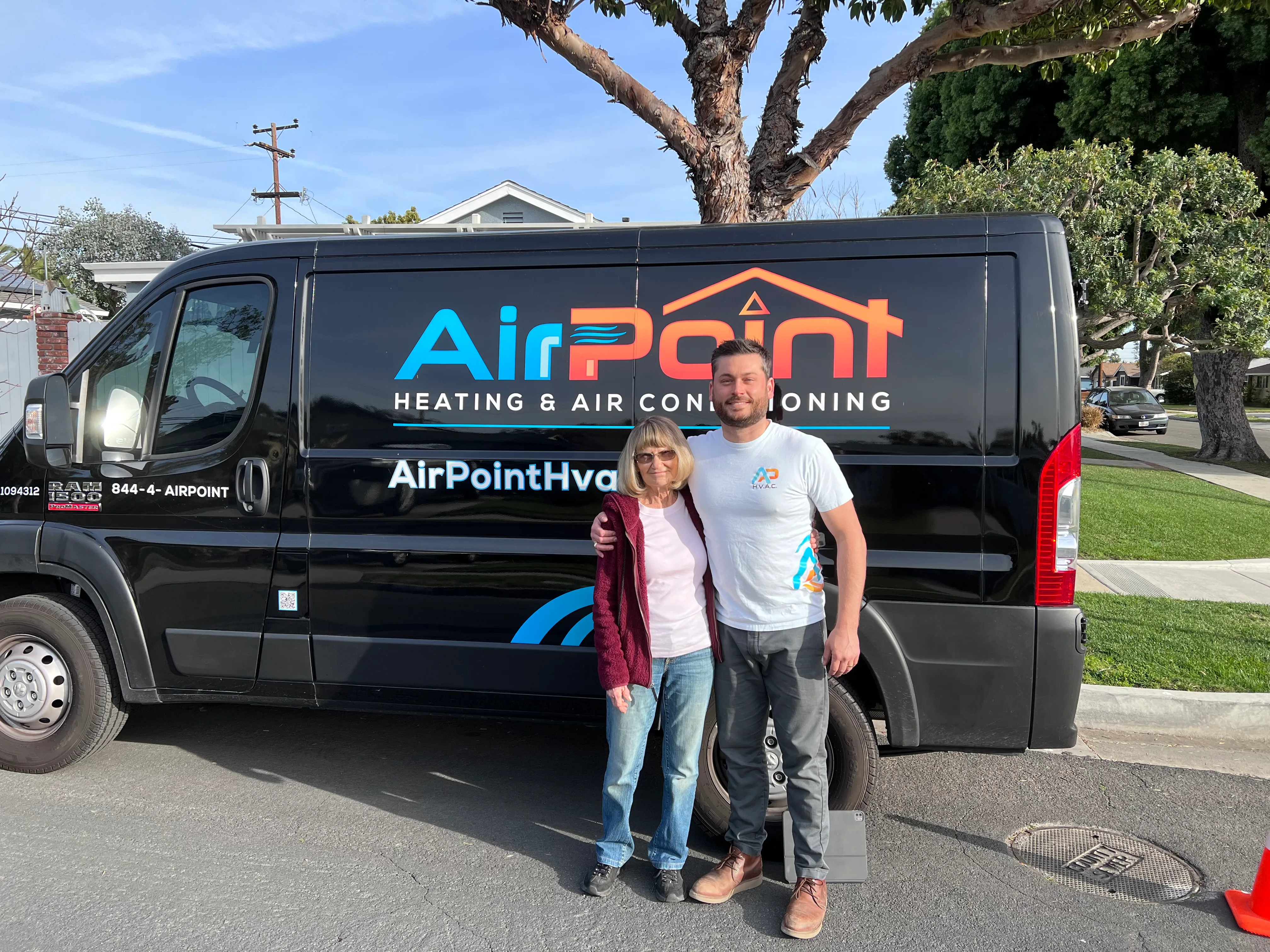
I recommend Air Point for your HVAC needs."