





Diagnosing Short-Cycling in Oversized Furnaces Installed During the 90s Housing Boom
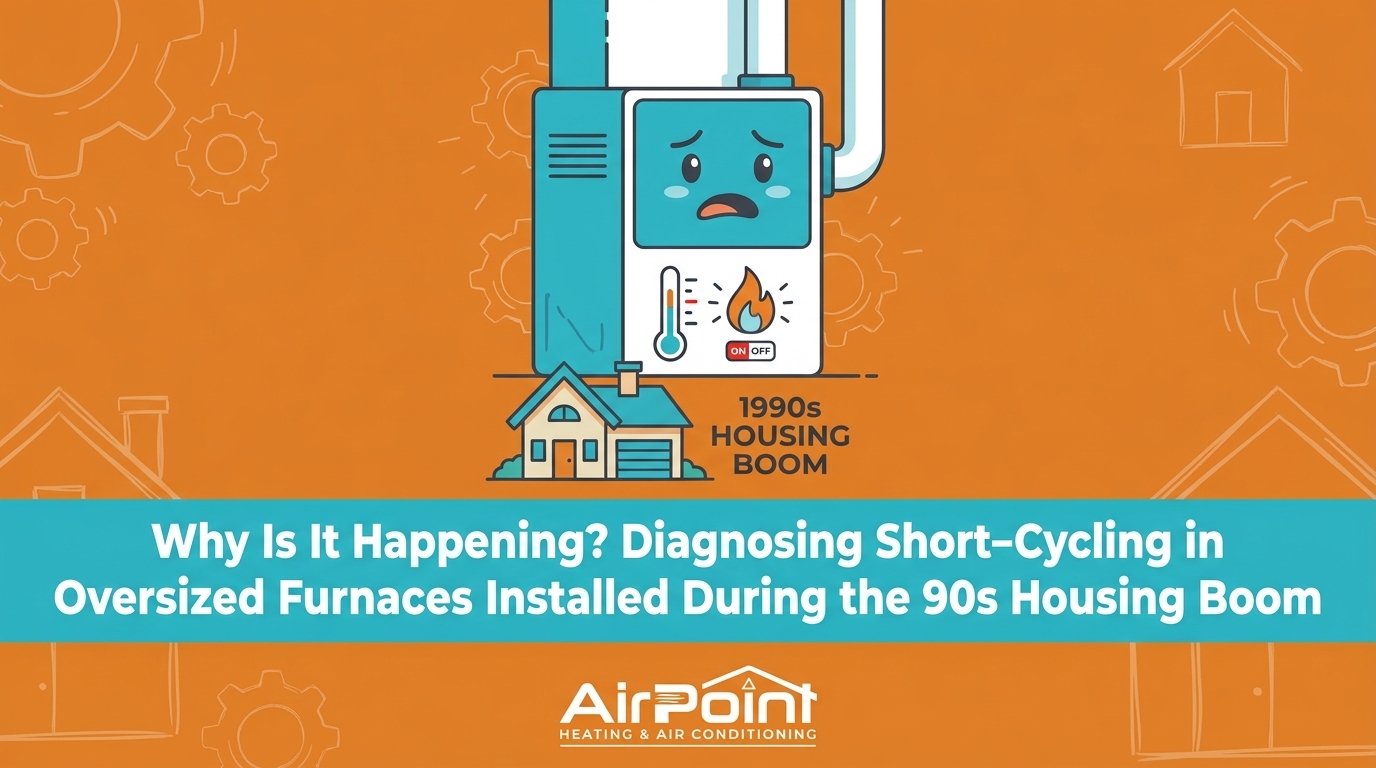
Is Your Older Furnace Turning On and Off Too Fast?
At AirPoint Heating & Air Conditioning, when our team is called out to diagnose short-cycling in oversized furnaces installed during the 90s housing boom, we typically find a system that fires up, blasts warm air for just a few minutes, and abruptly shuts down before your home even feels comfortable. This rapid on-and-off behavior is one of the most common and frustrating heating issues our Los Alamitos homeowners face with older legacy systems. Many people first discover this rapid cycling issue during their early fall pre-heating season test runs, right when they expect their equipment to operate smoothly after a long summer of sitting idle.
When you hear your furnace kick on only to power down almost immediately, your system is trying to tell you that it cannot safely complete a full heating cycle. The core decision point you face is determining whether this rapid cycling is a fixable airflow constraint or if the legacy unit is fundamentally too large for your home's actual heating load. Properly evaluating heating systems from this era requires professional diagnostics, precise airflow measurements, and a deep understanding of historical building practices—not just a simple filter change.
Common signs of short-cycling include:
• Brief run times: The burner shuts off in under five minutes.
• Uneven temperatures: The room with the thermostat gets warm, but the rest of the house stays cold.
• Frequent clicking: You constantly hear the thermostat clicking and the inducer motor starting up.
• Higher utility bills: The system burns more energy starting and stopping than it would running steadily.
For comprehensive help with your heating systems, reach out to schedule HVAC service.
The Legacy of the Housing Boom: Why Bigger Wasn't Better
To understand why your older furnace operates in short, frantic bursts, you have to look back at how homes were built a few decades ago. During the 1990s housing boom, residential construction moved at an incredibly rapid pace. Entire neighborhoods were developed simultaneously, and speed was prioritized over precise, customized engineering for each individual floor plan. This era left a lasting legacy on residential heating and cooling systems.
In our experience working on legacy systems throughout Los Alamitos, we've seen how HVAC sizing during this time often relied on generic "rule of thumb" estimates. A contractor might simply allocate one ton of capacity for every 400 square feet of floor space, completely ignoring crucial factors like window quality, insulation levels, ceiling height, and the home's orientation to the sun. This led to a pervasive "bigger is better" mentality. Builders frequently installed the largest possible units to ensure they would never receive a cold-call complaint from a homeowner saying the house wasn't warm enough. While a massive furnace guarantees the house will get hot, it creates a severe mismatch between the equipment's output and the ductwork's capacity.
An oversized unit generates heat much faster than the home's original ductwork can distribute it into your living spaces. The system blasts a massive volume of hot air, satisfying the thermostat's set temperature almost instantly. However, this rapid blast of heat causes the internal components to overheat, forcing the system to shut down prematurely. Southern California's relatively mild winters heavily exacerbate this issue. Because the outside temperatures rarely drop into extreme freezing ranges, an oversized 90s furnace heats a house far too quickly for the space, causing rapid cycling that wouldn't happen as severely in much colder, harsher climates where the system actually needs to run continuously to fight off the cold.
Rule of Thumb vs. Manual J Calculations
The difference between how systems were sized in the 1990s and how they are properly sized today comes down to mathematics and building science.
• Rule of Thumb (1990s) — How It Works: Estimates capacity based solely on total square footage of the home. — Drawbacks & Benefits: Often results in equipment that is 20% to 50% oversized, leading to short-cycling and rapid wear.
• Manual J Calculation (Modern) — How It Works: Measures insulation, windows, occupants, heat-generating appliances, and climate zones. — Drawbacks & Benefits: Provides precise BTU requirements, ensuring the system runs long enough to dehumidify and filter air.
Our modern installations at AirPoint Heating & Air Conditioning rely on precise measurements known as Manual J load calculations. This scientific approach ensures the furnace matches the exact thermal envelope of the house. In contrast, the builder-grade guesswork common in 90s tract developments almost always favored oversizing, leaving modern homeowners to deal with the mechanical fallout decades later.
The Mechanics: What Causes an Oversized Furnace to Short-Cycle?
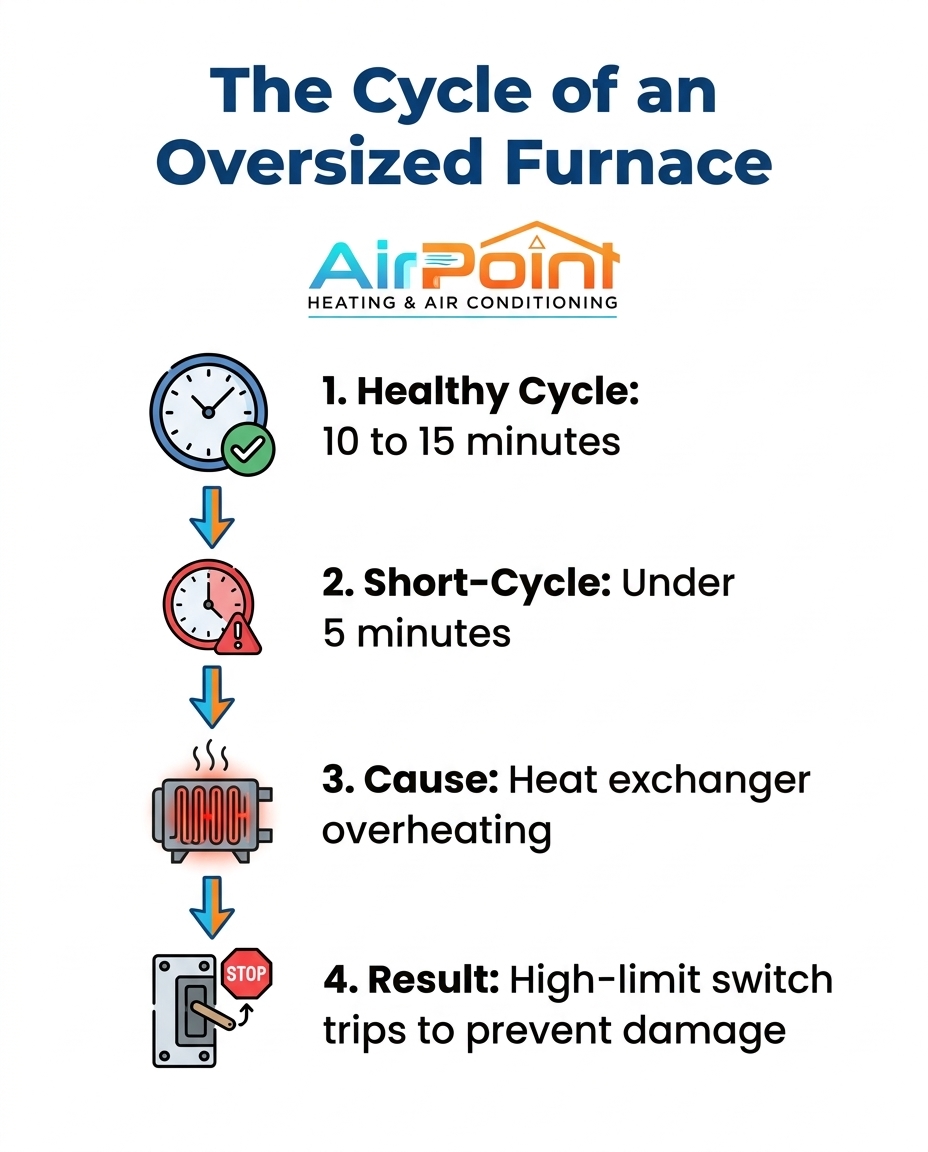
Understanding the mechanical sequence happening inside your utility closet helps explain why short-cycling is so damaging. A typical, healthy furnace cycle lasts anywhere from 10 to 15 minutes. This duration gives the blower motor enough time to push warm air to the furthest bedrooms and allows the system to operate at peak energy efficiency. Short-cycling, on the other hand, often occurs in under 5 minutes.
The primary culprit behind this rapid shutdown is the heat exchanger. The heat exchanger is the metal chamber where the heat from the burning gas is transferred to the air blowing through your vents. When a furnace's BTU (British Thermal Unit) output drastically exceeds the ductwork's capacity to move that air, the heat cannot escape the furnace cabinet fast enough. The heat exchanger rapidly overheats, acting like an oven with no ventilation.
This is where the high-limit switch comes into play. The high-limit switch is a critical safety mechanism built into every modern furnace. Its sole job is to monitor the temperature of the heat exchanger. If the temperature spikes beyond a safe threshold, the high-limit switch intentionally trips, immediately cutting the power to the gas burners. It does this to prevent a catastrophic fire or severe mechanical damage, such as a cracked heat exchanger, which could leak dangerous carbon monoxide into your home.
It is vital to understand that a tripped limit switch is almost always a symptom of poor airflow or system oversizing, not just a faulty switch that needs replacing. Limit switch diagnostics require professional multimeters and temperature probes, and adjusting or bypassing this switch is incredibly dangerous and should never be a DIY adjustment.
Our technicians see the effects of neglected, struggling systems frequently. Recently, our team helped a local homeowner who reached out during an early fall cold snap with an old, neglected HVAC unit that was struggling to run properly and had a leaky compressor. Rather than immediately pushing for a replacement, our technicians performed a complete pre-heating-season tune-up, fixed the compressor, topped off the coolant, rewrapped the deteriorating pipe, replaced heavily soiled filters, and thoroughly cleaned the system. The outcome was an older unit made significantly more efficient, proving that comprehensive, professional attention can restore safe operation to legacy equipment.
Builder-Grade Ductwork and Static Pressure Issues
The oversized furnace is only half of the equation; the other half is the pathway the air takes to travel through your home. In our years of inspecting Los Alamitos 90s tract homes, we frequently find builder-grade ductwork that was simply not scaled to match the massive output of the furnaces installed during construction. Builders often used the minimum required duct sizes to save on material costs and installation time.
One of the most critical flaws our team sees in these legacy designs is undersized return air drops. The return side of your HVAC system acts as the lungs of the equipment—it must pull in an equal amount of air to what it blows out. When the return ducts are too small, they starve the blower motor of the air it desperately needs to cool the heat exchanger. It is the equivalent of trying to breathe deeply through a tiny drinking straw.
This restriction creates high static pressure. Static pressure is the resistance to airflow within the system, much like blood pressure in the human body. When static pressure is too high, the blower motor has to work incredibly hard to force air through narrow, restrictive ducts. This forces the system to overwork, consumes excessive electricity, and accelerates the overheating process that triggers the high-limit switch.
Modifying the ducting is often a necessary step to relieve the pressure on an older, oversized system. In many cases, correcting the airflow is the only way to stabilize the furnace. Another homeowner called us after suffering through a long summer without a functioning AC and ultimately required a complete system overhaul. Our team's project involved performing necessary abatement, replacing the restrictive legacy ducts, and installing a properly sized new furnace and AC system efficiently and cleanly. The result was a comfortable, livable home with balanced airflow. If you are experiencing high resistance, you may need a professional to correct the airflow in your ductwork to save the equipment.
The Role of Return Air
Pulling enough air back into the system is just as vital as blowing warm air out. If the blower motor cannot draw in enough cool room air, the temperature inside the furnace cabinet will spike almost instantly. Starved returns lead directly to overheating, constant high-limit switch tripping, and the eventual premature failure of the blower motor itself.
Professional Diagnostics: Correcting Airflow vs. Replacing the Unit
When dealing with a short-cycling legacy system, our first step is always professional diagnostics. Guessing at the problem leads to wasted money on unnecessary parts. Our technicians use advanced tools to perform static pressure testing, measuring the exact airflow resistance inside the ductwork. By drilling small test ports into the supply and return plenums and inserting a digital manometer, professionals can see exactly how hard the system is working to breathe.
Once the static pressure is measured, our team can implement targeted airflow correction strategies. These strategies may include adding additional return vents in hallways or master bedrooms, adjusting the blower motor speeds to better match the ductwork's capacity, or modifying the plenum (the main trunk line connecting the furnace to the ducts) to allow for smoother air distribution.
Another crucial diagnostic step is evaluating your filtration. Overly restrictive air filters can mimic or severely worsen an oversized system's airflow problems. While high-efficiency pleated filters trap more dust, they also block airflow. If your system is already struggling with high static pressure, a dense filter can push it over the edge into a short-cycle. This is why understanding air filter types and MERV ratings is vital for homes with older equipment.
The ultimate decision point comes down to this: can airflow corrections save the existing unit, or is the system so excessively oversized that replacement is the only safe, efficient option? Our deep local expertise at AirPoint Heating & Air Conditioning in servicing and retrofitting 1990s tract homes in the Los Alamitos area allows us to provide proper airflow solutions tailored to these specific architectural challenges. If expanding the return ducting brings the static pressure down to a safe level, the furnace can often continue to serve you safely. However, if the unit is double the size required by a Manual J calculation, replacing it with a correctly sized system is the most cost-effective long-term choice. Additionally, state or federal tax credits may apply to qualifying high-efficiency upgrades, making a replacement more attainable—though we always advise verifying current programs with your utility provider or tax professional.
Frequently Asked Questions About Oversized 90s Furnaces
Before diving into specific questions, it is worth noting that short-cycling severely impacts your indoor air quality. When a system only runs for three minutes at a time, it cannot filter out dust, pet dander, or properly manage humidity.
Why does my 90s furnace turn on and off so fast?
It generates heat faster than the ductwork can distribute it, causing the high-limit switch to trip and shut the system down rapidly to prevent overheating. Because 1990s builders often installed oversized units to avoid heating complaints, the system produces a massive volume of heat in a very short time. Once the internal cabinet gets too hot, the safety mechanisms force a shutdown before the house is evenly warmed.
Can you fix an oversized furnace without replacing it?
In some cases, professional airflow corrections, adjusting blower speeds, and modifying ductwork can resolve the issue without a full replacement. By adding return air drops or expanding the plenum, technicians can lower the static pressure and allow the heat to escape the furnace cabinet faster. However, if the unit is drastically oversized for the home's square footage, these modifications may only be a temporary bandage.
What causes a furnace high-limit switch to trip?
A lack of airflow over the heat exchanger, often due to an oversized unit, undersized ductwork, or severely restricted air filters, causes the switch to trip. The high-limit switch is a safety device designed to prevent fires and cracked heat exchangers. When it trips repeatedly, it is doing its job to protect your home from a system that cannot breathe properly.
What happens if a furnace is oversized?
It short-cycles, leading to uneven temperatures, excessive wear and tear on components, and higher utility bills. An oversized unit blasts the rooms closest to the equipment with heat while leaving distant bedrooms cold. The constant starting and stopping also burns out igniters, inducer motors, and blower fans much faster than a system that runs in long, steady cycles.
How long should a furnace run before shutting off?
A properly sized furnace typically runs for 10 to 15 minutes per cycle to evenly distribute heat. During the coldest parts of the year, it may run even longer. This duration gives the blower motor adequate time to push conditioned air to every corner of the house and allows the air to pass through the filtration system long enough to clean your indoor air.
Does short-cycling affect indoor air quality?
Yes, because the blower motor doesn't run long enough to pull sufficient air through the filtration system, leaving the air stagnant. Your HVAC system is the primary air cleaner for your home. If it only runs for a few minutes an hour, airborne particulates remain suspended in your living spaces, and humidity levels can become unbalanced, leading to a stuffy, uncomfortable environment.
Take Control of Your Fall Heating Comfort
Ignoring a short-cycling furnace during early fall testing will almost certainly lead to sudden breakdowns when the weather actually gets cold and you need reliable heat the most. The rapid wear and tear caused by constant starting and stopping puts immense strain on your older equipment's vital components. Do not wait for the high-limit switch to fail completely or for the blower motor to burn out on a chilly evening.
The team at AirPoint Heating & Air Conditioning strongly encourages you to have one of our professionals evaluate your system's static pressure and airflow during an early fall tune-up before winter arrives. A thorough diagnostic check can determine if targeted duct modifications will save your current system or if it is time to upgrade to a properly sized unit. Reach out for an expert assessment today to ensure your home remains safe, efficient, and perfectly comfortable all season long.
Other Blogs
Latest Blog Posts
Retrofitting La Mirada Mid-Century Homes with Zoning Systems for Better Temperature Control
Why Clearing Dry Leaves from Your Heat Pump is Crucial Before the Santa Ana Winds Arrive
How to Verify an HVAC Contractor's Liability Insurance Before They Step on Your Property

Customer Testimonials



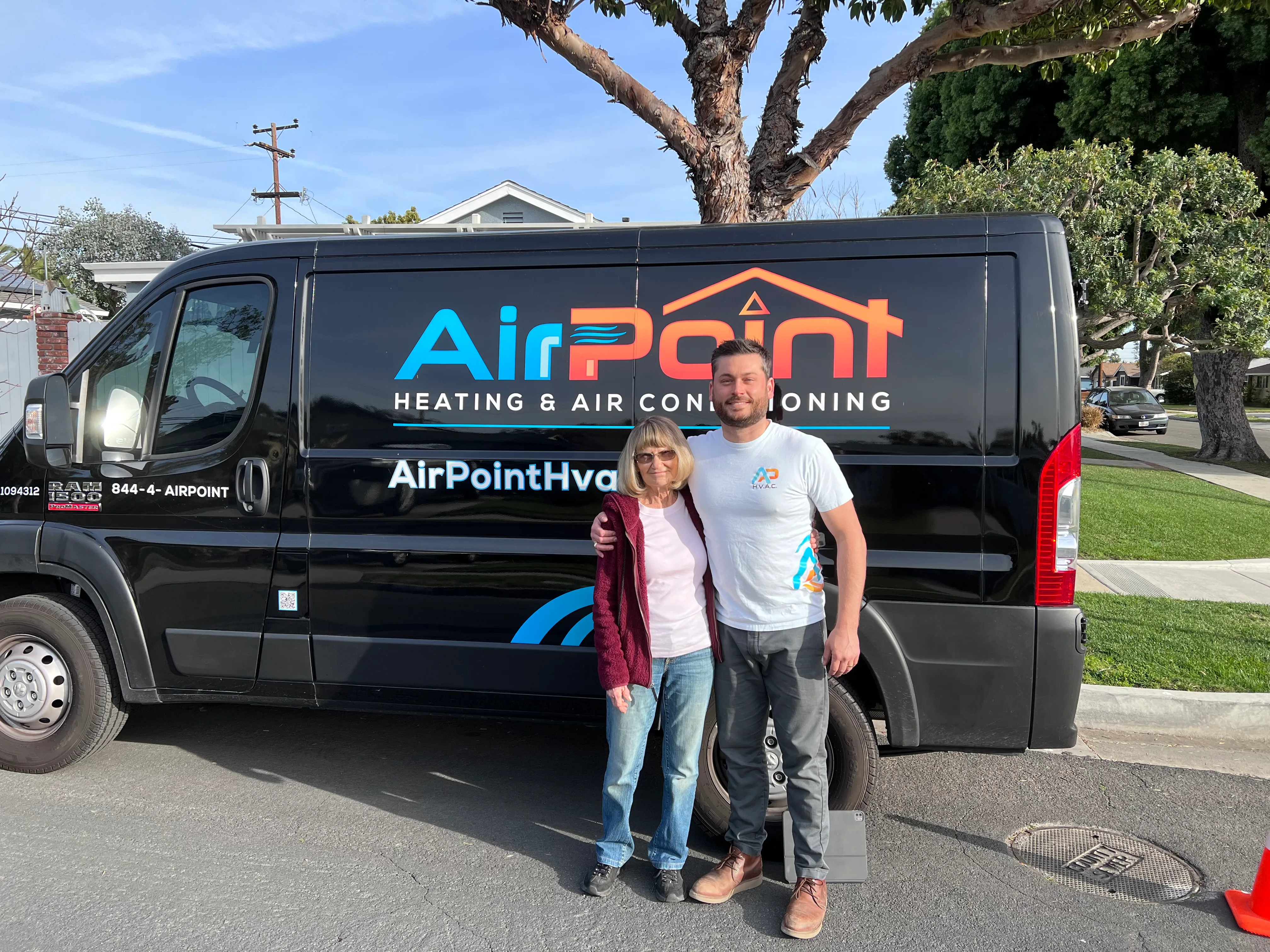
I recommend Air Point for your HVAC needs."